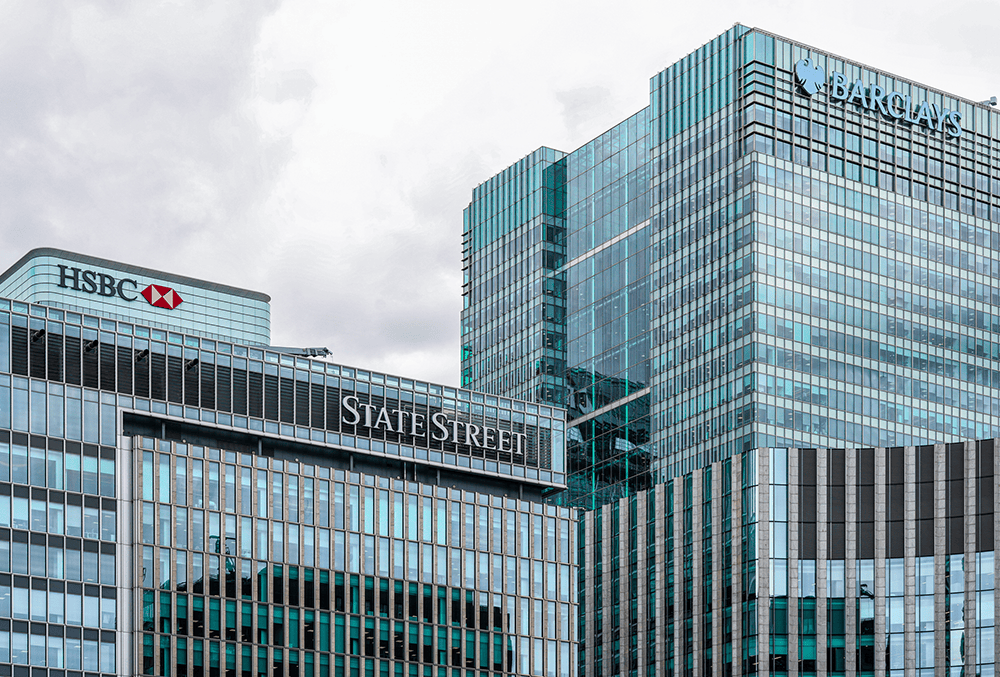


William Francis Sutton Jr (1901-1980), who spent half his adult life in prison, denied ever having said that he robbed banks ‘because that’s where the money is’. But he still gave his name to Sutton’s law of diagnostics, briefly summarised as ‘first consider the obvious’ – a maxim applied by finance ministries the world over in search of additional tax revenues. Name a category of corporate taxpayer that sits on vast reserves, is run by overpaid executives but loathed by its own customers and expects state support in times of crisis. Ah yes, the banks. So let’s tax them again and again.
That threat of the obvious must have topped the agenda at a meeting this week between Chancellor John Healey and the bosses of Barclays, HSBC, Lloyds and NatWest, which between them reported profits of more than £200 billion over the past five relatively crisis-free years. A study by PwC tells us that London banks already pay a ‘total tax rate’ of 46.6 per cent (including NIC and property taxes, plus a 3 per cent surcharge on profits over £100 million), compared with 39 per cent in Frankfurt and 28 per cent in New York.
Despite that punitive difference, TUC general secretary Paul Nowak believes ‘there’s a mountain of evidence to suggest that banks can easily afford to pay more tax’. His organisation has called for a scorching super-surcharge on bank profits of up to 35 per cent, intended to raise £60 billion to fund a ‘social tariff’ for household energy bills. But even the union men’s minimal suggestion of a return to the 8 per cent Conservative-imposed surcharge that applied from 2016 to 2023 would put UK banks at a severe competitive disadvantage.
There’s another mountain of evidence that the City itself is in retreat as a global finance centre, led by the shrinking London Stock Exchange and a steady exodus of successful investors. The surest way to disincentivise growth and innovation in a broader financial services sector that still contributes 12 per cent of UK economic output would be to tax it at levels not seen since Che Guevara was revolutionary Cuba’s central bank governor.
Andy Burnham’s cabinet – collectively and wilfully ignorant of how finance, investment and growth interact – must be wriggling like puppies at the thought of a Sutton-style bank raid to distract from any mention of unaffordable welfare bills in the forthcoming Budget. Can the all-but-voiceless City persuade the Chancellor otherwise? I very much doubt it.
Who bats for bankers?
What do I mean by ‘all-but-voiceless’? Just as I wrote recently of the failure of the CBI and the Institute of Directors to speak for British industry and commerce, I mean that no one these days makes a coherent case for the positive power of finance in the face of the entrenched public hostility which politicians are ever ready to exploit.
What use are the lobby groups UK Finance and TheCityUK, and what’s the difference between them? The Bank of England hasn’t batted for bankers (as opposed to trying to police them) since the days of governor Eddie George, or possibly his 1970s predecessor Gordon Richardson. Of the past dozen Lord Mayors, no more than three or four made much impact as ambassadors for the sector. And who is the London equivalent of Jamie Dimon, the veteran chief of JPMorgan Chase in New York who speaks authoritatively for US banking? Someone similarly seasoned and persuasive in the Square Mile needs to stick their head above the parapet.
Talked out
TalkTalk was once hailed as a model of British entrepreneurial ambition. Spun out of Carphone Warehouse by its co-founder Sir Charles Dunstone in 2003, it grew to be the UK’s fourth biggest broadband provider behind BT, Sky and Virgin Media, and ahead of Vodafone. In 2010, TalkTalk floated on the stock exchange with a £1 billion valuation that rose to nearly £5 billion. But the venture struggled to compete and delisted into private equity hands in 2021, while Dunstone retained a 30 per cent stake. Since then, its fortunes have sunk: loss-making, debt-laden and shedding retail customers, it was close to collapse when BT stepped in last week with a £400 million rescue bid. Competition regulators look likely to wave the deal through, even though it delivers TalkTalk’s 2.5 million users to the dominant dinosaur of the market that is BT and its Openreach network. Altogether a sad parable of promise unfulfilled.
De Gaulle has gone
As I write, the yield on ten-year UK government stock stands at 5.4 per cent, compared with 4.9 per cent for France and 3.5 per cent for Germany. The UK has to pay lenders more because of our perceived greater inflation risk and (so I learn from the National Institute of Economic & Social Research) ‘a lingering “moron premium” – the residual loss of confidence after the Truss-Kwarteng mini-Budget of 2022’. But Burnham’s Britain feels quite calm compared with France, where violent street protests combined with budget paralysis and the prospect of a presidential contest next year between right and left extremes is reviving memories of the near-anarchy of May 1968.
I worried about that at the weekend as I watched Antonin Baudry’s epic two-part cinema portrayal of Charles de Gaulle exercising his iron will and sense of destiny during the second world war. I was reminded of a moment in my own French village this summer when I found myself pulling on a rope during the chaotic raising of le mai – a decorated pine tree, like an English maypole – in honour of our mayor.
As the giant pole lurched above a parked car amid a barrage of conflicting instructions, disaster looked imminent. ‘Who’s in charge here?’ I yelled at my neighbour, who was pulling in a different direction. ‘No one,’ he yelled back. ‘C’est la France, De Gaulle has gone.’ He certainly has.






Comments