
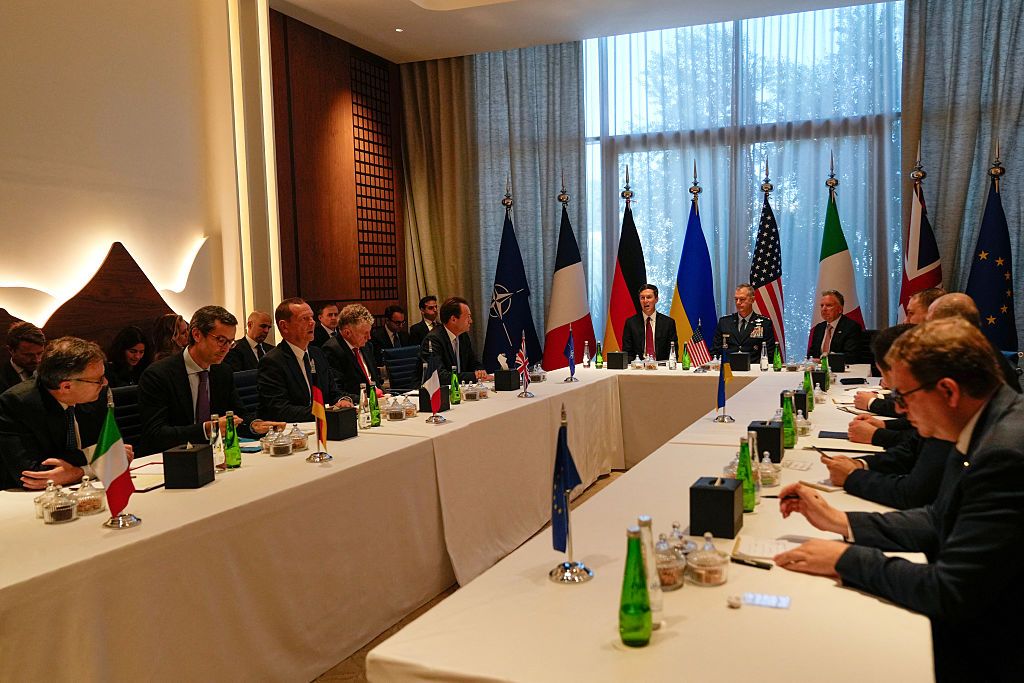
Is Vladimir Putin serious about ending his war on Ukraine? Or are the peace talks that began today in Abu Dhabi just a cynical smokescreen to buy time while Russian forces kick Ukraine’s cities to pieces?
Early readouts from both sides suggest at least three new initiatives that make these talks difference from previous fruitless sit-downs between Russia, Ukraine and the US. One is a reframing of the conflict’s solution away from just Ukraine to take in the bigger picture of what the Kremlin calls the “security architecture of Europe.” Translated, that persistent Kremlin demand means the creation of an effective Russian sphere of influence beyond its borders into which NATO and its forces cannot step. The presence at the negotiating table of Sergei Ryabkov, Russian deputy foreign minister responsible for what Moscow calls “global strategic stability,” is a sign of how seriously the Kremlin is taking this aspect of the negotiations. But Ryabkov is also a well-known hardliner who in January 2022 told negotiators in Geneva that “NATO needs to pack up its stuff and go back to the 1997 lines.” For many supporters Kyiv even discussing such arrangements amounts to giving Putin an early victory.
Second, the US has reportedly floated an ingenious – some would say childish – solution to Putin’s demand for all of Donbas in the form of a re-drawing of the borders of Donetsk province and reallocate the 11 percent of the territory still held by Ukraine to neighboring regions. Such an arrangement would allow Putin to claim victory without triggering any withdrawal by Kyiv’s troops from its last two “fortress cities” of Sloviansk and Kramatorsk – a humiliation which even pro-peace Ukrainians would consider an unconscionable betrayal.
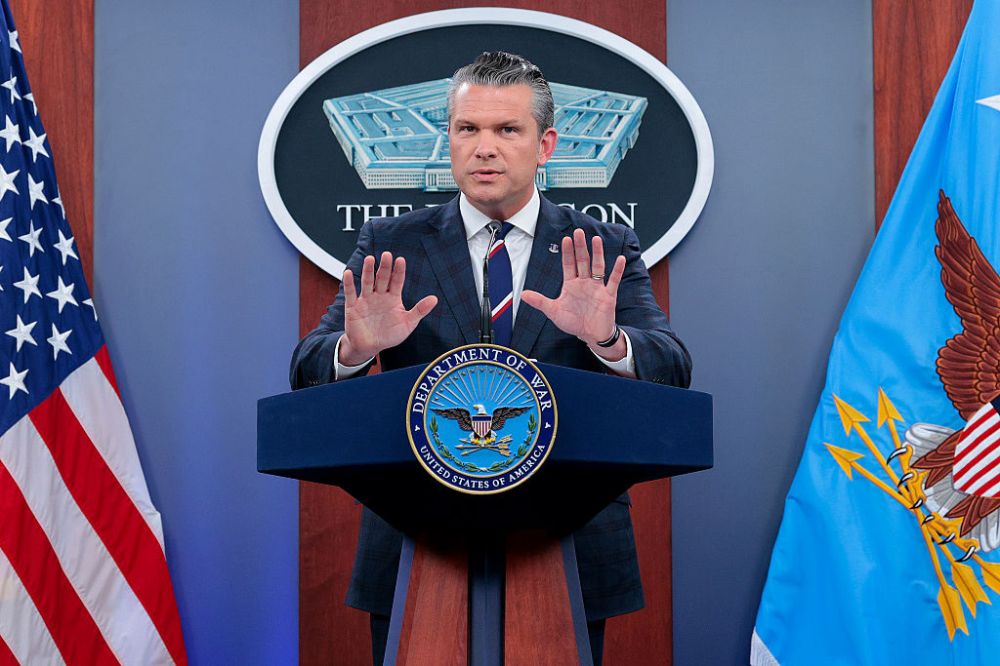
The third initiative – again floated by the Americans, and not directly discussed in previous negotiations – is to offer substantial economic carrots to both sides. A “comprehensive economic and prosperity plan” of development finance to help post-war Ukraine rebuild is on the table, according to special envoy Jared Kushner. But far more controversial is a suggestion to resume Russian gas exports to Europe via Ukrainian pipelines. Seen from Washington (or from Mar-a-Lago), that arrangement seems like a win-win-win, putting much-needed money into the Kremlin’s pockets, channeling transit fees to the Ukrainians and easing Europe’s cost of living crisis by resuming the supply of cheap Gazprom gas.
But so far all three supposed beneficiaries have strongly denounced the proposal – Europe and Ukraine because it would reward Putin’s aggression, and Russia because it would give Kyiv leverage over Moscow’s exports. The Kremlin, for its part, would much prefer to reopen the Nord Stream pipeline, built precisely to exclude Ukraine from its gas exports, by reactivating the one pipe that survived a September 2022 sabotage attack.
There is another, more serious difference between these talks and previous attempts to bring Russia’s war on Ukraine to an end, and that is a catastrophically deteriorating military situation. On the ground, Russian troops have moved the front lines forward by only a handful of kilometers in a year of bloody fighting. But Kyiv has run out of US-made Patriot interceptor missiles, leaving the skies over the capital and other major Ukrainian cities open to attack. Even worse for the Ukrainians, new generations of Russian jet-powered Geran 5 and 6 drones and cheaply produced ballistic and cruise missiles have systematically destroyed electricity generation and distribution facilities, leaving Kyiv without power for up to 22 hours a day. Other vital infrastructure from water mains, centralized heating systems, pumping stations and railways have also been hit, with over 500 locomotives destroyed. One of two bridges linking the two sides of the city has been badly damaged. Last month Kyiv mayor Vitali Klitschko said that Russian strikes have pushed the capital into “survival mode” and suggested that residents consider “leaving temporarily” – but stressed that he would never call for a full evacuation because “the best scenario for Putin is that we all leave and hand over our empty cities.”
But winter is coming. Putin is well on his way to making Ukraine’s cities uninhabitable, with terrible humanitarian consequences. Germany and Poland are already quietly making arrangements to deal with a new influx of winter refugees. What the political fallout inside Ukraine will be is not yet clear – but it is unlikely to be good for Volodymyr Zelensky. Already, a recent poll by the Kyiv School of Economics shows that 66 percent of Ukrainians support “a negotiated end to the war,” up from 27 percent in 2023. Sporadic protests against DTEK, Ukraine’s electricity company, have already led to angry locals blocking roads. Tellingly, Putin has ordered no let-up in bombardments as negotiators sat down in Abu Dhabi. His intent is clearly for peace talks to progress against a steady drum-beat of tragic news from Ukraine’s home front.
Not everything is going Putin’s way. In the wake of the Republican party’s hammering in the US midterm elections, the American political landscape has shifted, and Donald Trump’s freedom of maneuver over Ukraine has shrunk. “Putin will try to squeeze as much as he can out of Trump before the new Congress gets to work in January,” says Boris Bondarev, the only Russian diplomat to resign in protest over the war. Also, a resolution of the US’s war on Iran will restore normal exports through the Strait of Hormuz and end the squeeze on global energy supplies, pushing down prices and eroding Putin’s political leverage with it. In other words, Russia’s window of opportunity to bring the war to a conclusion on its own terms is shrinking.
Zelensky today called the trilateral talks “constructive and quite substantive.” And Kushner has explicitly framed the talks as the beginning of the end of the war, “shifting the focus from managing the war toward building the foundations for a durable peace.”
But the key problem is that Putin has “no interest at all” in a settlement between Russia and Ukraine, says Bondarev. Rather, he seeks “a settlement between Russia and the US.” Indeed, Bondarev argues, the very reason that Putin invaded Ukraine in the first place was “to confront the West with the fact that he dictates the rules in his sphere of influence, and that he and the US will divide Europe or the whole world into zones of control.”
Though senior European diplomats are present in Abu Dhabi they have been excluded from the actual negotiations. But Europe’s talk of “standing by Ukraine” is looking increasingly hollow as the continent continues to import Russian liquefied natural gas – and also drags its feet on the massive financial support Kyiv says it needs to fight on. At the same time Zelensky has run out of ammo and is fast running out of money and time. Putin, too, is negotiating against the clock before the Trump era ends, and recent leaks have shown that Russia has lost a staggering 450,000 killed in action. How long talks continue – and their outcome – depend on Ukraine’s resilience in what will be its hardest winter of the war.




Comments