Ukraine

What Ukraine’s ‘Amazon-for-war’ website can teach the US

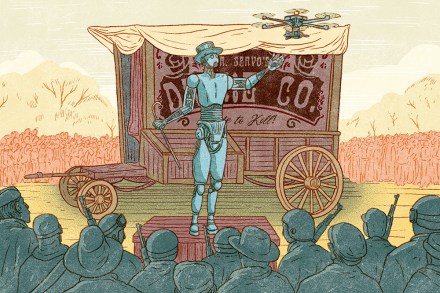
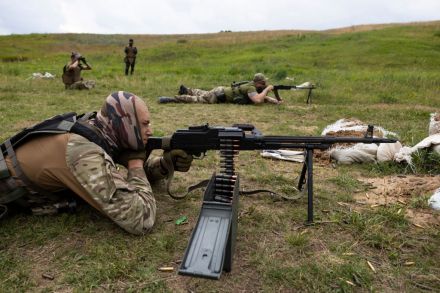
Donald Trump calls Dan Driscoll the “drone guy.” The 39-year-old Secretary of the Army – also a “total killer” with a “nice, beautiful face,” according to Trump – is on a mission to modernize the US military and firmly believes that drones are “the future of warfare.” The former Army Ranger, Yale Law School student and venture capitalist, announced last month that the Army was going to buy 1 million drones. Catch-up will be hard. Currently, the US military acquires around 50,000 a year – while Russia makes 4 million and China 8 million. In his race against time, Driscoll’s north star is Ukraine, the country he calls the “Silicon

dial a drone

Boris Johnson: will cowardly Europe betray Ukraine again?

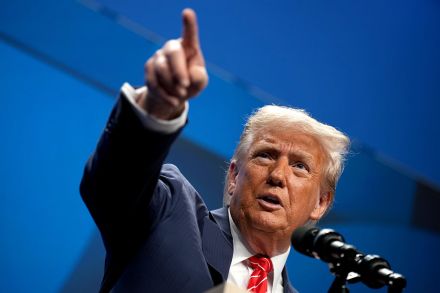
Boris Johnson has urged European leaders to hand $247 billion of frozen Russian central bank assets to Ukraine – but says he fears they “lack the courage” to do so, in an interview with The Spectator. The former British prime minister also warned that Trump is at risk of “morally polluting” himself if he caves to Putin’s demands in peace negotiations and encouraged his negotiating team to stop the “nauseating deals” they are discussing about joint business ventures. “I think Europe is at a very difficult point because Europe has got to do the reparations alone,” Johnson said. “And I’m worried that they lack the courage. They must do it.

Boris Johnson
european leaders

European leaders have changed their tune on war

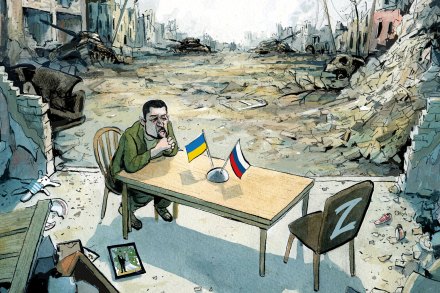
Ten days after Thanksgiving, news watchers were exposed to one of the more culturally incongruous images in recent history: Ukrainian President Volodymyr Zelensky and French President Emmanuel Macron beaming in front of the British Prime Minister’s house at 10 Downing Street, giving each other the locked-thumbs handshake familiar to African-American jazz musicians and professional athletes of the 1970s. Right on, brother! At that moment, according to Ukrainian media, thousands of Zelensky’s soldiers had been encircled by Russian troops near the city of Pokrovsk (or Krasnoarmiisk, as it may well soon be renamed). Large gaps were appearing in the Ukrainian front, desertions were rising and Russians appeared to be opening a

Will US businesses profit from a return to the Russian market?

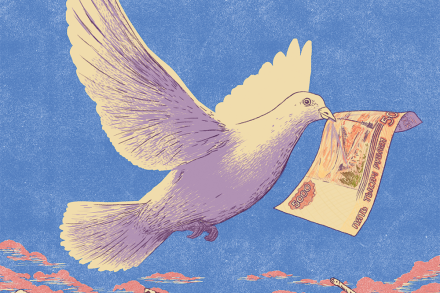
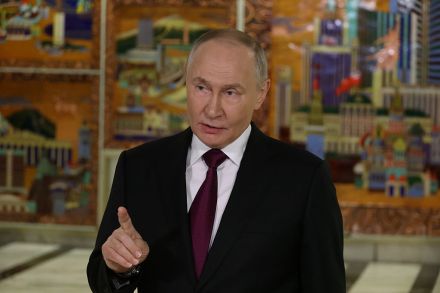
Rome Will peace in Ukraine also prove to be a great deal for US business? Vladimir Putin would certainly like Donald Trump to think so. Within days of Trump’s election victory last November, the Kremlin ordered major Russian corporations to prepare detailed proposals for economic cooperation with Washington. Coordinating these efforts were Maxim Oreshkin, deputy head of Putin’s presidential administration, and Kirill Dmitriev, the US-educated Harvard, Stanford and Goldman Sachs alumnus who heads Russia’s sovereign investment fund. According to a major US investor in Russia who eyes a postwar return to the market, among the major Russian corporations setting out potential deals for US companies were Russia’s atomic energy agency

Trump’s brave new world

No one ever tucked themselves up in bed to read a government document – at least not in the expectation of enjoying it. The standard format is one of hundreds of pages of impenetrable jargon yielding no more than nuggets of significant ideas. The Trump administration has admirably cut through that tendency to produce a National Security Strategy (NSS) that is worth reading: a coherent outlining of America’s strategic intentions on the world stage. Originally composed by Michael Anton, a brilliant mind who is sadly leaving the State Department, the document concisely lays out a Trumpian vision of America’s role in the 21st century. It stands as a corrective to