A peek at the horoscope, puzzling the meaning of dreams, wearing lucky socks, having a method for choosing lottery numbers – many otherwise rational people retain a vestigial interest in prediction to ensure favourable outcomes. I’ll happily admit to a fascination with Tarot cards – and I do seem to be an archetypal bossy Aries. Christopher Dell’s Prophecies demonstrates just how widespread a belief in divination has always been across cultures, however peculiar or unsavoury the methods.
In ordering his vast material, Dell sets out some ‘categories of convenience which allow us to impose some structure on a naturally amorphous topic’. Historically, divination – reading entrails or analysing the flight of birds in Ancient Rome, for example – was state-sanctioned and respectable, whereas fortune-telling was individualistic, unregulated and somewhat disreputable. Using Revelation, Channel, Intermediary and Context as his labels, Dell defines haruspicy, the practice of examining the liver of a sacrificed animal, as Active, Tool, Priest and Official respectively. I’m not sure how helpful this is.
The Sami believed that whistling at the Northern Lights would bring bad luck
The book is a rich salmagundi of bizarre ideas and absorbing illustrations. Ancient Germanic seeresses (Active, Divine Communication, Mystic, Societal) gazed into the billows of rivers. The Japanese Bureau of Divination, founded in 676, was only outlawed in 1870. A Hindu book of dream analysis portends imminent death if a dream involves ‘going towards the southern direction in a chariot to which monkeys and bears are yoked’. The Sami believed that whistling at the Northern Lights would bring bad luck, and a large number of Saxon women’s graves in Kent contain crystal balls.
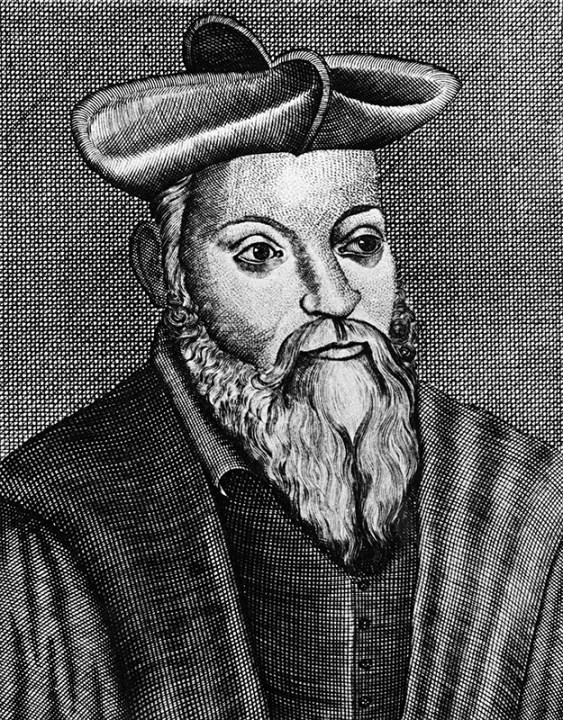
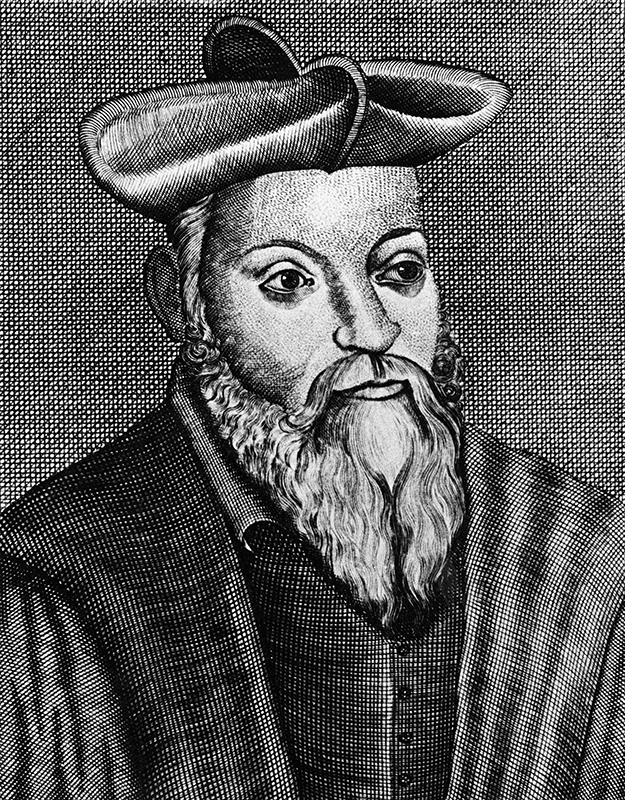
Nostradamus’s prophecies are so riddling and poetic that they can be taken to foretell almost anything. Some predictions seem accurate only by picking and choosing what to focus on. The American clairvoyant Jeane Dixon claimed in 1956 that the 1960 election would be won by a Democrat who would be assassinated or die in office, which sounds impressive – except that she also foretold that Kennedy wouldn’t win the election. ‘She had clearly tried to cover all possibilities,’ Dell notes. There’s also the phenomenon of fantastically accurate predictions made after events and ascribed to legendary seers retrospectively.
One slight drawback to this impressive coffee-table book is that the individual images often have little context beyond propping up the text. The fascinating Aion relief in the section on Hellenistic astrology shows ‘the Graeco-Roman personification of eternity, standing in the centre of the zodiac wheel’. He resembles the Tarot trump The World, but are those cloven hooves? Why is he standing in a bowl of fire? One would like to know so much more.
Felix John Taylor will be happy to see that one of the most popular Tarot decks is given its full title of Rider-Waite-Smith in Dell’s compendium. Taylor’s survey of the artistic activities of the Golden Dawn, the London-based magical society of the late-19th and early-20th centuries, is keen to look beyond the usual flamboyant egomaniacs MacGregor Mathers and Aleister Crowley and the sublime poet W.B. Yeats. Pamela Colman-Smith is given her due as the visionary artist behind the Rider-Waite-Smith deck and Taylor has a whole chapter on the actress, author and journalist Florence Farr, inaugurated as Soror SSDD (Sapientia Sapienti Dono Data – ‘Wisdom is a gift given to the wise’).
The Golden Dawn had the requisite fanciful origin story of any respectable occult organisation, with the discovery of a collection of coded manuscripts together with the name and address of a German occultist, Fraulein Sprengel, in a second hand bookshop on Farringdon Road. Taylor quotes a witty spoof by the graphic novelist Alan Moore, supposedly founding his own magical order, involving a letter from Sprengel folded in a Look-in annual from the early 1970s: ‘I ask you, what are the chances of that?’
Having cracked the code to reveal the documents’ ancient rites, the coroner and Freemason William Wynn Westcott set up the Golden Dawn. But it was with the arrival of Yeats and Farr in 1890, and A.E. Waite the following year, that it became, Taylor contends, ‘the strangest society of the arts of its time’. Reading his accounts of the dramatic rituals (sometimes conducted in public as a form of avant-garde theatre), the poems, plays, novels, journalism and artworks generated by this magical set, I longed for someone to put together a generous anthology of their works.
Taylor maintains a straight face and an even tone no matter how wayward the personalities and events he describes. After one mystical rite, Arthur Machen strode into the London streets, astonished to encounter a character from one of his own novels. Terrifying indeed, but Taylor notes this may actually have been Yeats, who featured as ‘the young man in spectacles’ in Machen’s occult horror The Three Impostors. For all their eccentricities, the adepts of the Golden Dawn tapped into extraordinary creative energies, and Taylor’s account of their activities is wildly enjoyable.



Comments