Magic

An ill-fated romance: Dark is the Morning, by Rupert Thomson, reviewed

From our UK edition

As a prolific writer of literary fiction, Rupert Thomson has had plenty of practice in creating a good story. In Dark is the Morning, he seems drawn to the question of whether a satisfactory narrative structure can be imposed on life. The tug between the meaningless, chaotic nature of reality and the more conventional art of storytelling is at the centre of the novel, which concerns the ill-fated romance between the narrator, Gino, and the enigmatic Franca. Thomson even appears awkward about how neatly fabular this tale turns out to be in his opening chapter: ‘I still find the whole thing hard to believe.’ This self-consciousness is apparent throughout, with Thomson making repeated reference to the power of storytelling in his characters’ lives.


No fairytale: The Children, by Melissa Albert, reviewed

From our UK edition

Who would be a child made famous by a book? A.A. Milne’s son, immortalised as the teddy-trailing Christopher Robin in the ‘Pooh’ books, became a global celebrity and was remorselessly bullied at school for the privilege. Alastair, the spoilt offspring who inspired Kenneth Grahame’s Mr Toad in The Wind in the Willows, felt moved to step in front of a train at university in return. And it is perhaps best for Alice Liddell that she never lived to read contemporary concerns about Lewis Carroll’s true motives for immortalising her in his Wonderland. This cost to children for enabling, even fuelling, an adult’s artistic ambition, is the starting point for the American YA author Melissa Albert’s first novel for adults, The Children.

The importance of fairy tales in testing times

In the realm of magic and imagination, human nature can be better understood than in the world of our everyday lives: ‘The best of our tales do not lie or die.’ It is a bold claim, which the folklorist Jack Zipes explores across continents and class in a series of essays. He guides the reader from the origin of oral storytelling, through medieval writings, to 17th-century literary salons and finally to today’s cinema screens. In the course of this journey, he focuses on the specific genre of the ‘wonder tale’, in which ‘those who are naive and simple are able to succeed because they are untainted and can recognise the wondrous signs... They have not been spoiled by conventionalism, power or rationalism.

A foolproof way of predicting the future

From our UK edition

A peek at the horoscope, puzzling the meaning of dreams, wearing lucky socks, having a method for choosing lottery numbers – many otherwise rational people retain a vestigial interest in prediction to ensure favourable outcomes. I’ll happily admit to a fascination with Tarot cards – and I do seem to be an archetypal bossy Aries. Christopher Dell’s Prophecies demonstrates just how widespread a belief in divination has always been across cultures, however peculiar or unsavoury the methods. In ordering his vast material, Dell sets out some ‘categories of convenience which allow us to impose some structure on a naturally amorphous topic’.

Can I read Trump’s mind?

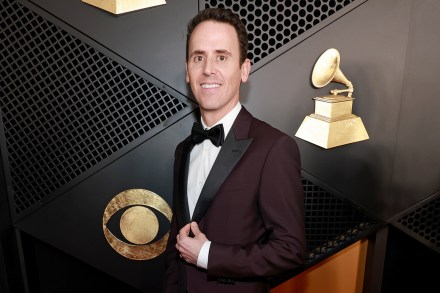
Making time to prepare to host the White House Correspondents’ Dinner has not been easy. Presently I’m flying back to New York, where I live, on a red-eye after a show in Las Vegas. My wife and five kids, all under the age of ten, are at home waiting for me. On average, I have one media appearance every day and a half between now and then. I’m not asking you to cry for me. All of this momentum and publicity is terrific. And my preparation for the big night on April 25 is always simmering below the surface. It feels as if reading minds for the last 30 years has been training for this moment. My goal is to have Donald Trump take part – and to save the best for last. If I could read only one mind in this world, it would be that of the most powerful person in the world.

oz pearlman

Thoughtful fantasy: Travel Light, by Naomi Mitchison, reviewed

From our UK edition

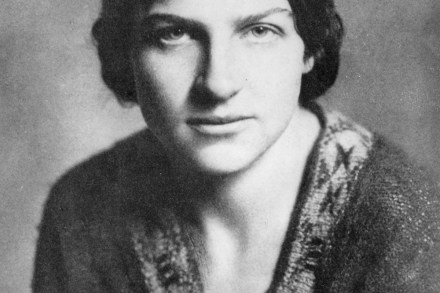
Naomi Mitchison is now renowned for being the author of ‘lost classics’ – famous for being forgotten. She lived to be 101 and wrote nearly as many books. She supported anti-Nazi movements in 1930s Vienna, ran a sexual health centre for women, became an octogenarian campaigner for nuclear disarmament and an ‘adviser and mother of the Bakgatla tribe in Botswana’. Despite two biographies and attempts to revive her masterpiece, The Corn King and the Spring Queen, she remains undervalued – perhaps because of her refusal to settle into one genre and her determination to venture into the territory of historical epic spiced with mythic ritual and dark magic. Travel Light was originally published in 1952 as a children’s book.

How the occult captured the modern mind

The British science-fiction writer Arthur C. Clarke, author of 2001: A Space Odyssey, proposed a "law of science" in 1968: "Any sufficiently advanced technology is indistinguishable from magic." Clarke’s proposition had a quality of rightness, of stating the obvious with sparkling clarity, that propelled it into dictionaries of quotations. The timing was perfect: Concorde would soon be flying over rock festivals packed with hippies obsessed with "magick." Naturally Clarke’s readers understood the difference between aerodynamics and sky gods. But African tribesmen gawping at an early airplane, or Pacific Islanders watching an atomic explosion, could only conclude that they were witnessing a supernatural event: for them, a scientific explanation was literally inconceivable.

Magic and the art of lying

From our UK edition

Talking to a former politician about lying felt very appropriate. It was during one of my ‘Magical Thinking’ sessions, a corporate team-building event I run in which I perform close-up magic tricks and the participants try to work out how they’re being done. Among those at this session was Anne-Marie Trevelyan, who had initially been baffled by a particular mentalism effect. She thought of a day of the week, then a month of the year and finally a playing card, and my guesses on all three proved correct. Every possible route by which I could have cheated seemed blocked off – but Anne-Marie was brilliant at responding to my hints (part of the process, of course), and gradually she led the team towards the solution. The moment it dawned on her how the trick worked was wonderful.

The supreme conjuror Charles Dickens weaves his magic spell

From our UK edition

As Charles Dickens lay in his coffin, his will was read out to the assembled mourners. ‘I conjure my friends,’ he sternly instructed them, ‘on no account to make me the subject of any monument, memorial or testimonial whatever.’ It’s an appeal that later generations have studiously ignored, as can be seen in the piles of commemorative merchandise that are available to purchase online. These range from a fully poseable Dickens action figure (‘with quill pen and removable hat’) to a T-shirt featuring his face and the slogan ‘I put the lit in literature’. They can also be seen in the shelfloads of biographies and critical works published every year.

What happened to children’s hobbies?

From our UK edition

Do kids still have hobbies? Maybe hobbies isn’t quite the right word. What I mean is a passionate interest in something fairly adult, something more than playing with toys. For example, a child might get precociously into theatre or birdwatching or medieval history and have a first taste of adult enthusiasm for something. I was into magic, meaning conjuring tricks. This seemed the most interesting thing about the world, the clear pinnacle of its complicated cultural array. Why wasn’t everyone fascinated by the fact that it was possible to perform acts of seeming wizardry? The magic bug bit me when I was about 11 – who knows why. Maybe it was my uncle doing a card trick, maybe Paul Daniels on television, maybe a basic magic set someone gave me. I had to know all about it.

Tarot isn’t very old or esoteric – but it does work

From our UK edition

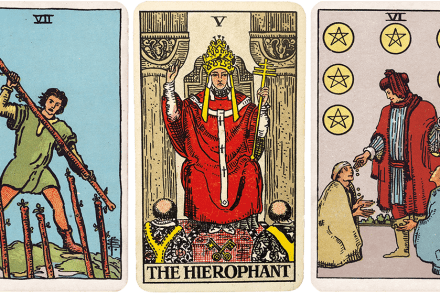
Among my many fake and useless skills, I’m a reasonably decent tarot reader. I can do one for you now if you like. A very simple three-card spread: your cards are the Seven of Wands, the Hierophant and the Six of Pentacles. There are lots of vaguely drippy ways of interpreting a three-card spread: past-present-future, or mind-body-spirit; I usually prefer to think of the cards as representing first, the mess you’re in; second, how you got there; and third, how you might plausibly manage to get your way out. And you, reader, are in a bit of a mess.

‘If you steal this book I’ll beat your brains out’

From our UK edition

‘I would lend you my copy, but the fucker who previously borrowed it still hasn’t given it back.’ Those precise words were uttered to me by an eminent churchman, more in anger than in sorrow, while chatting at high table about a book he believed I might find useful. Its title has long since slipped my mind, but I remember thinking at the time: who lends a book to a friend and seriously expects to get it back? Few things can be so often borrowed and so seldom returned.

An otherworldly London: The Great When, by Alan Moore, reviewed

From our UK edition

Is occult knowledge even possible in the age of the internet? If a recondite author obsessed you back in the day, it took hours of fossicking in far-flung dusty bookshops to feed your hunger. Oh, the joys of hunting down a shabby collection of Arthur Machen weirdiana! Now a few keystrokes will do the job. The magic has been lost. Magic is Alan Moore’s business, and he’s also a Machen devotee. The graphic novelist is well known for issuing his illustrators with exceptionally detailed written instructions for series such as The League of Extraordinary Gentlemen and From Hell, which perhaps accounts for the throbbing prose style of this fantasy novel.

The magic of carefully crafted words

From our UK edition

Early one morning, Alan Garner goes to let the hens out. The hens live in a hutch in the garden of Toad Hall in Blackden, Cheshire, a medieval dwelling which Garner has made his home since 1957, not many miles from where all his forebears – artisans and smiths – lived and worked for generations. Something glints in the light, catches his eye. ‘It is thin, translucent, honey-black and sharp; sharper than a surgeon’s steel.’ He knows just what it is. A flint, a tool, a precision instrument. ‘I am the first to know in the eight to ten thousand years since the last hand that held it.’ Alan Garner knows time; time knows Alan Garner. Powsels and Thrums is a collection of essays – and poems and a little bit of remarkable fiction – published in Garner’s 90th year.

Lawfare: how Starmer will govern through the courts

From our UK edition

40 min listen

This week: Lawfare Our cover piece examines how Keir Starmer’s legal experience will influence his politics. Ross Clark argues that Starmer will govern through the courts, and continue what he describes as the slow movement of power away from elected politicians. As poll after poll predicts an unprecedented Labour majority, what recourse would there be to stop him? Ross joined the podcast to discuss alongside solicitor and commentator Joshua Rozenberg (02:15). Next: we’ve become accustomed to the police wearing cameras, but what’s behind the rise in bodycams in other industries? In her article this week, Panda La Terriere highlights the surprising businesses that have begun using them, but what are the implications for daily life and how concerned should we be?

Why we love to be baffled

From our UK edition

So much of life is a search for answers. How to get ahead, how to earn more money, how to be happy. But deep down, is there a part of us that likes not knowing an answer? Do we sometimes want to be baffled? It’s a question that’s come to fascinate me as I’ve embarked on a new career leading corporate team-building sessions based around magic. I do the tricks (close-up stuff – cards, coins and the like), then the team has to work out how I’m doing them. People who don’t want to know how a magic trick is done are saying: ‘I want to be three again’ Of course they need hints to get them started, but you’d be amazed at how much the group brain can achieve.

Back from the beyond: The Book of Love, by Kelly Link, reviewed

From our UK edition

Kelly Link’s short-story collections bewilder and delight with their sideways takes on fantasy tropes. People might turn into cats, but they do it while texting emojis (dancing lady, unicorn, happy face). In The Book of Love, Link’s debut novel, she revels in upholding and upturning the genre’s conventions. Mainlining Buffy the Vampire Slayer, and with a dose of recent teen Netflix fantasies such as Locke & Key, her setting is a small coastal town in Massachusetts to which three sarky adolescents have suddenly returned home – although not, as is generally supposed, from a short trip to Ireland, but from what they, alongside assorted supernatural beings, know to be Death itself.

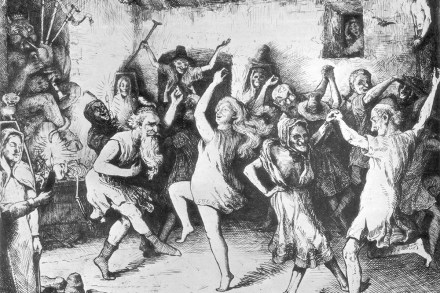
A beginner’s guide to witchcraft

From our UK edition

Next year, Exeter University will offer an MA in Magic and Occult Science: the first of its kind in a British university. The new course has led to newspaper headlines about a ‘real-life Hogwarts’ and questions as to whether magic is as worth studying as say, economics. The course director, Professor Emily Selove, refused my request for an interview – with polite apologies, although one could hardly expect the convenor of Exeter’s Centre for Magic and Esotericism to be anything but esoteric. A similar tension, it turns out, is at the heart of the debate about the degree. For all the media snideness, the most serious objections come from Britain’s growing magical community.

Stormy Daniels’s good fortunes

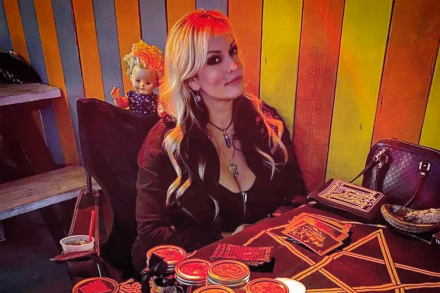
In the lobby of the Holiday Inn Chantilly, there’s a leak in the ceiling. Next to the pail collecting the drips sits Stormy Daniels, her client and a haunted doll called Susan. This is a normal — and paranormal — afternoon for the world’s most notorious porn star. In the time since her hush-money imbroglio with President Trump, Daniels has dedicated her time to directing porn, making some for her OnlyFans, reality TV show appearances… and the supernatural. Her latest venture sees her reading tarot for clients who book with her online. This is what has brought Cockburn to the fringes of the Exxxotica DC convention. “I usually do these up in the room,” Stormy explains, festively dressed in a red-and-black checked shirt and a snowflake necklace.

stormy daniels

Our prison culture is more barbaric than it was in 1823: Elizabeth Fry ‘The Angel of Prisons’ reviewed

From our UK edition

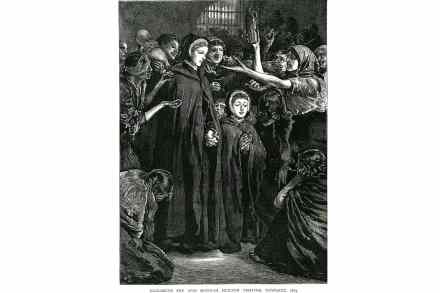
The Angel of Prisons dramatises the life of the penal reformer Elizabeth Fry, who lived near Canning Town. She married a wealthy Quaker, Joseph Fry, who encouraged her philanthropic work which she managed to pursue while raising 12 children. Early in life, Fry had been a party girl who loved dancing, and this production shows her practising her moves to a soundtrack of thumping contemporary music. The script, by James Kenworth, blends present-day London vernacular with the dialect of the early 19th century. It’s easy to watch and it delivers heaps of information without any hint of lecture-hall formality. When Fry visited the mixed-gender Newgate Prison near the Old Bailey she found her vocation.