
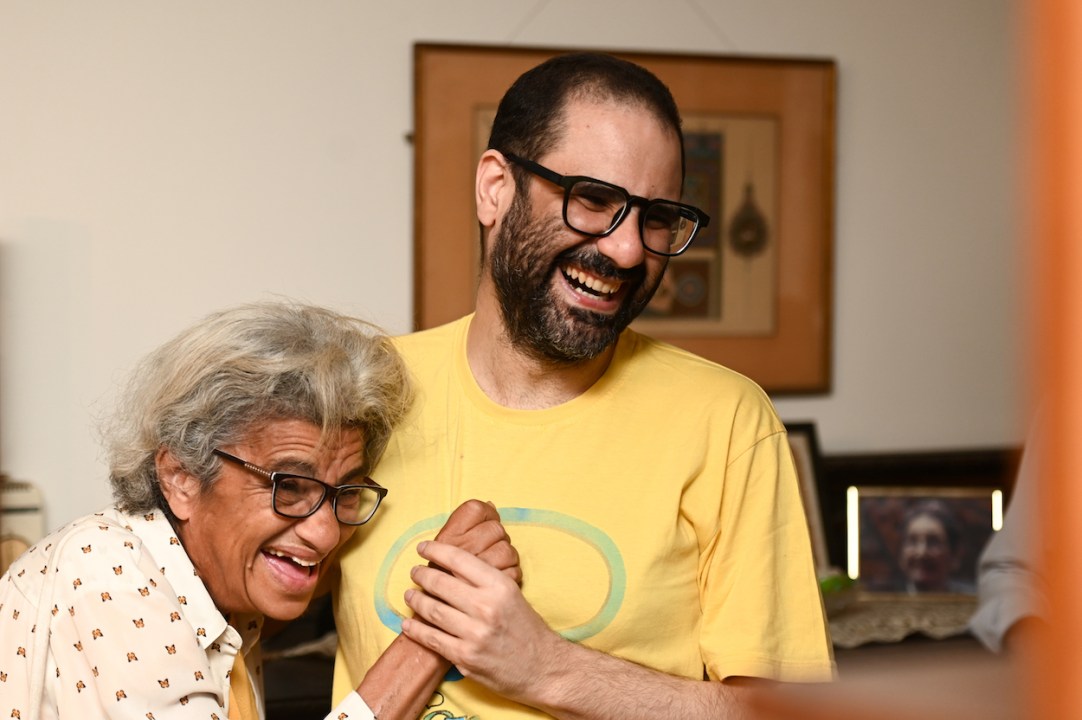
The liberal state and its journalistic and academic outriders fret constantly about the radicalising influence of under-regulated social media, but they are overlooking an even more effective provocateur: themselves. I say this as someone who is in the process of being radicalised by them. With the decision to grant citizenship to Alaa Abd El-Fattah and recently to return him to Britain from Egypt, and for the Prime Minister to express his ‘delight’ at these arrangements, they’re practically force-feeding me red pills.
Not so long ago, I was a happy warrior for liberal multiculturalism. Critical of the indulgence shown to Islamism, sure, and troubled by my fellow pro-immigrationists’ tacit – and not so tacit – approval of illegal immigration, but content that these were flaws that could be repaired by a more hard-headed liberalism. Today, I find myself, unexpectedly and not entirely comfortably, a critic of multiculturalism, a sceptic of mass immigration, and someone increasingly drawn to the idea that the acquisition of British citizenship should be made much, much more onerous.
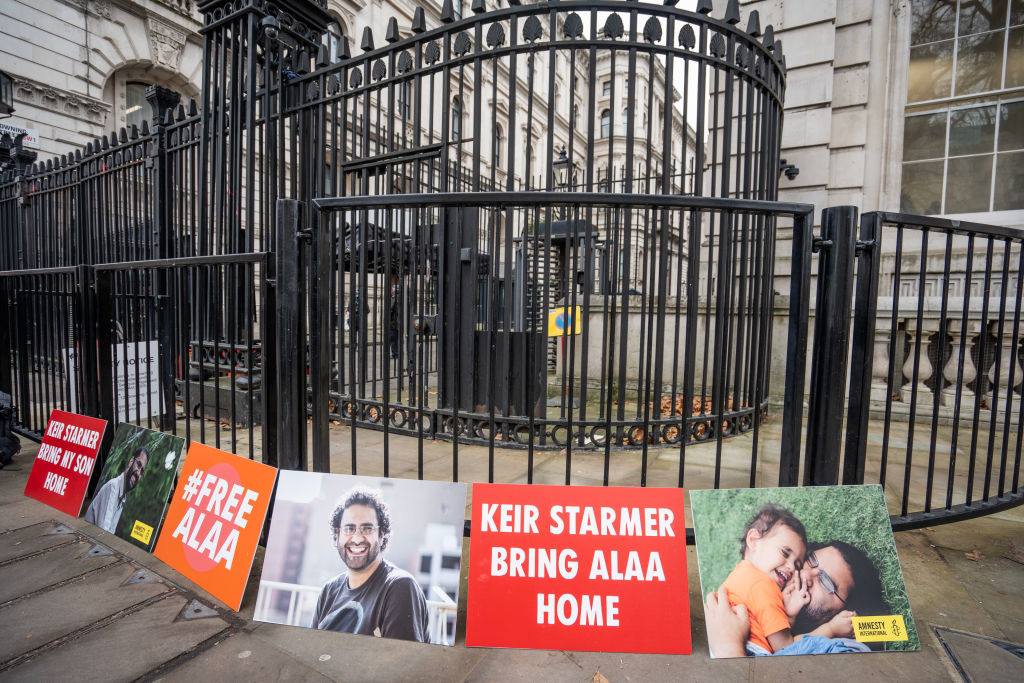
I haven’t arrived at these once-unthinkable thoughts because Elon Musk brain-zapped me with his far-right algorithm, but because the British state persists in acquitting itself to the detriment of the British and to the benefit of those hostile to them. Conquest’s Third Law holds that ‘the behaviour of any bureaucratic organisation can best be understood by assuming that it is controlled by a secret cabal of its enemies,’ but if the British state were secretly controlled by its enemies, we might expect it to take the odd decision favourable to Britain just to head off suspicion, and evidence of Whitehall promoting the national interest, even as a tactical feint, is scant on the ground.
No, the British state is controlled by a foe more committed than any foreign state or shadowy compact: the Russell Group. It’s unfortunate that three years spent at a UK university produces so many who regard pursuit of Britain’s national interests as something sordid, and particularly regrettable that the British state seems to function as a full-employment scheme for such people.
Keir Starmer belongs to this demographic, what we might call post-national proceduralists. What matters to them is process because process is rational, untainted by discernment, unsullied by discrimination, governed coolly by rules and conventions drawn up to insulate decision-making from the vagaries of democracy and the biases of self-interest. Negotiating the release from an Egyptian prison of Alaa Abd El-Fattah and bringing him to the UK is pure post-national proceduralism, as was the decision to grant him British citizenship under those centre-right Starmerites: the Conservative party.
El-Fattah appears to have tweeted a few years ago: ‘I consider killing any colonialists and especially zionists heroic, we need to kill more of them.’ Elsewhere, he is alleged to have posted: ‘There was no genocide against Jews by the Nazis – after all, many Jews are left.’ However, he claims these words have been taken out of context. He is also said to have written: ‘Dear Zionists, please don’t ever talk to me, I’m a violent person who advocated the killing of all Zionists including civilians, so fuck off.’ He also appears claimed to have branded police ‘not human’ and said that ‘we should just kill them all’, as well as referring to the British as ‘dogs and monkeys’.
This is who Starmer is ‘delighted’ to have in the UK? Whose case he called a ‘top priority’ for his government? Whom politicians left and right have lined up to plead for and cast as the Nelson Mandela des nos jours?
It’s hard to take seriously warnings that fascism is on the march and must be given no quarter while being told we must welcome this character into our country. It is jarring to hear that long-established norms around freedom of expression must be abandoned in order to confront racism and extremism and also that admitting a man who advocates murdering Zionists is a necessary evil to demonstrate our commitment to the same norms. It stretches credulity that the adult El-Fattah’s tweets from the 2000s and 2010s should be disregarded as ‘historic’, while Nigel Farage’s schoolboy remarks in the 1970s and 1980s should disqualify him from public life.
I would rather not be saying any of this
Alaa Abd El-Fattah is not British. I don’t care what it says on a piece of paper. His only connection to this country is through his London-born mother, and while the law on birthright citizenship has changed since then, this episode presents as good a time as any to tighten up the rules further. We should make it much more difficult to attain British citizenship, particularly for those who come from countries and cultures where extremism, anti-British animus, and anti-Semitism are commonplace. We should proceed from the principle that, on balance, bringing people who hate Britain to live in Britain is not in the interests of Britain. We should adopt a policy of removing resident migrants and denaturalising non-native citizens who smuggle in the hatreds and extremist ideologies of their birth countries.
I would rather not be saying any of this. I would prefer to still be hymning the virtues of multi-culti New Labour diversityism. I don’t enjoy losing friends with broadsides in favour of a more ruthless liberalism that aims to keep Britain liberal by denying entry to Alaa Abd El-Fatta and his ilk. But, no, I wasn’t radicalised by the right. I was radicalised by my own side.




Comments