Mani Basharzad

Mani Basharzad is Junior Research Associate at the Institute of Economic Affairs

Ramadan in Iran made my life a misery

From our UK edition

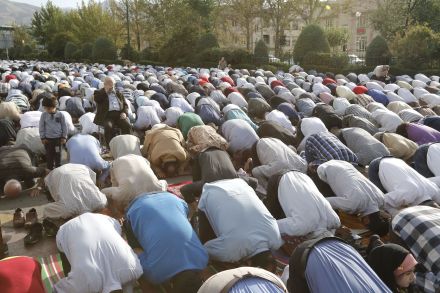
I still remember the last Ramadan I spent in Iran. My mother and I wanted to take a walk in the north of Tehran. Because all cafés were closed, we made coffee at home. As we were walking, we saw a young couple running toward us shouting, ‘Gasht is near!’ What is Gasht? It’s the police force of the Islamic Republic, which during Ramadan patrols the city to check whether people are eating in public. We threw our coffee in the bin. My mother and I were lucky. We weren’t among the 207 people who were flogged in public on charges of not fasting, or among the more than 500 people who were arrested in Shiraz for breaking their fast in public. Your experience of Ramadan may be different. You may see the lights on Regent Street, notice your colleagues fasting.

Why the Venezuela model would be a disaster for Iran

What next for Iran? Donald Trump appears to have a plan: the Venezuela model. The US president has hinted that, just as with the South American nation, he wants to try working with elements inside the existing regime, rather than backing exiled opposition figures. The biggest massacres in Iran’s recent history happened under so-called reformers 'We have a formula, Venezuela, smart country,' he said this week. 'We've taken out 100 million barrels of oil which is now in Houston...being taken care of and made so beautiful in refineries.' But if Trump really is planning on copying his playbook for Venezuela in Iran, he should be warned: it will be a disaster. Why? Because, put simply, the Islamic Republic idolises death over rational thinking.

The West will regret not intervening in Iran

From our UK edition

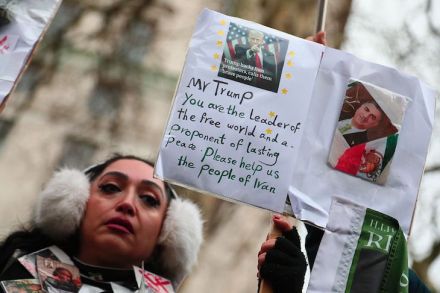
The longest war of the twentieth century was between Iran and Iraq and lasted for eight years. Yet during those eight years, Iraq killed fewer Iranian civilians than the Islamic Republic has reportedly killed in the past two weeks. The regime's security forces enter hospitals, not merely to arrest protesters, but to shoot them in the head. In the piles of bodies visible in the tragic videos circulating online, some corpses, with bullets in their heads, still have hospital monitors attached. This is a government at war with its own people. It is an occupying force that does not see Iranians as citizens, but as expendable sacrifices for the larger goal of spreading Islamic revolution across the world. This is a historic opportunity. Millions have risen up in Iran.

The end is drawing near for Iran’s mullahs

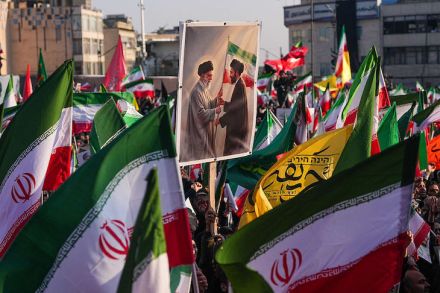
As a wave of protests swept across Iran last night, the internet was completely shut down. I have no idea what is happening to my friends, my family, or anyone else. My best friend Champ was at the demonstration. I desperately hope he is safe. Iran is a nation wanting its soul back. Protesters burn the Islamic Republic flag and replace it with Iran’s real flag Overnight, there were protests throughout Iran. From Qom and Mashhad, the most religious cities, to Rasht and Anzali, the most secular, people took to the streets. In Tehran, there were protests in the poorest parts to the richest parts of the city. I couldn’t believe my eyes when I saw the huge crowd in Pol-e-Roomi, a neighbourhood in Tehran where prices are comparable to London.

Iran wants its monarchy back

From our UK edition

There are protests in Iran again. But this time, something is different. In the uprisings of 2019, 2022 and 2023, the dominant slogan was negative: what Iranians did not want. 'Death to the dictator' echoed through the streets. Today, the country has moved beyond rejection. Now there is affirmation. A name is being chanted: Crown Prince Reza Pahlavi. More than ten Iranian cities have risen up in recent days, from the most conservative quarters of society to elite universities. Across Iranian cities one hears slogans: 'Pahlavi will return', 'Javid Shah' – the Persian equivalent of 'Long live the King' – and simply, 'King Reza Pahlavi'. For the first time since the revolution, Iranians are not merely denouncing a regime; they are articulating an alternative.

The worst thing about being an Iranian in Britain

From our UK edition

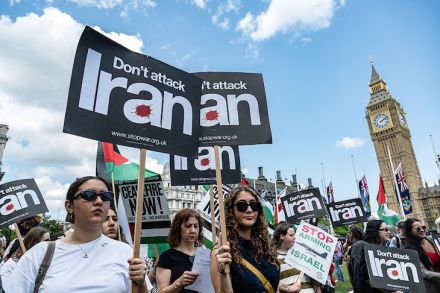
What's the most annoying thing about being an Iranian in Britain? Since coming to the UK a year ago, I’ve lost count of the number of times I've heard one particularly irritating comment. I’ve been told it by Oxford students and professors, Uber drivers and friends. It has felt like a shadow following me. No, it's not a racist remark; I've never encountered this in Britain. It's being told: 'I support what your government is doing.' The greatest challenge has been not losing my temper when someone says it People say it because they oppose Israel, back Palestine or enjoy resisting US imperialism. Of course, they know little of life under the mullahs. The greatest challenge has been not losing my temper when someone says it. Believe me, it’s not easy.

An independent Bank of England isn’t working

From our UK edition

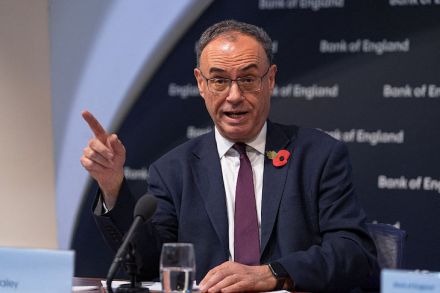
Andrew Bailey recently claimed that the Bank of England has saved the government £125 billion. The Bank's governor was responding to criticism from Reform deputy leader Richard Tice that the Old Lady of Threadneedle Street has cost taxpayers a fortune. Just weeks earlier, Reform leader Nigel Farage questioned the very idea of central bank independence, suggesting he might replace Bailey if he became prime minister. So is the Bank of England too independent for its own good? Independence, once a shield against politics, has become a licence for technocracy The concept of central bank ‘independence’ has certainly morphed into something it was never intended to be.

Why do boring economists always win the Nobel?

From our UK edition

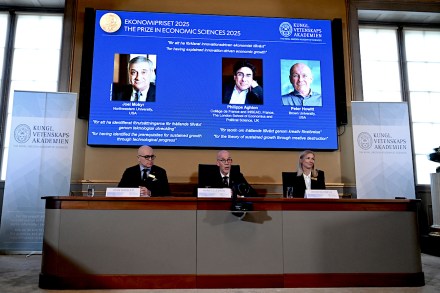
When Friedrich Hayek won the Nobel Prize, his entire lecture – titled ‘The Pretence of Knowledge’ – was an attack on economics itself. He believed economists were more worried about looking scientific than actually being scientific. The lecture was so controversial that Economica, the LSE journal that had published Hayek’s work since he was a young professor, refused to print the speech unless he made changes. Hayek, of course, refused. But that was the spirit of the Economics Nobel back then. It rewarded rebels. Since, the prize has become a monopoly for the ‘good boys’ of academia; those who publish in the top journals, collect citations and perfect their h-index.