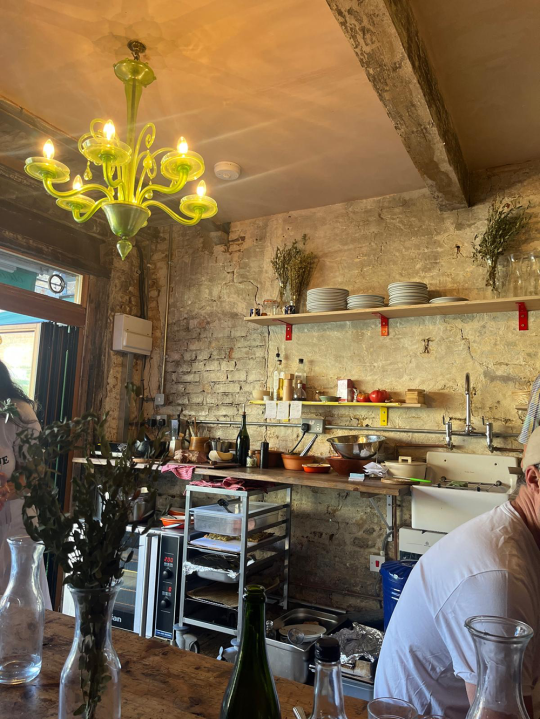

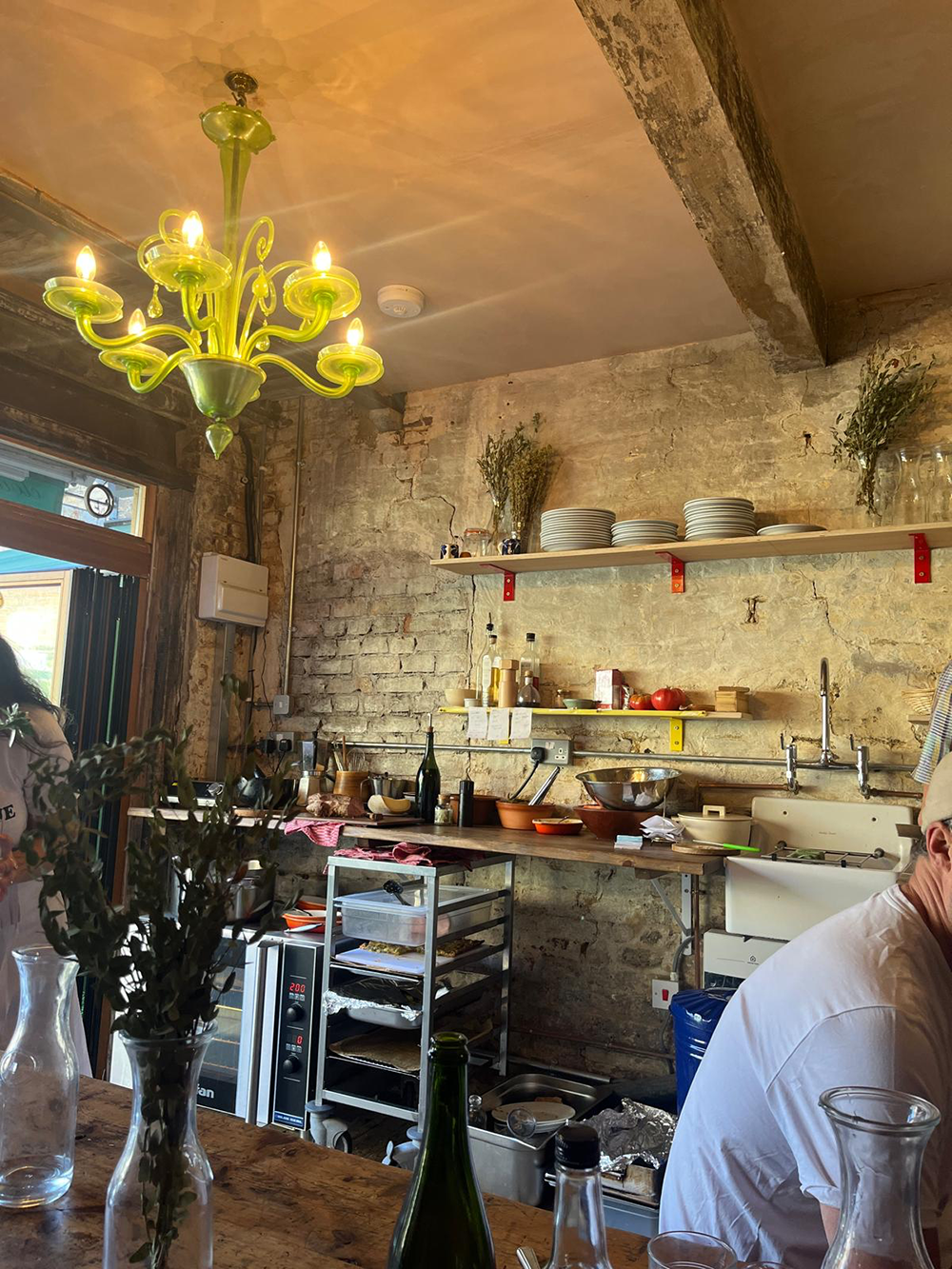
I had this meal where I was perched on the end of a dining table inside a kitchen. My friend and I had to sit side by side. There was a dog there. I think it was a restaurant, but I’m not really sure. We were in a converted Victorian horse stable. Most of the space was outside, in the stable yard. You couldn’t book it: you had to pop your name down then head to the pub for an hour. And there were just six things on the menu, all of them cold. And the only people working there were a couple, and one waitress. And the guy from the couple went round the restaurant at the end with a bucket of his homemade vermouth, topping up people’s spritzes. And when the bill came, you just told them what you’d had. So… did I eat at a restaurant, or have I just gone round to someone’s for lunch and been asked to pay?
It recognises that home cooking tastes better than most restaurant stuff ever does
This is Cloudstreet and I won’t bury the lede: I loved it. The restaurant is next to a stripped-back ale house called Macintosh Ales: it looks like it’s from the 1950s, but it opened three years ago. The stable yard, splendid on a bright autumn afternoon, is picturesque in the sense that Jonathan Meades defines it: it creates the haphazard, it idolises a kind of curated spontaneity. ‘Oh, this?’ the yard seems to suggest. ‘Oh, it’s nothing.’
It’s rather typical of its area, Stoke Newington. Yes, Stoke Newington of the 15,000 majority for Diane Abbott, where Spectator readers may wish to hide their magazine behind a copy of Tribune. But what the residents (early thirties yuppy couples) seem oblivious to is how back-to-basics these new establishments are. This is the cutting edge of London food and drink, and here’s the conceit: we do away with restaurants.
Inside the ‘dining room’, it’s all exposed, weathered brick. We sit staring at the small countertop oven, the induction hob and the trolley. You can see the washing up, the tea towels, the storage boxes and the Post-it notes, simply because there isn’t anywhere else to put them. Georgia Lahiff does most of the cooking: she’s Australian, which might explain the restaurant’s name. Cloudstreet is a 1991 novel by the Aussie writer Tim Winton, based in Perth. Her partner, Frank Guest, takes the food off the countertop, turns around and plonks it down. The menu simply says ‘wine’: you get a glass (£6) or a carafe, and today it’s white. That or a house spritz (£9) or beer (£5.50).

The menu screams ‘I could do this at home’, which of course we couldn’t. This is the glory of Cloudstreet: it recognises that home cooking tastes better than most restaurant stuff ever does, and makes it better than your friends ever could. First, there’s baguette with cucumbers, tomatoes, butter and a satisfying tonnato sauce (£12). Then, courgette flowers stuffed with rice (£16). If arancini suffocates rice, these flowers do the opposite: the rice is spilling out already, excitedly.
Then we get a slice of potato galette with a perfectly sharp side salad (£16) and the ‘main’, lukewarm roast pork collar with cannellini and green beans (£18), the best pork and beans it’s possible to imagine. Dessert was a single piece of goat’s cheese (£8) and figs and chocolate (£10).
This kind of food doesn’t allow hiding. Cloudstreet could so easily have been bad, but it succeeded because the cooking is excellent. I liked the stripped-back approach too, but I wonder what’s next. A restaurant where you have to bring the ingredients along yourself? I’ll take anything, as long as I don’t have to do the dishes.
Cloudstreet, Unit 4, 1 Bouverie Road, London N16 0AH; cloudstreet.london






Comments