Restaurants

The challenge of dining al fresco in Chicago

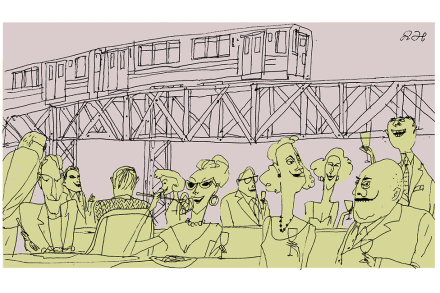
The food and drink editor was taken with my idea for a piece on the challenges of outdoor dining in the big city, specifically Chicago, the big city where I live. “Do you know when you might be able to file?” she asked. “Ma’am,” I replied, “this morning it was 23 degrees Fahrenheit. One of the challenges of outdoor dining in Chicago is avoiding frostbite. How far can you push it out?” The number of outdoor diners in Chicago killed by shrapnel is remarkably low I would have preferred the Fourth of July. She gave me till the end of April. Fine, I said. Even in Chicago, two straight months of inhospitable weather would be unusual, setting aside that 43-day stretch when the mercury never got above freezing. (No joke. December 28, 1976 to February 8, 1977. Look it up.

Go to Cicoria for the food, stay for the opera

Smart Italian restaurants in cultural destinations are like buses: you wait ages for one and suddenly two come along at once. I recently praised Locatelli at London’s National Gallery. Returning to the city, it is the turn of Cicoria at the Royal Ballet and Opera, Covent Garden; a joint under the aegis of Angela Hartnett, well-known for her upscale restaurant Murano in Mayfair, her casual chain Cafe Murano and her frequent appearances on the box. Surprisingly few of the world’s great opera houses have given much thought to catering, although things are improving. I ate very well recently at Madrid’s Teatro Real and you can push the boat out with caviar at the Met in New York.

cicoria
zohran mamdani

Zohran Mamdani’s policies will make restaurants bland and expensive

There’s no shortage of catastrophic predictions for New York City under Zohran Mamdani’s leadership. While we probably won’t see breadlines, the wildly expensive, exhaustingly derivative restaurants that dominate the New York food scene are likely to become more dominant. Mamdani’s big pledge on food is to “make halal eight bucks again.” But it’s a “false promise” of street-food affordability according to Heritage Foundation economist Nicole Huyer. She says Mamdani’s economic program, which includes higher taxes, steeper leasing regulations and a pledge to raise the minimum wage to $30 an hour by 2030, will effectively make restaurants even more expensive.

When did restaurants get so boring?

The New York Times recently released its annual list of America’s Top 50 restaurants – and the perfectly predictable honorees highlight just how beholden the restaurant industry is to the tastes of a would-be cosmopolitan class. The casually refined, vaguely ethnic-fusion cuisine that you stumble upon even in America’s most provincial places is rife. From New York to Los Angeles and everywhere in between, America’s restaurant industry has never been more diverse. Yet somewhat counterintuitively, it’s also never offered more of the same. Often, these restaurants propose some mix of French staples (think mother sauces, patisserie) or Italian comfort food (pasta, pizza) fused with Latin, Asian and/or Middle Eastern flavors.

restaurants
Bordeaux

There’s more to Bordeaux than fine wine

In the seminal Casablanca, there is a classic moment when the Humphrey Bogart character is asked how he ended up there. Bogie, doing laconic and world-weary as only he could, replies, “My health. I came to Casablanca for the waters.” When Claude Rains’s iconic Captain Renault purrs, “Waters? What waters? We’re in the desert!” Bogart’s response is simple. “I was misinformed.” This exchange occurred to me when I recently visited Bordeaux, a city with awe-inspiringly beautiful architecture, some of France’s most stylish places to shop and eat, situated teasingly close to the beaches of the Atlantic coast. Yet if you attempted to tell anyone that you’d come to Bordeaux for history, couture or coastline, you’d get the Bordeaux version of “What waters?

Chinese

Dining with the Chinese food pioneers of New York

For first-time restaurateur Bolun Yao, New York is a city to experiment in: “I feel like New York is the city that is always exploring new things. If you have a new idea, you put it here.” The Chinese-born entrepreneur — who has also spent significant time in New Zealand — came to NYU to complete a master’s degree in food studies. He quickly fell in love with the fine-dining Korean scene, including the two-Michelin-starred Atomix and COTE, America’s only Michelin-starred Korean steakhouse. Both merge contemporary and traditional techniques and ingredients. “Wow, that’s really, really smart and really creative,” the twenty-eight-year-old recalls thinking. “Why is there not a Chinese restaurant that does the same thing?

In praise of the Acropolis Museum Café and Restaurant

In the global poker game of cultural repatriation – otherwise known as who nicked what from whom – the Greeks seriously upped the ante with the opening of the Acropolis Museum in 2009. This lavish display of archaeological treasures in a light-filled building designed by the Swiss architect Bernard Tschumi is, alongside the recently opened Grand Egyptian Museum in Cairo, an exemplar of such a building’s mission to educate and inspire. In the tradition of polemic buildings, it is also a $200 million plea to return the Elgin Marbles from the British Museum to Greece.

Acropolis

Why Eleven Madison Park had to put meat back on the menu

Eleven Madison Park, perhaps the finest of New York’s fine-dining establishments, is adding select meat dishes back to its prix fixe menu after an ill-fated foray into veganism after the pandemic. Chef Daniel Humm announced the move in the New York Times, citing all the predictable reasons for ditching a plant-based menu. First and foremost: the finances. “It’s hard to get 30 people for a corporate dinner to come to a plant-based restaurant,” Humm told the Times, noting the negative feedback from diners over the years. Still, he framed the move in moral terms, explaining how he didn’t “realize that [the vegan menu] would exclude people.” To this, I can only muster an eye roll.

Eleven Madison Park
vegan

Why I was right to ban vegans

I remember the day I heard my culinary hero Daniel Humm had decided to make Eleven Madison Park’s menu plant-based. It was as profound as the day Princess Diana died and as pivotal as the birth of my first child, Lily Elvis. The news tore the joy from my heart as well as all the love and respect I had for Humm. The toil, tenacity and sheer stamina it took him to earn his three Michelin stars is extraordinary. Who am I to criticize one of the greatest chefs alive today? I’m a nobody. Yes, I’ve worked at three-Michelin-starred restaurants, served Queen Elizabeth II and starred in the BBC’s Great British Menu but I’m just a cook: nothing more and nothing less.

Locatelli has entered the premier league of museum dining

Does your museum feel tired and run down? Is the entrance unwelcoming? The bookshop shabby? The restaurant a mere café? If so, call Annabelle Selldorf, the German-American architect whose talent and sensitivity have made her the go-to person for reviving weary museums. Her recent transformation of the Frick in New York has been widely acclaimed and she will soon start work on the Wallace Collection in London. But the latest masterwork has seen Selldorf sprinkle her fairy dust on the Sainsbury Wing of London’s National Gallery. Those with long architectural memories will recall how in 1984, the then Prince of Wales christened the proposed new wing of the Gallery “a monstrous carbuncle on the face of a much-loved and elegant friend.

Locatelli

Will one rotten rebrand spoil Cracker Barrel?

No one thinks the Cracker Barrel rebrand is a particularly good idea. The entire charm of Cracker Barrel lay in the farmhouse attic vibe, the nana’s candy dish assortment in the gift shop and the menu, which served up the best chicken and dumplings or biscuits and gravy and sweet tea possible from a fast-casual chain with horrible wooden chairs. Still, the melodrama surrounding this story, the rising and falling stock prices, the online mocking and gloating, seems a little overblown. Not everything has to be political. Cracker Barrel certainly doesn’t. For those of you who’ve been wandering around the fields with a bucket on your head this week, Cracker Barrel has streamlined.

Cracker Barrel

‘I don’t build new restaurants’: an interview with Tyler Florence

As a child, the chef and television host Tyler Florence had 42 different listed allergies. It wasn’t until he was 13 years old that he tasted melted cheese for the first time. “I had a very weird early diet. I could only eat and drink things like salmon, lentils, goat’s milk.” As a teen, he finally outgrew the allergies and tried foods most kids had been eating their whole lives. “It was like an explosion – all the flavors and the textures. I couldn’t get enough of it.” His first job was as a dishwasher at the Fish Market restaurant in Greenville, South Carolina. “It was the nicest restaurant in town. All the waiters had tuxedos and cummerbunds. It was the 1980s, so there were pink tablecloths and fish tanks in the dining room.

Chet Sharma: chef, DJ, PhD

Chet Sharma – physicist, DJ and award-winning chef – only needs to sleep for four hours a night. “I inherited [this gift] from my mother,” shrugs the Londoner when we talk one morning before lunchtime service at his restaurant, BiBi. “She has unlimited energy!” Raised in Berkshire, England, to parents with Indian heritage, Sharma has a master’s degree in clinical and experimental medicine from University College London, as well as a master’s in physics and a PhD in condensed-matter physics from the University of Oxford. It was during those seven years studying that he also moonlighted as a cook and a DJ. “I’d do university in the morning, dinner service at a restaurant [at night], and at 11 p.m.

MAGA tourism in the heart of DC

On Friday night I arranged for a group to meet at Butterworth’s for a small dinner. I joke that I’ve become the Butterworth’s Whisperer, chaperoning curious and skittish liberal friends to DC’s Trump-era living museum for lamb tartare, cozy lighting and dissident ambiance. I needn’t waste too much time describing the scene. The restaurant has been profiled more often than the new Pope. Suffice it to say the fries are sliver-thin and seed-oil-free, the martinis flow like water and there are always at least a couple of Republican who’s-whos to point at in the dining room. Nothing to be afraid of. Some nights there’s even a party if you show up at the right time, as I did a couple of months ago during the Conservateur’s “Make America Hot Again” event.

Butterworth's

Keith McNally’s memoir is strangely unappetizing

Harvey Weinstein has a memorable walk-on role in Keith McNally’s memoir I Regret Almost Everything. Taking a break from being New York’s most celebrated restaurateur, McNally wrote and directed a film called End of the Night that was screened at Cannes in 1990. Its auteur hoped that Weinstein, who distributed the previous year’s Palme D’Or-winning picture Sex, Lies, and Videotape, would warm to it. He was blunt: “I didn’t like your film and I’m not going to buy it.” As McNally swallows the shot, there’s a chaser. “But I’d still like to come to the after-party.” McNally admires Weinstein’s honesty, if little else. So I’m going to be straight, too. I didn’t enjoy I Regret Almost Everything. This is a shame, because the ingredients are promising.

McNally
Palm

The rise of millionaires, valet parking and facelifts in Palm Beach

The two favored topics of conversation in Palm Beach are money and the place itself, so the latest survey by Henley & Partners, a specialist service which advises wealthy clients where to live, is doubly welcome. It shows that Palm Beach County is among the top five fastest-growing “wealth hubs” in the world, outpacing even Dubai and Silicon Valley. This latest report shows that Palm Beach County cities (that is, Palm Beach, the island off the mainland, and West Palm Beach, on the mainland, separated only by three drawbridges) experienced a 112 percent increase in millionaire residents between 2014 and 2024.

Ship shape: Normandie, the biggest French restaurant of all

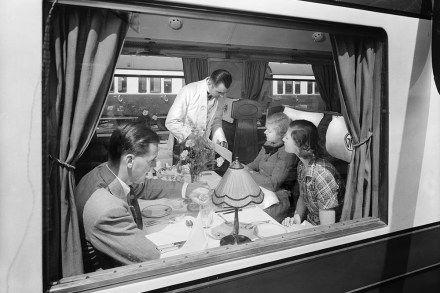
These pages recently carried a lament for the little French restaurant, and the loss from the cities they once graced of a certain element of gentility and, yes, class. On the same subject, let us consider another era when class was valued more highly, and which produced the classiest, and the grandest, French restaurant of all. This requires a journey. In July 1936, a Chicago family, relations of mine, embarked on an unrushed two-month European vacation. A meticulous Thos. Cook & Son-Wagons-Lits, Inc. itinerary routed them first to France, then Italy, Switzerland, Germany, Holland and finally to England. It was a thoroughly first-class affair.

French

Casa Bonita, the greatest restaurant in the world

Colfax Avenue is the longest commercial street in the United States. It’s over fifty-three miles long, from the foothills of the Colorado Rockies all the way through the capital of Denver and out to the Eastern plains. It is littered with single-story, seedy roadside motels, some with working neon signage and some without. Hemp shops and dispensaries have moved in now as well. East of Denver, it has gained a sort of urban-legend reputation for sex work, vagrancy, crime and as of late, migrant gang activity. However, West Colfax is legendary for another reason. Nestled in the corner of a semi-rundown strip mall in the suburb of Lakewood, next to a coin-op laundromat and a Dollar Store, sits the mythological pastel-pink stucco tower of Casa Bonita.

Casa Bonita

Hotel hopping in Rome

Summer in Rome. Expectation: breathe the soul of the classics, soak up the history, feel the romance. Reality: breathe in the AC, soak in a pool of sweat, feel ever so slightly unhinged. My plans to indulge in Italy’s time-honored tradition of la passeggiata — strolling around looking stylish, gelato in hand — were quickly nixed by the Cerberus heatwave. Dreams of meandering around perhaps the world’s most famous open-air museum gave way to lying recumbent with a handheld fan. Jumping from the relative cool of a sleeper-train carriage onto the platform at Termini station felt akin to opening an oven door and climbing in. Red alert warnings were issued as the mercury soared toward 119°F.

Rome

Going ham in Andalusia

In Spain you can eat all day — and we did. Earlier in the summer, I spent two days in Andalusia, and most of the forty-eight hours were taken up by mealtimes. A breakfast of the sweet porridge poleá started the day, then ham-tasting for a mid-morning snack followed by a two-hour lunch. I didn’t think it was possible to eat all day, but when the food is this good and meticulously chosen, it is. Spanish chef José Pizarro led the way, taking us to his favorite restaurants and showing us where he sources the ham and caviar for his own.

ham