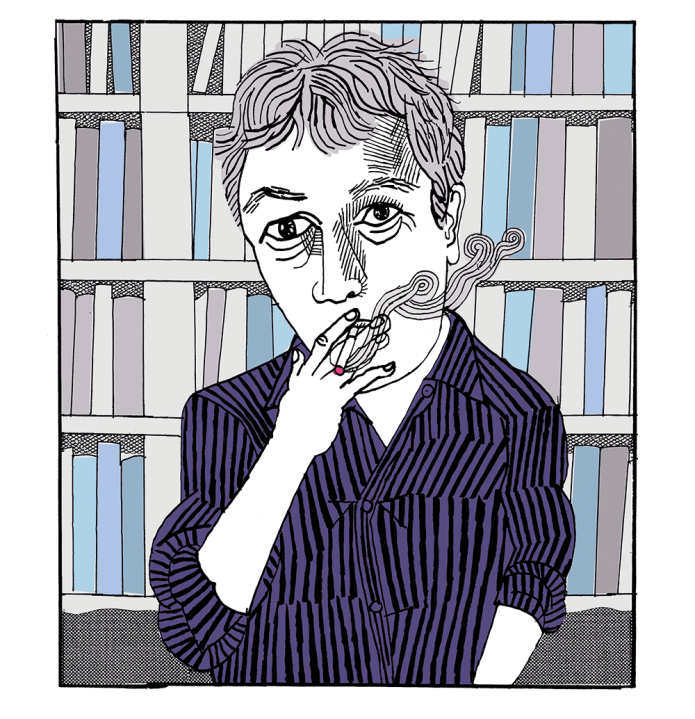


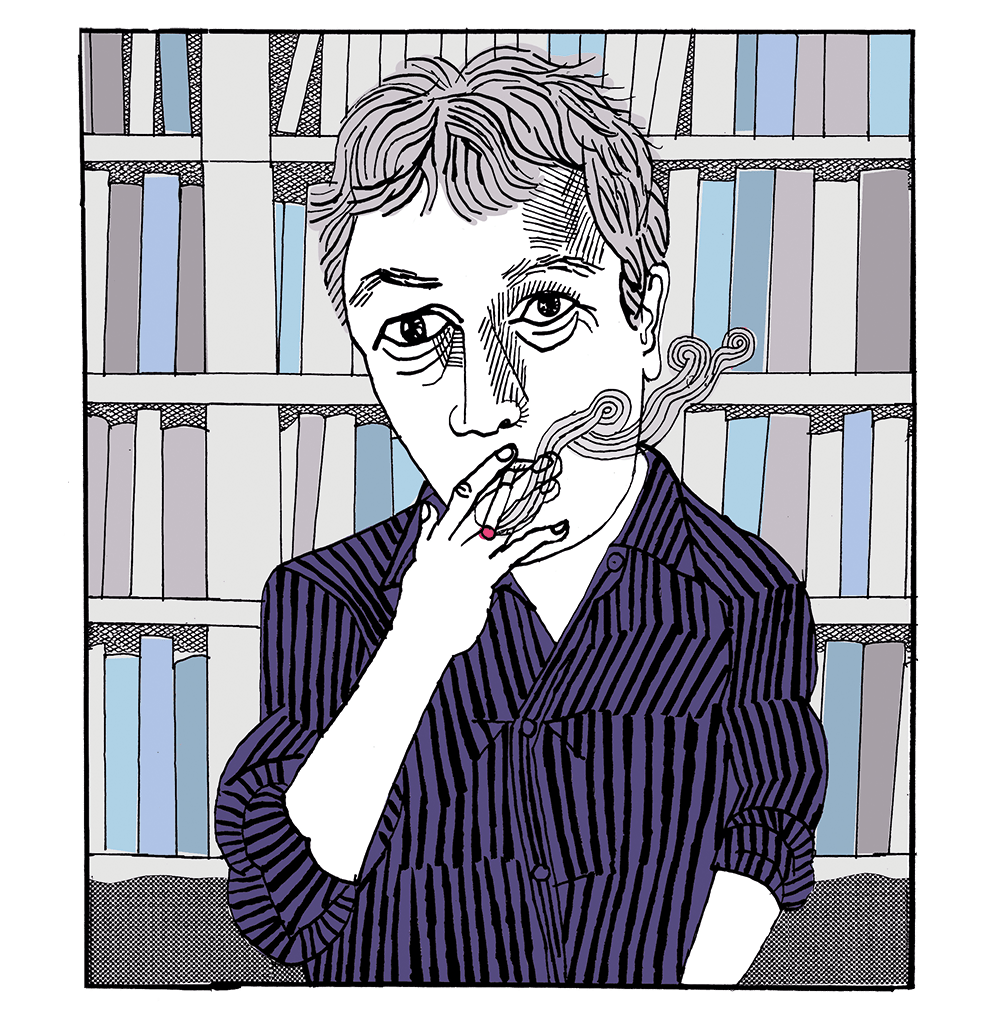
Since becoming Spectator editor there was one observation I heard more often from readers than any other: ‘Rod is the first page I turn to every week.’ Whatever people’s politics, background or other interests, to be a Spectator reader was to love Rod. Rod did his best, of course, to be unloveable. At least in print.
Nothing, and no one, apart from possibly Millwall, was spared from his criticism. Savage, foul-mouthed, merciless. But also hilarious, superbly well-informed and honest. Above all honest.
There are all sorts of enlightened souls in and around journalism who pretend to that virtue. Who claim they are speaking truth to power, fearlessly holding authority to account, exemplifying the incorruptible virtues of the fourth estate, yadda, yadda…
Nothing and no one was spared from his criticism. Savage, merciless. But also hilarious and, above all, honest
But all too many of them are compromised in their way – whether by a desire to avoid giving offence, or a fear of stepping too far outside the boundaries of what is considered wise and fashionable, or a wish to be well thought of by the people who count.
That was never a problem with Rod. He did not care about offending anyone, trampling over any boundary and couldn’t give a fig what the people who count thought of him. He thought they were counts anyway.
Rod believed in cutting through the cant, hypocrisy, double-speak, euphemism, evasion and empty pieties with which those in authority and those who shape our culture seek to evade proper scrutiny. He didn’t just observe that the emperor had no clothes, he pointed out that now we could see the emperor naked, it was apparent that he was a fat bastard with a tiny member who was wasting taxpayers’ money on a parade which made fools of every greaser and sycophant in the country.
Of course, Rod was strong meat for some. But it was because so many in society were intent on upholding nonsense that he knew he had to puncture it with a broadsword and then lay about the idiots responsible with fearless determination. Whether it was the idea that men could become women by wishing it so, or the belief that migration was an undiluted good, or the conviction that Islamism was not a threat, Rod took these pious fictions apart and showed that, whatever the good intentions of those peddling these noble lies, the consequences were hellish.
As my predecessor, Fraser Nelson, has observed, Rod ranks with Swift as a satirist. And his work stands in the same tradition as other – historic – scourges of fashionable nonsense like William Cobbett and George Orwell. He believed that a society, and politics, built on asking people to accept what their own experience and eyes told them was not true, was morally wrong.

What drove Rod particularly was the conviction that the ‘progressive’ nonsense which so many politicians, bureaucrats and academics upheld was not just a crime against plain-speaking and truth-telling, it was also designed to gull and fleece working people – to pummel them into submission and get them to pay for the administrative cadre’s pet projects. In that sense he was, like Swift, Cobbett and Orwell, on the side of those who lived not by lies but by honest endeavour, on the side of working people against the condescending classes. He was – as all the best satirists are – the genuine progressive, the truer moralist. And, in person, kind, thoughtful and supportive.
I first got to know Rod when I was a tyro reporter at the BBC and he was an executive on the Today programme. As others have written, he was a driven and demanding boss but also restlessly intellectually curious, endlessly original and prepared to spend time with young journalists, encouraging and guiding with a father’s care.
The BBC at the time was bureaucratic, conformist, corporate and timid. Rod’s presence was like Jack Sparrow at Henley Regatta. You couldn’t help but love him.
He was a far better journalist than most of us at the BBC at the time but the BBC was never his spiritual home. Nor indeed was the Guardian, for which he went on to write. Which is why I was delighted, when I was an executive at the Times, to give him a column on that paper. That is when his voice came into its own. And then he also found in The Spectator a home for his freest, most authentic, most daring writing.
There are comparisons to be drawn with other Spectator writers of the past – scabrous satirists like Auberon Waugh, free-booting iconoclasts such as Christopher Hitchens, upenders of cosy fictions like Theodore Dalrymple – but Rod was unique. His economic views were those of a Peter Shore or Barbara Castle – labourist and protectionist. His attachment to free expression was purely, classically, liberal. His attachment to institutions – from Millwall Football Club to the Church of England – romantically Tory. But running through everything was his burning, restless, unquenchable desire to be the first, clearest and loudest enemy of the lies by which we were being asked to live.
I know you will miss him. Terribly. So will I. More than words allow me to say.

Comments