Satire

Letters: ‘The voice of a beleaguered Middle England’ – readers say goodbye to Rod

From our UK edition

My all-time hero Sir: I was gutted to learn of the early death of one of my all-time heroes (8 August). Rod Liddle’s was the voice of a beleaguered Middle England, standing for the long-established Christian values of common sense, integrity, fairness, respect for all, and many other aspects so fundamental to this country’s traditional way of life. Rod never took prisoners: he just demolished their arguments with the supremely elegant and simple language. Richard LongfieldWeston Patrick, Hampshire A true wordsmith Sir: A friend speaks for all Liddleites when he writes: ‘Anyone who can think up the word “wankpuffin” is irreplaceable.’ RIP. J. C.H. MounseyMinchinhampton, Glos In Rod we trust Sir: Thank God for Rod.

‘I asked for a substitute for the f-word. He suggested the c-word’: the joy of editing Rod

It was in Westminster Magistrates’ Court, where I was sitting waiting for the judge’s verdict, that I decided I needed a better way of handling Rod Liddle’s column. As editor of this magazine, I had inherited one of its greatest writers; a force of nature loved by his readers for his bravery and candor. But it sometimes led to difficulties: in this case, criminal prosecution. The judge had a choice: prosecute our owners, the editor, or the magazine. The magazine was fined. “Rod was right,” I was told by Aidan Barclay, who as proprietor had nearly ended up in the dock himself. “But truth is no defense. Not any more. You need to spot these things before they blow up.

rod liddle

To be a Spectator reader was to love Rod

Since becoming Spectator editor there was one observation I heard more often from readers than any other: “Rod is the first page I turn to every week.” Whatever people’s politics, background or other interests, to be a Spectator reader was to love Rod. Rod did his best, of course, to be unlovable. At least in print. Nothing, and no one, apart from possibly Millwall, was spared from his criticism. Savage, foul-mouthed, merciless. But also hilarious, superbly well-informed and honest. Above all honest. There are all sorts of enlightened souls in and around journalism who pretend to that virtue.

rod liddle

I didn’t want to like Rod Liddle

One of the joys of being director of digital at The Spectator, back in 2015, was seeing the magazine proofs before they went to print. Rod Liddle’s column was the first thing I looked for, always the one I was most eager to read. He made me laugh every single time, something very few columnists are able to do. I was annoyed I liked those columns, because I didn’t want to like Rod Liddle. All I knew of his personal life was through the scandal that followed him leaving his wife during the so-called “Sextator” years. I took a dim view of that. Although we both worked for The Spectator, I didn’t actually meet Rod for a long time because, woke snowflake that he was, he only ever worked from home. The first time we met was at a Spectator summer party, years later.

rod liddle

‘The Middlesbrough Shakespeare’: Why I loved Rod

I met Rod 22 years ago this month. We had been selected as teammates on a gameshow pilot, and, halfway through the morning’s filming, we went for a fag break. He said to me: “This is crap, shall we go to the pub?” We scarpered and spent the rest of the day in a Covent Garden pub, working our way through the drinks list and chatting away like chipmunks. I’d never been starstruck by anyone before I met Rod. However famous or talented actors are, their job is to say stuff written by other people. Rod, however, was a legend to me. I began reading his Guardian columns at university. Though I was studying all the greats of English literature, it was Rod’s writing which felt like a ribbon-wrapped gift, a treat, a joy.

rod
rod liddle

Rod’s genius? Driving his enemies nuts

There is a reason the death of Rod Liddle has provoked such a swirling tide of grief among his millions of followers, including readers of this magazine, and that is that in the last 25 years Rod came to occupy a crucial position in journalism, and indeed in our country as a whole. His columns became a haven, a refuge, in which he gave us permission to think things that are in fact common sense, but which have for some reason become taboo. He gave us a renewed permission to laugh – at him, at ourselves, at our collective absurdities – at a time when laughter is increasingly controlled and often suppressed.

‘The Middlesbrough Shakespeare’: Why I loved Rod

I met Rod 22 years ago this month. We had been selected as team-mates on a gameshow pilot, and, halfway through the morning’s filming, we went for a fag break. He said to me: ‘This is crap, shall we go to the pub?’ We scarpered and spent the rest of the day in a Covent Garden pub, working our way through the drinks list and chatting away like chipmunks. He would tell me that all the best people treat their bodies like bins (and all the worst like temples) I’d never been starstruck by anyone before I met Rod. However famous or talented actors are, their job is to say stuff written by other people. Rod, however, was a legend to me. I began reading his Guardian columns at university.

‘I asked for a substitute for the f-word. He suggested the c-word’: the joy of editing Rod

It was in Westminster Magistrates’ Court, where I was sitting waiting for the judge’s verdict, that I decided I needed a better way of handling Rod Liddle’s column. As editor of this magazine, I had inherited one of the greatest writers; a force of nature loved by his readers for his bravery and candour. But it sometimes led to difficulties: in this case, criminal prosecution. The judge had a choice: prosecute our owners, the editor, or the magazine. The magazine was fined. ‘Rod was right,’ I was told by Aidan Barclay, who as proprietor had nearly ended up in the dock himself. ‘But truth is no defence. Not any more. You need to spot these things before they blow up.’ Our lawyers were kept busy, too.

Good riddance, Rod

From our UK edition

When a famous right-wing, straight white male dies, if your first instinct isn’t to gloat and trash his reputation then you clearly have no idea what it takes to be a progressive. The death of Rod Liddle is currently being celebrated by all of us on the right side of history. And because we announce our pronouns and wear keffiyehs, we can refer to him as a scumbag who deserves to burn in Hell and everyone will know that we’re actually incredibly compassionate. It’s a matter of simple mathematics. The population is divided into two factions: those who are good and those who are evil. Every time an evil person dies, the proportion of good people increases. Ergo, by dying, Liddle has made the world a gooder place. Being kind is largely about efficiency.

To be a Spectator reader was to love Rod

Since becoming Spectator editor there was one observation I heard more often from readers than any other: ‘Rod is the first page I turn to every week.’ Whatever people’s politics, background or other interests, to be a Spectator reader was to love Rod. Rod did his best, of course, to be unloveable. At least in print. Nothing, and no one, apart from possibly Millwall, was spared from his criticism. Savage, foul-mouthed, merciless. But also hilarious, superbly well-informed and honest. Above all honest. There are all sorts of enlightened souls in and around journalism who pretend to that virtue.

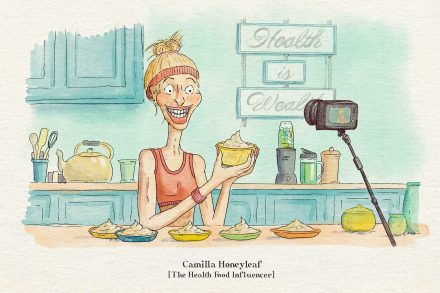
The Health Food Influencer

From our UK edition

Meet Camilla Honeyleaf, who runs the ‘Sugar is Poison’ YouTube channel that, she'll proudly tell you, ‘has given thousands of people the eating disorder they so badly need’. An entrepreneur and an activist, Camilla has a calling: to bring health to the masses, or at least the massive. She won't rest until friends and strangers alike discover the joys of a cupcake made entirely from avocado, burnt quinoa husks and a semi-organic sweetener that has definitely not caused tumours in laboratory rats.  Healthy living, she says, is not an option but a calling. She is fond of a pithy bon mot (‘They’re like sentences trimmed of fat!

The finest vacuum-cleaner romance you will see

From our UK edition

A Useful Ghost is the best sex-with-a-vacuum-cleaner film I’ve seen in a while – or perhaps ever. It is deeply funny. How could it not be? But it’s also, in its way, deadly serious. A first film from Ratchapoom Boonbunchachoke, its camp absurdism and high jinks with electric appliances are also a satire on Thailand’s violent recent history. You can see why it won the Critics’ Week prize at Cannes. With most films you know what the film is, and where it’s going, within the first few minutes: ‘Oh, it’s this film.’ Here, you’ll have no idea. We start with a character simply called Ladyboy (Wisarut Homhuan). He lives in an area of Bangkok where the local shops and other buildings are being torn down and replaced by a shopping mall.

Nothing can save Rosebush Pruning 

From our UK edition

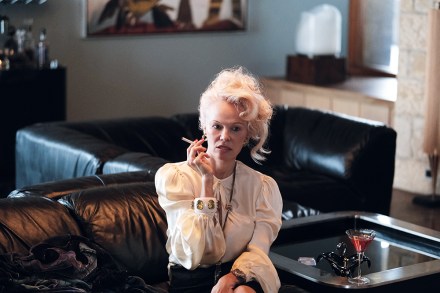
Rosebush Pruning is one of those films where you’ll say to yourself at the end: what the hell have I just seen? And not in a good way. It’s about a wealthy family who are into fratricide, parricide, incest and blood. No quiet evenings playing Trivial Pursuit or charades for this lot. Mercifully, it is only 90 minutes long but, on the other hand, there are images you won’t be able to scrub from your mind for a lifetime. Swings and roundabouts, my friends, swings and roundabouts. When it comes to the eat-the-rich genre, this does make Saltburn look like child’s play Inexplicably, it has a knockout cast: Callum Turner, Jamie Bell, Tracy Letts, Pamela Anderson, Riley Keough, Elle Fanning, Lukas Gage. (You will want to pull each aside to ask: ‘Why? Did you piss off your agent?

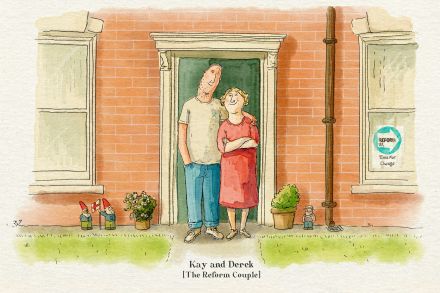
The Reform Couple

From our UK edition

Kay and Derek’s ‘radicalisation’, as their daughter calls it, became impossible to ignore when they named their dachshund’s latest litter. Six males and two girls and of course they were named Nigel, Richard, Danny, Lee, Robert, Zia, Sarah and Suella. (Kay is secretly rather pleased the runt didn’t make it – she didn’t have to think about whether she would name him Rupert.) Previously their puppies had been given strictly non-political names – like Chips or Monty or Winston – and Kay had renamed Nelson when a neighbour got the wrong idea. There’s a saying about giving a dog a bad name, and you can’t call them something you can’t shout across a field without embarrassment.  That was the point when their daughter Meg stopped talking to them.

A toff’s guide to Ascot

From our UK edition

When I announced to my American neighbour that I was going to Ascot for the first time in 20 years, she grabbed me by the arm as if I had just announced that I was running off with the gardener. Apparently Ascot and the Royal Enclosure have changed beyond recognition since the latest refurb and there is much to learn. ‘Which day are you going?’ she asked wildly, as I muttered something about Ladies Day. She turned around in shock, hand over mouth. If she were Hyacinth Bucket from Keeping Up Appearances, I was her nervous friend Elizabeth who spills her tea all over her saucer, shaking like a leaf. ‘We don’t have much time,’ she cried in no particular direction.  When she learned about my proposed outfit, she went pale.

In the dazzling company of Alexander Pope and friends

From our UK edition

In the summer of 1726, the writers Jonathan Swift and John Gay spent several weeks at the home of their friend Alexander Pope on the banks of the Thames at Twickenham (then known as ‘Twitnam’), not resting but toiling away at their various literary activities and mutually inspiring each other. On the surface they were an unlikely trio: Swift was almost 20 years older than either Pope or Gay; Pope was Catholic (at a time when Catholicism was still treated with suspicion) and financially independent, while Swift was an Anglican cleric, the Dean of St Patrick’s Cathedral in Dublin. Gay, in contrast, was a jobbing writer, dependent for financial security on his amiable sociability and maintenance of good relations with a long list of wealthy patrons.

Big Mistakes is hysterical – but not in a good way

From our UK edition

When following up a successful sitcom, should a writer head off into new territory or not? That was the question facing Dan Levy after Schitt’s Creek and John Morton after WIA – and now we have their answers: ‘yes’ and ‘not really, even with a change of country’ respectively. Curiously, both seem to have made the wrong choice. ‘Schitt’s,’ Levy has explained, ‘was so warm and sweet and cuddly. My natural curiosity was to go somewhere else more dangerous’; specifically, to provide ‘a story that’s thrilling but never not funny. That became the big challenge of the writers’ room.

Blockchain fantasies: My Bags Are Big, by Tibor Fischer, reviewed

From our UK edition

If you long for that far-off time when novels were prepared to be hilariously funny, vulgar, caustic, wildly politically incorrect and highly improbable you are going to love My Bags Are Big. Tibor Fischer has always been happy to write against the pieties of the age, whatever they might be. He has often been compared with Martin Amis, but he’s Amis without the pose. If anything, as he ages, he’s more like a very funny, very British Michel Houellebecq. You get the sense he really means it: he feels it; the rage is for real. His astonishing debut novel Under the Frog (1992) turned postwar Hungary into a carnival of grotesques and established the mode for a lifetime of books that treat plot as scaffolding for his riffs and reflections on life, the universe and everything.

Ghastly middle-class materialism: The Quantity Theory of Morality, by Will Self, reviewed

From our UK edition

In ‘Ward 9’, the central story of Will Self’s lauded debut collection, The Quantity Theory of Insanity (1991), it is posited that a society can only contain a finite supply of sanity, and that when it comes to marbles we’re all playing a zero-sum game. His latest novel suggests a limited amount of morality must exist in a world where the avaricious prosper and the meek inherit the debts of those who live unscrupulous lives. In the milieu of the book, these debts are mainly school fees, coke bills and the cost of renting an Italian villa for two weeks every summer.

Revelling in reading: The Enchanting Lives of Others, by Can Xue, reviewed

From our UK edition

Can Xue is an oddity in the landscape of world literature. Greeted mostly with bewilderment or indifference in her native China, her novels have gained a following among a certain type of erudite western reader over the past few decades, leading to an annual flurry of Nobel speculation and more works in English translation than nearly any other living Chinese author. The writing can be hard to enjoy. It often takes the form of avant-garde fairy tales populated by nameless characters who genially accept unsettling, inexplicable occurrences around them. When this works, as in last year’s gloriously strange Mother River, you get the disorientating feeling that you are the one who has gone insane, not the characters.