
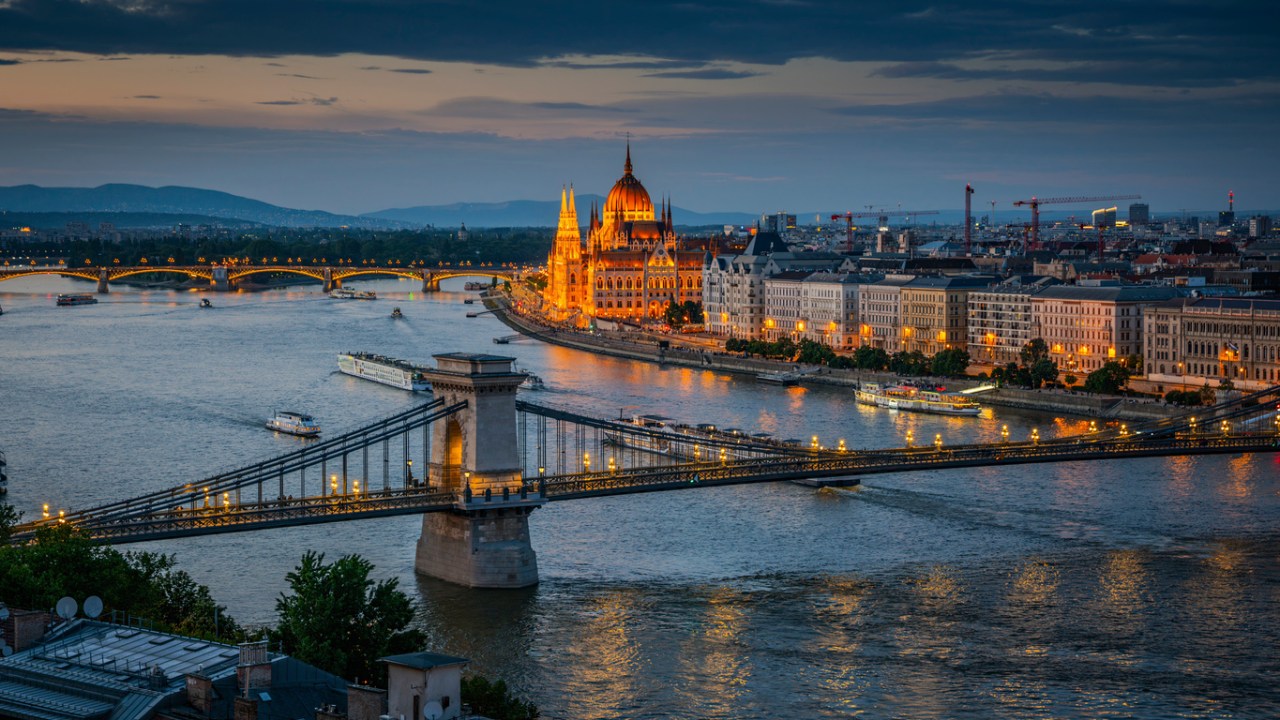
Hungary in 2026 is what most developed countries were probably on their way to becoming in the 1980s and early Nineties, had mass migration not intervened: a sleazy gerontocracy with occasional bouts of moral-majority politics and ethnic nationalism. With socialism dead, the opposition is made up of liberal parties led by equally sleazy modernizers. Crime has ceased to be an issue, partly because the population is aging. The people, like pandas, do not breed. There is boredom and ennui. There is nothing analogous to, say, the killing of Iryna Zarutska.
Hungary has had a dreadful century and is now a tired sort of place
Such has been the work of Viktor Orbán, Hungary’s Prime Minister since 2010, who is to face the voters again on April 12. Elected on a platform of fiscal retrenchment, Orbán’s Fidesz party would go on to debut many of the phrases and methods of right-wing populism. “We were Trumpists before Trump,” as Orbán often says. The Orbánists have always had a keen sense of a “Blob” or “deep state” lying in wait, ready to confound their efforts. In 1990 the Soviet garrison went home and Hungary held free elections, but almost no one employed by the old regime lost their jobs. Zsolt Németh, the walrus-mustachioed co-founder of Fidesz and Orbán’s old Oxford chum, whom I met on a press trip in Budapest last month, calls these people the “postcommunists” who still held all the key posts.
The postcommunists would soon make their presence felt. During a mass strike by taxi drivers later that year – an event apparently so important in the national memory that a feature film was made about it in 2022 – the state broadcaster blocked the Prime Minister from addressing the nation. By the Orbánists’ lights, it was these and similar intrigues that led to the historic defeat of the right in the election of 1994.
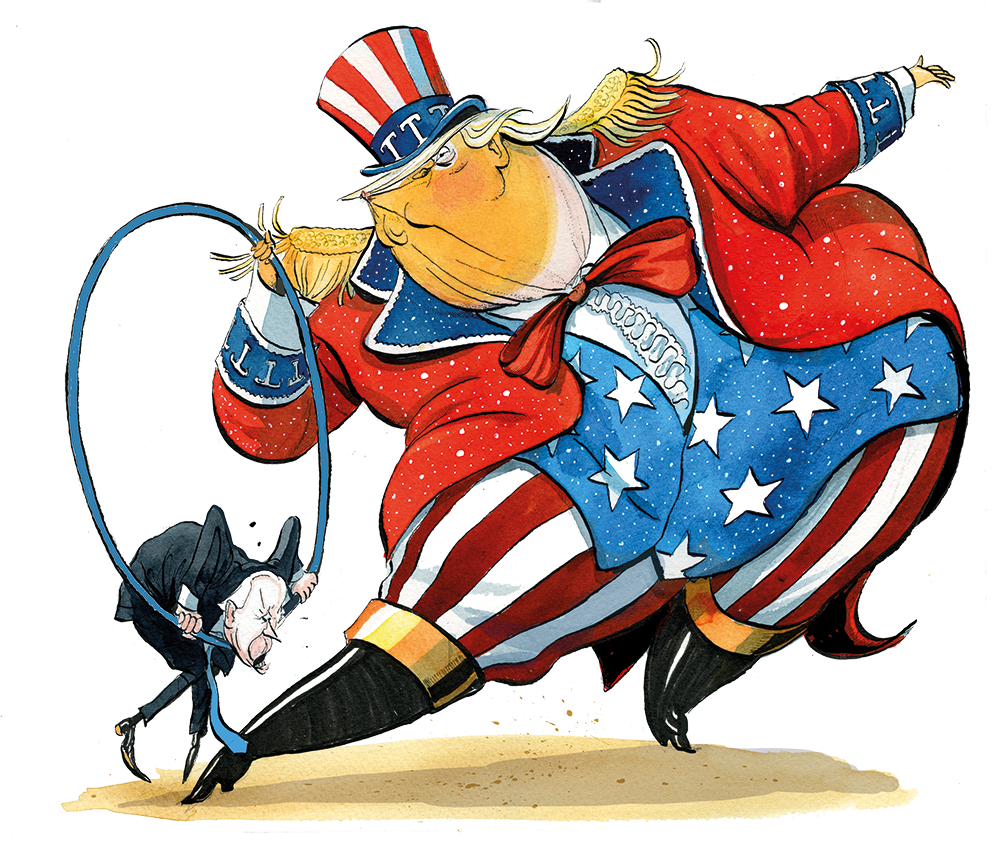
Once in power, Orbán’s task was to throw out the postcommunists. Judicial appointments were placed under the control of the elected government. Officials were fired. The country’s quangos were stuffed full of Orbán’s people, as was the constitutional court. EU directives on refugee resettlement were ignored and a fence was built on the southern border. NGOs that received foreign money were required to disclose it. The Orbánists also took steps to nurture a Blob of their own. In 2020, around $1.75 billion in shares of the state energy company were transferred to the Matthius Corvinus Collegium, a right-wing think tank. The Orbánists have called all this “illiberal democracy,” and its effect has been to substitute one governing class for another, a task which has proven beyond most populists. The Orbánists’ hope now is that their people, much like the “postcommunists” of yesteryear, will remain entrenched no matter who is in office.
This theory may soon be tested. Polls vary, but many observers think that Péter Magyar and his Tisza party will emerge victorious on April 12. Magyar used to be a Fidesz functionary and was married to the ex-minister of justice. He left the party in 2024 after releasing a secret recording he had made of his then-wife in private conversation, where she detailed the then-President Katalin Novak’s (also of Fidesz) role in hushing up a pedophilia scandal at a state-run children’s home. Magyar, who was uninvolved, has vowed to get to the bottom of the affair.
Meanwhile, the Hungarian economy has ground to a halt, not helped by the fact that Russian oil has stopped flowing through the Druzhba pipeline that goes through Ukraine. Orbánist Hungary is isolated in Europe with no allies except for little Slovakia, also with a populist government. In March, President Zelensky made a veiled threat to send armed men to Orbán’s house. Over $26 billion in Brussels funding for Hungary has been frozen because of “rule-of-law concerns,” money that Magyar has pledged to get back.
Many of Fidesz’s ministers seem to relish in their isolation. They declare that a new age of expediency in world affairs has now opened. High on the hill in Buda Castle, built by the country’s old Habsburg proprietors and now being restored in its original neo-Baroque style, the government’s international spokesman Zoltán Kovács holds forth on this theme. Europe is “stupid” not to make use of cheap Russian energy he says, averring that the continent must become more competitive and take investment from whoever is offering – China, India, or somewhere else.
But overall the mood is elegiac. Hungary has had a dreadful century and is now a tired sort of place. The recent and the not-so recent past looms large among the Orbánists. Each one we speak to begins with the same potted narrative of the country’s history: steppe conquest of the Carpathian basin in 896; an ancient constitution defended against various adversaries; and then disaster at the end of the Great War, when two thirds of the country’s territory was lost.
To Orbán and his associates, the task now is to find a tolerable way of life amid much-reduced circumstances. An “island of security and calm even in this upside-down world,” said Orbán in a recent speech. Not a “master-nation” as Marx once flattered it, but a “family-friendly country,” bedding down for what looks to be another turbulent century. In this the Orbánists have succeeded – up to a point. There are shabby antics around public procurement, but the state has not seen fit to loose unvetted migrants on small towns, as in western Europe.
But this sort of quietism will probably not be enough for Fidesz, or any of the other European populists. Woke will always have a certain attraction, especially in a small country like Hungary, because for a young and ambitious person becoming woke means getting to go to Brussels and help govern a continent. The alternative at home? Family values. Little surprise, then, that 80 percent of emigrants from the country are under 40 and that a third of them are degree-holders – compared with 18 percent among the general populace.
The highest ambition of the Orbánists at an EU level is to return power to the member states. The Orbánists have created a new Establishment, but there is little sense that they might now work with others to repeat the trick in Brussels; little sense that the European project might be turned to their own ends. International cooperation is a left-wing idea, says the state secretary cabinet office Balázs Hidvéghi. And yet, only a politics on a grand, possibly continental scale will be enough to entice the kind of talented and ambitious people that the populists need. Whatever the result on April 12, the strategy of defensive nationalism that Fidesz pioneered now seems to have run its course. To win out in the long run, the Orbánists and others like them will have to make a steppe conquest of their own.




Comments