Hungary

The lesson of Orbán: Trump must tackle corruption

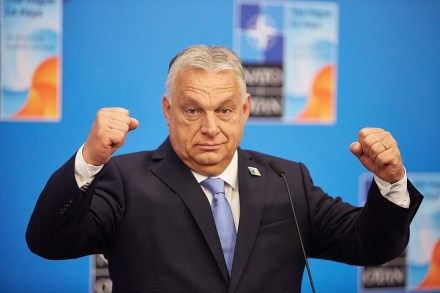
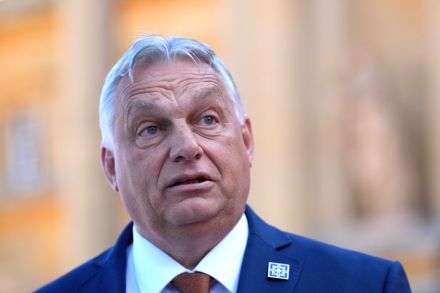
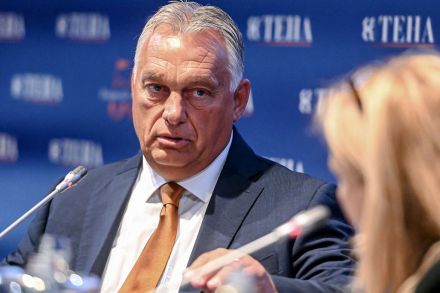
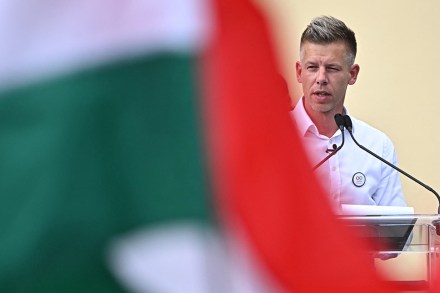
The landslide defeat of Hungarian Prime Minister Viktor Orbán carries lessons across the ocean for Donald Trump and both MAGA and non-MAGA Republicans. Trump pulled out all the stops for his ally, sending Vice President J.D. Vance to Hungary for a three-day endorsement tour and promising the day before the vote to “use the full Economic Might of the United States to strengthen Hungary’s Economy” if Orbán won. Well, he didn’t, and the Democrats are in full gloat mode after Orbán’s Fidesz party fell from 135 seats in parliament down to just 55. Senate Democratic Leader Chuck Schumer quickly made a comparison to the US, writing on X: “Pay attention, Donald Trump. Wannabe dictators wear out their welcome. November 2026 can’t come soon enough.
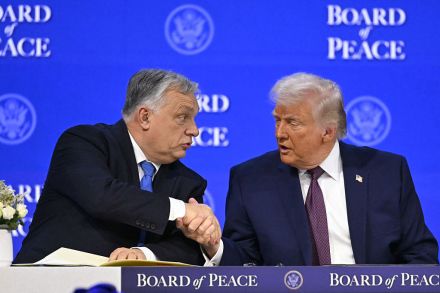
Trump Orban

Hungary has become a tired gerontocracy

Hungary in 2026 is what most developed countries were probably on their way to becoming in the 1980s and early Nineties, had mass migration not intervened: a sleazy gerontocracy with occasional bouts of moral-majority politics and ethnic nationalism. With socialism dead, the opposition is made up of liberal parties led by equally sleazy modernizers. Crime has ceased to be an issue, partly because the population is aging. The people, like pandas, do not breed. There is boredom and ennui. There is nothing analogous to, say, the killing of Iryna Zarutska. Hungary has had a dreadful century and is now a tired sort of place Such has been the work of Viktor Orbán, Hungary’s Prime Minister since 2010, who is to face the voters again on April 12.

How I lost 50lbs eating at McDonald’s

Eating regularly at McDonald’s over the past nine months, I have managed to lose 50lbs and ten inches off my waist, and I’m still counting. Yes, you read that correctly. Like many Americans, I have been trying to lose weight to no avail. I completely changed my diet, eating only vegetables, apples and microwavable, low-calorie, diet meals. And again, like many Americans, after months and years of discipline, restricting my portion sizes and eating like a rabbit, the scales wouldn’t budge. I had made so little progress that I had given up trying. Dieting is expensive and time-consuming and I didn’t realistically have the time or the money to do it, especially if I wasn’t seeing results. I work very odd hours and don’t have time to meal prep or cook. So I gave up trying.

The Europe of American imaginations no longer exists

Since the United Kingdom left the European Union five years ago, the pair have been in battle to prove who has performed better. But the real story of the past five years is not a stagnant UK falling behind a buoyant EU, but of Britain and Europe being trapped in the same cycle of relative decline. It’s America that has quietly raced ahead of Europe this century. Following the pandemic it has become impossible to ignore the gulf in economic vitality between the US and Europe, the former growing by 16.3 percent per capita since 2008. There are very good reasons for America’s success, or rather, Europe’s decline. The EU and the UK increasingly treat their industries as pieces of heritage which must be preserved against disruptors and foreign competition.

Europe

A ‘Trump tornado’ is about to hit Europe

There is a wind of change blowing through the West. It emanates from Washington DC, where President Donald Trump continues to dash off executive orders; more than fifty by the end of last week, the highest number in a president’s first 100 days in four decades. The liberal mainstream media is rattled. The New York Times magazine ran a piece at the weekend in which it described Trump as "the leading light of a spate of illiberal leaders and parties flourishing in democracies around the world." The paper namechecked some of them: Poland, Holland, India, France, Germany, Italy, Brazil, Hungary and Russia. What unites and motivates these "illiberal" parties is their opposition to what the NYT called "liberal creep," which they regard as a civilizational threat.

Trump

The end of the Orbán era

Over the headline “Peace Mission,” a recent cover from the conservative Hungarian periodical Mandiner shows an awkwardly photoshopped Viktor Orbán mediating between a bemused-looking Vladimir Putin and a grim Volodymyr Zelensky. Behind Orbán, a map of the world connects Kyiv, Moscow, Beijing, Washington and Budapest. One of these capitals, as they say, is not like the others. Even before Ukraine’s Kursk offensive, the chances of Orbán’s July trips to Kyiv and Moscow producing a peace settlement were slim. The Mandiner cover, however, is a revealing window into the mindset of Orbán’s conservative fans. The idea of a Hungarian prime minister mediating between squabbling great powers is both attractive and plausible to many of Orbán’s fervent supporters.

Orbán

Natural wine and tacos on the Hungarian Riviera

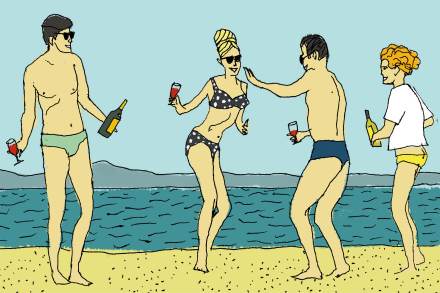
In the summer of 2020, as impatience with quarantine and the urge to get out of town gradually displaced fears of Covid, a joke circulated on Hungarian social media about Lake Balaton, a favorite destination for domestic holidaygoers. The post-quarantine stampede had driven up prices at the lake to such an extent, the joke went, that penny-pinching travelers should consider less expensive destinations, such as Monaco or the French Riviera. Until recently, Balaton had always been the inexpensive Hungarian alternative to pricier (and, during the Cold War, politically restricted) foreign getaways.

Balaton

The Regime is bad eastern European pastiche

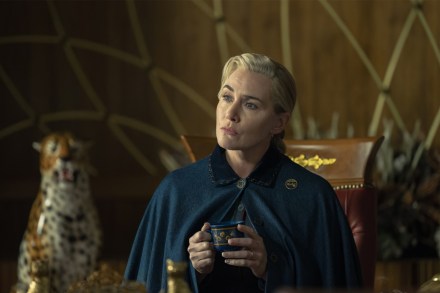
When you tire of trying to find the humor in The Regime, HBO’s new satire set in an unnamed “middle European” country, you can keep yourself occupied by trying to identify all of the historical references. The series was shot in Austria and the interiors have a dilapidated imperial feel, so perhaps we’re meant to think of one of the Visegrád countries — Czechia, Slovakia, Poland and Hungary — that inherited the heartlands of the Habsburg monarchy. The government, however, is led by a capricious and occasionally brutal authoritarian. Alexander Lukashenko of Belarus, often called Europe’s last dictator, immediately comes to mind. Chancellor Elena Vernham, played by Kate Winslet, is said to have studied medicine in Paris.

regime

Poland and Hungary learn different lessons from history

For decades, the European Union was dominated by a combination of French élan and German economic clout. By the late 2010s, a conservative Budapest-Warsaw alliance seemed poised to challenge this arrangement. The ideological firepower was supplied by Hungarian prime minister Viktor Orbán, who emerged as an unlikely spokesman for the international right, while Poland’s booming economy and large population lent the partnership some much needed heft. The Polish elections in mid-October not only marked the end of the Law and Justice party’s near-decade of conservative rule; they offered another blow to a Polish-Hungarian relationship already fraying over the war in Ukraine.

poland

What did the Habsburgs ever do for us?

Do you have a favorite Habsburg? Mine is Maximilian I, the first and last ruler of the Second Mexican Empire. Americans may be vaguely aware of him because a defeat of his French allies is commemorated annually on Cinco de Mayo. His struggles echo the experience of many unlucky rulers supported by fickle foreign patrons: Abandoned by the French and besieged by belligerent locals, the ill-fated emperor stubbornly refused to abandon a throne he hadn’t much wanted in the first place. His last words to the firing squad were, “Aim well, muchachos.

habsburgs

Why South Africa is cozying up to Russia and China

Vladimir Putin’s invasion of Ukraine opened the most dramatic divide between East and West since the Cold War. Most of these divisions were clear beforehand — Hungary and Turkey were longtime thorns in the side of NATO, for example. Yet South Africa’s warming ties with Russia and China seemed to come out of nowhere. South Africa's initial reaction to the invasion was the same as much of the Western world, demanding that Russia leave Ukraine. That did not last, however. South African President Cyril Ramaphosa said on March 17 that “The war could have been avoided if NATO had heeded the warnings from amongst its own leaders and officials over the years that its eastward expansion would lead to greater, not less, instability in the region.

Dear God, not this national divorce thing again

Marjorie Taylor Greene wants Americans to get a national divorce, and the only question is who gets custody of Puerto Rico. Actually there are other questions, such as: why the hell are we talking about this again? And: why is a member of the United States House of Representatives advocating breaking up the United States? And: which third party gets to be the divorce lawyer? Because there is no way Canada is telling me how much alimony I have to pay. For those of you leading normal and productive lives, this latest brain-plague began on Twitter when Congresswoman Greene declared, "We need a national divorce. We need to separate by red states and blue states and shrink the federal government," adding, "Everyone I talk to says this.

national divorce

Why Sweden and Finland still haven’t joined NATO

Sweden and Finland officially applied to join NATO last May, overturning their long-standing policies of neutrality. If their membership goes through, it will be one of the most consequential accessions in NATO history, bringing two technologically advanced militaries right on Russia’s doorstep into the fold. But as the eight-month mark approaches, neither nation has received the unanimous support from the other members that it needs. To date, twenty-eight members of the alliance have approved the Scandinavian nations’ memberships, with Hungary and Turkey as the two holdouts. Hungary has indicated it will vote to accept the accession in early 2023, which will leave NATO’s most undemocratic and troublesome member, Turkey, as the last hurdle.

What I saw at the Restoring a Nation conference

Take a drive through Steubenville, Ohio, Patrick Deneen urged the crowd at the recent Restoring a Nation conference. In downtown Steubenville, he assured us, the “blessings of liberty” are on full display. I didn’t bother making the trip. I know what those blessings are. We have the same ones where I grew up, in Beaver Falls, Pennsylvania, less than an hour away: a population that’s dropped 50 percent since 1940, record fentanyl overdoses, crippling brain drain, hulking husks of abandoned steel mills, empty storefronts on main street, the steady decay of once-beautiful public spaces and everywhere the poisonous fallout of family breakdown. The people I grew up with are dying — and the best the libertarians can offer them is a U-Haul.

Giorgia Meloni and the reactionary axis that wasn’t

One is a blonde, photogenic woman who grew out of a youthful infatuation with Benito Mussolini to become the first female prime minister of Italy. The other is anything but photogenic, a grizzled veteran of more than three decades of political combat, who began his career as a student activist and became a respectable center-right statesman, only to reinvent himself as a populist firebrand. But if you were to judge Giorgia Meloni and Hungarian Prime Minister Viktor Orbán by the frequency with which they appear together in media coverage, usually with adjectives like “far-right” and “extreme” attached, you might assume that the two conservative heads-of-state are basically indistinguishable. The European Union and its assorted sympathizers certainly seem to think so.

giorgia meloni

Conservatives need to forget about Hungary

In his novel The Prime Minister, the fifth in the Palliser series, Anthony Trollope has Plantagenet Palliser, the Duke of Omnium, enunciate his political credo. The Duke explains to Phineas Finn, who recently defended him in the House of Commons from the charge that he tried to purchase a seat for one of his supporters, that the belief that “political virtue is all on one side is both mischievous and absurd. We allow ourselves to talk in that way because indignation, scorn, and sometimes, I fear, vituperation, are the fuel with which the necessary heat of debate is maintained.” Finn responds, “There are some men who are very fond of poking the fire.” Just so.

hungary

How many refugees can Eastern Europe take?

Hundreds of thousands of Ukrainian refugees have already streamed into Slovakia, Hungary and the Czech Republic. Head north to Poland, and the numbers go from the unprecedented to the jaw-dropping: two and a half million refugees have entered the country with a total population of 38 million since the war in Ukraine began. In the Czech Republic, where I live, official estimates put the current number of refugees at over 300,000, a figure expected to rise to between 500,000 and 600,000 in the coming months. In a country of less than eleven million, that’s five percent of the population. In Poland, a proportion closer to ten percent is possible. At the moment, most of the Czech Republic’s refugees are concentrated in Prague.

Hungary’s Orbán remains a thorn in everyone’s side

Viktor Orbán has just won another election. The Hungarian prime minister has secured a hefty majority in his country’s legislative elections, and in his victory speech, Orbán revealed once again that he is a thorn: in the side of Europe most obviously but, if need be, in the side of all. I’ll leave for others the discussion of Hungarian democracy — whether Orbán has so manipulated national life that his continued electoral successes are unimpressive, even fraudulent. But Orbán, in his own mind, thought an “overwhelming force” ranged against him. “We never had so many opponents,” Orbán said.

Where Europe ends and the war begins

On a nondescript bridge in the northeastern Hungarian town of Záhony, the European Union ends and the war begins. Even amid the turmoil in Ukraine, the local border crossing is strangely quiescent. The flood of cars from the early days of the war has slowed to a trickle, and big eighteen-wheelers continue to cross over from Hungary into Ukraine. There are only two signs that something is amiss: a small notice on the door of the nearby Penny Market asking customers to help Ukrainian refugees, and a massive billboard of Hungarian prime minister Viktor Orbán’s stern face, promising voters that he will keep Hungary safe and peaceful.

viktor orban eu hungary

America’s long history of sitting out Russian invasions

By now, my colleagues in the media may have convinced you that Russia’s invasion of Ukraine has been a “transformative” event, a challenge by a reactionary dictator to the “liberal international order,” if not an end to one historical epoch and the beginning of a new one. The world has turned upside down, nothing will again be the same, blah, blah, blah. When millennials make such apocalyptic observations, I can understand. Like Founding Father Thomas Paine, they assume that each day marks the “birthday of a new world.” But what about baby boomers like New York Times columnist Tom Friedman, who were in high school in 1956 during the so-called Hungarian Revolution, which was very much like what is happening in Ukraine today?