

British history is littered with elections and Elections. The first type, common or garden elections, are fought with prosaic issues at their core. Readers might remember the 2001 general election, which saw such pressing topics as the fate of Kidderminster hospital pushed to the fore. The 1865 general election was also considered uneventful by contemporaries. Even contests nominally involving major changes can be just ‘elections’. The tedium of 2024, featuring cynical electoral bribery, with the result a foregone conclusion and the stated policy platforms of the two main parties largely similar, is a prime example.
What, then, are the other type: the Elections? These are existential ones in which visions for the country are put to the test, where the electorate are asked to think and vote on what they believe rather than who can bribe them most effectively. Unsurprisingly, many have had religion at their heart. The first modern general election was one such, when the Tories surged to a landslide in 1710 with the rallying cry of ‘The Church in Danger’. The Liberal landslide of 1906 was helped by a canny manipulation of nonconformist votes in Wales. While explicitly religious Elections have been rarer postwar, both Attlee and Thatcher deployed the vocabulary, syntax and grammar of religion in the wake of their victories, as if electoral mandate and divine vocation were one and the same.

Tony Blair’s victory in 1997 was infamous as the start of ‘not doing God’. Yet as the political world Blair shaped is swept into the dustbin of history, two things are increasingly clear: our next national poll will be an existential Election, and religion will play a bigger role than it has for years. Britain’s politics is back ‘doing God’ again.
The Labour party is a case in point. Perhaps the most telling divide among its MPs is between those who understand religion and those who don’t. Ministers like Shabana Mahmood and Wes Streeting are open about faith as a motivation for their political engagement. Two of the most effective backbenchers, who have forced numerous U-turns, are Rachael Maskell and Florence Eshalomi, both devout Christians (Maskell a Charismatic and Eshalomi a Catholic). More cynically, Angela Rayner has kept quiet about her own beliefs but has tried to show herself to be attuned to faith, from a big diplomatic visit to the late Pope Francis early on in her tenure as deputy prime minister to her controversial efforts to force through a definition of Islamophobia.
It is true that Labour is still currently controlled by a secularist residue – the Falconers and Starmers of this world – who think religion is just like being a football supporter or a non-executive director of a company. Most Labour MPs, especially in the bug tank of its backbenchers, fall into this category. They talk generically of ‘communities’ and view all religions as essentially the same. They find it impossible to understand that faith might be a valid motivation for public service, even among their colleagues, while uncritically believing that their own sub-LinkedIn guff about diversity and strength ought to be treated as if it were carved on tablets of stone at Sinai. The Prime Minister still essentially believes in the Blair-era playbook where ‘rational’ law-based principles are all and religion is a thing to be, at best, just a bit apologetic about, like having athlete’s foot or being into steam trains (unless, of course, there are sectarian votes to be won).
The religious vote played a major role in the Greens’ by-election victory in Gorton and Denton
Meanwhile parties on the right are engaging once more with faith – whether it is the quiet work being done behind the scenes by Danny Kruger and James Orr to present Reform UK as a Christian party; the Tories going into battle for Nick Timothy about public prayer; or the scrabble on the fringes by very online young men eager for policies that make Tomas de Torquemada look like a Lib Dem councillor.
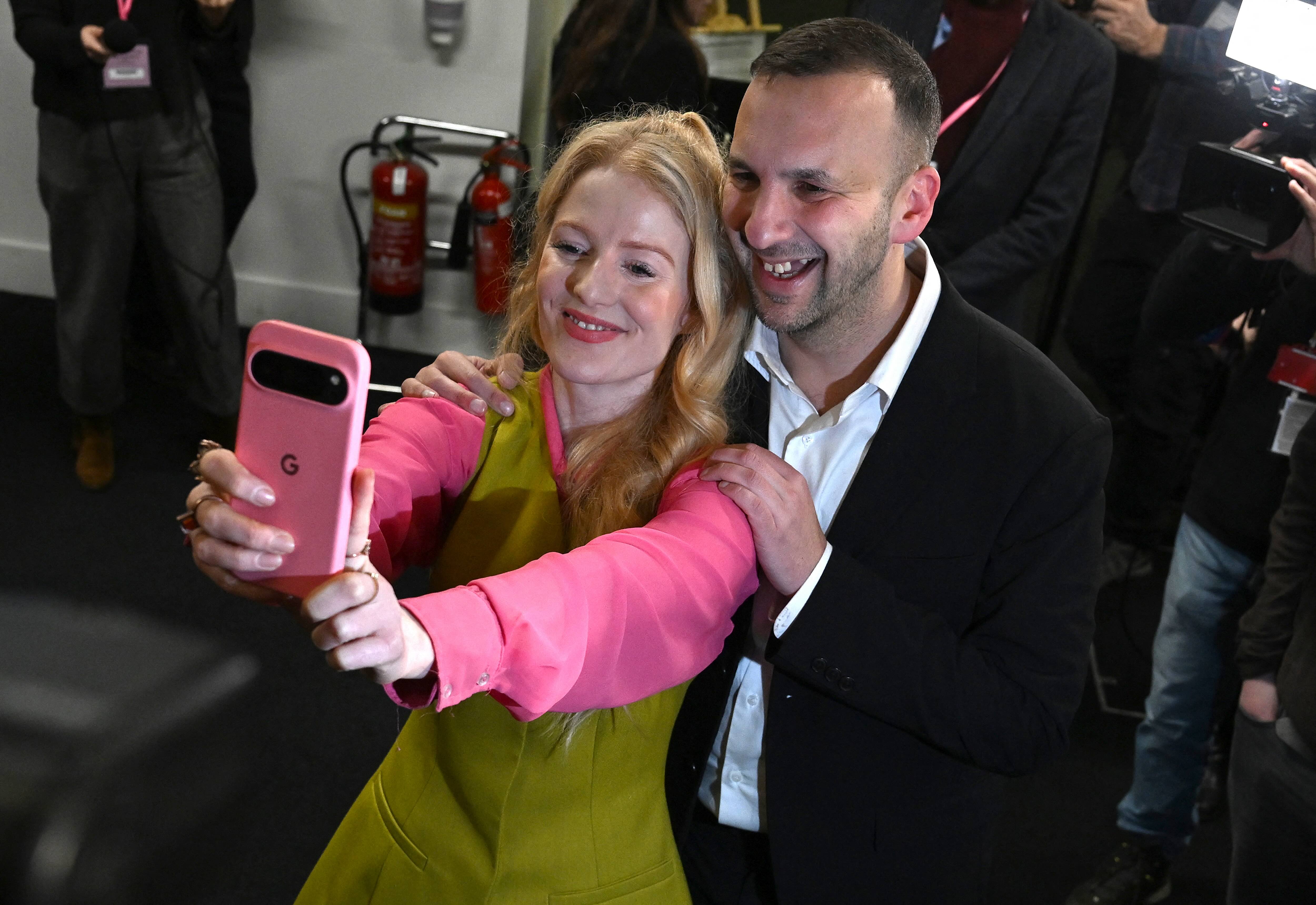
Talking of fringes, the Green party has made religious policy a key part of its electoral offering, with a rather retro vow to disestablish the Church of England. The last national party leader to talk seriously about Church-state affairs in this vein was David Lloyd George. Unofficially, the mobilisation of a religious vote played a major role in the Greens’ totemic by-election victory in Gorton and Denton, with canvassing and adverts tailored towards the very specific concerns of Islamic voters. More worryingly, the old canards of anti-Semitic blood libel, first emergent in English religion just after the Norman Conquest, have cropped up in Green activist WhatsApp groups. Despite their policy platforms, in fact, the Greens probably prove more than any other party that completely secularised politics isn’t really possible at all.
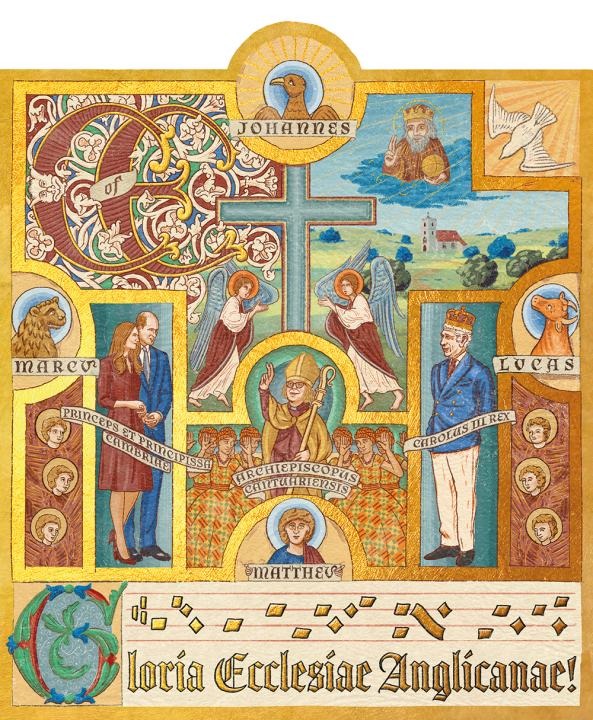
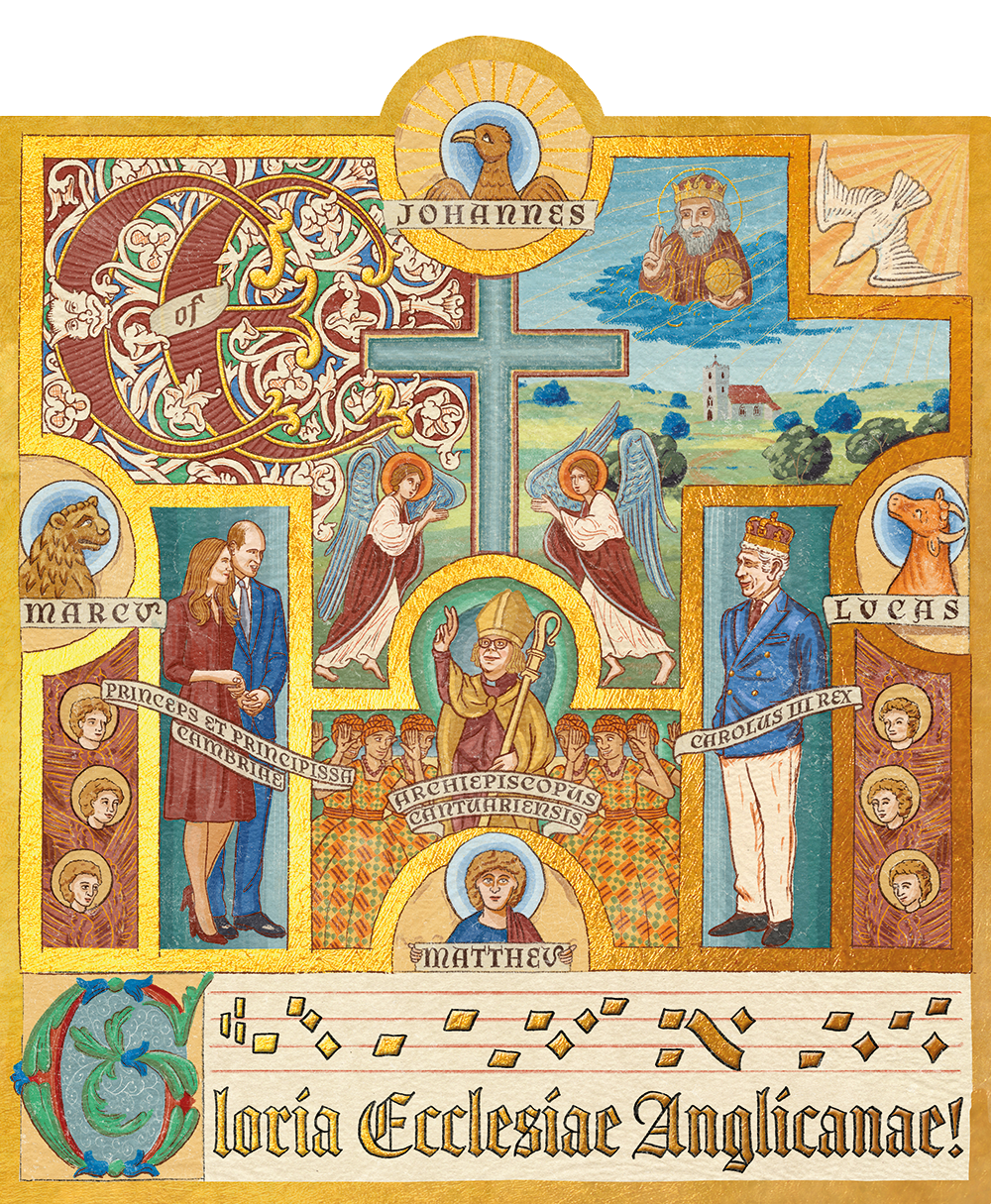
As a capital-E type, the next Election might feature at its centre issues such as the role of public prayer, assisted suicide, blasphemy legislation and the constitutional role of Church and state. Indeed, in existential terms, it may be closer to the election of 1710 than that of 2010. UK politics is finally – for better and worse – realising that religion is here to stay. The Crown has noticed this, too. Despite conspiracist slander from the online right, the King’s faith, though higher and more eccentric than his mother’s low and dry religion, is strong and unfeigned, and his prayers with Pope Leo last year were quietly monumental. More tellingly, the Prince of Wales has made public that he has no plans to rock the boat of Church-state relations. ‘Of course’ he believes in God, came a statement from Kensington Palace. Ten years ago, that ‘of course’ would not have been so obvious.
There has since been another election – for a new Archbishop of Canterbury. As faith becomes more prominent in the political sphere, Sarah Mullally has the opportunity to reverse the Church’s dual policies of being tediously predictable and one-sided in political statements, and seemingly rueful about its own existence. Mullally is not obviously a Cranmer, Laud or Lang, but she is crucially not a Welby either. A fresh start might be just what the national Church needs.
Many people are bored of hearing only predictable, left-coded talking points from senior Church figures
In practice, this would mean more financial support for parishes and necessarily reforming the Church Commissioners’ role to free up money currently held by bureaucrats. It would involve scrapping Project Spire – the Church’s deeply detested plan to give away £100 million of church money for programmes dubiously deemed ‘reparations’ for slavery. Such a vast sum of money would make a huge difference to every parish in the country if it were redistributed to them. Project Spire typifies both Welbyism and the influence of activists who hate the institution. Reversing it would show that the Church’s upper echelons respect the people in the pews, who mostly despise the idea. Deeply unpopular, based on questionable history and law, and intimately associated with her widely disliked predecessor, the whole project should be a no-brainer for the new Archbishop to draw a line under. Naturally, she almost certainly won’t.
Addressing the lack of political diversity on the bishops’ bench will also be vital. Many people are bored of hearing only predictable, easy, left-coded talking points from senior Church figures on complex issues like migration and climate change. Apart from anything else, the Church hasn’t actually earned anything from its leftist turn; as the Greens’ calls for disestablishment prove, radicals still want to tear it down. Needless to say, bishops should be able to think and express themselves freely, but the utter unanimity of view in their pronouncements is itself a problem. This is arguably a recent scourge, dating back to Gordon Brown’s decision to surrender the prerogative right to appoint bishops and senior clergy, making appointments an internal C of E matter. Inevitably, this led to yes-men and apparatchiks being rewarded, rather than effective communicators, faithful teachers and genuine pastors. Any future right-wing government should reverse that at once.
During the mid-20th century, public discourse was elevated by genuine disagreements among the bishops. The Christian-Socialist William Temple was succeeded as Archbishop of Canterbury by the arch-Tory, A-bomb enthusiast Geoffrey Fisher. The flamboyant hard-leftist Mervyn Stockwood served as Bishop of Southwark while just across the Thames lived the staid reactionary Bishop of London, Henry Montgomery Campbell. Upon Stockwood’s appointment, Montgomery Campbell greeted the news by saying that he hoped to have the river widened. Bishops then were not only more principled but cleverer and funnier too.
Like so many institutions, the Church of England has prioritised all forms of diversity except diversity of thought, leading to a convergence of opinion that is not only alienating but leads to myopic decision-making. We do not need a militaristic or persecuting Church but our new political world could benefit from one that at least seems to like itself and believe in what it can do well – namely underpinning the macro and micro aspects of British life and seeking to live out the teachings of Christ, on which, after all, almost everything that anybody values about life in Britain, is based.


Comments