
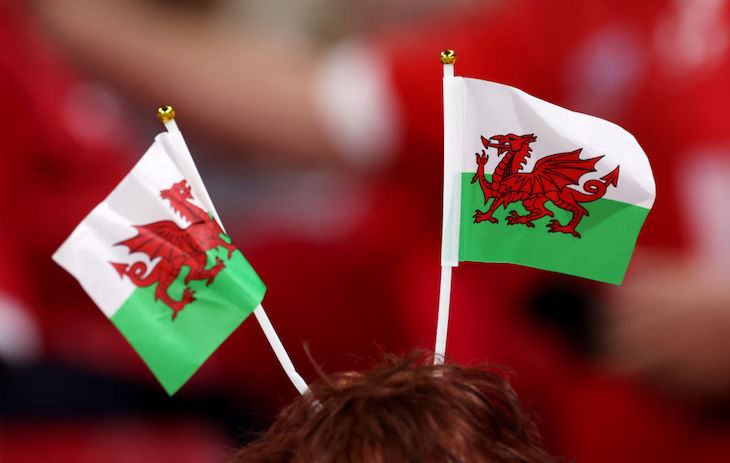
Being a mildly Celtophobic Tory from Metro-Land, I’m an unlikely Welsh nationalist. Aside from once sharing a Christmas dinner with Cerys Matthews, I’ve few ties to the Principality. Nonetheless, last week I found myself at the conference of Plaid Cymru – the Party of Wales.
If Wales did become independent, it would be a tragic loss, born from neglect
My interest was piqued by last October’s Caerphilly Senedd by-election. Despite the confident assertions of Reform outriders that Nigel’s boy would walk it, Plaid won handily. Naturally, the London press rushed to interview the losing candidate, ignore the victor and forget the whole affair. Which is perhaps why they were surprised yet again when the Gorton and Denton by-election showed a similar coalescence of left-wing voters around a single anti-Reform party.
Like the Greens, Plaid are competing with Reform to displace Labour in what used to be its heartland. Polls have Plaid and Reform neck-and-neck ahead of May’s Senedd election; a victory for either would be a seismic moment for Wales, ending 27 years of devolved Labour rule and a century of hegemony. But with more potential partners in government, Rhun ap Iorwerth – Plaid’s leader – looks the likely next first minister.
When I arrived in the Newport conference centre, I wasn’t sure what to expect. As Rory Sutherland suggested last issue, The Spectator has poor form on Cymru. The stereotypes of Welsh nationalists I held were unflattering: Gandalf-look-alikes muttering about Owain Glyndwr and tap water, or young women with pink hair and too many vowels blowing up caravans. What I did not foresee were several hundred cheerleaders.
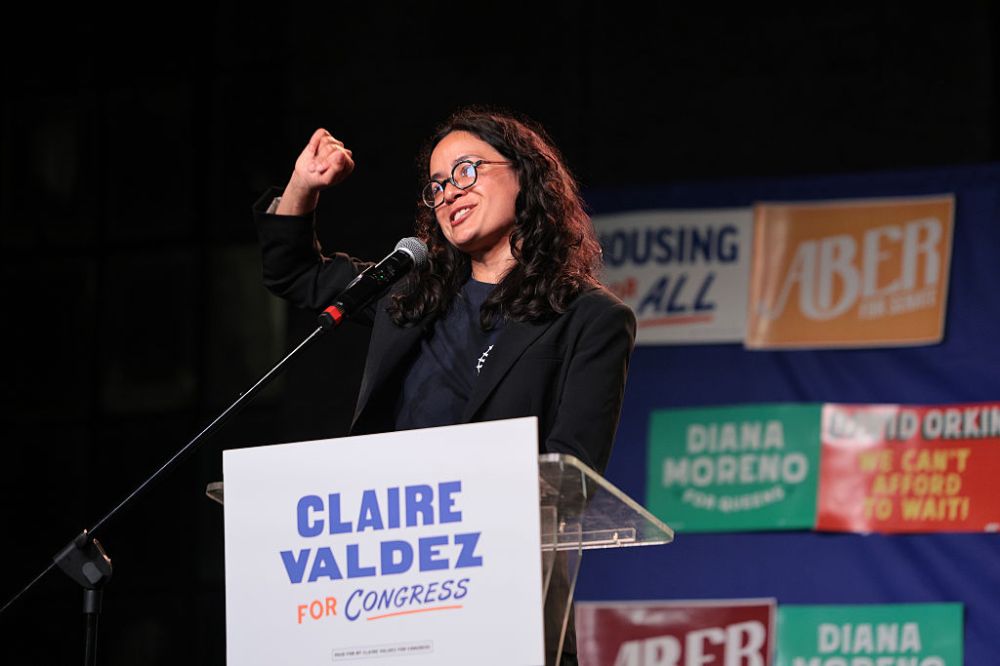
‘Don’t worry’, a member told me, ‘We’re not that confident’. The ICC Wales had been double-booked with a cheerleading tournament, so the Plaid faithful were battling for space with legions of besequinned pre-teens. Half the speeches were in Welsh, with intermittent Rihanna blaring in the background. But it was apparent to me that my preconceptions were out of whack. Carry on Cymru, this was not.
Your average Plaid member is disconcertingly – almost disappointingly – normal. The conference looked more like a charities’ fair than a druidic ceremony. I looked from the earnest men and women manning the stalls for Marie Curie Cymru and Carers Wales and the equally earnest party members passing by, and it was hard to tell which was which. Among older members, a few sported evacuee jumpers and elbow patches, with a diligent glint that suggested signalling a lifetime lecturing about Dafydd ap Gwilym. But the overwhelming feeling was of youthful optimism.
This was Plaid’s biggest ever conference. One veteran spoke wistfully of former assemblies held in leisure centres and townhalls, with only a few dozen of the faithful. I assumed they were talking about the seventies or eighties; I was floored to learn they meant 2021. Plaid has grown very rapidly. Covid woke up many Welsh voters to the reality of devolution; Keir Starmer schooled more on the folly of voting Labour.
According to the pollsters More in Common, as Plaid’s support has grown, the nature of its base has changed significantly, with disillusioned Labour voters pushing the party in a more progressive direction. Four out of five Welsh voters believe it’s time for a change; after just 18 months of Starmer, Labour’s support has halved. More than a third of current Plaid supporters voted Labour in 2024. Unsurprisingly, Plaid lead with those voters who want an independent Wales, and Reform lead with those who want the Senedd abolished.
A majority of the Welsh still oppose independence. But support for it has tripled in a decade, and some polls suggest a plurality of young voters back it. This reflects changes in Wales itself. Devolution was never a popular prospect. In the 1979 referendum it was rejected, squeaking home in 1997 by only 6,721 votes. But it is has become a fact of life; under-30s know nothing else. Young voters are also more likely to speak Welsh due to an expansion of Welsh education. Over 50 per cent of Welsh speakers are under 33. They are naturally more assertive about their nation’s identity and interests; England’s merits seem unclear.
Plaid has also changed. The party was formed in 1925 – nine years before the SNP – but wouldn’t win its first MP until 1966. Unlike the SNP, since devolution, Plaid’s best result has been serving as Labour’s junior partner for a term, unable to break out of its perceived position as a sectional party for Welsh speakers. But as the language has spread, this has faded. Iorwerth – an ex-TV journalist – has proved a charismatic leader, a unifying contrast to a Welsh Labour cycling through first ministers and ignored by Westminster over policy.
To govern alone would be a remarkable moment. But that’s not to say that Plaid are the finished product. Like Starmer before the 2024 election, Iorwerth’s message is heavy on the importance of change, less on the specifics of what Plaid could do differently – especially when little extra funding is expected. He launched a plan for the party’s first 100 days in office, which was heavy on proposed reviews, consultations and stakeholder engagement, but with little evidence for how waiting lists would be coming down come August.
But Plaid are conscious of the need to deliver meaningful change to voters’ lives quickly. In Iorwerth’s speech, he argued the ‘complacent thing’ would be ‘to commit all our energy just to winning’ – ‘see Trump, see Cummings, see Starmer and McSweeney’ – ‘rather than giving careful thought to what follows’. While that’s a tad unfair to the Donald and Dom, Plaid fear repeating Labour’s failure to prove different and swiftly become unpopular.
One called winning a ‘base camp’, from which the real trudge would begin. The contrast with Reform was played up, with a Senedd member warning darkly of ‘right-wing dictatorship’. That’s a bit much – Reform’s new Welsh leader is an ex-Tory and former leader of Barnet council – but shows just how existential this election seems.
As an Anglo-Saxon interloper, I was warmly accepted. ‘I love England’, one Senedd member told me, ‘It’s my second favourite country’. Time and again, I was told what members wanted was not independence, but parity. A Free Wales will always be the dream, but perpetual Labour rule has left the country timid and neglected. Unlike their Scottish confreres, the Welsh don’t like making a fuss. But what has their quiescence got them?
Despite receiving higher funding per head than England, the Welsh NHS has consistently under-performed it, with worse waiting times for A&E, ambulances and elective care. The OECD suggests that Welsh educational outcomes are the UK’s worst; the absence of a Cambrian Michael Gove means schools remain under local authority control. Life expectancy is lower than in England; obesity and chronic health conditions higher; GDP per capita only three-quarters as high. Looking at those figures, who wouldn’t be a nationalist?
Plaid may be a small party for a small country, but SW1 has been small-minded in ignoring it for so long. Commentators can sneer, mutter about the Barnett formula and joke about the Welsh for voting for Labour like sheep. These are three million people that have been failed, ignored or joked about. Mea culpa…
Every unionist should be ashamed that a part of the United Kingdom has fallen so far behind. If Wales did become independent, it would be a tragic loss, born from neglect. I won’t swap my support from Surrey to Glamorgan. There is so much that I disagree with Plaid on, from their hearty enthusiasm for immigration to gender self-ID. But I admire their sincerity and enthusiasm. I returned to London having fallen a little bit in love.



Comments