Recently, Timothée Chalamet gave the world a refreshing show of ambition when, after winning a SAG award, he said that “the truth is I’m really in pursuit of greatness. I know people don’t usually talk like that, but I want to be one of the greats.” Ambition perhaps turned into arrogance when, during an interview for his new film, Marty Supreme, Chalamet noted that during the last few years, he’s been handing in “top-of-the-line performances… I don’t want people to take it for granted. This is really some top-level shit.”
Marty and Chalamet both resemble one of the most hated and beloved 21st-century figures: Donald Trump
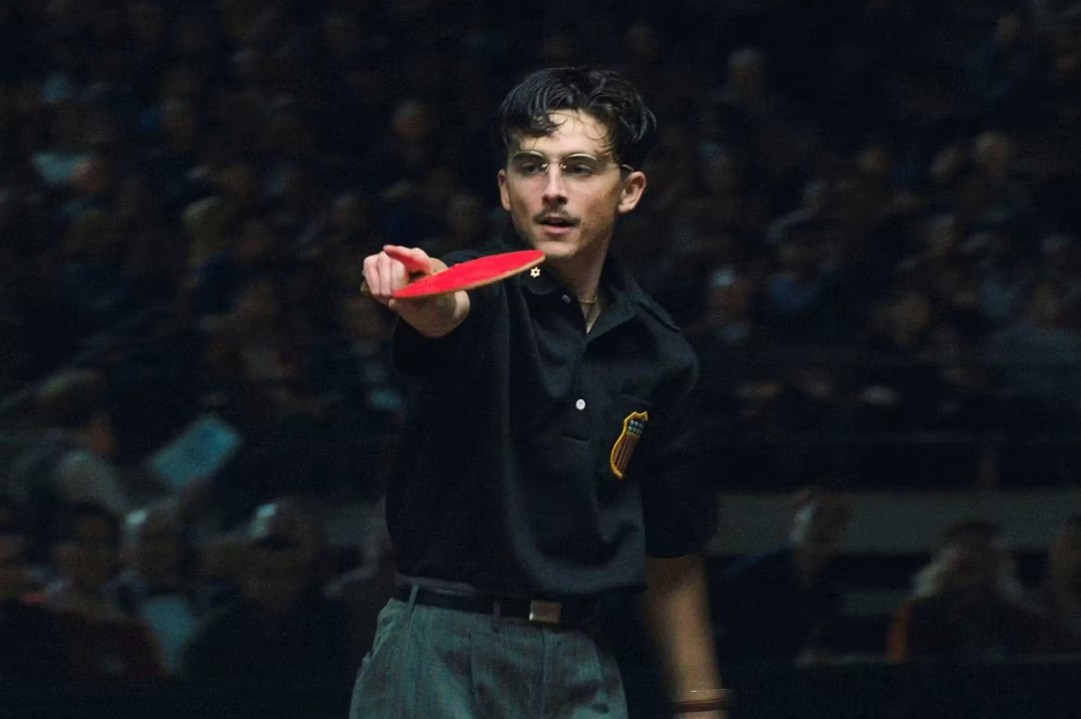
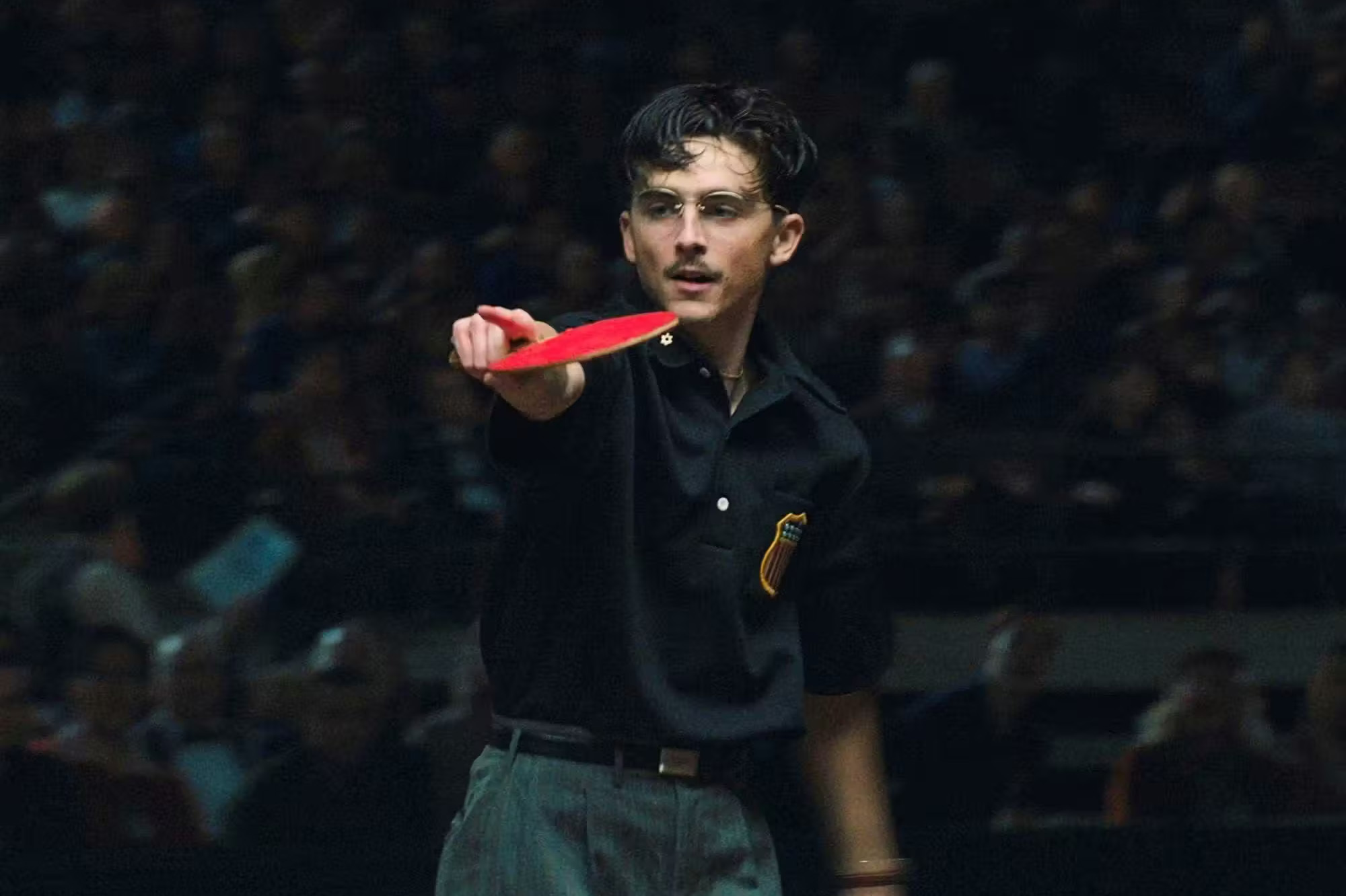
The film (which has received nine Oscar nominations, including Best Actor, Best Director and Best Picture) follows Marty Mauser, a Jewish table-tennis player living in New York in the 1950s, who dreams of greatness in the sport. With self-confidence and force of will that appears self-destructive at times, Marty hustles his way through several physical, financial and personal obstacles. He is convinced he has been endowed with a great purpose – to become the world’s best ping-ponger – and will stop at nothing to achieve it, even if that brings about massive collateral damage as well as temporary personal humiliation.
Chalamet has been a divisive figure since his rise to fame with 2017’s Call Me by Your Name. But few doubt his acting talent. Some believe that talent has gone to his head, just as Marty’s does. Telling the world not to take your thespian contributions for granted probably doesn’t qualify as humility.
Marketing stunt or not, Chalamet embodies the grandiosity of Marty Supreme’s protagonist. During the film’s press cycle, the actor released a song with British rapper EsDeeKid, in which he pompously extols his own success. “My life is an opera. Look at the Oscars. Look at the groupies. Look at the movies. Look at the ‘triple A’ girl goin’ ‘Choose me.’”

A24, the film’s distribution company, released a video of a mock meeting in which Chalamet proposes absurd promotional ideas to the film’s marketing team – painting the Statue of Liberty the color of his signature orange ping-pong ball to “highlight the spirit of international cooperation” – all to nods of approval. Where does Timmy end and Marty begin? It’s difficult to say. Marty, like Chalamet, is not shy about his ambitions. The character reveals his objectives to anyone who will listen and is convinced of his future as one of the greats. Marty has an affair with actress Kay Stone (Gwyneth Paltrow); Chalamet, who used to date actress Lily-Rose Depp and has been with Kylie Jenner for the past three years, shows a similar penchant for famous women.
The film frequently plays with the line between reality and make-believe. Director Josh Safdie seems insistent on it, going so far as to cast real-life mogul Kevin O’Leary in the role of ruthless businessman Milton Rockwell. In many ways, Marty and Chalamet both resemble one of the most hated and beloved figures of the 21st century: President Donald Trump. Here’s a man who is unabashed about his pursuit of historical greatness and moves through the world with self-assurance and bravado and incredibly little regard to what might be around him. He is the embodiment of Facebook’s original motto, “Move fast and break things.”
Is it any wonder that, in a world that seems dead and stultified, many young men have found a hero in the bulldozer that is Trump? Chalamet is typically grouped in among Gen Z actors (though he’s really a tail-end millennial). Like so many zoomers, he seems to believe he was born into a dying world. He’s fed up with a mediocre status quo and insists upon doing whatever it takes to lift the world – or at least himself – out of this decline. This might look to many like naked ambition.
Personally, I cannot help but be charmed by the sincerity of his ambitions. This may be in part because he seems intent on making everyone around him greater as well. In a recent podcast, Ross Douthat described Chalamet as a man “fighting a one-man war against Hollywood decadence.”

In an era in which the greatness of film is under threat from the formulaic prescriptions of streaming platforms such as Netflix, Chalamet seems to stand athwart the tides of enshittification and false humility by expecting himself, and the medium as a whole, to rise above. In the end, Marty’s megalomania is justified. He proves himself the best table-tennis player in the world, albeit in an unexpected way. His arrogance suddenly becomes charming.
Thomas Hobbes distinguishes between glory and vainglory: the former is merited by one’s actual abilities while the latter is not. Marty’s confidence is glorious. What about Chalamet’s? Trump’s? Time will tell whether their “arrogance” was not, in fact, arrogance, but confidence in the truth.




Comments