Cinema

How the office has come to haunt us

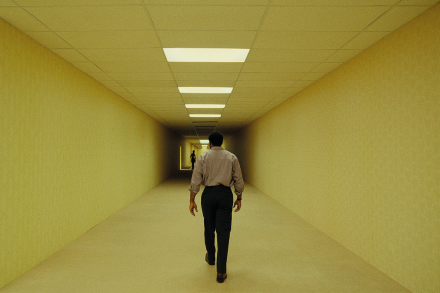
Should we hop on a call? Let’s touch base. Let’s take this offline. Let’s circle back to your last slide deck. Let’s get those action items actioned by close of play. We need stakeholder buy-in. We need deliverables. We need to make sure you’re aligned with company culture. We’re concerned you’re not leveraging your core competencies. After careful consideration, management has made the difficult decision to terminate your contract. We’re committed to helping you with this transition. Corporate jargon is zombified language. These euphemisms and elisions are the soulless husks of words, meant to blunt the sharp edges of human emotion (sorry – ‘maintain professionalism’). And they often leave you feeling a sneaking sense of dread.

Riveting: Kokuho reviewed

A three-hour Japanese epic about a classical performance art (kabuki) isn’t the easiest sell, I’ll grant you, but I’ll give it my best. Kokuho is multi-award winning. It is the highest grossing live-action film in Japan ever. It is sumptuously filmed. It is masterfully sweeping. The kabuki itself is stunning, so much so that you may one day wish to visit the kabuki theatre in Tokyo, although be warned: the shortest production is four hours. Some last all day. Looked at this way, you are getting off lightly here. I felt entirely immersed in a world I had known little about Directed by Lee Sang-il, and adapted from Shuichi Yoshida’s two-part novel, the film is a drama spanning 50 years.

How the movies improve your mental health

If you subscribe to The Spectator, there’s a fair chance you are a committed reader. Of books, I mean. Books are your friends, they don’t frighten you. Even long books. But here’s a behavioral oddity that I’ve noticed in others, and in myself. We tend not to read many books twice, but we do often watch movies twice, even more than twice. Of course, length may have a lot to do with it; movies are rarely more than two hours long; books can often take days to finish. But is there something more to it, something deeper? Down here on the beaches in Florida we now recognize something the psychologists are calling “cinematherapy.

Fascinating: EPiC – Elvis Presley in Concert reviewed

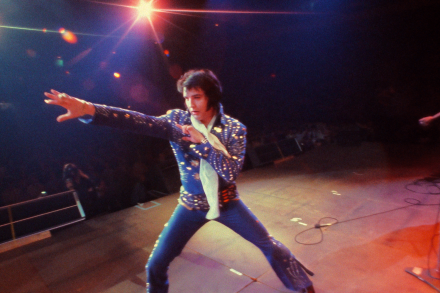
EPiC: Elvis Presley In Concert is a concert documentary that grew out of the 65 boxes of unseen Las Vegas performances discovered by Baz Luhrmann while researching his 2022 biopic Elvis. As I have little interest in "the King" I approached with a heavy heart. But now? I’m abundantly interested. In fact, I’ve shifted from indifference to thinking that if I could see one musical artist live at their peak it would have to be him. He’s that electrifying. A warning, however: it’s a 12A. "Elvis picks up a bra thrown on to the stage during a concert performance and puts it on his head," notes the BBFC. I wish I’d had the chance to throw a bra that he’d put on his head. Hopefully, it would have been one of my nicer ones that day. They are of varying quality.

elvis

Ann Lee deserves better than her biopic

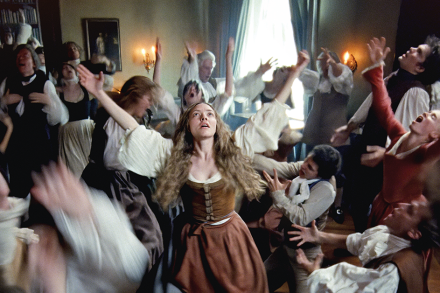
Ann Lee was a sharp-tongued woman from the back streets of 18th-­century Manchester who joined a maverick Protestant sect that became known as the Shakers, or “Shaking Quakers.” In fact their shaking was the least of it: they howled, gurned and gibbered while flirting with the notion that God would return to Earth in the form of a woman. All sexual activity, even between man and wife, was forbidden. Ann then had a series of visions that, according to subsequent Shaker accounts, identified her as the “woman clothed with the sun” whose appearance in the Book of Revelation heralds the end of the world. In 1774, “Mother Ann” and a small band of faithful emigrated to America.

ann lee shakers

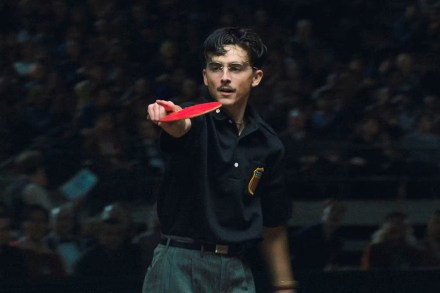
Marty Supreme mirrors Timothée Chalamet’s desire

Recently, Timothée Chalamet gave the world a refreshing show of ambition when, after winning a SAG award, he said that “the truth is I’m really in pursuit of greatness. I know people don’t usually talk like that, but I want to be one of the greats.” Ambition perhaps turned into arrogance when, during an interview for his new film, Marty Supreme, Chalamet noted that during the last few years, he’s been handing in “top-of-the-line performances... I don’t want people to take it for granted. This is really some top-level shit.

marty supreme

The cruelty of H is for Hawk

H is for Hawk is an adaptation of the bestselling memoir by Helen Macdonald who, following the sudden death of her beloved father, channels her grief through the training of a goshawk, Mabel. The film stars Claire Foy, who is superb, as is the nature photography, but is it right, keeping a wild animal captive, and depriving it of its natural behaviors because it helps you in some way? What’s in it for this gorgeous bird, I kept wondering. The cruelty is never addressed. This is solely about human need. We’re not even told who plays Mabel, so I can’t say what she has been in before or whether she has won any awards. (I would hope so; she is magnificent.

No, Jacob Elordi isn’t a ‘whitewashed’ Heathcliff

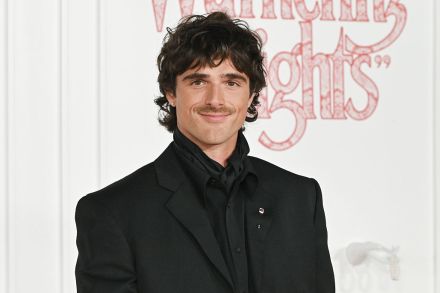
For those of us who associate Wuthering Heights either with high-school English classes or Kate Bush caterwauling over the moors while exhibiting some remarkable interpretive dance moves, the news that the new Emerald Fennell-directed film of what she calls “my favorite book in the world” has become the subject of a race-based controversy may come as a shock. Yet the latest interpretation of Emily Brontë’s classic novel, which is being released, appropriately, on Valentine’s Day, has already been met with contempt and derision by many before anyone even sees it.

jacob elordi

To see, or not to see Hamnet?

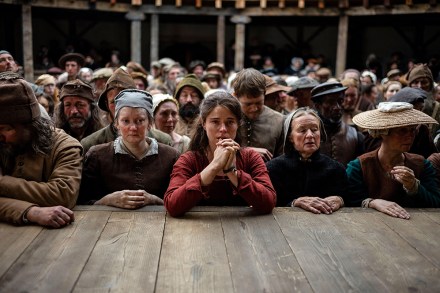
In 1966, the actor Raphael Montañez Ortiz staged his one-man show Self-Destruction at London’s Mercury Theatre. Intermittently screaming “Mommy! Daddy!,” Ortiz tore the clothes from his body, doused himself with baby powder, lay down in a diaper, downed a few bottles of milk and began vomiting profusely. Plastic bags were then distributed to members of the audience, who were encouraged to follow suit. Montañez Ortiz’s performance gave the psychologist Arthur Janov the idea to create primal scream therapy, a psychiatric fad that once counted John Lennon and Yoko Ono among its followers.

hamnet

The art of the transatlantic liner

From our UK edition

Some time in the next few weeks, a great ocean liner will be lost at sea. One of the greatest, in fact. When the SS United States made its maiden voyage in July 1952, it was the last word in transatlantic liner design. In an age of ocean-going elegance, the ‘Big U’ was the newest, the sleekest and the swiftest. To this day, it holds the Blue Riband – the all-time record for the fastest transatlantic crossing by a passenger ship. Now, after five decades rusting in dock, and a series of unsuccessful preservation attempts, the United States is about to make its final voyage. Stripped of masts, fittings and its massive red, white and blue funnels, it will be towed out and sunk as a diving reef off the Florida coast. It’s heartbreaking to admit that this might be for the best.

My Name is Orson Welles was illuminating

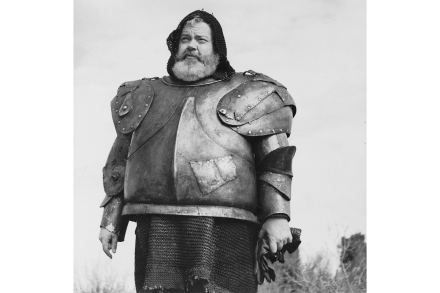
Orson Welles (1915-85) considered the notion of posterity vulgar, but he knew that he’d be loved once he was dead. That death came suddenly, just over 40 years ago, on October 10, 1985. There was a poignancy to the way death took him – sitting at his typewriter after appearing on Merv Griffin’s talk show. By then, the co-writer, director and star of the greatest film ever made, Citizen Kane (1941), hadn’t finished a film since 1973’s ignored but now quietly loved F for Fake. At the end of his life, he may have been better known as the guy in Paul Masson wine commercials than as a cinematic genius. To commemorate the 40th anniversary of his passing, Paris’s Cinémathèque Française last fall arranged the illuminating exhibition My Name is Orson Welles.

orson welles

Will the new Avatar be the last?

For someone who has directed two of the three highest-grossing films of all time – and if we include Titanic in the mix, three of the top five – James Cameron struck an unusually modest figure at this week’s premiere Avatar: Fire and Ash. When asked at the screening whether its inevitable box-office success would result in the planned fourth and fifth films being produced, the erstwhile King of the World responded “I’m not even thinking about four. Are you kidding me? I'm unemployed right now.” Admittedly, Cameron’s definition of “unemployed” is rather different to that of most people, whether they be A-list directors or the less fortunate.

The dying art of costume design

From our UK edition

At the receptionist’s desk in Cosprop’s studio and costume warehouse, a former Kwik Fit garage, the sloping bleakness of Holloway Road is held at bay by a small chandelier, brassy lighting and a bound guest book. It’s a bit stagey, like a filmset for a cheap foreign hotel or an expensive shrink’s office, quite out of place in the real north London high street. But as the entrance to a costume house that builds worlds and people out of bits of fabric, feathers and jewels, it’s appropriate. Suspend all disbelief, ye who enter here. Cosprop was founded by the costume designer John Bright in 1965.

Please let this be the end of Downton Abbey

The third and supposedly final Downton Abbey picture released in American cinemas this Friday. Ominously subtitled The Grand Finale – oh how I wish, given the residual camp elements within the show, that it had instead been called The Final Curtain! – it supposedly wraps up the story of the Grantham family, the privileged idlers who inhabit the eponymous grand house, and their unusually devoted and long-serving staff, all of whom converse with their superiors on easy and intimate terms that bear precisely no relation to how the English upper classes have ever spoken (or been spoken to) by their servants in history. Still, if you’re looking for historical accuracy from Julian Fellowes’ Downton, you are not going to find it.

Rattigan’s films are as important as his plays

From our UK edition

A campaign is under way to rename the West End’s Duchess Theatre after the playwright Terence Rattigan. Supported as it is by the likes of Judi Dench and Rattigan Society president David Suchet, there’s evidently a desire to right a historical wrong. Author of classics such as The Browning Version, The Winslow Boy and Separate Tables, Rattigan was known for his poise, melancholy and restraint, all of which put him at odds with the coterie of upstart writers of the 1950s – still amusingly known as the Angry Young Men. It’s an oft-repeated chapter of theatre history that arch-kitchen-sinkers such as John Osborne made the environment virtually impossible for Rattigan to work in. Rattigan joked about it at the 1956 opening of Look Back in Anger.

Ambition and delusion: The Director, by Daniel Kehlmann, reviewed

From our UK edition

As bombs rain down on Nazi-occupied Prague, Georg Wilhelm Pabst shoots a film – a romantic courtroom drama adapted from a pulp novel by a creepy Third Reich hack, Alfred Karrasch. Although the leading man finds it strange to make any movie ‘in the middle of the apocalypse’, his director insists that ‘art is always out of place’. In retrospect, Pabst assures the star, it will look like ‘the only thing that mattered’. The discoverer of Greta Garbo and Louise Brooks, and the director of The Joyless Street, Lulu, Westfront 1918 and other prewar masterpieces, Pabst really did attempt to film The Molander Case in Prague in 1944-45. The bizarre, chaotic shoot furnishes Daniel Kehlmann with the climactic scenes of this novel, inspired by the great director’s compromised career.

The genius of Gene Hackman

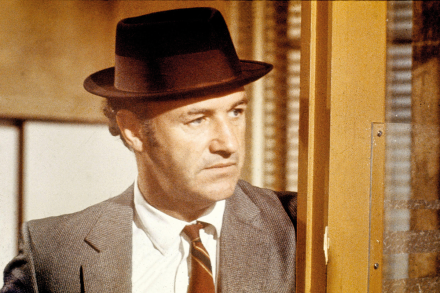
When the news of Gene Hackman’s death at the age of 95 was initially reported, ghoulishness quickly overtook sorrow. The unsolved-crime aspects of his death dominated the coverage. The actor, his wife Betsy Arakawa and one of their pet dogs were found dead in their New Mexico home in February. They were likely to have died as many as ten days beforehand. The police were swift to suggest that, while initially unfathomable, there were no signs of foul play. Still, this did not stop the usual conspiracy theories, including the indomitable Randy Quaid declaring that Hackman was murdered by the “Hollywood Star Whackers,” who also “got” Heath Ledger and David Carradine.

gene hackman

Cartoonish, sub-Armando Iannucci comic caper: Mickey 17 reviewed

From our UK edition

Mickey 17 is the latest film from the South Korean writer-director Bong Joon-ho, who won an Oscar for Parasite and made Snowpiercer and Okja. It’s a dystopian sci-fi satire starring Robert Pattinson twice over (all will be explained) but while it initially kicks some decent ideas around, it eventually descends into a cartoonish, sub-Armando Iannucci comic caper with, as far as I could ascertain, nothing fresh to say. It’s not the biggest disappointment I’ve had in my life but it’s up there. The film is set some time in the future and Pattinson plays Mickey 17, a crew member on a space-colonisation mission who, in the opening sequence, has fallen into a deep crevice on the ice planet that is Niflheim. (I’ve always had my reservations about Niflheim; ask anybody.

Spreads emotions like jam: Festen, at the Royal Opera House, reviewed

From our UK edition

Mark-Anthony Turnage’s new opera Festen opened at Covent Garden earlier this month, and reader, I messed up. I broke my own golden rule with new operas: don’t do any homework, don’t try to memorise the plot, and whatever you do, don’t revisit the source material. The aim is to experience the new work on its own terms. That’s hard enough, given the PR onslaught that precedes any Royal Opera première – the way the classical establishment circles the wagons, and the unspoken consensus that certain living composers (including Adès, Benjamin and Turnage, though not Judith Weir, curiously) are simply too big to fail. But no: I rewatched Thomas Vinterberg’s 1998 Dogme movie, twice, and it was the wrong decision. Inevitably, and unfairly, you cross-reference.