
It is remarkable how heavily the Russian army has relied on western technology during a war it claims to be fighting against the West. After Starlink terminals went offline on both sides of the Ukrainian frontline on Wednesday evening, Russian communications were sent into disarray. ‘The enemy at the front doesn’t have a problem; the enemy has a catastrophe,’ wrote Serhiy ‘Flash’ Beskrestnov, a Ukrainian defence adviser. ‘All troop command and control has broken down. In many areas, assault operations have been halted.’
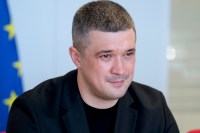
The block was thanks to Ukraine’s newly-appointed defence minister Mykhailo Fedorov. After just a few days in office, he appealed to Elon Musk’s SpaceX to deactivate Starlink terminals that were not officially registered in the country – which Russia has been using for drone attacks. The pair have history: on the second day of Russia’s invasion in 2022, when communication centres were being targeted by Russian missiles, Fedorov tagged Musk on Twitter and asked him to provide Kyiv with Starlink stations. ‘While you try to colonise Mars, Russia tries to occupy Ukraine! While your rockets successfully land from space, Russian rockets attack Ukrainian civil people!’ he wrote. The answer was immediate: Musk activated Starlink in Ukraine and sent the first 500 terminals in a matter of days.
The billionaire later joined Donald Trump in abusing Volodymyr Zelensky and calling for him to give up land to Russia. But Starlink has remained a reliable and affordable means of satellite communication and been a huge advantage for the Ukrainian army.
That changed when Moscow started buying terminals from third countries and delivering them to occupied territories, where the Starlink service remains active. Russian frontline troops have since grown dependent on these smuggled terminals for high-speed internet. In recent weeks, Moscow’s most effective drone unit started fitting them on long-range drones. This allowed operators to fly drones in real-time, significantly improving their ability to strike moving targets deeper inside Ukraine.

After Fedorov and SpaceX introduced a Starlink ‘whitelist’ this week, which required Ukrainian forces and civilians to be verified, Russian units were effectively left blind. They have been forced to beg for radios and try to bribe Ukrainians via Telegram to register terminals in their names. Russian military bloggers had insisted that Fedorov’s plan was doomed as it would affect Ukrainian troops as well. However, they are now lashing out at Russia’s defence ministry, asking why Moscow has failed to produce a domestic alternative to Starlink and continues to tie its frontline communications to US satellite infrastructure after four years of full-scale war.
‘It turned out that “fighting against Nato” while relying on satellite internet from this very Nato and not promptly developing their own analogues is not a very good idea. Who would have thought it?’ wrote Military Informant, a Russian blogger with more than 620,000 subscribers.
Military channel Voennyi Osvedomitel wrote: ‘As we feared from the outset, it wasn’t just drone terminals that “died” – stationary communications along the frontline went down as well. This has pushed communications and command-and-control in Russia’s armed forces back several years, forcing a return to long-forgotten technologies like wired internet, wifi and radio communications.’
The channel Two Majors called Musk a ‘Ukrainian whore’, while Vladimir Solovyov, Russia’s main TV propagandist, urged Donald Trump to call Musk unless he wants Russia to strike Starlink production facilities or even target US satellites in orbit.
Ukrainian soldiers have reported disruptions on their side as the registration and verification of terminals takes time. However, the system is expected to be fully back online in the coming days while Russian assault activity is already declining. Unless Moscow somehow finds a rapid replacement for Starlink or reverts to second world war-era technologies, Ukraine appears to be off to a strong start in countering Russian drones and hindering Moscow’s ability to move forward on the frontline.





Comments