Isis

The strange death of Islamism

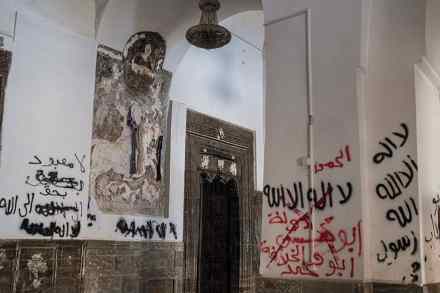
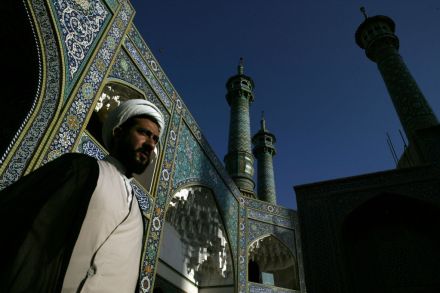
Iranians have adopted a new sport in the past few years: knocking the turban from a passing cleric’s head. There are points for technique and for how high and how far you can get their headgear to go. These are small acts of revenge against a hated religious elite who came to power on a wave of arrests and torture and who, as recently as January, ordered thousands of peaceful protesters to be shot in the streets. It’s also a symptom of something larger. Political Islam is in retreat across the Middle East and the wider Muslim world. “The strange death of political Islam” is an idea that’s in the air at the moment. Rule by clerics, and by others who claim to speak in the name of God, is going out of fashion in the Islamic world.
US troops finally leave Syria

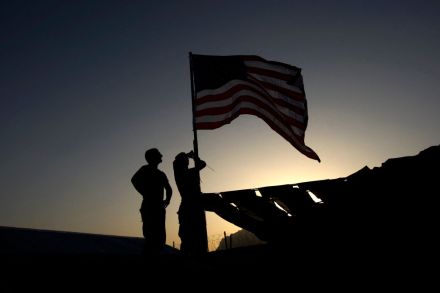
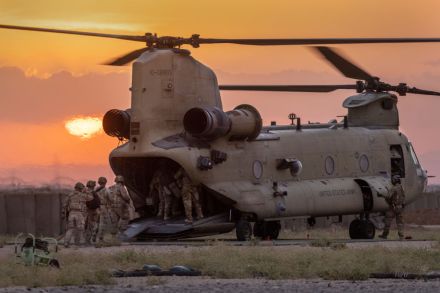
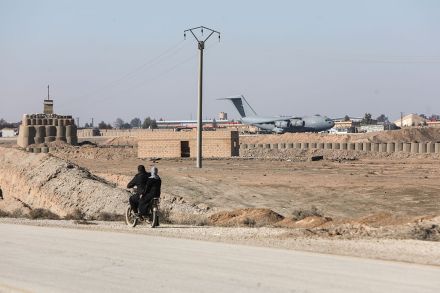
In December 2018, to the shock of pretty much everybody in the US national security establishment at the time, President Donald Trump publicly ordered the withdrawal of all US troops from Syria. The announcement caused a panic within the Defense Department, State Department and National Security Council, whose officials teamed up to dissuade Trump from going through with it. A similar story unfolded ten months later, in October 2019. Again, the bureaucracy pushed back; in October 2019, the House went so far as to pass a resolution opposing a US withdrawal, with senior Republican lawmakers signing onto the measure. Fast-forward more than six years later, and the US troop withdrawal Trump floated about during his first term is finally coming to fruition in his second.

Syria

ISIS is stirring once more

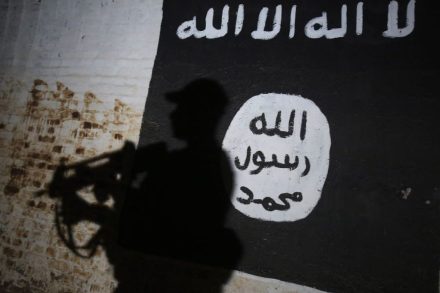
Indications that the Islamic State (ISIS) has begun to employ artificial intelligence in its efforts to recruit new fighters should come as no surprise. At the height of its power a decade ago, Isis was characterized by its combination of having mastered the latest methods of communication with an ideology and praxis that seemed to have emerged wholesale from the deserts of 7th century Arabia. In 2014 and 2015, ISIS recruitment took place on Twitter and Facebook. YouTube was the favored platform for the dissemination of propaganda. The group's videoclips of its barbaric prisoner executions, including the beheadings of a series of western journalists and aid workers and the immolation of a captured Jordanian pilot, became the organization’s gruesome trademark.

isis

Pray for the persecuted Christian church

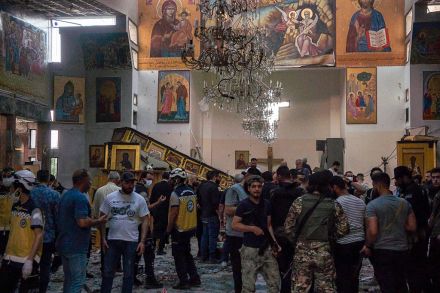
Sunday November 2, 2025 marks the annual Day of Prayer for the Persecuted Church. Global violence against Christians has doubled in the last thirty years, and one in seven believers now suffers persecution. Today, “Christians constitute by far the most widely persecuted religion,” in the world.In sub-Saharan Africa, more than 16 million Christians have fled for their lives to escape violence or been forcibly displaced. Congressman Riley Moore has described Nigeria as “the deadliest place in the world to be a Christian.” So far this year in Nigeria at least 7,000 Christians have been put to death. More than 19,000 Christian churches have been burned to the ground or attacked in the last fifteen years.

Christians

There are glimmers of hope for Iraq’s Christians

From our UK edition

It is 43˚C in Erbil, which a friend here describes as ‘cool’. Unlike my first visit in 2015, when Isis was just a few miles from the airport, the flight in was smooth. The plane this time was full of Iraqis and Kurds, mainly those who have emigrated, returning to visit their families. Ten years ago, the plane was empty apart from a few American contractors in fatigues and one lone priest. The descent then was rapid, to avoid Isis missiles. Erbil is the capital of the north-east Kurdish region of Iraq. After the 2003 invasion, the Kurds were given greater autonomy but since then they’ve found themselves fighting Isis, Iraqi armed forces and even each other.

The Alawite women taken as sex slaves in Syria

From our UK edition

Syria’s Alawite communities are in the grip of a fear that their women and girls could be kidnapped and held as sabaya, or sex slaves. After the Assad dictatorship fell, amid revenge attacks by militias loyal to the country’s new rulers, there were reports of abductions for rape and even of forced marriage. Alawite human rights activists say that some women are still being held prisoner and that kidnappings are still happening. They accuse the Syrian authorities of being unwilling or unable to stop it. The activists say that between 50 and 60 women and girls have been taken. These numbers are small compared with the 1,600 or more civilians killed in a spasm of sectarian violence in March.

Why Trump met Syria’s interim president

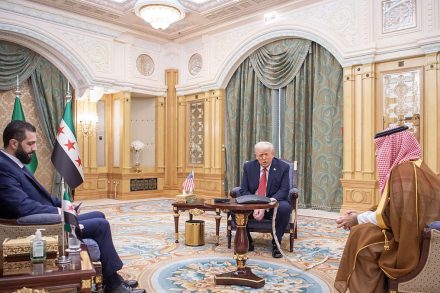
Few career arcs in modern history can be as remarkable as that of Ahmed Hussein al-Sharaa – or Abu Mohammed al-Jolani, to give him the nom de guerre under which he fought American troops in Iraq back when he was a firebrand member of al-Qaeda. Twenty years ago al-Sharaa was languishing in a US military prison in Baghdad, held on suspicion of terrorism. Today, as Syria’s new interim President, he shook hands with Donald Trump posing for photo-calls alongside the de-facto ruler of Saudi Arabia Mohammad bin Salman. Trump was evidently impressed by al-Sharaa, who has swapped the turban and dusty fatigues that he habitually wore before taking Damascus by storm last winter for a plain blue suit and purple tie. “He’s a young attractive guy.

al-sharaa

The truth about grooming gangs, ‘why I’m voting for the AfD’ & exploring YouTube rabbit holes

From our UK edition

47 min listen

This week: what does justice look like for the victims of the grooming gangs?In the cover piece for the magazine, Douglas Murray writes about the conspiracy of silence on the grooming gangs and offers his view on what justice should look like for the perpetrators. He also encourages the government to take a step back and consider its own failings. He writes: ‘If any government or political party wants to do something about the scandal, they will need to stop reviewing and start acting. Where to begin? One good starting point would be to work out why Pakistani rapists in Britain seem to have more rights than their victims.’ To unpack his piece in a little more detail, we were joined by journalist Julie Bindel, who has been reporting on the grooming gangs for almost 20 years.

America’s new ally in the battle against Isis: the Taliban

From our UK edition

Isis are back. In fact, to borrow Gerry Adams’s remark about the IRA, they never went away. Now, they are regaining some of their previous strength in Syria and Iraq, and moving into fresh territory in Africa. Of most importance to the West, the Afghan branch of Isis – Isis Khorasan – is said to be plotting more direct attacks on the ‘far enemy’, as well as pumping out propaganda to create so-called ‘lone wolves’. But with the stakes rising, it seems the United States may have found a new ally in the battle against Isis: the Taliban.

Colum McCann: American Mother

From our UK edition

35 min listen

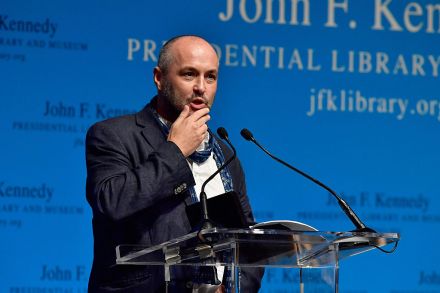
My guest on this week's Book Club podcast is the award-winning novelist Colum McCann, whose new book takes him out of the territory of fiction and into something slightly different. American Mother is written in collaboration with Diane Foley, mother of Jim Foley, the journalist killed by ISIS in Syria in 2014. He tells me how he came to reinvent himself as (not quite) a ghostwriter, why he thinks you can use the tools of the fiction-writer to get at journalistic truth, and about what it was like to sit in the room with Diane Foley and the man who murdered her son.

War tourism is alive and well

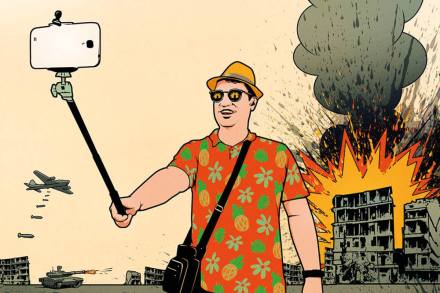
In 2004, the BBC sent me to the Iraqi city of Karbala to report on the gathering of Shia pilgrims for the religious holiday of Ashura. American troops knew to stay well away. They were already fighting a Sunni insurgency and didn’t want trouble with Iraq’s Shiites as well. The insurgency’s leader, Abu Musab al-Zarqawi — the butcher of Iraq — had just threatened to attack “the sects of apostasy,” as he called the Shia, and as we entered Karbala, militiamen searched us for weapons. The air hummed with tension. But at breakfast in the hotel, we ran into a gaggle of backpackers: Brits and Americans. Seeing the look on my face, a blonde woman in the group told me not to worry. “Things are much calmer now in Iraq, aren’t they?

tourism

Biden must rethink US policy in the Middle East

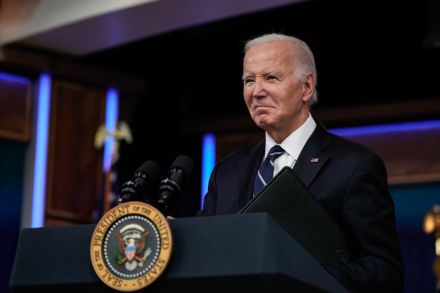
Responsibility for the catastrophe now unfolding in the Middle East belongs to Hamas and its sponsor, Iran. The atrocities we are now discovering — the deliberate killing of innocents, the capture of hostages — were an integral part of Hamas’s military strategy and grew directly out of its vicious hatred of all Jews — and of Western civilization. These are acts of true evil and, in committing them, Hamas has the full backing of Iran. President Biden spoke for America when he said, bluntly, “The brutality of Hamas’s blood thirstiness brings to mind the worst rampages of ISIS. This is terrorism.” It is important to begin with these basic points before discussing mistakes made by Israeli and American leaders.

joe biden middle east foreign policy

Marking twenty years of America’s most endless war

The Iraqi people have been through plenty over the last twenty years: a regime change operation against Saddam Hussein; a jihadist insurgency against American occupation forces; a sectarian civil war between Shia and Sunni armed groups; Iranian political interference; an Islamic State rampage; a US-organized counter-ISIS coalition that destroyed the terrorist group’s territorial caliphate. According to Brown University’s Cost of War Project, at least 275,000 Iraqi civilians died in war-related violence between 2003 and 2019. On March 19, the US will mark the twenty-year anniversary of Operation Shock and Awe, the massive air campaign against Saddam’s Iraqi army that paved the way for the ensuing armored drive to Baghdad.

foreign policy

Isis is wreaking havoc in Afghanistan

From our UK edition

The bomb tore through an examination hall in Kabul on Friday, where students – mostly minority Hazara, mostly young women – were sitting a practice test in preparation for university. Thirty-five were killed, dozens more injured. An unspeakable human tragedy. We don’t formally know who did it, but we can guess. Under the Taliban’s leadership, Afghanistan is a haven for terrorists. And the terrorists compete. The Taliban is, in my judgement, indistinguishable from al-Qaeda.

One year later, Biden is right to have left Afghanistan

A year ago today, the Taliban captured the northern Afghan city of Kunduz, dealing the US-supported Afghan government an embarrassing blow and setting in motion a blitz across the country that would eventually send Afghan President Ashraf Ghani and his closest aides into exile. A week later, Taliban fighters entered Kabul virtually unopposed. American forces would leave the country two weeks later, cutting the cord on a two-decade war that cost the US over $2 trillion and tens of thousands of casualties. "We succeeded in what we set out to do in Afghanistan over a decade ago,” President Biden said from the White House last August 31. "Then we stayed for another decade. It was time to end this war.” Much has changed since the troops left.

Time for Turkey to align with the West

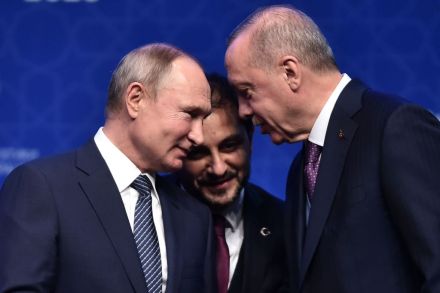
To deter Russia from invading Ukraine, the US and its Western allies vociferously vowed unified and decisive action against Russia. Countries like Hungary and Turkey, which enjoy favorable relations with Russia, were a concern, as it was not clear whether they would join US-led sanctions against Russia. Turkey’s refusal to enforce these sanctions would be a significant lifeline for Russia and show division in the Western camp. Turkey’s uncertain loyalties don’t come as a surprise. For one thing, Turkey is heavily dependent on energy imports from Russia. For another, Turkey has had a turbulent history with the Kremlin. When Putin annexed Crimea back in 2014, Turkey only expressed meek disapproval, a stark departure from its historical strategic stance regarding Ukraine.

west

Congressman bows out after affair with ISIS bride

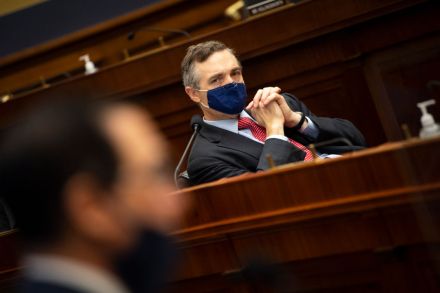
The “Tinder Swindler” has some competition in the “romantic entanglement gone wrong” department this week. Congressman Van Taylor, Republican from Texas, has just announced he’s ending his re-election campaign, which the Texas Tribune reports he had in the bag with 49 percent of the primary vote. The reason? According to Breitbart, Taylor had an affair with Tania Joya, a so-called “ISIS bride.” Cockburn notes that the details are sordid. Joya had been married to the late John Georgelas, an American who had converted to Islam, embraced jihad, joined ISIS and was reported to have been killed in Syria in 2017. Joya says Taylor paid her $5,000 to keep the affair quiet and provided Breitbart with bank records that appear to prove that Taylor did, indeed, make such a deposit.

isis bride

Return to Iraq

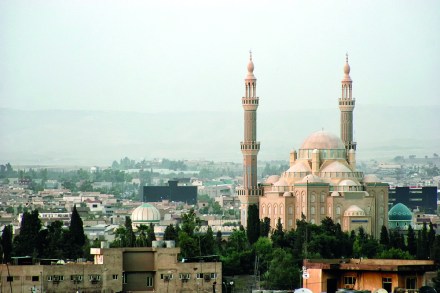
The land around Erbil, the capital city of the Kurdistan region of northern Iraq, is mostly beige, flat and seemingly endless. The mountain has seen a lot of action. The terror group ISIS remains dug in around it and the Kurdish peshmerga, with whom I recently spent time, continue to battle against them. Iraq. Two syllables, almost two decades of conflict. When people think of Iraq they think of several things: the disastrous 2003 war, oil (like all Arab countries in the popular imagination), ISIS and, if they’re a bit older, the mustachioed features of Saddam Hussein that stood, in the early years of this century, for the type of dictator painted as the West’s greatest threat. I think of all those things, too. But they’re leavened by something else: family.

iraq

Is Christianity about to end in the place it began?

From our UK edition

Janine di Giovanni’s book begins in a Paris apartment during the first lockdown. She’s at a friend’s home, which she leaves for the odd shopping trip wearing a homemade mask and rubber kitchen gloves. Covid has made her anxious and she worries that we may lose things about our way of life forever. They need to be written down so we don’t forget. As she thinks about how her faith has comforted her during the pandemic she decides to tell the story of Christians in the Middle East who have experienced troubles of a different kind. She feels that Christianity is vanishing there, and if we don’t make a record of it, it will be lost.

Why is the US still in Syria?

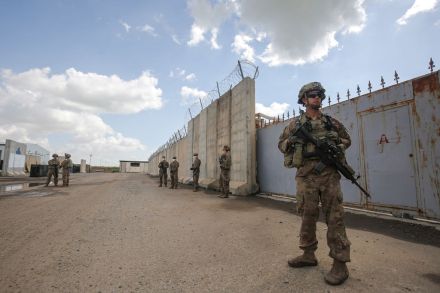
A week ago, US troops camped out in the small, dusty Syrian outpost of al-Tanf suddenly found themselves under a “deliberate and coordinated attack", as multiple explosive-laden drones barreled toward their positions. According to US officials who spoke to the AP on background, Iran “resourced and encouraged” the latest drone attack targeting US forces. The five drones were also reportedly Iranian-manufactured, leading to speculation that Tehran is testing the Biden administration at a time when nuclear negotiations between the US and Iran remain in limbo. Fortunately, US troops managed to defuse the drone attack without suffering any casualties.

syria