Isis

A dark journey into a fanatical underworld

From our UK edition

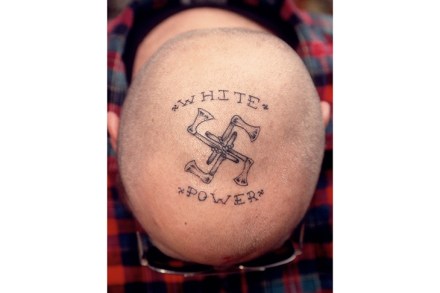
Two years ago, the counter-extremist analyst Julia Ebner decided she needed to delve deeper into the extremists trying to disrupt and destabilise our democracies. So the Austrian researcher invented five identities and joined a dozen secretive digital worlds of white nationalists, radical misogynists and jihadi women to explore their networks, their strategies and their recruitment techniques. This sobering book tells the tale of her journeys into a swampy underworld filled with fanatics and fantasists. Many of the people she came across seem like the saddest of losers. She joins a white nationalist dating site — motto ‘Love your race and procreate’ — where people admit they received ‘negative’ feedback on mainstream forums.
After the Americans

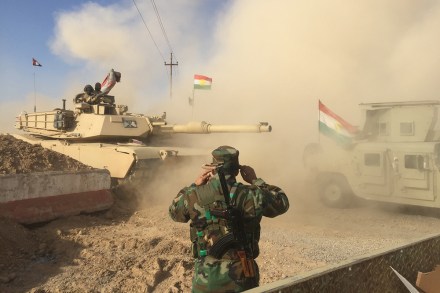
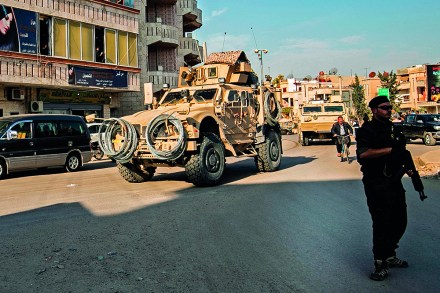
This article is in The Spectator’s January 2020 US edition. Subscribe here.Malkef, northern Syria I’m sitting under an olive tree about a mile from the front with ‘Agir’, a Kurdish soldier from the Syrian Democratic Forces (SDF). The sharp cracks and dull rumbles of fighting make their way to us over dusty farmland; the shade protects us from the scorching mid-morning sun and omnipresent Turkish drones. Agir tells me how the Turkish-backed Free Syrian Army (FSA) can’t fight — at least, compared with the Islamic State (Isis). Agir fought Isis with American backing for years in Syria. Sometimes, he says, Isis soldiers would tie foam cushioning to their feet, sneak up to your position in the moonlight and slit your throat.

americans syria

Mike Pompeo’s dishonest Iran defense

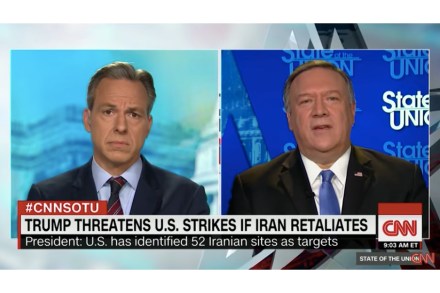
P.G. Wodehouse once described a character as so crooked that he sliced bread with a corkscrew. Secretary of state Mike Pompeo’s behavior on the Sunday morning television shows brings to mind Wodehouse’s description. No, Pompeo wasn’t toting a corkscrew or a loaf of bread, but he offered a study in deceit. Pompeo didn’t merely reiterate the wafer-thin claim that Iran was about to pose an 'imminent' threat to American interests in the Middle East, but also claimed that President Obama and his aides had essentially been in league with the mullahs of Tehran.In responding to Jake Tapper of CNN, Pompeo was unable to explain how blowing Qasem Soleimani to kingdom come would enhance the safety of America.

pompeo

Trump’s foreign policy isn’t working

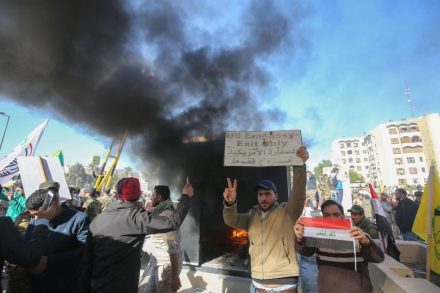
An end to endless wars? Get real. America’s foreign policy since the end of the Cold War is a never-ceasing tragedy. One front improves, another worsens. On Sunday, it emerged that the Taliban council had agreed a ceasefire in Afghanistan, a development that could at last end America’s longest war, its 18-year military engagement in the graveyard of empires. Maybe President Donald Trump really could make good on his promise to end America’s hopeless and destructive foreign entanglements. At the same time, however, Iraq has fallen into greater chaos again — because America can’t stop meddling. George W. Bush’s other great disaster continues. The failure cycle whirs.

baghdad iraq foreign policy

Trump honors hero dog Conan. Media goes barking mad

There are a few scenes from the Trump presidency which belong in the pantheon of great American political imagery. There is of course Kanye West donning Trump’s trademark red MAGA hat for an Oval Office meeting. There is President Trump posing delightfully in front of a long dining table with every kind of fast food imaginable, like a presidential Willy Wonka, as he welcomes the Clemson Tigers football team with their Golden Tickets. And today, the American public and the world were (finally) introduced to Conan, the United States special forces Belgian Malinois credited with chasing down Isis mastermind Abu Bakr al-Baghdadi, outside the White House.

conan

Portrait of the week: An election date is set, al-Baghdadi dies and a row over gay giraffes

From our UK edition

Home Boris Johnson, the Prime Minister, having shelved his Brexit Bill in the face of parliamentary opposition, persuaded the Commons to vote by 438 to 20 for a general election on 12 December. A one-clause Bill was given its third reading after an amendment put by Labour to change the date to 9 December was defeated by 315 to 295. That majority of 20 coincided with the voting power of 10 MPs to whom the Conservative whip had earlier that day been restored, including Alistair Burt, Ed Vaizey and Sir Nicholas Soames, but not Philip Hammond, Sir Oliver Letwin, David Gauke, Dominic Grieve or Kenneth Clarke. The government had failed the day before to secure an election through the provisions of the Fixed-term Parliaments Act, which required the support of two-thirds of MPs.

Awful Abu Bakr al-Baghdadi headline inspires #WaPoDeathNotices

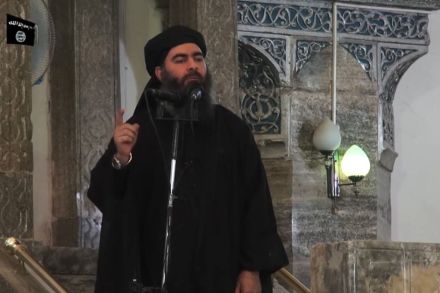
Headline-writing can be hard, chaps. Especially when you have to capture the true spirit of a person in the light of their death. But with the demise of Isis founder Abu Bakr al-Baghdadi, a truly heinous individual, surely putting his character into black and white is a black-and-white issue. If you're the Washington Post, apparently not, as Spectator contributor Kelly Jane Torrance was one of the first to point out. https://twitter.com/KJTorrance/status/1188467380491640833 'Austere religious scholar at helm of Islamic State dies at 48', the paper crowed, dolefully commemorating the life of the man who inspired hundreds of deaths. Obviously, the headline of his obituary has since been changed.

abu bakr al-baghdadi

The US will pay for abandoning the Kurds

Credibility used to be an important thing in US foreign policy, a guiding principle: hundreds of thousands of Americans in uniform died to maintain it. In 1969, with half a million American troops in Vietnam, Henry Kissinger wrote this in Foreign Affairs: '[W]hat is involved now is confidence in American promises. However fashionable it is to ridicule the terms “credibility” or “prestige,” they are not empty phrases; other nations can gear their actions to ours only if they can count on our steadiness. The collapse of the American effort in Viet Nam would not mollify many critics; most of them would simply add the charge of unreliability to the accusation of bad judgment. Those whose safety or national goals depend on American commitments could only be dismayed.

kurds

Who’ll be the next jihadi-jackpot winner?

From our UK edition

Reading the news this week of Jihadi Jack (née Letts, of Oxfordshire) having his UK passport withdrawn, my mind went to a Canadian television programme earlier this year. While most people can’t recall what was on TV last night, for us connoisseurs of western masochism the 2019 Easter edition of Tout le monde en parle (Television de Radio-Canada) was a collector’s item. The subject was Omar Khadr. In case you haven’t had the pleasure, the Khadrs are a Canadian family of Palestinian-Egyptian origin. Since 2001 they have had a sketchy patch. Specifically, family members have shown a terrible propensity for being at ‘weddings’ at the wrong place and time. Specifically around the Pakistan-Afghan border.

Hold the Nobel

As we know, President Trump often governs by tweet – he literally can’t help himself – but from time to time he also loves to have a secret plan. During the 2016 campaign, there was a secret ‘absolutely foolproof’ plan to defeat Isis. Much to his surprise, he ended up in the Oval Office and was pressed to say what was in this secret plan. He revealed that it was a plan to come up with a plan. He gave the US military 30 days to provide a ‘comprehensive strategy’ against the so-called Islamic State. This turned out to be to ‘bomb the shit out of Isis…just bomb those suckers’ – Trump’s words – something that both he and the generals could heartily agree upon. It worked, eventually, though they are still digging the bodies of civilians out of the rubble in Raqqa.

jared kushner nobel

Demining at the foot of Mount Sinjar

Sinjar, Iraq, December 2015. Major Adel Sleman poured more sweet tea into a small glass. It was cold outside the half-built shed we were sitting in, and we inched closer to the jet-black stove. Kurdish men stood next to small mattresses they had arranged on top of cinder blocks around the stove. Each man seemed to have a different style of camouflage. The pot-bellied major with his loose-fitting fatigues looked dressed ready to blend into a jungle. His colleague Major Hussein Yusuf wore forest green. Even though it was cold, the two men didn’t put on coats.  ‘I’ve spent 19 years working in demining,’ said Sleman. Born in 1963 in northern Iraq’s Kurdish region, he had been a Peshmerga, or Kurdish soldier, since the 1990s.

iraq demining

Best of the Fringe

From our UK edition

Clive Anderson’s show about Macbeth, ‘the greatest drama ever written’, offers us an hour of polished comedy loosely themed around the Scottish play. Shakespeare’s material is still topical, he says, ‘a clever Scot with a rampantly ambitious wife, like Michael Gove and Sarah Vine’. He prefers Macbeth to Hamlet which is ‘about some bloke who can’t make up his mind, like a three-and-a-half-hour interview with Jeremy Corbyn’. The act’s centrepiece is Anderson’s memory of his infamous encounter with the Bee Gees who stormed out of his TV chat show in 1996. He’d been encouraged to mock pop stars by Sting who enjoyed being teased about his stage name. ‘Sting is a minor skin-wound,’ Anderson told him.

A losing battle

From our UK edition

Foreign fighters are returning from the battlefield — not Islamists but the Americans, Europeans and South Americans who fought to rid the world of Isis. But for all their bravery, their homecoming is a tricky one because their home countries do not want them back. I have now interviewed more than a dozen volunteers. Many of them share similar stories of arrests and detentions. They have been stripped of their ability to travel, have their movements monitored, their bank accounts closed. One of them, an American, has since committed suicide. One fighter, who wishes to be known as Max, tells me in an email that he has left his home country of Denmark.

The brutality of the Isis Beatles

From our UK edition

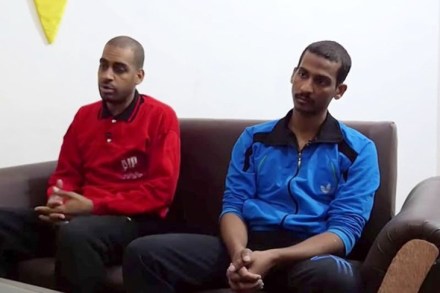
 Beirut Television cameras get everywhere these days. Or maybe that was always true. Gore Vidal, the grand old man of American letters, wrote a book in which NBC gets the rights to the crucifixion, live from Golgotha, with St Paul as the ‘anchorperson’. So it was only faintly bizarre when CNN ‘crossed’ to a prison in northern Syria to speak to two of the so-called ‘Beatles’, the British jihadis accused of murdering British and American hostages while members of Isis. The interview was just as self-serving as if the remote link had been to some politician or celebrity. But it was also revealing, the most honest — or least dishonest — interview so far from the Beatles.

Make an example of Shamima Begum

From our UK edition

The three most popular justifications for punishment under the law all (as it happens) begin with R. They are retribution, rehabilitation and removal. But the fourth and to my mind the most important seems to have fallen rather out of public consideration. Yet that fourth, deterrence, is by far the best reason for the investigation and interrogation of Shamima Begum and — if there is a case against her to answer — her detention and trial. Leading all other reasons for the prosecution according to due process — and, if convicted, the punishment — of those who may have committed a criminal offence is deterrence: the discouragement of others who may be tempted to commit similar offences. I can’t understand why more is not being made of this.

Points of view | 28 February 2019

From our UK edition

Is it me or are we now faced (or perhaps I should say fazed?) much more often by stories in the news that test our moral and ethical principles to the limit, forcing us to question ourselves and what we think to such an extent that it becomes impossible to be sure of what is right? I can never understand the high-minded righteousness and full-blown convictions of the panellists on Radio 4’s Moral Maze, who each week are given a topical issue and who then spend 45 minutes tossing it about, testing the pros and cons and questioning a group of often baffled witnesses who are invited on to the programme to provide evidence for differing points of view.

Media exposure was the worst thing that happened to Shamima Begum

From our UK edition

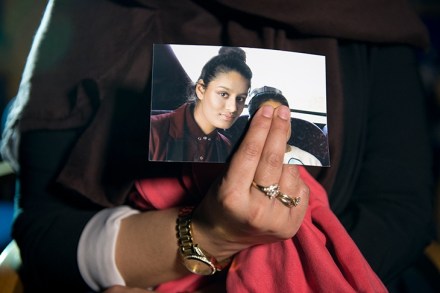
Why has Sajid Javid announced that he is revoking the citizenship of Shamima Begum? The 19 year old, who travelled as a teenager to join the Islamic State in Syria, has asked for 'forgiveness' from the UK, but last night the Home Secretary responded by saying he would be removing her status as a British citizen. He can do this, he argues, because she has a right to Bangladeshi citizenship, which means the government will not be rendering her stateless. A fair few people have suggested that this is about Javid's own ambitions in the Conservative party, as this move will likely appeal to the Tory grassroots. It has already earned praise from key newspapers like the Sun. But it's not just about the politics of this.

Sajid Javid is wrong to strip Shamima Begum of her British citizenship

From our UK edition

Sajid Javid’s decision to strip Shamima Begum of her British citizenship leaves me deeply uneasy. I can understand why a Home Secretary charged with keeping the public safe would want to do whatever possible to keep this woman out of the country. But Begum was born in this country, grew up here and was educated here. This, surely, makes her British. As a country, we should want to take charge of investigating her and, if the evidence is there, prosecuting her. After all, she offended against the ties that bind when she headed from this country—a liberal democracy with the rule of law—to go and serve in a so-called caliphate that offended against the values we hold most dear.

Will ‘Isis bride’ Shamima Begum really end up in a British prison?

From our UK edition

What will the UK do about Shamima Begum, the schoolgirl who travelled to Syria to join Islamic State? The Times' stunning scoop this morning about the 19-year old's plea to be allowed home from the Syrian refugee camp prompted Security Minister Ben Wallace to tell the Today programme that 'actions have consequences' and that she could face prosecution. Some argue that as a teenager who left when she was just 15, she has been indoctrinated and needs rehabilitation, not punishment. Wallace may well agree with that, but it's not something he's likely to say in a broadcast interview, given it is still important for the government to send the message that you cannot support a proscribed organisation or potentially commit crimes in its name without fearing that the law will catch up with you.

Trump’s Mideast carve-up

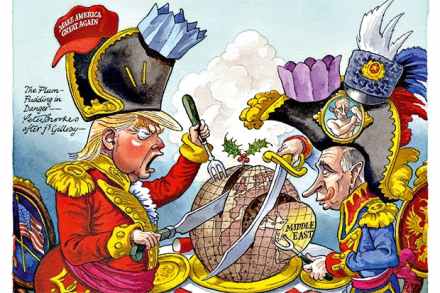
If any other president than Donald Trump had announced the withdrawal of American troops from Syria, he would be lauded for a strategic wisdom rare among American presidents, and for that even rarer achievement, fulfilling a campaign promise. Instead, he is attacked by Democrats and Republicans alike. That alone suggest that he is doing something right. The truth is, American foreign policy experts have been consistently wrong about the Middle East for decades. Who, apart from the culprits of George W. Bush’s wars, seriously believes that Iraq ever was a nation, rather than a cobbled-together state? Who, apart from the apologists of Obama’s appeasement, seriously believes that Iran has no ambitions as a nuclear-tipped empire?

carve