Steve Morris

Why budgerigars are the perfect pets 

From our UK edition

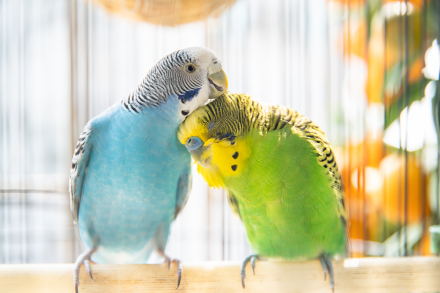
Geoff Capes, two-time winner of The World’s Strongest Man competition, weighing in at 27 stone, was a budgie fancier. He kept them, bred them and was even president of the Budgerigar Society in 2008. The fascination started for him when he was a copper in the 1960s and came across a budgie in the house of someone he arrested. The villain entrusted Capes with six of the birds. Capes was smitten. We don’t know what happened to the criminal. In our modern world of cockapoos and designer dogs, the budgie – which was wildly popular in the 1950s and 1960s – could do with a comeback. Our lives would be better with them. They hark back to a simpler time when pets were pets and not designer accessories. Budgies are native to the grasslands of Australia.

‘My voice is a curse’: Gary Numan interviewed

From our UK edition

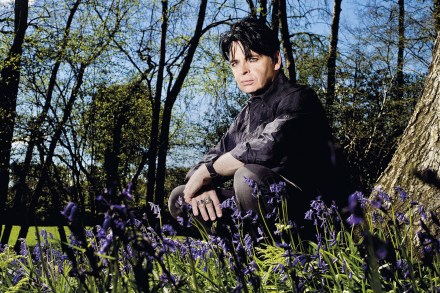
Reading the opening chapter of Gary Numan’s recent autobiography, (R)evolution, I start to get the odd feeling that I could just as well be reading about my own early life. Like Numan, I grew up near Heathrow and found the aircraft that flew over our house beautiful and magical. My parents were working class and worked hard and supported me all the way. Like Numan, I wanted to be a pilot, and a rock star. And like him, I never quite fitted in. Perhaps I could have formed a seminal band, become a pilot in my spare time and moved to LA. But then I don’t have that voice, or that talent. Never mind. I am chatting to him by Zoom. He’s in his LA home and eagerly awaiting the release of his 18th solo studio album, Intruder.

My phobia is not to be sneezed at

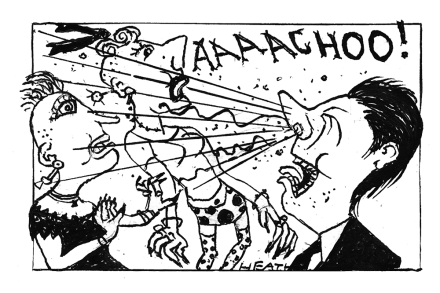
In January 1894, an assistant of Thomas Edison made a five-second silent film of Fred Ott taking snuff and then sneezing. It was the second ever film to be copyrighted – and it started with a sneeze. The sneeze is a blessing and a curse, associated with good fortune and ill omen. In ancient Greece it was a prophetic sign from the gods – a sneeze could confirm the gods’ blessing of a decision. By the end of the 6th century, with plague sweeping through Rome, it had become associated with illness and death. Pope Pelagius II died from plague mid-sneeze. His successor, Gregory the Great, declared by papal decree that ‘God bless you’ was the appropriate response of a Christian when someone sneezes, to keep the wildness and danger at bay.

Christmas II: Dominic Sandbrook, Philip Hensher, Steve Morris, Christopher Howse, Michael Hann & Mary Killen

From our UK edition

41 min listen

On this week’s special Christmas edition of Spectator Out Loud – part two: Dominic Sandbrook reflects on whether Lady Emma Hamilton is the 18th century’s answer to Bonnie Blue; Philip Hensher celebrates the joy of a miserable literary Christmas; Steve Morris argues that an angel is for life, not just for Christmas; Christopher Howse ponders the Spectator’s enduring place in fiction; Michael Hann explains what links Jeffrey Dahmer to the Spice Girls; and, the Spectator’s agony aunt Mary Killen – Dear Mary herself – answers Christmas queries from Emily Maitlis, Elizabeth Day, Rory Stewart and an anonymous Chief Whip of Reform UK.  Produced and presented by Patrick Gibbons.

Why is the modern Church embarrassed by angels?

From our UK edition

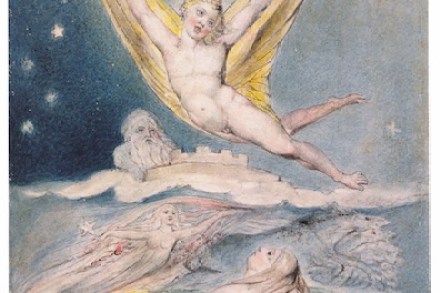
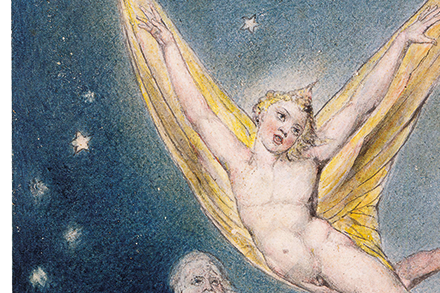
One day while walking in Peckham Rye Park, William Blake saw angels sitting in the trees: ‘bright angelic wings bespangled every bough like stars’. He was eight years old. His fascination – some have called it obsession – with angels lasted for the rest of his life. When he sat to have his portrait painted by Thomas Phillips, the two men began to argue about who painted a better angel, Michelangelo or Raphael. Phillips, not unreasonably, suggested that since Blake had never seen even an engraving by Michelangelo, he was not qualified to give an opinion on the matter. ‘But I speak from the opinion of a friend who could not be mistaken,’ replied Blake. ‘And who may he be, I pray?’ asked Phillips. ‘The Archangel Gabriel, sir.

John Connolly, Gavin Mortimer, Dorian Lynskey, Steve Morris and Lloyd Evans

From our UK edition

26 min listen

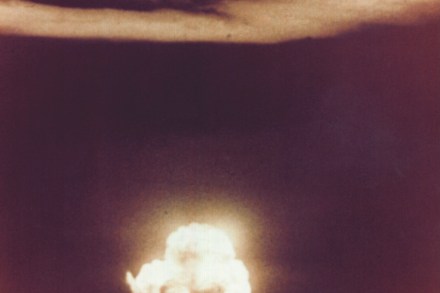
On this week’s Spectator Out Loud: John Connolly argues that Labour should look to Andy Burnham for inspiration (1:51); Gavin Mortimer asks if Britain is ready for France’s most controversial novel – Jean Raspail’s The Camp of the Saints (4:55); Dorian Lynskey looks at the race to build the first nuclear weapons, as he reviews Frank Close’s Destroyer of Worlds (11:23); Steve Morris provides his notes on postcards (16:44); and, Lloyd Evans reflects on British and Irish history as he travels around Dublin (20:44).  Produced and presented by Patrick Gibbons.

How postcards made Britain

From our UK edition

Worse for drink, and lonely in his Hollywood apartment, F. Scott Fitzgerald sat down to write a postcard. He began, ‘How are you?’, an important question as he was planning to send the postcard to himself.  Although he never sent it, perhaps he understood the magical ability of the postcard to cheer us up. They’ve been doing that since the first ones – plain cards bearing a pre-printed stamp – were introduced into Britain in 1870. It took time for the current format as we know it to develop: picture on one side and, on the other, a space for the address and some words. By the Edwardian period, 800 million cards were being sent a year.

The importance of the Great British curry house

From our UK edition

Back in 1979, I took my grandmother and her friend Frances to Monty’s in Ealing. Monty’s was one of the early Indian restaurants in London. My nan was in her 90s, and it was her first curry. We ordered the usual array of dishes – the sizzling tandoori, the Bombay aloo, the dal. My nan and her friend, both Eastenders, tucked in. They wondered why it had taken so long to go for an Indian. In the curry house, we are somewhere different, somewhere with a bit of glamour even Midway through the meal, a door at the side of the restaurant opened and in came Old Mr Monty, the patriarch of this establishment, about the same age as the people at our table. One of the waiters had told him that this was my grandmother’s first curry and that she was very old.

Join the Royal British Legion!

From our UK edition

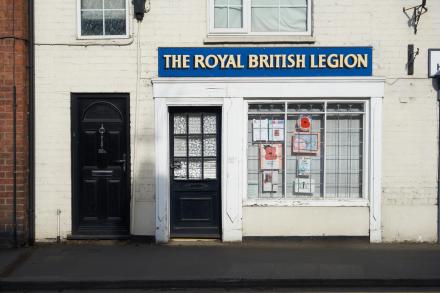
One of the things I really regret is that I didn’t spend more time down the British Legion with my dad. I was a bit snooty about it, I suppose. All those ex-squaddies talking about the army and playing darts and having a pint or two.I was an indie-kid, heading to university to read English. I preferred Camden to Greenford. But now I’d choose the Legion any day. And if more us don’t then you might see your local club closing as a result of the cheap pints at a local Wetherspoons. I realise now that the old British Legion clubs and the Legion itself is of such importance that we need a national drive to support it. To get into one of the clubs you need a membership, but that’s not difficult. Everyone is welcome, even with no connection to the military at all.

The problem with vets

From our UK edition

A year or so ago my mum, 90, took her cat to the vet. She left an hour later, relieved of nearly £800. Her aged cat it appeared needed tests, a scan and various medicines. My mum lives in a poor area of London and is on a state pension. She has little spare money, but she loves that cat and when a vet says he needs tests, who was she to say no? Most of the other people using that vet are in similar circumstances. I was outraged so rang the HQ of the firm and got through to the medical director who told me he made no apologies for his company offering a ‘Rolls-Royce service’. I wonder in what world do regular moggies need an annual checkup? And there we have the problem with vets. Across the country, sole-trader vets have been swallowed up by a number of very big firms.

The grim world of a modern Hogarth

From our UK edition

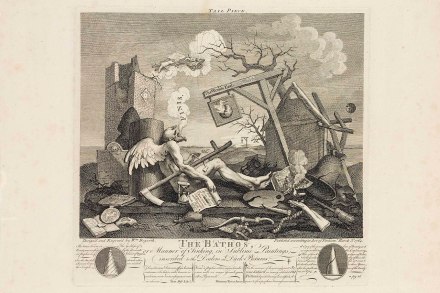
There’s a fascinating phenomenon taking hold on YouTube. It is awash with walking tours. Tours by amateurs who walk and film in the most incredible and awful places. Sometimes they do so without commentary and so you can find yourself sharing a stroll along some of Philadelphia’s drug zombie streets, red light districts, bonkers ex-Soviet republics, and various places you probably wouldn’t touch with a barge pole. Is it acceptable for us to have to put up with others smoking crack and cottaging in public? In some ways they are simply voyeurism, a way to watch the suffering, pain and poverty of others from a safe distance, letting someone else take the risk. And yet they are compelling. There are plenty of YouTube walking tours around Manchester – the Venice of the North.

I miss Christmas in the old East End

From our UK edition

My family is from Canning Town in London’s East End. One thing’s for sure, we never curated Christmas, never had it with bells on and we looked forward to the next one the moment it was over. There were essential elements: winkles on Christmas Eve, with my dad rather solemnly getting out the winkle pins. Strange little molluscs, Winkles. You go through all that work ‘winkling’ them out of their shells, add some vinegar and pepper and then they’re gone, barely touching the side of your mouth. Christmas Eve was the focus of the party. Front door open, everyone welcome Of course, there was always the traditional knees-up.

Bed bugs invaded my mind!

From our UK edition

It isn’t just the Paris Metro. Even the very best hotels are not immune from bed bugs. I was blissfully unaware of this fact until a trip to New York a few years ago when a nightmare struck. We had booked a really top place, but within days of getting home, we discovered little red bites on our legs. Little did I know that this was just the beginning.  There are perfectly rational people who have been reduced to smothering their bodies in Vaseline at night to stop the bites Bed bugs are little blighters. They can lay dormant and spring to life months after arriving. They lay their eggs in clothes, in drawers, in carpets, on television remotes and, of course, in beds. They can live in walls.

Theatre of war

From our UK edition

34 min listen

In this week’s episode: What is the next act in Putin’s theatre of war?For this week’s cover story, James Forsyth writes about Putin’s dangerous dramatics on the Russian-Ukrainian border and where they might lead. James joins the podcast along with Paul Wood, who writes in this week’s magazine that Putin’s bluff may be backfiring. (00:49)Also this week: How important is gallows humour?The BBC’s new comedy-drama, This Is Going To Hurt, based on the best-selling book of the same title by trainee doctor turned comedian Adam Kay depicts some truly gut-wrenching scenes with a touch of gallows humour.

The rise and fall of whistling

From our UK edition

There was, at least until recently, an old sign round the back of the Savoy banning whistling by staff or tradesmen. Whistling, it seems, can wind up some people. Winston Churchill hated the practice. Posters were put up in the War Rooms forbidding it. One day, on his way to Downing Street, he heard a paperboy whistling and sharply told him to stop it at once. The boy had some spirit and argued back: ‘Why should I, you can shut your ears can’t you?’ Churchill found this amusing — even if he never learned to love whistling. If he’d lived in my house, he’d have seen it a little differently. When I was growing up in the 1960s and 1970s, men — and it generally was men — seemed always to be whistling.

Is Christianity about to end in the place it began?

From our UK edition

Janine di Giovanni’s book begins in a Paris apartment during the first lockdown. She’s at a friend’s home, which she leaves for the odd shopping trip wearing a homemade mask and rubber kitchen gloves. Covid has made her anxious and she worries that we may lose things about our way of life forever. They need to be written down so we don’t forget. As she thinks about how her faith has comforted her during the pandemic she decides to tell the story of Christians in the Middle East who have experienced troubles of a different kind. She feels that Christianity is vanishing there, and if we don’t make a record of it, it will be lost.

Cop out: Boris’s battle to save the climate summit

From our UK edition

32 min listen

In this week’s episode: Can Cop26 deliver on its grand promises? In our cover story this week, Fraser Nelson assesses the state of the upcoming Cop26 summit in Glasgow and questions their very effectiveness in dealing with climate change in a world of global players with very different priorities. He is joined on the podcast by reporter Jess Shankleman, who is covering Cop26 for Bloomberg. (00:48)‘This one’s in Glasgow, but you’d best think of it as the Edinburgh Festival for environmentalism. Lots of fun, lots of debates, lots of protests, lots of street action, but not really any much of concrete substance.’ – Fraser Nelson Also this week: Is it moral to bribe your child to go to church?

Winkles

From our UK edition

For the first time in 30-odd years, many Brits have started eating winkles again. Unable to holiday abroad this summer, we headed to the British seaside and rediscovered the winkle stalls that were once part of everyday life. Winkle recipes — similar to snail recipes — are suddenly popping up, and October is the perfect month for picking these shore-dwelling molluscs. For me, a winkle has a Proustian effect. Every Sunday when I was a child, we’d have winkles for tea. My father would put some on each of our plates and we’d have an eggcup full of vinegar, some pepper, and our own winkling pin to get the little blighters out.

Bring back the great British holiday camp

From our UK edition

By the 1980s, after decades of immense popularity, the great British holiday camp was in terminal decline. The huge camps founded by Billy Butlin and Fred Pontin — the chalets, the dining hall, the redcoats (Butlin’s) and bluecoats (Pontins) — were becoming passé. Now the few that remain have been rebranded as holiday villages. But why not bring them back? Surely old-fashioned camps had exactly what we need today: simplicity, gentle fun and a sense of community. They were about team effort, not atomised nuclear families. Above all perhaps, they had a sense of identity. And they were a life-changer for me. I recently came across an online video of Gunton Hall, near Lowestoft, in the late 1970s.

‘I’ve started talking to myself’: Tamsin Greig interviewed

From our UK edition

C4’s Friday Night Dinner was the nation’s stop off point for feeling a bit better about ourselves. It featured the Goodman family. Every week the Goodman’s two sons returned to their parents’ home for Shabbat dinner. Every week, things didn't go to plan. Of course, the chaotic Goodmans stand in for all our chaotic families in these times. It is good to know that it isn’t only our own family that is a shambles. The guiding force, the everyday matriarch of that family, is Jackie Goodman – long-suffering mum, played by Tamsin Greig. ‘It is charming because it is all about coming home. I think that’s why people love it. The two boys come home every week to somewhere they know they are loved.