Zoe Strimpel

Zoe Strimpel

We need a cat lockdown now

I have always marvelled at the attitude of cat owners who point to bloodied arms or dramatic scratches and explain – with docile, almost apologetic acceptance – that Jasper or Bella just got a bit annoyed. It was all the human’s fault for patting them in the first place. Violent animals are a form of domestic abuser and should be treated as such. Why would anyone allow something to attack them – or their children – rather than simply removing the animal from their home? Sure, they are unlikely to maul you to death, unlike the technically banned XL Bullys, but it’s a different story for wildlife. Domestic cats, the wily rotters, are thought to kill around 270 million birds, mammals and reptiles per year across the UK. They’re the nukes of the animal kingdom.

Bridget Jones is no feminist

Bridget Jones isn't what she used to be. The latest film, Mad About the Boy, features Bridget as a grieving widow with kids. It's a sad departure from the Bridget of the 1990s, with her festive jumper, short skirts and saucy moments with Daniel Cleaver. I was 14 and Bridget Jones hit every note I wanted Mad About the Boy, which came out on Thursday, has already been raved about, slathered over and lauded. It's certain to make a fortune at the box office. But I've always found the films’ success rather puzzling. Bridget will always be text first and foremost – not film – to original true believers who, like me, devoured Helen Fielding’s first instalment on publication in 1996.

The brash shall inherit the Earth

As a girl, and later a woman, prone to barbs and punchy elocutions, I have encountered a great many repercussions for my words. My re-education began in primary school when the mother of a classmate angrily rang my mum to tell her that I had said this or that outrageous thing to her daughter. (A daughter who was herself tough as nails and a crafty little madame; I never picked on those weaker than me.) Over time, the pain of fallouts with school friends became the stress of getting communication wrong in the workplace, which carries its own, more formal and sinister consequences. Now I try to pause and be polite and ‘reasonable’ (one must be ‘reasonable’!) no matter how angry, anxious or upset I feel in the face of blatant foul play, falsity or injustice.

Shoppers like me will pay the price for Waitrose’s free coffee perk

Freeloaders rejoice: Waitrose is bringing back free coffee for customers even if they don't buy anything. This is a bad idea that will make shopping in what was once a nice supermarket even more miserable. The reintroduction of free coffee means more people through the door, and therein lies the problem Before the pandemic, the coffee perk for members of the My Waitrose scheme could mean big queues. Originally introduced in 2013, the giveaway turned Waitrose into the second largest purveyor of coffee in the country, but the hordes it attracted irritated other shoppers. The perk was rescinded in 2020 during the pandemic and reintroduced in 2022, so long as a purchase was made. Now it’s back to freeloaders’ paradise with no purchase necessary.

In praise of immersive exhibitions

'Immersive' exhibitions get a bad rap. And it's not hard to see why. But if, like me, you find yourself hard-pressed to concentrate on Important Art when troubled by the cares and complexities of life, then digitally amplified sensation and spectacle might be a decent alternative if your museal itch needs scratching in stressful times. There are two notable options in London right now. The first is Vogue: Inventing the Runway, at the Lightroom in King’s Cross. Drawing on Vogue's nearly 150 year old archive, it’s a show about the catwalk's flashpoints, narrated by Cate Blanchett.

Are we calling too many fat people obese?

Over the years I have learned not to take BMI measurements too seriously. I’m pretty healthy, touch wood, and fit, and don’t look remarkably like a porker. But by BMI standards, I am very definitely “overweight”, once or twice even bordering on the dreaded orange swathe of the chart that signifies obese (“severely obese” is shown in a screaming red). Podge is here to stay, so we need to adjust our scales for assessing it When I was younger and vainer I was more than once crushed by the chart’s verdict. I needn’t have bothered. What an as-good-as arbitrary crunch of simple metrics means for people of different propensities and builds is next to zilch.

Where Wales went wrong

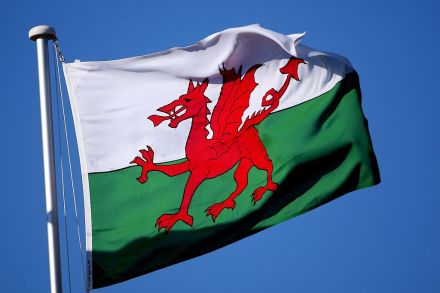
There is no land more lovely than Wales. I have walked through a magical forest to splash in the shallow, shimmering waters of the sea at the forested Newborough Beach in Anglesey and traipsed out to the monastery on the spit. I’ve struggled up Mount Snowdon while being pummelled by the angry Welsh wind and stared at by unimpressed sheep. Ten miles north-west, I have inspected the neat beauty of Caernarfon Castle staring into the Menai straits, strolled the pretty streets of Monmouth and Hay-on Wye, and lived it up in the rolling hills just over the border from Ludlow. As a place of beauty and charm, and a fascinating history of royalty and intra-national power struggles, Wales has everything going for it. Why, then, does it use all its energy up on self-destruction?

In defence of Gail’s

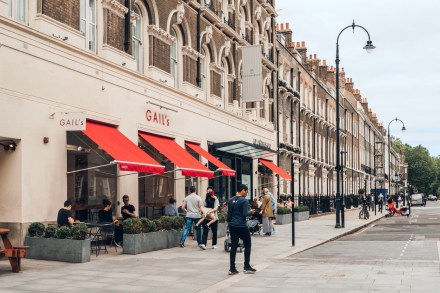
A few months ago in Primrose Hill, I overheard a woman from the Camden New Journal, the local paper, asking in a café about rumours of a Gail’s opening in the famously anti-chain neighbourhood. Just a few weeks previously, there had been uproar in Walthamstow about a new branch – an unpleasant alliance of the anti-gentrification brigade, anti-business and anti-Brexit types who protested at investor Luke Johnson’s politics, and anti-Israel fanatics who objected to the fact that the bakery chain was founded by two Israelis. The latter element was what caught my attention, given the extent of anti-Zionist nastiness since 7 October. If Primrose Hill were to join in the anti-Gail’s protest, the sense of sinister anti-Israel sentiment would grow stronger.

The tragedy of Jocelyn Wildenstein

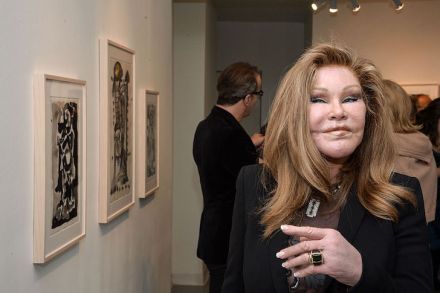
When I saw that Jocelyn Wildenstein, aka the Bride of (art dealer Alec) Wildenstein, had died at the age of 84, I began compulsively flicking through the widely-shared galleries of horror photos depicting the three-decade plastic surgery odyssey for which she was known. But the picture that struck me most – more, even, than the hideously gnarled, ferocious face with its pinched eyes looking out at the courtroom at her divorce trial – was the one of her when she was young. Namely, in her 30s, with Hollywood golden-age good looks; wonderful bone structure, bright eyes. And one more: as a gamine 15-year-old who looks like a supermodel in waiting.

Spare us from ‘amber’ weather warnings

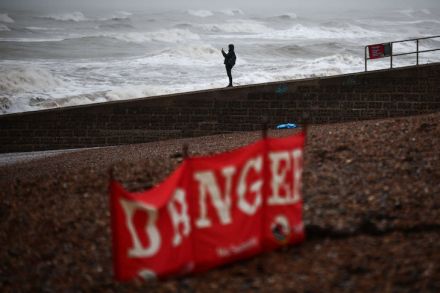
With quiet, sinister inevitability, the health and safety edifice has been marching through the festive season, capturing new terrain. Arguably the most powerful cultural force in Britain today, a new target has been seized: the weather. Suddenly, the warnings issued by the Met Office – whose weather forecasting service rarely seems reliable – are taken as gospel. Predictions of snow and ice during the cold snap of the next few days have been seized upon with a similar enthusiasm to the fears that arose during the pandemic: we're being urged to stay in and stay put. Don't go out because it's cold in January?

Women would be wise to avoid the streets of Lambeth at night

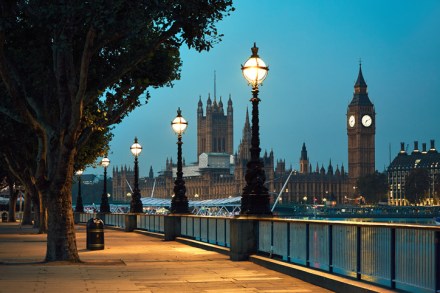
Being a woman walking on the street at night, especially on your own, is still scary. No matter that we live in an age of progressiveness and equal rights, of post #MeToo vigilance: the threat of violence by men against women under cover of darkness remains elemental and real. Lights on a quiet street are essential to mitigating this, and that includes in the middle of the night, when women are likely to need such illumination most; when, possibly after a party, they are more vulnerable; drunk, tired, or just very much alone. It’s when there is least likely to be anyone around to hear you scream. With no police presence on the streets, decent lights often feel like our only protection.

How Gen Z ruined Guinness

James Joyce called Guinness ‘the wine of Ireland’. Now it feels a bit more like the Coca-Cola of alcohol – as much brash branding as beer. Once, it merely had an ugly logo and the rowdy promise of Emerald Isle hedonism which – I confess I have often thought – is crafted to appeal to simple people. For who, other than simple people, chooses Guinness in this day and age when faced with the proliferation of ales, IPAs, helles, sessions, Belgian beers and porters? The sorts of people who find the Irish pub in a Mediterranean town and hit it hard. Guinness is taking on a strange new life But now, Guinness is taking on a strange new life.

How the Groucho lost its lustre

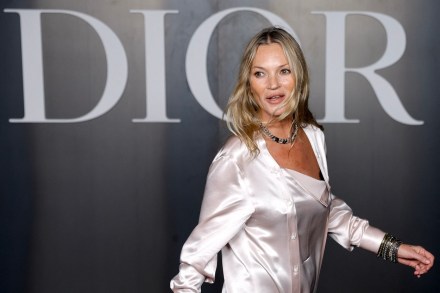
This week, the Groucho Club in Soho had its licence suspended by Westminster Council after a request from the Metropolitan police, who are investigating a ‘serious criminal offence’ said to have taken place on its grounds. Beyond ‘serious’, the crime has yet to be specified. But one thing is certain: the Groucho has gone down (at least temporarily) in a hail of bad vibes, all the famous fun and games grinding to an infamous halt.  I used to be a member of the Groucho, having taken advantage of its offer for under 30s. I spent much time carousing in its seductive, plush interiors. Kate Moss talked to me once on a boozy festive evening, telling me how much she loved panto.

There’s nothing worse than an entitled restaurateur

Going to restaurants used to be fun. So much so that in the first two booze-sloshed decades of the 21st century, restaurants were the key setting for most of my social activity. My friends and I, living in pretty nasty rented rooms, spent our disposable income on two or three meals out a week, where we ordered decadently and drank plenty of wine. Even if the food and service weren’t always stellar, it was generally possible to relax. Waiters were friendly, if a bit remote. They didn't breathe down your neck, and they let you focus on each other and your food, not them.

Canary Wharf is better than ever

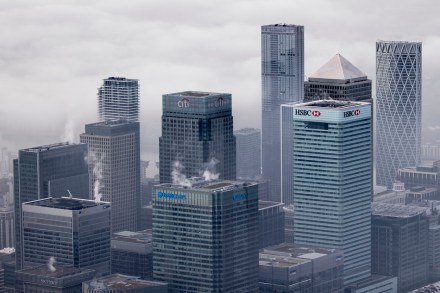
For the kind of people who think London ought to be all Farrow and Ball-coated quaintness and whiffs of Dickensianism, Canary Wharf is a rude assault, an obnoxious jungle of the anti-quaint. It is also, to many, an embarrassing paean to a moment that only the 1980s could have produced: one of gauche capitalistic, deregulatory optimism soused in international finance. One Canada Square, the frontispiece of the development and once Britain’s tallest skyscraper, is named in honour of the Toronto-based property developer who bought the project in 1988 (and a few years later went bankrupt).

Flying isn’t what it was – but don’t blame British Airways

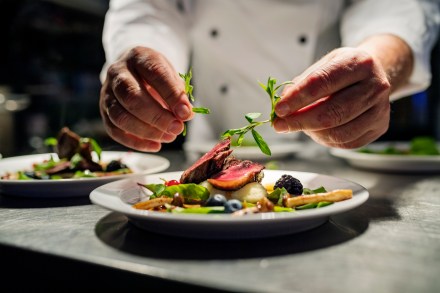
It is tempting, confronted with the news that British Airways is to swap out lunch on long-haul flights leaving between 8.30am and 11.29am in favour of a 'Great British Brunch', to conclude that flying has simply gone to the dogs. The cost-cutting move, which applies to business and First Class passengers, has raised many an eyebrow, especially as the brunch menu sees the traditional opening sallies of lunch (cheese, artichoke, choice of other appetisers) followed by a gear shift into waffles or eggs and other apparent constituents of the 'Great British brunch'.

Ozempic and the sugar coating of reality

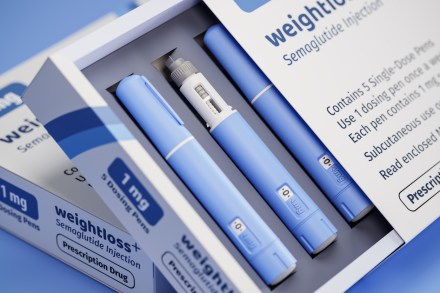
Old or young, fat or thin, body-positive or body-embarrassed, man or woman, everyone with money seems to be on a weight-loss drug: Wegovy, Mounjaro or Ozempic (which although a diabetes drug, is so often used off label for weight loss that there have been supply shortages). In the past couple of weeks alone, two freewheeling 60+ titans of journalism – my Spectator colleague Julie Burchill and my Telegraph colleague Allison Pearson – have written about how Mounjaro has curbed their hedonism (the former) and unhealthy, ancient patterns around cake (the latter). If these life-loving ladies have taken the plunge, I thought, maybe similarly life-loving 42-year-old me should be considering it?

The horror – and glory – of Sandbanks

In the showy harbourside enclave of Sandbanks, in Dorset, properties regularly go for upward of £7 million; one bungalow there recently sold for £13 million. Footballers and screen stars call it home. But there are two things money can’t buy when it comes to Sandbanks: sunshine and style. It's a desperately cramped, traffic-ridden place Estate agents like to claim that Sandbanks is ‘Britain’s Palm Beach’, but on a rainy Thursday night in October it's hard to see how. Over the next week, Britain’s priciest seaside community is expected to see a blend of torrential rain, light rain, and partial sunshine at temperatures roughly on par with those forecast for London. Some residents claim the outcropping of Poole has its own microclimate.

Admit it, roast dinners are bad

Sunday lunch is a bit like the Edinburgh festival. People make a big thing of it, it’s considered a British treasure, and I am meant to book it, go to it, and like it. But I don’t. If Edinburgh is forever associated in my mind with glowering edifices of grim dark stone, hostile chilly sun between spells of overcast cold skies, the worst comedy and theatre I have ever seen, and paying a king’s ransom for a nasty little room a 20-minute taxi ride out of town, then Sunday lunch is, for me, forever intertwined with desperately wishing to be somewhere, anywhere else. Maybe even the Edinburgh festival. Sunday lunch is what people traditionally do when they don’t much like each other, or at least don’t know how to talk to each other.

Spain makes for an awful holiday

Spain is busy with an image update. Thanks to a host of savvy media stories, we’re now supposed to think of Spain not just in terms of package holidays, sangria, and Catholicism but also as chic, romantic, stylishly left-wing – the macho anti-fascism of Hemingway’s Spain updated for the #MeToo age – and devastatingly cutesy. Take the recent viral trend among Spain’s youth: a supermarket pineapple gimmick that’s gone global. A TikTok video has Gen Z storming the Mercadona chain between 7 and 8 p.m., under the notion that placing an upside-down pineapple in their shopping trolley signals romantic availability. ‘Spanish singles found a new dating strategy. It’s in the fruit aisle,’ crooned the Washington Post. How utterly adorable.