Zoe Strimpel

Zoe Strimpel

Where Wales went wrong

From our UK edition

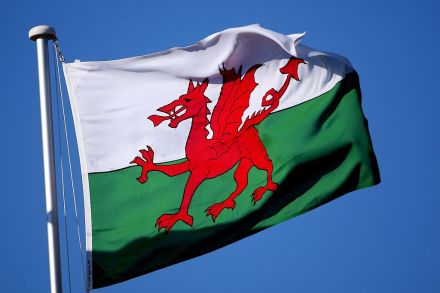
There is no land more lovely than Wales. I have walked through a magical forest to splash in the shallow, shimmering waters of the sea at the forested Newborough Beach in Anglesey and traipsed out to the monastery on the spit. I’ve struggled up Mount Snowdon while being pummelled by the angry Welsh wind and stared at by unimpressed sheep. Ten miles north-west, I have inspected the neat beauty of Caernarfon Castle staring into the Menai straits, strolled the pretty streets of Monmouth and Hay-on Wye, and lived it up in the rolling hills just over the border from Ludlow. As a place of beauty and charm, and a fascinating history of royalty and intra-national power struggles, Wales has everything going for it. Why, then, does it use all its energy up on self-destruction?

In defence of Gail’s

From our UK edition

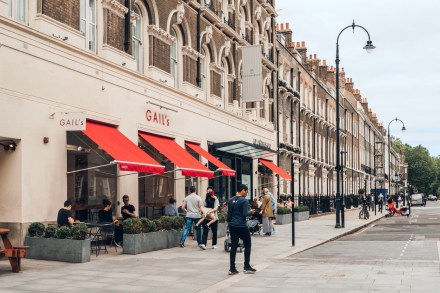
A few months ago in Primrose Hill, I overheard a woman from the Camden New Journal, the local paper, asking in a café about rumours of a Gail’s opening in the famously anti-chain neighbourhood. Just a few weeks previously, there had been uproar in Walthamstow about a new branch – an unpleasant alliance of the anti-gentrification brigade, anti-business and anti-Brexit types who protested at investor Luke Johnson’s politics, and anti-Israel fanatics who objected to the fact that the bakery chain was founded by two Israelis. The latter element was what caught my attention, given the extent of anti-Zionist nastiness since 7 October. If Primrose Hill were to join in the anti-Gail’s protest, the sense of sinister anti-Israel sentiment would grow stronger.

The tragedy of Jocelyn Wildenstein

From our UK edition

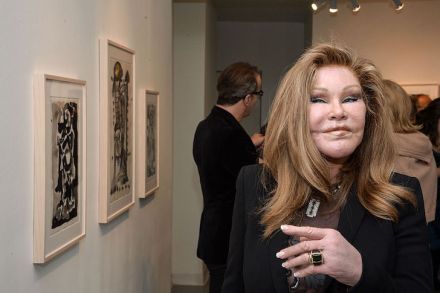
When I saw that Jocelyn Wildenstein, aka the Bride of (art dealer Alec) Wildenstein, had died at the age of 84, I began compulsively flicking through the widely-shared galleries of horror photos depicting the three-decade plastic surgery odyssey for which she was known. But the picture that struck me most – more, even, than the hideously gnarled, ferocious face with its pinched eyes looking out at the courtroom at her divorce trial – was the one of her when she was young. Namely, in her 30s, with Hollywood golden-age good looks; wonderful bone structure, bright eyes. And one more: as a gamine 15-year-old who looks like a supermodel in waiting.

Spare us from ‘amber’ weather warnings

From our UK edition

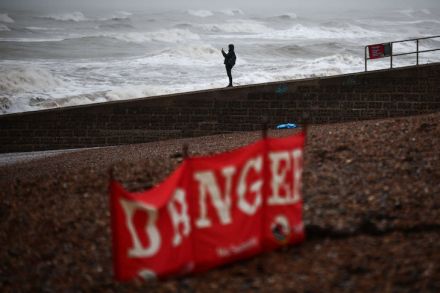
With quiet, sinister inevitability, the health and safety edifice has been marching through the festive season, capturing new terrain. Arguably the most powerful cultural force in Britain today, a new target has been seized: the weather. Suddenly, the warnings issued by the Met Office – whose weather forecasting service rarely seems reliable – are taken as gospel. Predictions of snow and ice during the cold snap of the next few days have been seized upon with a similar enthusiasm to the fears that arose during the pandemic: we're being urged to stay in and stay put. Don't go out because it's cold in January?

Women would be wise to avoid the streets of Lambeth at night

From our UK edition

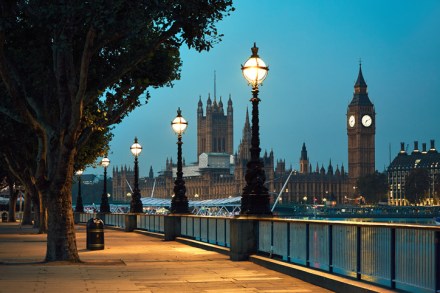
Being a woman walking on the street at night, especially on your own, is still scary. No matter that we live in an age of progressiveness and equal rights, of post #MeToo vigilance: the threat of violence by men against women under cover of darkness remains elemental and real. Lights on a quiet street are essential to mitigating this, and that includes in the middle of the night, when women are likely to need such illumination most; when, possibly after a party, they are more vulnerable; drunk, tired, or just very much alone. It’s when there is least likely to be anyone around to hear you scream. With no police presence on the streets, decent lights often feel like our only protection.

How Gen Z ruined Guinness

From our UK edition

James Joyce called Guinness ‘the wine of Ireland’. Now it feels a bit more like the Coca-Cola of alcohol – as much brash branding as beer. Once, it merely had an ugly logo and the rowdy promise of Emerald Isle hedonism which – I confess I have often thought – is crafted to appeal to simple people. For who, other than simple people, chooses Guinness in this day and age when faced with the proliferation of ales, IPAs, helles, sessions, Belgian beers and porters? The sorts of people who find the Irish pub in a Mediterranean town and hit it hard. Guinness is taking on a strange new life But now, Guinness is taking on a strange new life.

How the Groucho lost its lustre

From our UK edition

This week, the Groucho Club in Soho had its licence suspended by Westminster Council after a request from the Metropolitan police, who are investigating a ‘serious criminal offence’ said to have taken place on its grounds. Beyond ‘serious’, the crime has yet to be specified. But one thing is certain: the Groucho has gone down (at least temporarily) in a hail of bad vibes, all the famous fun and games grinding to an infamous halt.  I used to be a member of the Groucho, having taken advantage of its offer for under 30s. I spent much time carousing in its seductive, plush interiors. Kate Moss talked to me once on a boozy festive evening, telling me how much she loved panto.

There’s nothing worse than an entitled restaurateur

From our UK edition

Going to restaurants used to be fun. So much so that in the first two booze-sloshed decades of the 21st century, restaurants were the key setting for most of my social activity. My friends and I, living in pretty nasty rented rooms, spent our disposable income on two or three meals out a week, where we ordered decadently and drank plenty of wine. Even if the food and service weren’t always stellar, it was generally possible to relax. Waiters were friendly, if a bit remote. They didn't breathe down your neck, and they let you focus on each other and your food, not them.

Canary Wharf is better than ever

From our UK edition

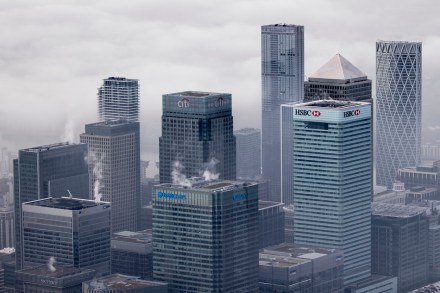
For the kind of people who think London ought to be all Farrow and Ball-coated quaintness and whiffs of Dickensianism, Canary Wharf is a rude assault, an obnoxious jungle of the anti-quaint. It is also, to many, an embarrassing paean to a moment that only the 1980s could have produced: one of gauche capitalistic, deregulatory optimism soused in international finance. One Canada Square, the frontispiece of the development and once Britain’s tallest skyscraper, is named in honour of the Toronto-based property developer who bought the project in 1988 (and a few years later went bankrupt).

Flying isn’t what it was – but don’t blame British Airways

From our UK edition

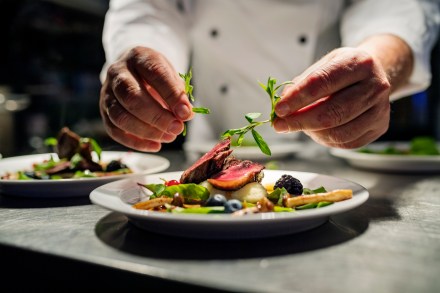
It is tempting, confronted with the news that British Airways is to swap out lunch on long-haul flights leaving between 8.30am and 11.29am in favour of a 'Great British Brunch', to conclude that flying has simply gone to the dogs. The cost-cutting move, which applies to business and First Class passengers, has raised many an eyebrow, especially as the brunch menu sees the traditional opening sallies of lunch (cheese, artichoke, choice of other appetisers) followed by a gear shift into waffles or eggs and other apparent constituents of the 'Great British brunch'.

Ozempic and the sugar coating of reality

From our UK edition

Old or young, fat or thin, body-positive or body-embarrassed, man or woman, everyone with money seems to be on a weight-loss drug: Wegovy, Mounjaro or Ozempic (which although a diabetes drug, is so often used off label for weight loss that there have been supply shortages). In the past couple of weeks alone, two freewheeling 60+ titans of journalism – my Spectator colleague Julie Burchill and my Telegraph colleague Allison Pearson – have written about how Mounjaro has curbed their hedonism (the former) and unhealthy, ancient patterns around cake (the latter). If these life-loving ladies have taken the plunge, I thought, maybe similarly life-loving 42-year-old me should be considering it?

The horror – and glory – of Sandbanks

From our UK edition

In the showy harbourside enclave of Sandbanks, in Dorset, properties regularly go for upward of £7 million; one bungalow there recently sold for £13 million. Footballers and screen stars call it home. But there are two things money can’t buy when it comes to Sandbanks: sunshine and style. It's a desperately cramped, traffic-ridden place Estate agents like to claim that Sandbanks is ‘Britain’s Palm Beach’, but on a rainy Thursday night in October it's hard to see how. Over the next week, Britain’s priciest seaside community is expected to see a blend of torrential rain, light rain, and partial sunshine at temperatures roughly on par with those forecast for London. Some residents claim the outcropping of Poole has its own microclimate.

Admit it, roast dinners are bad

From our UK edition

Sunday lunch is a bit like the Edinburgh festival. People make a big thing of it, it’s considered a British treasure, and I am meant to book it, go to it, and like it. But I don’t. If Edinburgh is forever associated in my mind with glowering edifices of grim dark stone, hostile chilly sun between spells of overcast cold skies, the worst comedy and theatre I have ever seen, and paying a king’s ransom for a nasty little room a 20-minute taxi ride out of town, then Sunday lunch is, for me, forever intertwined with desperately wishing to be somewhere, anywhere else. Maybe even the Edinburgh festival. Sunday lunch is what people traditionally do when they don’t much like each other, or at least don’t know how to talk to each other.

Spain makes for an awful holiday

From our UK edition

Spain is busy with an image update. Thanks to a host of savvy media stories, we’re now supposed to think of Spain not just in terms of package holidays, sangria, and Catholicism but also as chic, romantic, stylishly left-wing – the macho anti-fascism of Hemingway’s Spain updated for the #MeToo age – and devastatingly cutesy. Take the recent viral trend among Spain’s youth: a supermarket pineapple gimmick that’s gone global. A TikTok video has Gen Z storming the Mercadona chain between 7 and 8 p.m., under the notion that placing an upside-down pineapple in their shopping trolley signals romantic availability. ‘Spanish singles found a new dating strategy. It’s in the fruit aisle,’ crooned the Washington Post. How utterly adorable.

Middle-aged Swifties are weird

From our UK edition

The Starmers were supposed to have the moral high ground – at least according to Labour eschatology – and yet we read of their grubby relationship mega-donor Waheed Alli. Alli was given a security pass to 10 Downing Street in return for his money. During the election, he lent Team Keir the use of his £18 million Covent Garden home. Lady Starmer, meanwhile, certainly has time and taste for more than NHS occupational health work. Vics was pictured front row at the show of London Fashion Week’s wokest designer, Edeline Lee, dressed head to toe in Lee’s own creation, a polka dot dress (on loan), worth over £1,000. Altogether, Vicky has been clothes-horsed in £5,000 of designer-wear courtesy, once again, of Alli.

TGI Fridays was doomed from the beginning

From our UK edition

Few will mourn the demise of TGI Fridays, whose parent company collapsed into administration this week. The restaurant chain's 87 branches in the UK have been put up for sale. Only a fool would think they could turn around TGIs' fortunes. The truth is that the British obsession with American food, and specifically American diners, was never going to end well. Attempts to imitate American cuisine over here are a bit embarrassing When TGI Fridays first opened in Britain it was, for a time, a roaring success. The original TGIs was a cocktail bar on the Upper East Side of Manhattan which opened in March 1965. It was an instant hit, especially with single young men and women, since it offered a place to drink and carouse in public with members of the opposite sex.

Not for the squeamish: The Substance reviewed

From our UK edition

Both horribly familiar and wonderfully shocking, this body-horror film written and directed by Coralie Fargeat does a very traditional thing – turning the scramble for youth and beauty into a monster of immeasurable disgust and immorality – in a huge way. There is nothing minimal or restrained or overly clever here; nothing of the nuance in language or wit that makes its forerunner, The Picture of Dorian Gray, so haunting. This is a presentation of the horror of ageing for the bombastic mash-up age, melding vampire, sci-fi, feminist tragicomedy and dystopian genres. It’s like a reverse Barbie but with lashings of Poor Things, Blonde, the uncomfortably up-close Marilyn Monroe biopic, and plenty more.

Gen-Z mean girls are aggressive and progressive

From our UK edition

When Black Lives Matter created the figure of the Karen, it was a sign of that movement’s darker, bullying qualities. What exactly was wrong with a white middle-aged woman who asked to speak to the manager when things were unsatisfactory? The answer seemed to be in the white part and the woman part, and perhaps also in the middle-aged part. In short, the Karen was a racist, sexist, ageist construct, and as a middle-aged white woman myself, who makes her dissatisfaction known from time to time, I felt extra defensive. But if that original Karen caricatured the wrong person, then there are some modern female types that deserve closer scrutiny.

Italy is a land of beauty and death

From our UK edition

I was nine. It was Florence, in mid-July. My parents bravely led my younger brother and me through a day of sweaty sight-seeing. We had just been up and down the Duomo and were cooling ourselves with ice cream in an adjacent square when there was a hideous bang. At first, we thought it was an explosion. Then, as we passed the Duomo again a few minutes later, we saw something so grisly I still remember it with a shudder: paramedics trying to get a stretcher covered in a white sheet into the ambulance, and on the ground, a huge splat of what looked like spaghetti sauce. It took a moment for me to get my head around what that must be, and how it related to the bang, and then I couldn’t unwrap my head from it.

How to shop at Waitrose

From our UK edition

Over the years, I have spent a pretty penny on therapy. I have also spent a lot of money in Waitrose, of which there is a big branch that I like to call a ‘flagship’, very close to my flat. Of the two, therapy and Waitrose, it is probably Waitrose that has provided the most mental relief and has certainly been better value overall. Items may cost a bit more than they do at other supermarkets, but it’s free to enter the shop and there is no time limit on browsing, peering closely, or fondling the goods. Waitrose is not a shop that rewards a quick in and out, which is why I struggle to see the point of its Little Waitrose offshoots Waitrose has soothed me over the years in several ways.