Zoe Strimpel

Zoe Strimpel

The unbearable rudeness of the thumbs up emoji

Years ago, in the midst of a dating spree that involved numerous encounters with erratic and callous young men, I often consulted my cousin. She’s a cool, emotionally controlled New Yorker who seemed to have an innate knowledge of how to seize and maintain power in sexual or would-be sexual entanglements. She often advised me to nix the wordy message I had planned, especially in response to an outrageous slight, like a last-minute cancellation with a crap excuse and an insincere apology, and send a single yellow thumbs up instead. This was the craftier, nastier update on the cumbrous and obscene big blue thumb from Facebook messenger. For those of us who panic at blankness, the thumb is psychological botulism Her advice was clever.

The rise of the Thomas Hardy guy

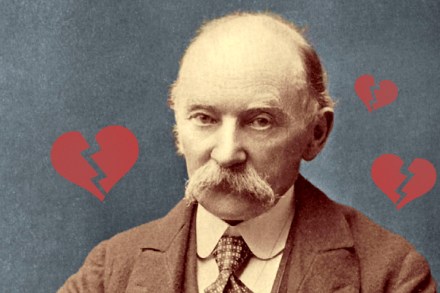
If I had to pick a king of women I’d call a draw between Vermeer, the 17th century painter, and Thomas Hardy, novelist and poet. Both had an outstanding capacity to take women’s interior lives seriously, to see individual women as distinct, intense and complex, and far from corresponding to any feminine stereotype. Whether it’s Vermeer’s young woman with a pearl necklace, Eustacia Venn in Hardy’s The Woodlanders or his mournful poems about his wife Emma’s death, these are moving, emotionally astute portraits. The pick-up artist movement, which began in the early 2000s, created its own breed of Hardys But while Vermeer seems to have been a decent husband, Hardy was not.

Retailers are hacking your brain

While perusing bins on the John Lewis website, having heard great things about the Brabantia 60-litre, I noticed my stress levels rise – and it wasn’t just because the lid-up height meant the bin wouldn’t fit in my new cabinet. It was because for my whole shopping session there had been a dribble of information about how many other customers had put the items I was looking at in their basket in the last 24 hours, how many had bought them and how fast the stock supply was dwindling. Over on the M&S website, a mattress topper flashed a banner: ‘In demand! Sold 43 times in the last 48 hours’. My heart rate climbed and I felt my wellbeing plummet as a generalised, half-conscious sense of missing out for being too slow – a lifelong fear – crept over me.

A (partial) defence of the ‘Jewface’ Oscars

How could I be Jewish, my friend wondered out loud, when I didn’t have the... She paused as she mimed a big old nose, coming far out from the face in a grotesque outward bulge. I was shocked. My friend was a sophisticated Cambridge graduate, yet still she had imbibed the anti-Semitic cartoons that have caricatured and justified violence against Jews for time immemorial. That was in 2004, long before most people knew what critical race theory and BAME groupings were. It was also a time in which one of the most popular shows on TV, Little Britain, featured actors in blackface: characters played by Matt Lucas and David Walliams included an obese Caribbean woman called Desiree DeVere, portrayed in blackface, and a portly Thai bride called Ting Tong.

Drinking during pregnancy just isn’t the same

From our US edition

There are many cruel ironies in life. One of them is getting pregnant (and intending to keep it) at just the age at which you begin to understand how and where to drink good booze and feel justified in spending money to do so. So, finding myself with a bun in the oven just after my forty-first birthday this summer, I had to bring to a screeching halt the habits of the last few years: drinking really good wine, sometimes quite a lot of it, fairly regularly. Indeed, I spent the first week of pregnancy in the Languedoc drinking a bottle a night, plus the odd gin and tonic, because of course I didn’t know. Just last year I made a special journey to an industrial park outside Brussels to collect six bottles of 2013 white Bordeaux — it was that good.

pregnancy

How Israel is failed by its war of words

Sitting in a room at the Israel Defence Forces' Hakirya base in Tel Aviv, I listened – along with a room full of delegates, mostly European MPs and members of the House of Lords – to a briefing from an IDF spokesman. He was a British-born reservist recruited back to the front lines of Israel’s communications war, and he did not inspire. He repeated basics about what happened on 7 October, and the horror of those events – something that everyone in that room, all there as pretty major fans of Israel, desirous to see it triumph in its hour of adversity, already appreciated. We wanted new information: dispassionately and intelligently presented. Stuff that would add to our understanding, so that we could share it at home.

How Hamas radicalised Israel’s liberals

I have visited Israel three times in the past year. The first trip was in the spring, just as the anti-government protests – triggered by Benjamin Netanyahu’s attempts to control the Supreme Court – were beginning. The day before we travelled, protestors forced Tel Aviv's Ben-Gurion airport to close, and a general strike was announced. Every Saturday night, out went the protestors – mostly liberal and secular, but not entirely, so widespread is frustration with the government. ‘You could not be seen sitting and drinking wine on a Saturday night’, Moran Alon, the owner of the Nilus bar in Tel Aviv told me. ‘People would wonder: why aren’t you at the protest? What’s wrong with you?

Israeli nightlife is slowly returning

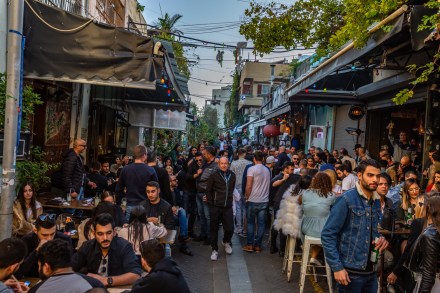
Tel Aviv is the size of Bristol, with about 400,000 residents each. While Bristol has 400 pubs and bars, and just shy of a thousand restaurants, the rough concrete charm of Tel Aviv yields no fewer than 1,750 cafes, bars and clubs and more than 4,000 places to eat. Tel Aviv is a dense, hedonistic city: friendly, creative and edgy without the nasty underbelly of European cities. It is known in Israel as ‘the bubble’, secular and in its own world of sun, sea, late nights and wine, apparently separated from the problems of wider Israel.

Why women still love Twilight

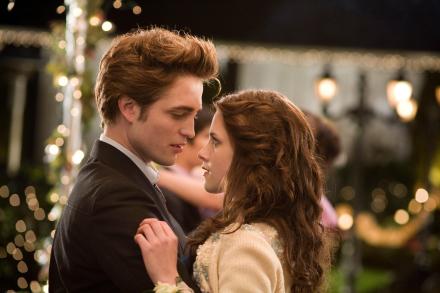
Anybody who has been a teenage girl will know how dark and swampy the sexual imagination of that demographic can be. At 14 and 15, after watching Baz Luhrmann's Romeo and Juliet (1996), and then James Cameron's Titanic (1997), I became so obsessed with Leonardo DiCaprio that I’d lie for hours on my bed hatching feverish plans for going to New York and meeting him; comparing fictional fling Kate Winslet to me (similar body type, I told myself) and broodingly calculating my chances. It wasn’t a funny light-hearted thing, but deadly serious, awash in life or death longing. The same quality applied to Will, Pete, Travis, Chris, and the other boys at school on whom I developed all-consuming crushes.

Why climate activists love to hate Israel

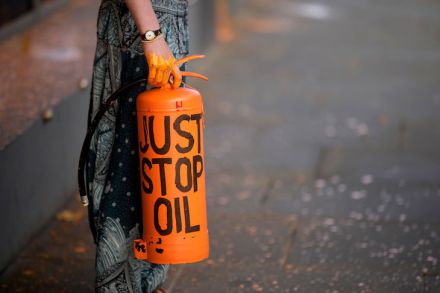
Climate activists have been busy since 7 October. The demands for 'action now' on global warming continue, but affairs in the Middle East are proving to be a distraction for Just Stop Oil. Cries of 'free Gaza', 'ceasefire now', and even 'from the river to the sea' – a chant, purported to be a cry for peace and 'solidarity' with Palestinians, but used by those who want to wipe Israel off the map – have now joined, and at times drowned out, the usual green slogans. Just Stop Oil (JSO) activists took part in a sit-in protest at London's Waterloo station on Saturday to demand a ceasefire, despite Hamas continuing to hold hundreds of Israelis hostage.

Back to the future: Sunak’s big gamble

45 min listen

On the podcast: It's been a busy week in Westminster. On Monday, Rishi Sunak's first major reshuffle saw Suella Braverman sacked and David Cameron make a surprise return to politics.  Then two days later, the Supreme Court's Rwanda ruling left the government's pledge to 'stop the boats' in tatters. It was meant to be the week in which Rishi Sunak had hoped to stamp his authority on a fracturing party, but it seems to have only added to the narrative of Tory disrepair. Katy Balls writes about Rishi’s last gamble in the magazine this week, and joins the podcast alongside Kate Andrews, The Spectator’s economics editor. (01:01) Also this week:  Svitlana Morenets writes a candid account of the current state of the war in Ukraine for The Spectator.

The death of TV

A while ago, a therapist advised me to go out less and stay in and watch TV more. Having avoided the world of block-streaming until then, I took her advice and immediately found great pleasure in my new pastime. There was so much to watch, and it was all so absorbing and pleasantly addictive. The pleasure and excitement has gone out of making TV – and it shows As soon as one arty but gripping ‘prestige’ series was over, there was another to begin. The golden age of television started around 2000, where innovation was enabled by leaps forward in visual technology and a revolution in storytelling ambition. Many of these shows were international, even if the US dominated.

Among the Glastonbury pagans

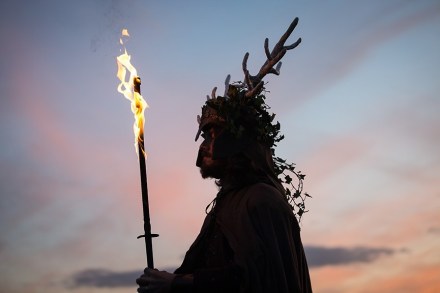
England is a mystical place, and its epicentre is Glastonbury, known by its pagan residents as Avalon, the mythical island of the Arthurian legend. It has sacred springs, the supposed tomb of King Arthur, the Tor and ruined tower, proximity to Stonehenge and now a thriving, sprawling community of pagans, with dozens of denominations from druid to water-witch. Once dismissible as mere woo-woo fringe, paganism has become a religious force that demands serious consideration for the simple fact that it is the fastest-growing religion in Britain. In the 2021 Census, 74,000 people in the UK referred to themselves as pagans, up from 57,000 in 2011, with a further 13,000 people calling themselves Wicca.

In defence of the noughties

Russell Brand always seemed repellant to me, but that had little to do with the fact he became famous in the noughties. And yet, since allegations have emerged, we keep being told repeatedly that Brand is a typical toxic product of the early years of the new millennium.  ‘Resurfaced clips give a sobering reminder of noughties culture,’ says the BBC. ‘Nasty noughties: a culture reckoning?’ asks the Week. The noughties was a ‘cesspit’ – ‘a laddish era (that) allowed Russell Brand to thrive,’ said the Daily Telegraph. ‘Back in the noughties,’ began one of many pieces on Brand, ‘pop culture was hard and nasty…It was a period of viciousness and excess, where cruelty was the norm and misogyny was celebrated.

The truth about Bedales

Every now and again, my alma mater is in the news, and why wouldn’t it be? Britain is obsessed with schools and class. Bedales provides ample fodder for both: the boarding school in Hampshire is famously ‘liberal’ – and was so even when England was famously illiberal. Bedales, whose graduates include Lily Allen, Kirstie Allsopp and Daniel Day-Lewis, is the educational equivalent of Tatler smashed together with Vogue. Bedales hit the headlines again this week because it is the first school in the country to ditch GCSEs – those entering now will take just two, in maths and English. The rest will be a mixture of the usual subjects like history and physics, with Bedales’ own-brand, such as outdoor work (including learning how to corral sheep).

Forget the Cotswolds, try the Forest of Dean for a weekend break

The roads around Monmouth are quiet but have their attractions; they cut through valleys and woods, past castles and churches. My host, soignee interior designer Neil McLachlan, explains that this part of the world is a well-kept secret, popular with minor gentry and Londoners in the know but protected from the crowds that flush in and out of the Cotswolds.

Trumpvision: he’s making America watch again

27 min listen

On the podcast this week:  In his cover piece for the magazine, The Spectator’s deputy editor Freddy Gray says that he was hardly surprised that Donald Trump chose not to participate in last night’s Republican candidates debate. He argues that Trump no longer needs the TV networks and joins the podcast alongside Douglas Murray, who profiles the no-hoper Republican candidates looking to pip Trump to the nomination in his column. (01:21) Also this week:  Mark Millar, the comic book writer and producer behind Hollywood hits such as Kingsman, Kick Ass and a host of Marvel films, writes The Spectator’s notebook.

Fear and complacency in Taiwan

From our US edition

On a recent trip to Taiwan as a guest of its Ministry of Foreign Affairs, I knew that war with an increasingly belligerent China is a daily possibility. Chinese ships are in constant circulation in the Taiwan Strait. Chinese aircraft unceasingly fly near the island, getting close to Taiwanese air space. Beijing’s increasingly threatening language about forced “unification” seems to bring a catastrophic attack closer. Genuine fear fluttered in the wake of Nancy Pelosi’s visit in August last year when China launched three days of drills that paid no regard to what they called the “imaginary” median line, which divides Chinese from Taiwanese territory.

Taiwan

I’m cancelling rat girl summer

Rat girl summer is a typically absurd TikTok meme that most women –indeed, most humans – born before 1990 would probably struggle to understand. But it’s a thing. And here’s what it means, according to the Washington Post: it is ‘a TikTok movement that emphasizes living like a rat: scurrying around the streets at all hours of the day and night, snacking to your heart’s delight, and going to places you have no business going to’. After a content creator called Lola Kolade encouraged followers to ‘embrace the rodent energy’ in June, #ratgirlsummer has been shared over 25 million times on TikTok.

Chess doesn’t need Rishi Sunak’s cheesy cheerleading

There's something embarrassing about Rishi Sunak's plan to revive chess in Britain. The PM is set to announce half-a-million pounds funding for the English Chess Federation. The money could be used to send teams to international tournaments, install chess tables in parks and teach the game to school kids. But Rishi’s cheesy cheerleading for government-sponsored chess is reminding me a lot of a parent buying condoms for their teenager: there’s no better way to take the sexiness out of sex. Perhaps the PM is trying to take inspiration from eastern Europe. Last October, I went to Budapest to interview the world’s best-ever female chess player, Judit Polgar, and also attended the chess festival she hosts at the Hungarian National Museum in Budapest.