Tim Shipman

Tim Shipman

Tim Shipman is political editor of The Spectator.

The truth about Chinese espionage

From our UK edition

13 min listen

Tim Shipman's bombshell cover piece for the magazine this week explains how the collapsed spy trial blew up in the government’s face. As well as raising ‘serious questions’ about Keir Starmer’s judgment and Jonathan Powell’s role, ‘the affair reveals a Whitehall tendency to cover up the gory details of foreign spying in the UK’. According to Tim, four ‘highly credible sources in the upper echelons of the last government… have revealed that far worse scandals have been hushed up’. One, involving Russia, was suppressed ‘to avoid embarrassing a former prime minister’.

Chinese spies, Vance’s rise & is French parenting supreme?

From our UK edition

30 min listen

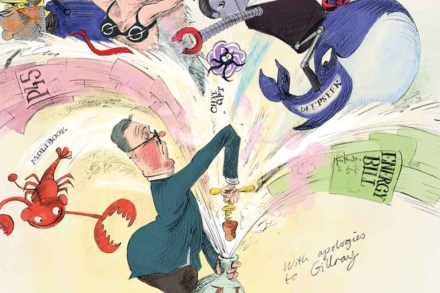
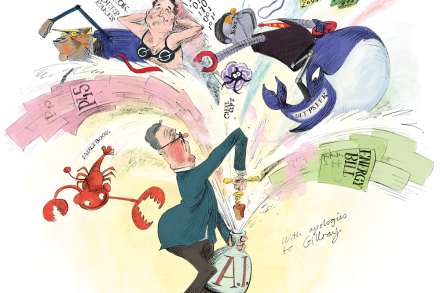
‘Here be dragons’ declares the Spectator’s cover story this week, as it looks at the continuing fallout over the collapse of the trial of two political aides accused of spying for China in Westminster. Tim Shipman reveals that – under the last Conservative government – a data hub was sold to the Chinese that included highly classified information; one source describes this to him as a ‘stratospheric clusterfuck’. Why do successive governments seem to struggle with UK-China relations? And, with many unanswered questions still remaining, what’s the truth over this case?  Host Lara Prendergast is joined by the Spectator’s political editor Tim Shipman, arts editor Igor Toronyi-Lalic and deputy editor Freddy Gray. As well as the cover, they discuss: how J.D.

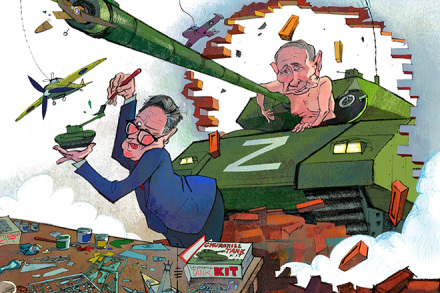
Here be dragons: the truth about Chinese espionage

From our UK edition

On 3 July a Chinese man, Xu Zewei, was arrested in Milan to face extradition on nine charges relating to the hack carried out by a group called Haf-nium during the Covid pandemic. Western companies had secrets stolen in 2020 and 2021 when a weakness in the Microsoft Exchange servers was exploited. The National Cyber Security Centre (NCSC), part of GCHQ, later said 70 British firms had fallen victim to ‘a malicious act by Chinese state-backed actors’. The court documents claim that officers of China’s ‘Ministry of State Security and the Shanghai State Security Bureau directed Xu to conduct this hacking’.

Are the Tories to blame for the China spy scandal?

From our UK edition

14 min listen

Keir Starmer did not go into Prime Minister’s Questions with the intention of resolving the row over the collapse of the Chinese spying case: he merely wanted to avoid the pressure building too much. He announced in a long statement at the start of the session that the government would be publishing its three witness statements, and then spent the rest of his sparring with Kemi Badenoch arguing that this was all the fault of the previous government anyway. So who is to blame, the Tories or Labour? What does the inability to deal with this scandal say about the ineptitude of successive governments, and how they communicate with the public? James Heale speaks to Tim Shipman and Isabel Hardman.

China spy scandal: ‘a masterclass of ineptitude’?

From our UK edition

13 min listen

Tim Shipman and Charles Parton, China adviser at the Council on Geostrategy, join James Heale to discuss the ongoing fallout over the collapse of the Westminster spy case. Security minister Dan Jarvis answered an urgent question on the matter late on Monday in Parliament, stringently denying that the government played an active role in collapsing the case. But, as Charles and Tim stress, the case still doesn't add up. Is it as simple as the government not wanting to offend China? And is the deputy national security adviser being 'hung out to dry'? Produced by Patrick Gibbons.

Spy scandal: what is Labour’s policy on China?

From our UK edition

15 min listen

It’s a ‘great and beautiful day’, as Donald Trump wrote in the guestbook at the Knesset, where he will address the Israeli parliament after the final hostages were handed back to Israel. It is, of course, a historic piece of diplomacy, and the conversation in Westminster has turned to the extent to which the UK was involved. Bridget Phillipson claimed over the weekend that Britain played a ‘key role’ in bringing about peace – much to the chagrin of Mike Huckabee, the US Ambassador to Israel, who called her ‘delusional’. Is she? The government have more pressing issues, however, with the collapsed China spy case – the sudden abandonment of a case brought against two men (Chris Cash, a parliamentary researcher, and Chris Berry, an academic).

Tim Shipman, Ian Williams, Theo Hobson, Lara Prendergast & Lisa Haseldine

From our UK edition

34 min listen

On this week’s Spectator Out Loud: Tim Shipman says that the real war for the right is yet to come; Ian Williams examines the farce over the collapses China espionage case; Theo Hobson argues that the Church of England is muddled over sex and marriage; Lara Prendergast reads her letter from America; and, Lisa Haseldine goes on manoeuvres with the German army, the Bundeswehr. Produced and presented by Patrick Gibbons.

How can the Tories turn it around? Live

From our UK edition

40 min listen

Recorded live in Manchester, during the Conservative Party conference, Michael Gove sits down with Tim Shipman, Madeline Grant and Tim Montgomerie to discuss how the Tories can turn their fortunes around. Do the Tories need to show contrition for their record in government? Has the party basically been split ever since the Coalition years? And does Nigel Farage need to set a deadline for Tory to Reform defectors? Plus – from Canada to Italy – which countries do British Conservatives need to look towards for inspiration? Produced by Patrick Gibbons.
Whisper it quietly, peace in the Middle East?

From our UK edition

15 min listen

Donald Trump says Israel and Hamas have agreed to the first phase of his Gaza peace plan. During an extraordinary round table on the Antifa organisation last night, the US President was interrupted by Marco Rubio and given a hand-written message. He told those assembled at the White House: ‘I was just given a note by the Secretary of State saying that we’re very close to a deal in the Middle East, and they’ll need me pretty quickly.’ Details of the deal, including the finalised list of prisoners Hamas wants freed as part of an exchange, remain unclear. But the first part of the deal could be set in motion as soon as today once the Israeli government approves the plan at around 2 p.m. local time. Is he heading for a Nobel Peace Prize?

The real war is to come for the Tories

From our UK edition

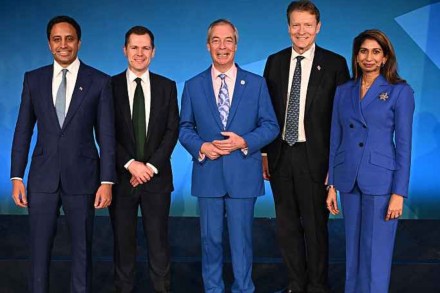
British politics often resembles a golden-age murder mystery, with multiple parties sitting anxiously on the sofas/green benches waiting for the detective/electorate to crack the case. The Reform, Labour and Tory conferences provided a plethora of clues. But just as Sherlock Holmes solved ‘The Adventure of Silver Blaze’ by diving into the significance of the dog that didn’t bark, just as much can be learned from what didn’t happen over the past few weeks. First, there was no serious leadership challenge from the pretenders in Labour or the Conservatives. Andy Burnham turned up in Liverpool with a knife between his teeth, only to discover he neither had a seat nor the 80 parliamentary supporters needed to challenge Keir Starmer.

Who’s listening to the Tories? Live from conference

From our UK edition

39 min listen

Tim Shipman, James Heale and Lucy Dunn record live at Conservative party conference in Manchester. What's the mood at conference – and has Kemi done enough to neutralise her detractors? Tim says he expects there to be no immediate leadership challenge but the Conservatives need to get real about the 'attention economy' they're faced with. What inspiration can they take from Tory grandee Michael Heseltine? And can they 'make conservative sexy again'? Plus, audience questions on the upcoming budget and the challenges for the Conservatives in both Wales and Scotland. Produced by Patrick Gibbons.

Economy: can we trust the Tories again?

From our UK edition

11 min listen

Tim Shipman and Michael Simmons join Lucy Dunn live at Manchester for Conservative party conference. It's day two, and we've heard from shadow chancellor Mel Stride, who unveiled various pledges including business rates relief and spending cuts. The Tories are clearly trying to position themselves again as the party of 'fiscal prudence' – but are people listening to them? As the team points out – whether through a lack of protestors or the speedy serving times at the conference bar – the convention centre is pretty quiet. Produced by Patrick Gibbons.

Manchester attack: Michael Gove on the rise of antisemitism

From our UK edition

24 min listen

On today’s Coffee House Shots, Tim Shipman is joined by Michael Gove to reflect on the terrorist attack at Heaton Park Synagogue in Manchester, which left two people dead. They discuss how the Jewish community has long warned of rising anti-Semitism, often forced to fund its own security, and how inflammatory rhetoric on recent pro-Palestinian marches has deepened the sense of vulnerability. Michael warns that Britain remains naive about Islamist ideology and risks only ever reacting to violence, rather than preventing it. While there are capable people in government and the security services, he says, real leadership is needed to confront the ideology that fuels attacks before more tragedies occur. Does the Prevent system need reform?

Kemi Badenoch’s plan to save the Tories

From our UK edition

18 min listen

The Prime Minister was set to announce his crackdown on the existing rights of refugees at the European Political Community meeting today; however, he has flown back to chair a Cobra meeting after a terror attack in Manchester. Two people have been killed and at least two others injured after a driver allegedly rammed a car into pedestrians outside a synagogue and attacked them with a knife. The suspect, who was shot by police, is also believed to be dead. Also on the podcast, Tim Shipman interviews Kemi Badenoch for the magazine this week. As she enters conference season with the Tories running third in the polls behind Reform and Labour, she tells Tim that she is up for a fight.

Kemi’s fightback, the cult of Thatcher & debunking British myths

From our UK edition

40 min listen

The Spectator’s cover story this week is an interview with Conservative leader Kemi Badenoch ahead of the Tory party conference. Reflecting on the criticism she received for being seen as slow on policy announcements, she says that the position the Conservatives were in was ‘more perilous than people realise’ and compares herself to the CEO of an ailing firm. Can Kemi turn it around for the Tories? Host William Moore is joined by the Spectator’s political editor Tim Shipman – who interviewed Kemi – alongside commissioning editor Lara Brown, and academic and author Philip Hensher. They discuss whether the ‘cult of Thatcher’ needs to die, Tim says he's more Disraeli and Bismarck to Lara's Pitt and Philip reveals what once got him sacked from the House of Commons.

Kemi Badenoch: how I plan to save the Tories

From our UK edition

Kemi Badenoch is in ebullient form. She promises the Conservative party conference, which begins this weekend in Manchester, will be ‘more fun than usual’. But that does not mean the Tory leader plans to sweep on stage like Reform’s Andrea Jenkyns. ‘I won’t be wearing any jumpsuits with sequins on,’ Badenoch says. ‘I won’t be singing “Insomniac”.’ The state of the opinion polls, with the Tories at well below 20 per cent, ought to give her sleepless nights, but she is upbeat. What, I wonder, is her karaoke song? Her three children ‘are the DJs’ in the Badenoch household and ‘all they sing are Taylor Swift songs’. I push my luck and suggest she could try ‘I Will Survive’, Gloria Gaynor’s anthem for defiant women let down by useless men.

Labour’s deputy divisions: insider vs outsider?

From our UK edition

14 min listen

Tim Shipman and Claire Ainsley from the Progressive Policy Institute join Patrick Gibbons to reflect on Labour's party conference as it draws to a close in Liverpool. This conference has been received positively for Labour but, on the final day, a hustings for the deputy leadership demonstrated that divides remain under the surface. Is Lucy Powell versus Bridget Phillipson a case of left versus right in the party, or is it more about the outsider versus the insider? And, as a leading political commentator declares Labour to now be the 'party of the professional middle class', what does the contest tell us about who Labour needs to appeal to? Produced by Patrick Gibbons.
Keir Starmer gave the speech of his life at Labour conference

From our UK edition

The consensus before Keir Starmer’s speech to the Labour party conference was that he needed to make ‘the speech of his life’. He did so. It was not the greatest conference speech I’ve seen, far from it, but it was the best Starmer has made and not because it was shot through with content. However, it had an argument, it laid out a narrative and some dividing lines for British politics over the next four years and it went much further than before to tell us both what Starmer is for and what he is against. In that sense it was an unlikely triumph, popular in the hall and one which lays to rest, for a few months at least, whether Starmer should continue as Prime Minister.

Starmer delivers ‘the speech of his life’

From our UK edition

20 min listen

We have just heard the Prime Minister’s headline speech at Labour Party Conference and – whisper it quietly – that might have been Keir Starmer’s best yet. As briefed out beforehand it was a patriotic address, with lots of flag waving in the room as he presented his version of patriotism in contrast to a Nigel Farage who is guilty of talking Britain down. It was miles better than the dreariness of last year and instead struck a chord of hope against the broken Britain narrative. Even though there was little of actual substance on the economy and more platitudes about ‘smashing the gangs’, this did seem like a landmark moment for Keir Starmer where he communicated an actual plan for the Britain he wants to build.

ID cards are back: will they work?

From our UK edition

17 min listen

The Labour machine has whirred into gear to try and contain a certain Northern mayor’s mischievous interventions this week, by announcing a big controversial piece of policy. The news that ID cards – Tony Blair’s pet project – will be introduced has splashed all the front pages, demoting Andy Burnham to yesterday’s news. It’s a policy with broad public support, but with a passionate minority opposition including the leaders of the other major parties. The fact that it is being rebranded as a ‘Brit card’ with the aim of tackling the migration crisis has also ruffled a few feathers. Will it work politically? And, more importantly, will it work in practice?  Lucy Dunn speaks to Tim Shipman and James Heale.  Produced by Oscar Edmondson.