The Spectator
Thursday
Spectator letters: India’s forgotten soldiers, James Delingpole’s happy father, and a defence of public relations
Worth the candle Sir: I was saddened by Charles Moore’s account of the Westminster Abbey candlelit vigil marking the centenary of the start of the first world war (The Spectator’s Notes’, 9 August). At each of the four quarters of the Abbey (representing the four corners of the British Empire), he notes, there was one big candle and one dignitary assigned to snuff it out. He was ‘niggled’ to be in the South Transept, where ‘our big-candle snuffer was Lady Warsi’. Baroness Warsi had been chosen to represent the upwards of one million men from the Indian subcontinent who took part in the Great War. The Indian army was possibly the largest volunteer army in the world at the start of the war.

Who cleans skyscrapers?
Tough at the top The clocks on Big Ben were cleaned by abseiling window-cleaners. Some other big cleaning/painting jobs: — Repainting the Forth Railway Bridge used to be a metaphor for never-ending work, but a new coating completed in 2012 is estimated to have a life of 25 years. — Sydney Harbour Bridge was, for the first 80 years of its life, cleaned by hand, but last year it was done for the first time by robot. — The world's tallest building, the Burj Khalifa in Dubai, is cleaned by a team of abseilers, with all 24,000 windows taking three months to get through. — Most New York skyscrapers are cleaned by hand. The World Trade Center had an automated cleaner, but it could not cover the corners or upper windows. Two window cleaners were among the victims on 9/11.
Portrait of the week | 21 August 2014
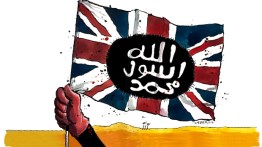
Home David Cameron, the Prime Minister, writing of the Islamic State in northern Iraq, said: ‘If we do not act to stem the onslaught of this exceptionally dangerous terrorist movement, it will only grow stronger until it can target us on the streets of Britain.’ Anyone waving an Islamic State flag in Britain would be arrested, he said. He invoked Britain’s ‘military prowess’ but later said: ‘We are not going to be putting boots on the ground.’ British C-130 transport planes were used to drop aid; Tornados were used for surveillance in addition to a Rivet Joint surveillance aircraft; and Chinook helicopters remained on standby.
Asylum seekers are dying in British ports. It’s time we looked after them properly.
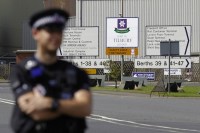
The tale is now familiar: shouts are heard from inside a freight container and police are called. A cargo of human beings is discovered, some gravely ill. This happened last Sunday along the Thames at Tilbury docks. Thirty-five Afghans were discovered. One of them, Meet Kapoor, was already dead. Days later, 15 Kashmiris and Eritreans were found on a lorry pulled over in Somerset, dehydrated but alive. Dozens of people are now being found each week in these kinds of circumstances. It is not just economic migration: the Afghans found in Essex were Sikhs, for example, a group singled out for repression under the Taleban. Once they must have hoped that a stable government would emerge in Kabul, allowing for the return of the 1.4 million Afghans still in exile.

Books and arts – 21 August 2014
Podcast: Britain’s jihad, the Pope vs the Vatican, and the existence of ‘The One’
[audioplayer src="http://traffic.libsyn.com/spectator/TheViewFrom22_21_August_2014_v4.mp3" title="Britain's jihad, the Pope vs the Vatican, and the existence of 'The One'" fullwidth="yes"] The View from 22 podcast [/audioplayer]The murder of James Foley by an Isis fighter ‘with a London accent’ has been treated with understandable revulsion. But we shouldn’t be surprised, says Douglas Murray in his cover piece this week. On this week’s podcast, he outlines how Britain came to be the West's leading producer of 'foreign fighters'. Shiraz Maher, one of Britain’s leading authorities on radicalisation, joins him, and explains why the British jihadis are regarded as some of the most vicious and extreme fighters.
The Spectator at war: The death of Pope Pius X
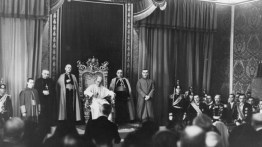
From The Spectator, 22 August 1914: Pope Pius X. died at twenty minutes past one on Thursday morning. In a moment of lucidity, just before his death, his Holiness is reported to have said: "Now I begin to think the end is approaching. The Almighty in His in- exhaustible goodness wishes to spare me the horrors which Europe is undergoing." It is stated that since the outbreak of the war the Pope showed very deep feeling, and again and again repeated "Poor children !"—alluding to the soldiers killed in action. The Pope was a man of great personal charm of character as well as of great goodness of heart, but no one but a flatterer could suggest that he had the intellectual qualities requisite for his great office.
The death of Pope Pius X
From ‘News of the Week’, The Spectator, 22 August 1914: Pope Pius X died at 20 minutes past one on Thursday morning. In a moment of lucidity, just before his death, his Holiness is reported to have said: ‘Now I begin to think the end is approaching. The Almighty in His inexhaustible goodness wishes to spare me the horrors which Europe is undergoing.’ It is stated that since the outbreak of the war the Pope showed very deep feeling, and again and again repeated ‘Poor children!’ — alluding to the soldiers killed in action. The Pope was a man of great personal charm of character as well as of great goodness of heart, but no one but a flatterer could suggest that he had the intellectual qualities requisite for his great office.

Wednesday
The Spectator at war: Commercial possibilities
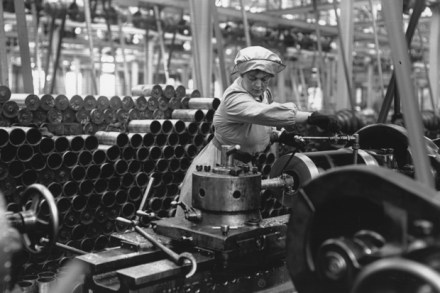
From The Spectator, 22 August 1914: IT is gratifying to find that the public is rapidly waking up to the fact that other prospects than those of universal unemployment arise out of the present war. The daily papers of this week, instead of talking of the necessity for relief funds, have begun to talk of the tremendous commercial possibilities revealed for Great Britain by the collapse of Germany's oversea commerce. The main cause of that collapse everybody now understands. It is due to England's possession of superior sea-power. In addition, it must be noted that many German manufacturing concerns have been obliged to shut down because their work-people have gone to the front.
Tuesday
The Spectator at war: How to keep husbands sweet
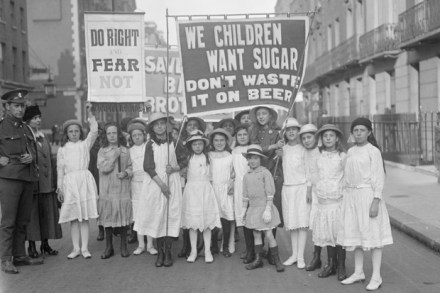
From The Spectator, 22 August 1914: SIR,—The article on this subject in your last issue has prompted me to write down some of the things said to me about the war by the women in my district. Our rector wished me to ask at each house whether any one from it was serving with the forces. The usual answer was: "No one from here, I'm glad to say. I shouldn't like any of mine to go." One mother said: "There's no one here could go but Eddie, and I've told him he needn't offer. If they want him they'll take him." This idea is general. One woman had heard that "they" had "taken" twenty men from B— (a neighbouring village). Eddie's grandmother had not been sleeping at nights for the fear that they would take him- " he's such a big, strong, likely fellow.
Monday
Video: Does Cameron have an Iraq policy? Or is he just making it up?
The Prime Minister has returned from his holidays, and yesterday wrote an intriguing piece in the Sunday Telegraph about the ongoing struggles in Iraq and Syria. ‘True security will only be achieved if we use all our resources – aid, diplomacy, our military prowess – to help bring about a more stable world’ he wrote, and this morning Defence Secretary Michael Fallon sounded distinctly hawkish about British involvement in Iraq. But what does any of this actually mean? Fraser Nelson tries to get to the bottom of things in our look at the week ahead, while Isabel Hardman wonders whether anyone – including Cameron – knows what our policy is anymore.

The Spectator at war: Lord Kitchener’s campaign
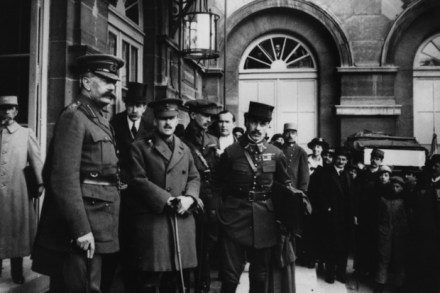
The Spectator, 22 August 1914: Recruiting for Lord Kitchener's first hundred thousand men appears to have brought in seventy thousand. That is good, though, we confess, not so rapid as we should like to see it. This comparative slowness is, no doubt, very largely 'due to the fact that even now there are not enough recruiting centres open. Here, however, the military authorities must not be blamed, for the public must remember that almost the whole of the recruiting staff was swept off into the Expeditionary Force, and that the General Officers responsible for recruiting in the various districts have literally had to improvise a recruiting staff out of men unaccustomed to the work, in order to cope with the greatest effort at recruiting ever known in England.
Sunday
The Spectator at war: Talk of the village
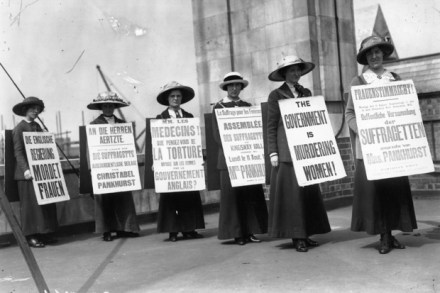
‘War and the village wives’, from The Spectator, 15 August 1914: The men and women of the village are talking unceasingly about the war. The whole aspect of the place is changed. The English silence is broken. Even on Sunday no one lolls and smokes in speechless reflection. All the men read the newspapers; none read less than the whole of one paper every day. The women, however, do not read them, and though they talk as much, they know far less than their husbands. Indeed, if one may judge by a good many chance conversations, they may be said to know nothing at all. It is the question of alliances which has confused these goodwives. A war should be between two countries, they think.
Saturday
The Spectator at war: The German military mind
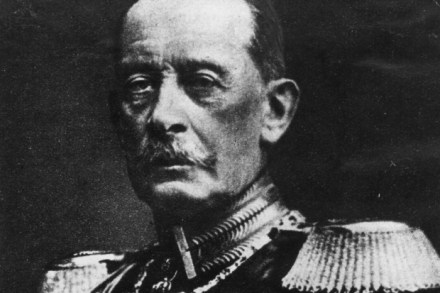
From ‘The German military mind’, The Spectator, 15 August 1914: All Englishmen are now agreed that Germany made the war, and that the moving force within the German nation was and is German militarism. The astonishing thing is in looking back is that any one here should have doubted what would happen if we either weakened our Navy below the safety points, or hesitated in the support of France and Russia. Our Navy, we admit, was not “let down,” but Germany thought she had enough evidence that Britain would remain neutral if France was attacked. For the German military mind this was good enough. Before Germany had discovered her mistake she had committed herself to war.
Friday
Are ministers better off today?
From the Barometer in this week's Spectator. Home Office minister Mark Simmonds resigned this week, complaining he couldn’t afford to live in London on his junior minister’s salary of £89,435. His resignation echoes that of Lord Gowrie, who resigned as minister for the arts in September 1985 complaining he couldn’t live in London on £33,000 a year. Are ministers better off now than they were then? — If you uprate Lord Gowrie’s 1985 salary with the Retail Prices Index (which the government now regards as overstating inflation), it would be worth £85,000, less than the sum earned by Simmonds.However, Lord Gowrie’s was a cabinet post and would now carry a salary of £134,565.