The Spectator

The Spectator at war: The first battle

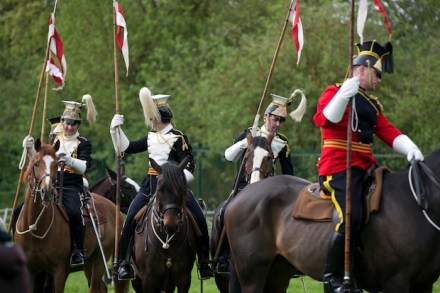
‘News of the Week’ in The Spectator, 29 August 1914: THERE is cause for manly anxiety, there is cause for stern determination; above all, there is cause for unflagging energy in military preparation; but there is no cause for despair, or even for despondency. If the effort of will is maintained by the nation, and if good sense, courage, and the calmness not of fatalism but of resolution strung to the very last point remain ours, we must win. We say this in no boasting spirit; but because time is with us and against our enemies. Those who fight with the sense that all is lost unless they can win quickly may get a certain superficial advantage from their desperation, but let us never forget that "if Tear-'em is a good dog, Holdfast is a better.
From the archives | 28 August 2014

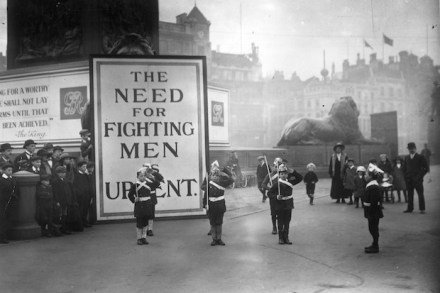
From ‘Left behind’, The Spectator, 29 August 1914: In the poorer streets a kind of holiday atmosphere prevails, and a sort of excitement which is in a measure pleasurable fills the air… All the children are intensely excited. Many fathers have ‘gone to the war’, but not quite so many as are said to have gone by little boys and girls who cannot bear to be behind their friends and neighbours in importance. It is a tremendous step up in the world to have relations ‘at the front’, and ‘the front’ has a very wide meaning to children. Indeed, it seems to include the whole of England, except London.

Rotherham’s child abuse was ignored in order to protect careers and retirements

This is an extract from this week's Spectator, available tomorrow. Subscribe from just £12 for 12 issues here.  If Rotherham council were a family, its children would have been removed by social services long ago, and Ma and Pa Rotherham would be safely behind bars. Professor Alexis Jay’s report, which was published this week, reveals depravity on an industrial scale in the South Yorkshire town. At least 1,400 children, Prof. Jay estimates, were subjected to sexual exploitation between 1997 and 2013. Many were raped multiple times by members of gangs whose activities either were or should have been known about. Children were trafficked around the country to be abused. Those who put up resistance were beaten.

The Spectator at war: The work of a Sheriff in wartime

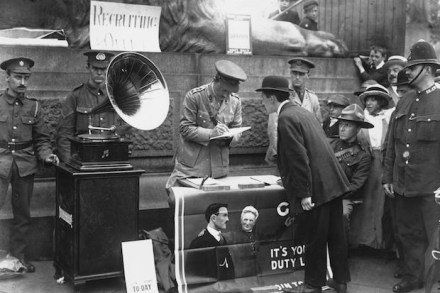
The Spectator, 29 August 1914. A SHERIFF may be compared to the Cheshire Cat in Alice in Wonderland, which faded away till nothing but its smile remained. The ancient office has gradually faded away till nothing but the ceremonial smile remains, a smile only now useful for the entertainment of Judges at the Assizes or for a public meeting. In war time, however, even Sheriffs may find work to do. As High Sheriff for the county of ---, I felt that the most appropriate work for one whose historic duty it is to call upon his county to attend him to repel the King's enemies was to do everything he could to help in organizing the national defence, and, above all things, to act as a recruiting agent for Lord Kitchener's Second Army.

The Spectator at war: The inalienable right to enlist

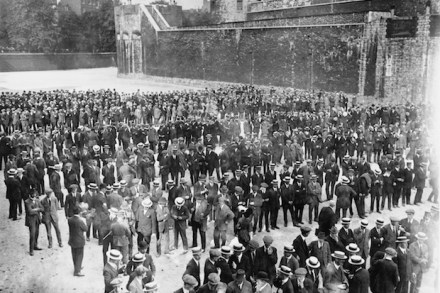
The Spectator, 29 August 1914: "WE need all the recruits we can get," said the Prime Minister in the House of Commons, and he said no more than every thinking man knows to be true. We need, not one hundred thousand, but at the very least five hundred thousand men, and as many more as will volunteer. That is the meaning of Mr. Asquith's statement. Unfortunately, we have hitherto not gone the right way, but the wrong way, to get them. Under a voluntary system if you want half a million men you ought to ask for a million. No other way will certainly give you the proper result.

View from 22 podcast special: Scottish independence debate round two

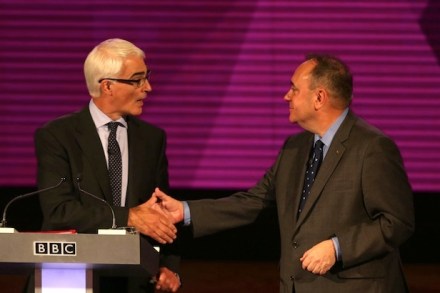
In this View from 22 podcast special, Alex Massie, Isabel Hardman and Fraser Nelson analyse this evening's going on in Glasgow, as Alex Salmond and Alistair Darling took part in the second round of their independence debates. The polls released immediately after the debate from The Guardian/ICM has Salmond the clear winner on 79%, with Darling on just 21% of the vote. But are the Yes campaigners right to be 'cock-a-hoop' about tonight, or will things appear differently in a few days when the dust has settled?

Salmond vs Darling: round two – live

Welcome to tonight’s liveblog of the BBC debate between Alex Salmond and Alistair Darling at the Kelvingrove Art Gallery in Glasgow. 00:05 In this View from 22 podcast special, Isabel Hardman, Alex Massie and Fraser Nelson discuss what they made of tonight's debate. listen to ‘Scottish Independence Debate special – with Isabel Hardman, Alex Massie and Fraser Nelson’ on Audioboo PS – in the podcast above, Fraser asks Alex Massie what he would choose as a headline if he were editor of a Scottish national newspaper.

The Spectator at war: What we are fighting for

The Spectator, 29 August 1914: NO decent or self-respecting person will ever indulge in a word of recrimination even against those men who supported Germany and German aspirations till the beginning of the war, who deprecated any attempt to make adequate military provision for war in these islands, and who denounced as criminal, and even inhuman, the distrust of the governing class in Germany when it was publicly set forth. Time has proved those who held these views to be wrong, and they are now, as a rule, the last men in the world to entertain them; but their forced disillusionment, though it may prove them to have been wrong in fact, does not of course in the least prove them to have been wrong at heart. Their error was in thinking too well of human nature.

The Spectator at war: Maintaining the machinery of sport

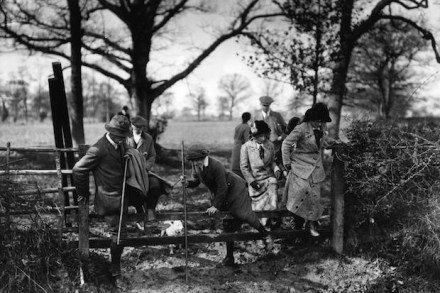
The Spectator, 22 August 1914: WHEN so great a business as war comes upon England, the sports and games of the country fall into their proper places. Cricket has been packed into an obscure corner of the daily newspaper. Golf clubs have expended their activities largely in trenching vacant ground, and in forwarding subscription lists to the Prince of Wales's Fund. The Scottish Football Union, sending its contribution to the Fund, exhorts its members to prove what they may owe to the discipline and self-control given by the game. But these games—just because they are merely games—are less seriously affected than other country activities.

The Spectator at war: Bayreuth on the eve of war

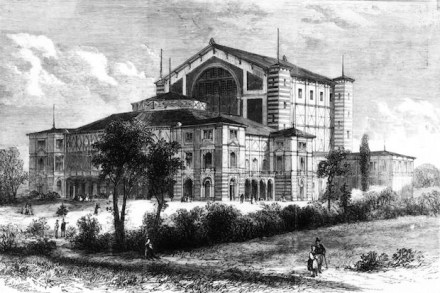
The Spectator, 22 August 1914: Inter arma silent Musae; but Bayreuth on the eve of the war showed very few signs of the coming cataclysm. It is true that on the presentation of the Austrian ultimatum to Servia a good many Austrian visitors departed, and the Fürsten-galerie was not so crowded towards the end of the first cycle as it was at the performance of Parsifal. The military were more and more in evidence in the streets: knots of officers were seen in animated conversation; groups of people circled round the newspaper offices and other places where bulletins were posted up, and, to judge from the nocturnal voces populi, a good many of the residents of Bayreuth seemed never to go to bed at all.

The Spectator at war: The scrap of paper that was worth a war

From The Spectator, 22 August 1914: THE Times of Wednesday published a piece of news in regard to the final interview between Sir Edward Goschen, our Ambassador at Berlin, and the German Imperial Chancellor, Herr von Bethmann Hollweg, which is of the highest significance. If the report is true—and we feel confident that the Times would not have given it such prominence unless convinced of its truth—the Imperial Chancellor expressed with considerable irritation his inability to understand the attitude of England, and added: "Why should you make war upon us for a scrap of paper?