Witness
From our UK edition
From our UK edition
From our UK edition
From our UK edition
From our UK edition
Advice for Cameron Sir: David Cameron once saved my life from a school of Portuguese man o’ war jellyfish, so now’s the time for me to save his political life with this advice: to do nothing. The British people are a fair-minded lot; they will give him another term in office because he and George Osborne have delivered the best growth rates in Europe despite the monstrous overspending and boom-bust of the Blair-Brown years. Every newly incoming ministry since the war has been re-elected — except Ted Heath’s, which broke all the rules anyhow — and this one will be too. Douglas Carswell is an intelligent man who has made a stupid mistake.
From our UK edition
In poor taste US Ambassador Matthew Barzun attracted the ire of chefs for complaining that he had been served lamb and potatoes too often since arriving in Britain. Some others who have landed in the oxtail soup after complaining about British food: — At a summit in 2005 former French President Jacques Chirac was said to have joked with world leaders that his country’s problems with Nato originated from being persuaded to try haggis by its former secretary-general George Robertson. He went on to say of the British: ‘one cannot trust people whose cuisine is so bad’.
From our UK edition
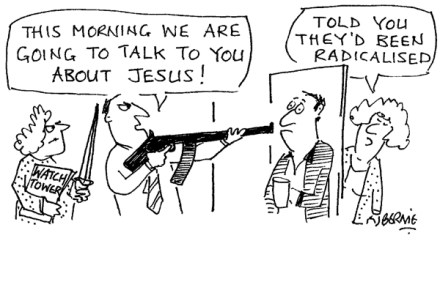
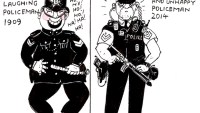
Home Britain’s terror threat level was raised from ‘substantial’ to ‘severe’ in response to fighting in Iraq and Syria, meaning that an attack on Britain was ‘highly likely’. Three days later, David Cameron, the Prime Minister, in a hesitant statement to the Commons, proposed that: police should be able to seize temporarily at the border the passports of people travelling overseas; there should be all-party talks on drawing up powers to prevent suspected British terrorists returning to Britain; those under terrorism prevention and investigation measures (Tpims) should be subject to ‘stronger locational constraints’.
From our UK edition
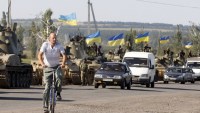
This week’s Nato summit was originally intended to look back on lessons learned from Afghanistan and reflect on the notion that (as Barack Obama put it) a ‘decade of war is now ending’. How naively optimistic that seems now. In the past week a second American journalist has been beheaded in Iraq and the Sunni insurgents who call themselves Islamic State say that a British hostage will be next. So far, their war has claimed more than 25,000 lives. Meanwhile Russia is intensifying its war with Ukraine in a conflict that has seen the loss of at least 2,000 lives.
From our UK edition

From our UK edition
Do the Tories think they’ve already lost the election? Their behaviour is certainly beginning to suggest so. In this week’s issue, James Forsyth and Isabel Hardman discuss the civil war that is raging in the Conservative party. A party that should be readying itself for victory is now preparing to tear itself apart in opposition. But can Cameron do anything about this? Isabel, James and Fraser Nelson weigh up his options in this week’s podcast. It’s a different story up in Scotland. The referendum debate has ignited politics, and galvanized both sides of the political spectrum.
From our UK edition
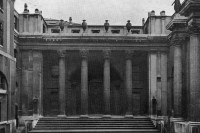
From The Spectator, 5 September 1914: THE general public is quite excusably befogged by the repeated references in the Press to the financial difficulties which are blocking the way to a general resumption of international trade. The sea has been opened by the power of our Navy, but commerce still hesitates to resume its normal course. At the same time, our Stock Exchange remains rigidly closed, and the mora- torium has been extended for another month. These two facts alone suffice to prove that there must be some very grave interruption to the ordinary machinery of finance and commerce. Yet it is known that the Government have taken the unprecedented step of guaranteeing an enormous number of financial transactions with the very object of putting the machinery of finance again in motion.
From our UK edition
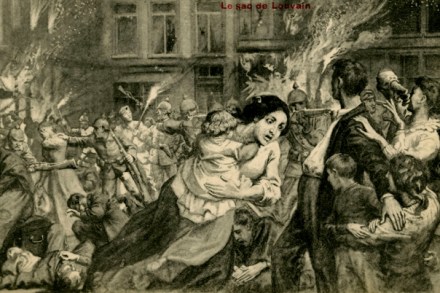
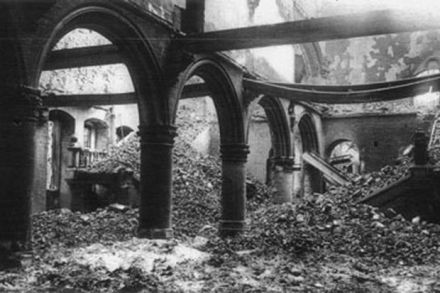
From ‘The giving up of Louvain to “Military Execution”,’ The Spectator, 5 September 1914: Germany has dealt herself the hardest blow which she has yet suffered in the war. By burning Louvain, killing we know not how many of its inhabitants, and turning the rest (say nearly 40,000 men, women, and children) adrift in the fields and on the pillaged countryside, she has forfeited the consideration of decent men. She has committed a deed which two centuries of exemplary conduct could scarcely efface… Germany must henceforth occupy a place with the Vandals and the Huns.
From our UK edition
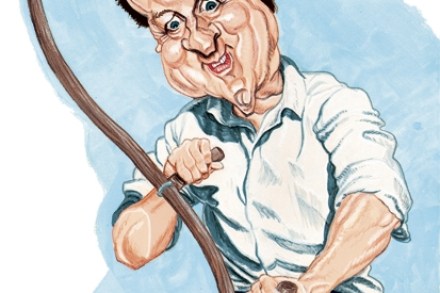
We asked Daniel Hannan, Lord Tebbit and historian Andrew Roberts what – if anything – David Cameron could do to rescue his party. Here's what they had to say: Daniel Hannan, MEP At this stage in the Parliament, there are no legislative tricks to pull out of the hat. In any case, as far as policy goes, David Cameron has got the basics right: lower spending, welfare reform, free schools, support for enterprise. But it all risks being thrown away because of a divided Centre-Right vote. Ukip will do to the Conservatives what the SDP did to Labour 30 years ago. Our first-past-the-post system doesn't allow space for two competing parties on the same side of the political spectrum. Think of the result at the Eastleigh by-election.
From our UK edition
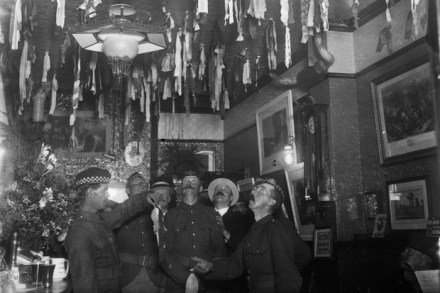
'Distraction', from The Spectator, 5 September 1914: EVER since the world began great trouble has been surrounded by ceremonial. From age to age the ceremonial changes. It tends to become a bondage or a hypocrisy, and bold social reformers step in, as they think, to destroy it, but immediately it appears again in a new form. Modern mourning is the sackcloth and ashes of the past. The grave tone in which we address the afflicted, though their trouble touch us but little, is as much a ceremonial as was the wailing of the ancient Jewish sympathizer. The Psalmist was greatly aggrieved because, when his false friends were in distress, he "humbled himself," and his politeness was disregarded.
From our UK edition
The Giving up of Louvain to 'Military Execution', from The Spectator, 5 September 1914: GERMANY has dealt herself the hardest blow which she has yet suffered in the war. By burning Louvain, killing we know not how many of its inhabitants, and turning the rest (say nearly forty thousand men, women, and children) adrift in the fields and on the pillaged countryside, she has forfeited the consideration of decent men. She has committed a deed which two centuries of exemplary conduct could scarcely efface. "German" must for a long time to come be almost synonymous with those epithets of nationality which we use to denote barbaric behaviour, particularly barbarism directed against a cultured conception of life. Germany must henceforth occupy a place with the Vandals and the Huns.
From our UK edition
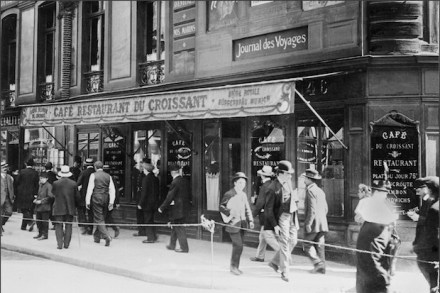
The Spectator, 5 September 1914: SEDAN Day has passed, but there has been no second Sedan, as the Germans so fondly hoped. Indeed, as far as one can yet learn, the day passed without any memorable action, for it would be absurd to count as memorable the pleasant little capture of ten German guns by the British cavalry near Compiegne. Granted reliance on Fabian tactics for the present—and we fully recognize that these are the right tactics to adopt in existing circumstances— we are well satisfied with the situation.
From our UK edition
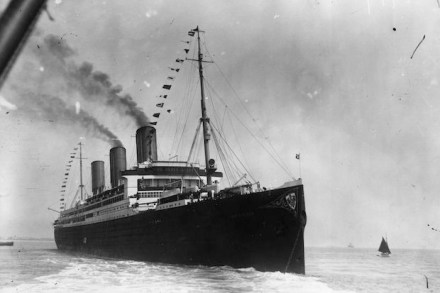
The Spectator, 29 August 1914 IT is most gratifying to Englishmen who value American sympathy to know that public opinion in the United States is wholly with them in the war. We may be told that we overestimate the advantage of the approval of the United States, and may seem to be in danger of reckoning it as an asset that may be measured in material terms— which, of course, would be entirely, and absolutely wrong, since the United States is, and ought to be, in the strictest possible sense of the word, a neutral—and yet we cannot help saying that we should prosecute this war with heavy hearts if we had any reason to think that the United States (a country which cultivates idealism in difficult places) withheld from us her moral sanction.
From our UK edition
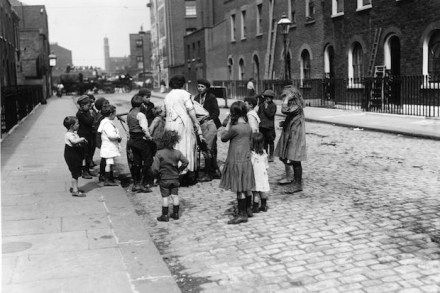
The Spectator, 29 August 1914: THE loafers in London look more pitiable than ever. The best have enlisted, and the rest are drinking to their good fortune and safe return. In the poorer streets a kind of holiday atmosphere prevails, and a sort of excitement which is in a measure pleasurable fills the air. The children rush out of school eager to go on playing at soldiers. The smallest boys tie tin cans about their persons and beat them with hoop-sticks as they march. In the byways of poor neighbourhoods London is still the London of thirty years ago. There is not much traffic. It is still possible to walk in the road if the street happens to be unusually full of people, and the children swarm in apparently greater number than where the traffic drives them to take cover indoors.
From our UK edition

From our UK edition
From our UK edition