Books and arts – 5 February 2015

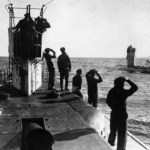
From ‘News of the Week’, The Spectator, 6 January 1915: THE mountain has produced a curious little naval mouse. The meeting of the German Council of War, together with the Emperor's State visit to the fleet at Wilhelmshaven, seemed to show that some great naval development was about to take place—either the coming out of the German Grand Fleet in an attempt at invasion, or else some new scheme in which air and water should combine to serve the apostles of hate. And then we get the announcement that Germany will sink our transports if she can—a thing which she has been trying hard to do ever since the war began, and a thing to which, of course, we can take no possible exception.
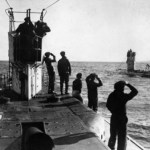
From ‘News of the Week’, The Spectator, 6 February 1915: Germany proclaims a paper blockade of all the British coast, to be carried out, when possible, by submarines! This new act of war is really too childish for discussion. It means no fresh development whatever. The Germans, as before, will try to destroy our ships with submarines and by sowing more mines, and they will doubtless have one or two small successes. The main course of trade will not, however, be in the least interfered with. As regards our food supplies, we are a thousand times more alarmed by the Labour Members’ menacing motion for fixing a maximum price for wheat, and by the government’s willingness to inquire whether it would not be a good thing to prevent the free access of corn to our shores.
From ‘Practical Proposals’, The Spectator, 6 February 1915: "BUT, after all, something has got to be done about these high prices; what do you propose?" so will, we are sure, persist the practical man. Well, the appeal is not unnatural, and we will try to answer it in a practical spirit. We will attempt to outline what we should do if we were the Government—provided, of course, that we had come to the conclusion that the rise was not temporary, but, as far as we could see, a rise likely to last, and a rise which was causing acute suffering. In the first place, we should look very carefully into the problem of freights, and see whether there was a shortage of shipping. and so a physical incapacity to bring sufficient corn to Britain.
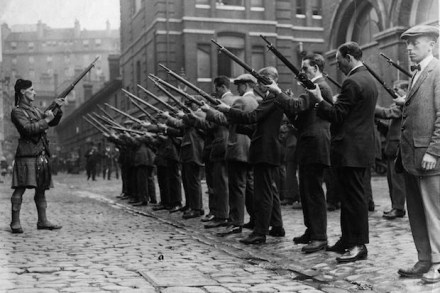
From ‘Military Rifle Shooting’, The Spectator, 6 February 1915: THE most serious problem which confronts those who are engaged in training our New Armies is unquestionably that of shooting. Drill and marching are important; trench-digging is vitally important; but what shall these profit the soldier if, when he has reached his tactical point and dug himself in, he can only waste his ammunition? The admirable and scientific system of musketry instruction which has been in force in our Army since the Boer War was the pre-eminent factor in the amazing success of our troops in holding off the attack of vastly outnumbering, forces on the retreat from Mons.
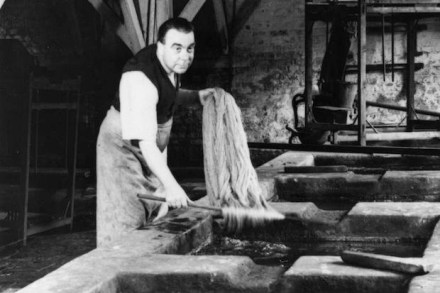
From ‘Free Traders and Trade Problems’, The Spectator, 30 January 1915: There is every reason to believe that if the chemists of the country would now concentrate on these chemical problems, a solution would be found which would enable us to build up chemical industries capable of holding their own even against a German combine. In the long run it is only those industries which can bold their own that this nation wants. If, through any special capacity that our competitors possess, they are able permanently to produce any particular article of a better quality or at a lower price than we can produce it ourselves, it is to our interest as a nation that they should continue to do so, and to exchange that product against our own productions.
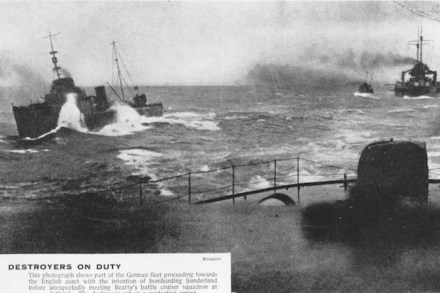
From ‘The Running Fight in the North Sea’, The Spectator, 30 January 1915: THE splendid success of the battle-cruisers under Admiral Beatty in the North Sea last Sunday means much more than that they sunk the German armoured cruiser 'Blücher,' as well as a light cruiser, and very seriously damaged two German battle-cruisers. It means that we have a much better knowledge than before of what German tactics are likely to be, and what the German capacity is for fighting a superior force with an inferior force.