The Spectator

The Spectator at war: A dreadful froth of dead

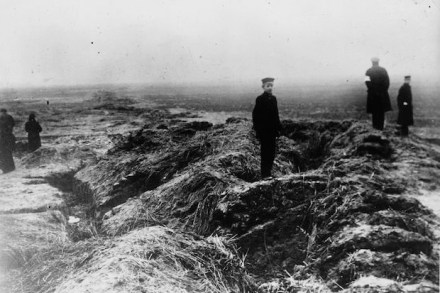
From ‘News of the Week’, The Spectator, 13 February 1915: FROM the eastern theatre of war there have been received daring the week details of the gigantic dimensions of Field-Marshal von Hindenburg's grand attack upon the Russian centre—i.e., upon the force on the Bzura which bars the German advance on Warsaw. On a very narrow front, not more, it is said, than seven miles, the Germans concentrated some hundred and fifty thousand of their best troops and burled them in close formation, five deep, upon the Russian trenches. This mighty mass of battalions, brigades, and divisions was supported by the fire of no fewer than a hundred batteries, or six hundred guns. The gun and rifle fire of the Russians swept away the beads of the formations as they advanced.
Removing Tony Abbott as Australian Prime Minister is pointless and reckless

In the latest issue of Spectator Australia, the leading article lambasts the Australian Liberal Party for trying to remove Prime Minister Tony Abbott: The determination by many in the media, even among conservatives, to hasten the demise of Tony Abbott’s prime ministership is as pointless as it is reckless. Pointless not because they will or they won’t succeed, but pointless because such an outcome would merely herald the beginning, rather than the end, of a long period of Coalition instability and in-fighting. Make no mistake: it is not Tony Abbott the man who is deeply unpopular (although his poll figures are, at present, nothing to write home about).

Spectator letters: Oxfam’s Ebola appeal; what Cumberbatch should have said; and why Prince Charles is right and wrong

In defence of Oxfam Sir: Mary Wakefield rightly praises Médecins sans Frontières but makes many misinformed claims about Oxfam and aid in general (31 January). Contrary to her suggestion, money donated to Oxfam and other charities’ emergency appeals must be spent solely on that crisis. This is stipulated by the Charity Commission and confirmed by our publicly available audited accounts. It is regrettably not possible for our website to provide a running commentary of developments in Liberia, but the British public can rest assured that their generous support is helping to save lives and to put lives back together.

Portrait of the week | 5 February 2015

Home MPs voted by 382 to 128 to make Britain the only country to allow genetic modification of embryos to prevent mitochondrial flaws: this could be done by the removal of the nucleus of a donor’s fertilised ovum and its replacement by the nucleus of two parents’ fertilised ovum, thus giving a child three parents. William Hague, the Leader of the House, outlined his plan for resolving the West Lothian question: ‘Before a Bill or parts of a Bill affecting only England was put to its final vote in the House of Commons, the English MPs would meet separately in what would be called the English Grand Committee and decide whether they agreed on it.’ Sir Martin Gilbert, the biographer of Churchill, died, aged 78.

Proof that the schools revolution isn’t over

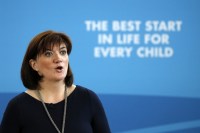
[audioplayer src="http://traffic.libsyn.com/spectator/TheViewFrom22_5_Feb_2015_v4.mp3" title="Isabel Hardman and Fraser Nelson discuss the plans for 50+ new free schools" startat=1694] Listen [/audioplayer]For those who assumed that the removal of Michael Gove as Education Secretary marked the end of the Conservatives’ scholastic reforms, this month may hold a surprise. More free schools are coming, The Spectator understands: at least 50 of them. Gove’s successor, Nicky Morgan, is due to announce the first of three waves this year. If the Tories win the election, Britain might have 150 more free schools by the end of the year. That means thousands more pupils enjoying independent education within the state system.