Bamboo
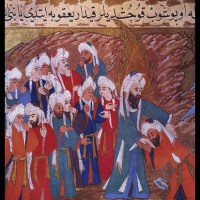
The roots of radicalism Sir: Qanta Ahmed is to be praised for her dissection of Islamism and her call for a reformation of Islam (‘Let there be light’, 17 January). That call has been muted for decades but is now growing louder, and it is right to promote Muslims who see a way forward out of their current predicament. But her view of an ‘authentic Islam’ that is untainted by Islamist interpretation is surprisingly naive. Islamists do not, in fact, distort classical Islam to the extent that Ahmed suggests. Offensive jihad is a doctrine in the Quran and was a practice of Mohammed. Harsh sharia laws pre‑date modern Islamism by many centuries.

Campaigning in Putney in 1978, Mrs Thatcher famously took out a pair of scissors and cut a pound note down the middle, telling her audience that the remaining stump represented what was left of the pound in your pocket after four years of Labour and high inflation. David Cameron may soon be able to repeat the stunt — except rather than cutting a note in half he will be able to stick a bit on the end to represent the extra buying power being granted to consumers courtesy of deflation. Inflation on the government’s preferred measure, the Consumer Prices Index (CPI), has fallen to 0.5 per cent. With the price of crude oil slumping and a supermarket price war in full cry, it may well dip below zero in coming months. That is to say: the cost of living is about to fall.
Home More than 1,100 imams and Islamic leaders received a letter from Eric Pickles, the Communities Secretary, and Lord Ahmad of Wimbledon, the communities minister, saying: ‘We must show our young people, who may be targeted, that extremists have nothing to offer them.’ Imran Khawaja, from Southall, west London, who had posed for a picture in Syria with a severed head before trying to re-enter Britain, pleaded guilty to four terrorism offences and will be sentenced next month. Sir John Chilcot confirmed that the report of his inquiry into the Iraq war, which took its last evidence in 2011, would not be published until after the election. A workers’ dispute left 1,300 houses in Northern Ireland without water; some people boiled snow.
Poor data Oxfam complained of an ‘inequality explosion’, citing an estimate that by next year 1 per cent of the world’s population will own half the wealth, but little other evidence. Is global inequality really growing, and does it matter? — There have been few estimates of global inequality in income and wealth, but one recent one was contained in a Unicef report in 2011 which revealed that on some measures global inequality is falling. In 1990, it claimed that the wealthiest 20% of people on the planet received 87% of global income. By 2007 that had fallen to 83%. Over the same period the poorest fifth of the population saw their share of wealth increase from 0.8% to 1%.
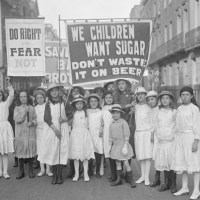
From ‘Economic quackery’, The Spectator, 23 January 1915: Ever since the war began there has been a tendency to rely upon the government, instead of relying upon ourselves and upon the operation of economic laws. The political mischief resulting is the establishment of what is virtually an uncontrolled Cabinet autocracy. The economic mischief, though it has already made itself evident in one important particular, may only be realized years hence. The instance to which we refer is the case of sugar. The public and the government worked themselves up into a panic at the beginning of the war over the price of sugar, with the result that Mr McKenna was permitted to gamble in sugar with many millions of the nation’s money.
From The Spectator, 23 January 1915: The Press Bureau has published, at the request of the Russian Embassy, a narrative of the insults, privations, and assaults suffered by Russian subjects in Germany after the outbreak of war. All the facts have been carefully verified, and the names of the chief victims are given. The story of the violent treatment which the staff of the Russian Embassy endured is already well known, but here we have the first detailed evidence of the cruel treatment of the hundreds of Russians who were convoyed to the frontier. As an example we may mention the case of one party of sixty travellers who were not allowed for seventy hours to leave the railway carriages more than once. All this time they were refused not only food but water.
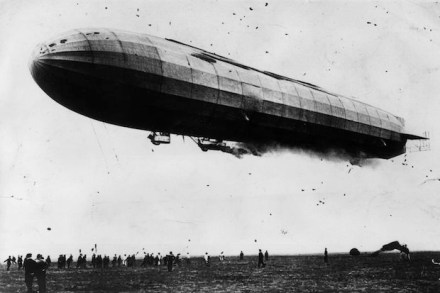
From ‘News of the Week’, The Spectator, 23 January 1915: WE have written elsewhere of the raid by German airships on Tuesday night, but may mention here the bare facts. The airships, of which there were apparently three, were seen at 1.30 in the afternoon off the Dutch coast, and they must have reached England after dark. Their presence was unsuspected till bombs began to fall on Yarmouth about 8.30. Considerable damage was done to houses, but some of the bombs did not explode. One bomb actually went right through a house without injuring anybody. A men and a woman, however, were killed. Later King's Lynn was visited by the airships, which on the way dropped bombs near Brancaster, Heacham, Snettisham, and Sandringham.
From The Spectator, 16 January 1915: A VOICE FROM THE FRONT [To the editor of the “Spectator”] SIR,— You may be interested to hear that the other day—in a place which the Censorship regulations forbid me to mention —I saw a number of soldiers surrounding an officer who was reading the Spectator to them; and in another place I saw a private give a packet of treasured cigarettes to a comrade for a three-weeks-old copy of the Spectator. He felt he bad got a good bargain. Pray do all you can to get the men in England to undertake their proper share of the work we are doing out here for them.

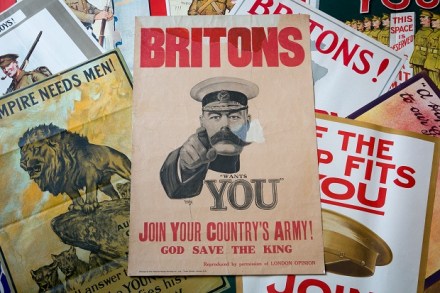
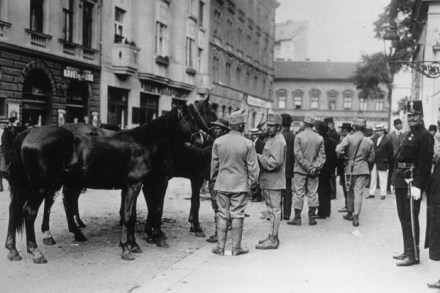
From ‘Compulsory Service’, The Spectator, 16 January 1915: COMPULSORY service has not come yet, but it is drawing very near, and will certainly come unless some miracle should intervene—as, for example, the conquest of this country or the sudden collapse of our enemies. Those who dispute our statement that compulsion is coming must be very poor readers of the signs of the times, or else have paid no attention to Lord Haldane's speech in the House of Lords on Friday week. In that speech Lord Haldane, with great emphasis and with perfect clearness, laid down the principle which we have preached in these columns for the last seven or eight years when supporting the policy of Universal National Service.