Strut
From our UK edition
From our UK edition
From our UK edition
In defence of Kids Company Sir: Your piece ‘The problem with Kids Company’ (14 February) bears an important message: charities need to be transparent and accountable. That’s why Kids Company was independently audited twice last year alone, and our financial structures and functioning put to the test. We also have auditors working alongside us, verifying our outputs and outcomes in relation to our government grant. All such audits have been positive. Several pieces of independent research were carried out capturing our clinical work and our staff wellbeing — two of these found our staff satisfaction and productivity to be above 90 per cent. Some 600 staff, almost 10,000 volunteers and 500 clinical students worked at Kids Company last year.
From our UK edition
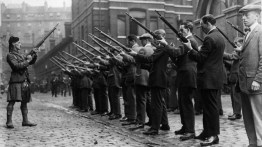
Gun lords The House of Lords shooting range is to be turned into a cupboard, having previously survived an attempt by Labour MPs in 1997 to turn it into a crèche. — The range was constructed in 1916 for the Palace of Westminster Rifle Club, which managed to convince the Lord Great Chamberlain that rifle clubs were ‘a means of promoting a stronger sense of citizenship among members’. — The motive was not to train lords for front but to help them practise for the annual Lords vs Commons shooting match, held at Bisley since 1862. An early participant was the Maharajah of Vizianagram, who in 1875 provided £400 to make a trophy for the event.
From our UK edition
To listen to Greek government ministers addressing the outside world during their breaks from negotiations with eurozone leaders this week, it would be easy to form the impression that Greece had a mighty economy upon which all other eurozone countries were pathetically dependent. ‘Europe is going through the difficult process of understanding that Greece has a new government committed to changing a programme that has failed in the eyes of everyone who doesn’t have a vested interest,’ said finance minister Yanis Varoufakis. The reality is that Greece is the dependent country, propped up by its creditors, and it is Greek government ministers who are having trouble in understanding the situation in which they find themselves.

From our UK edition
Home The annual rate of inflation fell to 0.3 per cent as measured by the Consumer Prices Index (or to 1.1 per cent by the Retail Prices Index). The Bank of England predicted a touch of deflation in the spring. Unemployment fell by 97,000 to 1.86 million in the last quarter of 2014. The FTSE share index rose to 6,914.62, close to its record of 6,930.2 on 30 December 1999. In a lecture at King’s College London, Sir John Sawers, who was until November head of MI6, said: ‘The Ukraine crisis is no longer just about Ukraine. It’s now a much bigger, more dangerous crisis, between Russia and western countries.’ Sex-and-relationships education should be compulsory in all state primary and secondary schools in England, the Commons Education Committee said in a report.

From our UK edition
From our UK edition
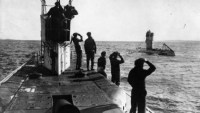
From ‘News of the Week’, The Spectator, 20 February 1915: We are very glad to see that the Admiralty have rewarded the captain and crew of the merchant steamer 'Laertes,' which skilfully escaped from a German submarine attack last week. Although his vessel was unarmed and rather slow, Captain Propert came through unhurt both by gunfire and torpedo attack. He has set an example of coolness, gallantry, and seamanlike resource to the merchant service, and the Admiralty in honouring him have done the right thing in the right way. He has been granted a temporary commission in the Royal Naval Reserve, and has received the Distinguished Service Cross. His officers have each received a gold watch, and every member of the crew £3. But why the nondescript sum of £3?
From our UK edition
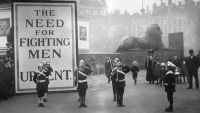
From ‘The psychology of drill’, The Spectator, 20 February 1915: One is tempted to divide all men under drill into two classes — the precipitate and the tardy. Every one who has listened to a drill instructor’s words knows that the first part of a command is cautionary. For instance, in ‘Right-turn’ there is a pause between the two words, and the movement to the right takes place on the word ‘turn’. Some men cannot prevent themselves from moving at the word ‘right’. Others are late on the second word. Surely this tendency must correspond to some constitutional temperament or innate mental quality.
From our UK edition
From ‘The Finance of the War’, The Spectator, 20 February 1915: According to Mr. Lloyd George's estimate, the three Allied Powers together will have expended on war purposes by December 31st next something like £2,000,000,000. British expenditure, he estimates, will exceed that of each of the other two Powers by something between £100,000,000 and £150,000,000. We may take it that the extra cost involved to Great Britain is mainly due to the more liberal scale upon which our soldiers are paid and their dependants supported.

From our UK edition
From ‘News of the Week’, The Spectator, 20 February 1915: The great event of the week ought to have been the beginning of the blockade by Germany of the whole of the shores of the British Islands. Strangely enough, however, Der Tag passed in complete calm, and we are now informed by German wireless that it was a mistake to suppose that anything particular would happen till some days after the 18th. One of the German papers, indeed, speaks of ten or fifteen days having to elapse before the hour strikes.

From our UK edition
From ‘Labour Problems and the War’, The Spectator, 13 February 1915: The ultimate object of all Trade Union regulations is to improve the pecuniary position of the wage-earner. How far that object is attained by Trade Union methods is a matter of very keen controversy. There are economists, like the late Mr. T. S. Cree, who have brought forward many strong reasons to show that in the long run the position of the wage-earning classes could not be pecuniarily benefited by Trade Union action. There is no space here to follow out Mr. Cree's arguments, and for the moment there is no necessity to do so. For the purpose of the controversies which are now likely to be raised no harm will be done in assuming that the conventional view as to the value of Trade Union methods is correct.

From our UK edition
From News of the Week, The Spectator, 13 February 1915: In the House of Commons on Thursday Mr. Asquith made three notable announcements. In future Sir John French will send twice a week a communication summarizing the doings of the British Force. Evidently "Todgers's can do it when it likes." Next Mr. Asquith explained that the Government are considering the adoption of more stringent measures against German trade. Thirdly, he declined to fix maximum prices – "an experiment which the German Government had made with disastrous consequences." We record this decision with intense relief, for it means that the Cabinet realize that the sure way to starve the working classes would be to discourage the importation of corn by artificially knocking down prices.
From our UK edition
From ‘Prohibition in Scotland during the war’, The Spectator, 13 February 1915: WE note with great interest the movement which is gathering strength in Scotland in favour of prohibition during the war. Let us say at once that, provided a well-marked majority of the representatives of the Scottish constituencies support the movement, we not only see no reason why their wishes should not be fulfilled, but we see good reason why the Government, at a time when there is plenty of Parliamentary leisure, should take up the matter and let Scotland have what she wishes.

From our UK edition
From our UK edition
From our UK edition
From our UK edition
From our UK edition
From our UK edition
From our UK edition