The Spectator
Thursday
Letters | 9 April 2015
In defence of Catholicism Sir: Michael Gove gives an excellent defence of Christianity (4 April), but his embarrassment about the Roman Catholic part of the story is unnecessary. He writes of his discomfort as, declaring oneself to be a Christian, ‘You stand in the tradition of the Inquisition, the Counter-Reformation, the Jesuits who made South America safe for colonisation … the Christian Brothers who presided over forced adoptions’. The Inquisitions (Papal, Spanish and Portuguese) were indeed shameful, but were often as ineffective as the governments that supported them. The Counter-Reformation was a great movement of spiritual and cultural renewal that altered and improved western civilisation.
Barometer | 9 April 2015
The Scottish way of death Nicola Sturgeon said the SNP would block a rise in the state pension age on the grounds that it would be unfair to Scots, who don’t live as long as the English. — The idea that the Scots die early was fuelled by a study by the Glasgow Centre for Population Health in 2006, which found male life expectancy in the Calton area of Glasgow to be 54: less than in many developing countries. — The figure, derived from statistics collected between 1998 and 2002, was exaggerated by the presence of a large number of hostels in the Calton taking in drug addicts from other areas. Life expectancy in Glasgow as whole last year was 73 for men and 78.5 for women, the lowest for any council area in Britain but not by much. In Blackpool it is 74.3 for males.
Swing time
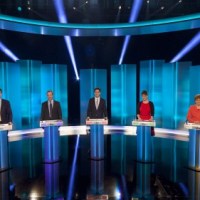
The age of two-party politics is over: we know that because everyone keeps saying so. We are entering an era of coalitions, apparently, where compromise is king and a wider variety of views will be represented in parliament. These barely comprehensible seven-way television debates are the future, we are assured, and decisive general election results a thing of the past. Look deeper and this analysis falls apart. Even now, Labour and the Conservatives between them have about two thirds of the vote, just as they did at the last general election. What we are witnessing is the collapse of the Liberal Democrats, who have been reduced — on a bad day — to being the UK’s sixth most popular party.
Portrait of the week | 9 April 2015
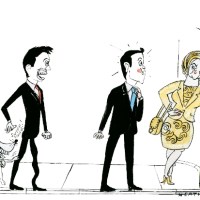
Home Tony Blair, the former prime minister, opposed a referendum on membership of the EU. In a speech at Sedgefield he said that, following the Scottish referendum, David Cameron, the Prime Minister, knew ‘the perilous fragility of public support for the sensible choice’. Opinion polls following a television debate by seven party leaders, which drew an audience of 7.7 million, were inconsistent. Nicola Sturgeon, the leader of the Scottish National Party, was held to have made a mark, while Leanne Wood, the leader of Plaid Cymru, and Natalie Bennett polled at between 2 and 5 per cent. Nigel Farage, the leader of Ukip, was seen to sweat profusely.
Books and arts – 9 April 2015
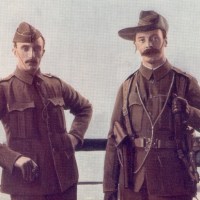
Before Dad’s Army
From ‘Our Home Guards’, The Spectator, 10 April 1915: There is nothing of the national picnic; or of playing at soldiers about the Home Guards. Those who enter the corps mean business, and not a good time in the open air under a series of military aliases. Some of the special features of the movement are most interesting. Mr Harris in his letter mentions the example of Bradford. In this city the Volunteer movement has created something like a social and moral revolution. It has given the city a corporate military feeling akin to that which existed in the great Flemish towns in the 14th century.
Wednesday
The Spectator at war: Righting wrong
From ‘News of the Week’, The Spectator, 10 April 1915: With much satisfaction we record that Mrs. Johnson, formerly of Redhill and now of Old Town, Croydon, has been awarded by the Home Office £500 compensation for eighteen months' wrongful imprisonment. This unhappy woman was wrongly convicted in October, 1912, and July, 1913, of writing threatening letters. The letters have since been clearly traced to another person. Her husband and family were compelled to leave their former home, and were reduced almost to destitution. The compensation is none too large after two and a half years of agony, but we congratulate the Home Office warmly upon having done the just thing and done it promptly.

Tuesday
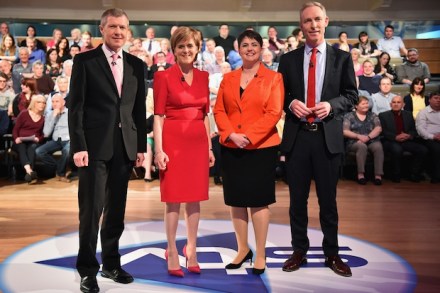
As it happened: Scottish leaders’ debate
Welcome to The Spectator’s live coverage of the Scottish leaders’ debate on STV. We’ll be providing the latest developments and analysis on the programme, starting at 8pm this evening.
The Spectator at war: Three month suspension
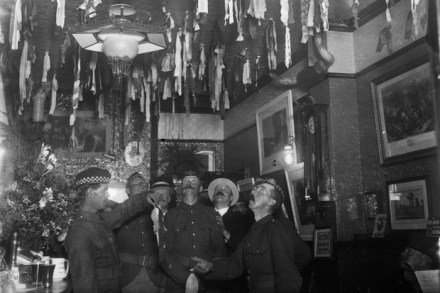
From ‘A Possible Compromise’, The Spectator, 10 April 1915: If the Government have not the courage to adopt total prohibition, then we reluctantly suggest the following plan. Let the Cabinet adopt the policy of the suspension of the sale of all intoxicants for three months—say from April 20th till July 20th. Such suspension would cover what, as far as we can see, must be the crisis of the war. It would cover also the period when climatic conditions give less excuse for the use of stimulants, though at the same time they increase the temptation to drink on the purely physical ground of thirst. Speaking generally, people drink more in hot weather, though they have really much less excuse for demanding a "dram" than they have in very cold or very wet weather.