The Spectator

The Spectator at war: The possibilities of thrift

From ‘The Possibilities of Thrift’, The Spectator, 10 April 1915: IT has, perhaps, not yet been sufficiently realized that the country is passing through what may almost be called an economic revolution. Large numbers of the working classes who, let it be frankly admitted, were often underpaid are now in receipt of incomes which, in comparison with their previous earnings, must almost be described as princely. The husband, who by the nature of the case in a working-class family is the greatest consumer, has gone to the front, and the wife finds herself in possession of a larger income than before, while she is relieved of the principal burden upon her housekeeping money.

Letters | 9 April 2015

In defence of Catholicism Sir: Michael Gove gives an excellent defence of Christianity (4 April), but his embarrassment about the Roman Catholic part of the story is unnecessary. He writes of his discomfort as, declaring oneself to be a Christian, ‘You stand in the tradition of the Inquisition, the Counter-Reformation, the Jesuits who made South America safe for colonisation … the Christian Brothers who presided over forced adoptions’. The Inquisitions (Papal, Spanish and Portuguese) were indeed shameful, but were often as ineffective as the governments that supported them. The Counter-Reformation was a great movement of spiritual and cultural renewal that altered and improved western civilisation.

Barometer | 9 April 2015

The Scottish way of death Nicola Sturgeon said the SNP would block a rise in the state pension age on the grounds that it would be unfair to Scots, who don’t live as long as the English. — The idea that the Scots die early was fuelled by a study by the Glasgow Centre for Population Health in 2006, which found male life expectancy in the Calton area of Glasgow to be 54: less than in many developing countries. — The figure, derived from statistics collected between 1998 and 2002, was exaggerated by the presence of a large number of hostels in the Calton taking in drug addicts from other areas. Life expectancy in Glasgow as whole last year was 73 for men and 78.5 for women, the lowest for any council area in Britain but not by much. In Blackpool it is 74.3 for males.

Swing time

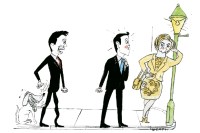
The age of two-party politics is over: we know that because everyone keeps saying so. We are entering an era of coalitions, apparently, where compromise is king and a wider variety of views will be represented in parliament. These barely comprehensible seven-way television debates are the future, we are assured, and decisive general election results a thing of the past. Look deeper and this analysis falls apart. Even now, Labour and the Conservatives between them have about two thirds of the vote, just as they did at the last general election. What we are witnessing is the collapse of the Liberal Democrats, who have been reduced — on a bad day — to being the UK’s sixth most popular party.

Portrait of the week | 9 April 2015

Home Tony Blair, the former prime minister, opposed a referendum on membership of the EU. In a speech at Sedgefield he said that, following the Scottish referendum, David Cameron, the Prime Minister, knew ‘the perilous fragility of public support for the sensible choice’. Opinion polls following a television debate by seven party leaders, which drew an audience of 7.7 million, were inconsistent. Nicola Sturgeon, the leader of the Scottish National Party, was held to have made a mark, while Leanne Wood, the leader of Plaid Cymru, and Natalie Bennett polled at between 2 and 5 per cent. Nigel Farage, the leader of Ukip, was seen to sweat profusely.