The Spectator

Which world leaders survived the greatest number of assassination attempts?

From our UK edition

Marathon sprints The Kenyan marathon runner Sabastian Sawe broke the world record by running the first official sub-two-hour marathon. – The world’s first official sub-three-hour marathon was also run in London, at the 1908 Olympics at White City. – The record could have gone to an Italian, Dorando Pietri, but he collapsed just short of the line and was helped over it, leading to his disqualification. The record went instead to Johnny Hayes, at a time of two hours 55 minutes and 18 seconds. – The two and a half hour barrier was broken in 1925, in New York. The price of energy Is renewable energy really helping to keep down bills? The table shows domestic electricity price alongside the share of electricity made up of wind and solar. South Korea 10.

Unearthing

From our UK edition

I’d not go out there now if I were you –  not unless you have a taste for fire falling in flakes, for clouds of dust that leave an acrid chalky residue on wigs and epaulettes. If I were you I’d be inclined to stay inside at least until the ground had ceased to shake, the roads to crack – unearthing bad things we buried not that long ago. We’ve all been out enough by now to know it’s not the best of times to feign disinterest now the pillars of the temple are askew, now slates are flying, bridges burning and the big cats have bust out of the zoo.

In the local elections, think local

From our UK edition

In March, just before Artemis II rounded the far side of the Moon, the Transport Secretary had her own lunar encounter. Heidi Alexander claims that a ‘moon crater’-sized pothole forced her Mini off the road in Oxfordshire. She is far from alone. Pothole casualties in Britain rose from 270 in 2020 to 393 in 2024, including six dead. An RAC Europe survey found that 62 per cent of British drivers thought European roads are better maintained. Britain’s pothole problem is a story of government dysfunction. Local authorities seem unable to perform their basic duties; meanwhile, council tax continues to rise, bin collection becomes more infrequent and public spaces continue to deteriorate.

Letters: the little-known role of liquorice in parliamentary history

From our UK edition

Pennies pinching Sir: I agree with much of this week’s editorial, except for two points (‘Nunc dimittis’, 25 April). As a formerly Positively Vetted civil servant, I cannot see what point there is in vetting an applicant for a job if the outcome of the vetting (as opposed of course to the private details) is not made known to the appointer. Who was responsible for this not happening in the current case still remains obscure. The second point I take issue with is your pressing for the end of the triple lock for pensions. I wish you would suggest how pensioners who have the ‘full’ state pension, and just enough more to put them over the threshold for Pension Credit, are expected to live?

Livestream: The Fight for the Right

From our UK edition

Watch the live recording of The Fight for the Right. On Wednesday 29 April, we pit the Conservatives, represented by Nick Timothy and Claire Coutinho, against Reform UK, represented by Matt Goodwin and Danny Kruger, to see which party truly represents the future of the right. The debate will be chaired by Isabel Hardman, The Spectator’s assistant editor. The livestream is exclusive to Spectator subscribers.

How many people undergo security vetting?

From our UK edition

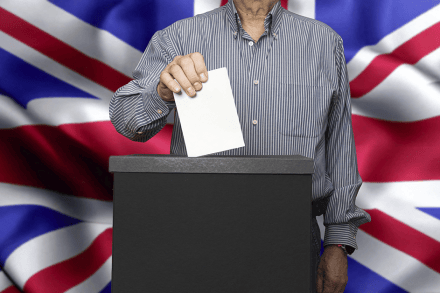
Balls to that Why are elections called ‘ballots’?  — The word ballot comes from the Italian, pallotta, meaning a small ball. In Venice in the 16th century voters deposited a pallotta in a pot. The same system was used in an election in Barnstaple, Devon, in 1689, where voters were given a ball and asked to deposit it in one of two pots. The system allowed people to vote secretly by concealing the ball in one of their fists. They would hold each fist over a pot and discreetly drop it. No one watching could tell which fist had contained the ball. Heavy vetting How many people undergo security vetting?

It’s time for Starmer to go

From our UK edition

The Book of Common Prayer asks that those who ‘suffer for the sake of conscience’ might be strengthened. Those prayers were answered on Tuesday morning. Sir Olly Robbins, the not so permanent under-secretary at the Foreign Office, demonstrated a calmness and strength of purpose in upholding the duties of his office which shamed the prime minister who sacked him. The suffering civil servant, who told the committee that he knew sections of both the civil service code and the Book of Common Prayer by heart, was vindicated. Sir Keir Starmer was revealed, by contrast, as not so much a king led astray by evil counsel but a whited sepulchre – professedly virtuous but corrupted within.

Letters: what vegetarians get wrong

From our UK edition

Flat broke Sir: John Power’s article on the property squeeze (‘Flatlined’, 18 April) identifies a symptom of a deeper problem, the overregulation of property. Buyers are deterred by spiralling service charges, which are themselves driven by layers of legislation, insurance premium hikes and rocketing labour costs. Those still willing to take the plunge are then hit by a tax system that actively discourages transactions. In the absence of buy-to-let demand, it is no surprise values are dropping. The solution is obvious. Stamp duty, with its crude cliff edges, freezes activity and distorts prices. A landlord or renovator can face £20,000 or more in tax on an entirely ordinary flat, a deterrent by design. This is not a plea for higher prices.

Vinegar

From our UK edition

A bad night for a scattering.             The river’s mouth was full. Sucked in its draught the last of him             seemed indissoluble. So once again she’d got things wrong.

We can’t afford to keep the pension triple lock

From our UK edition

When Britons go to the polls next month, the results will likely reveal just how un-United the Kingdom has become. Separatist parties are poised to win in Northern Ireland, Scotland and Wales. The established parties of government – Labour and Conservative – are likely to sustain losses. The former may be deserved, and the latter unjust, given Kemi Badenoch has been vigorously effective in holding the Prime Minister to account. Even so, the polarising dynamics of our splintered nation will hit both historic parties hard. In a polity that is split by geography, attitude and income, one division is particularly striking: age In a polity that is split by geography, attitude and income, one division is particularly striking: age.

Portrait of the week: Trump attacks the Pope, Trump praises the King and Melania goes public

From our UK edition

Home Lord Robertson of Port Ellen, the former secretary general of Nato, said: ‘We are under attack. We are not safe... Britain’s national security and safety is in peril.’ The government ran out of time to pass legislation to give the Chagos Islands to Mauritius before the end of the current session of parliament. Sir Keir Starmer, the Prime Minister, visited Saudi Arabia, the UAE, Bahrain and Qatar. He said in the Guardian that renewable energy would give Britain resilience in an unstable world. The IMF forecast that the Iran war would hit Britain’s economy the hardest, among G7 countries, reducing its estimate for growth this year to 0.8 per cent, from the 1.3 per cent predicted in January.

Which racecourses have seen the most deaths?

From our UK edition

Hero worship Peter Magyar, the new PM of Hungary, has the unique distinction among world leaders of bearing the name of the country he leads. Why do we call the country Hungary when the natives call it the ‘land of the Magyars’? – ‘Hungary’ is literally, the land of the Huns. However, Middle English didn’t distinguish between them and the Magyars, a tribe which, in the 9th century, invaded and settled in what had been known as Pannonia. The Magyars themselves spoke a Uralic language related to Finnish, in which ‘Magyar’ is believed to mean ‘hero man’. Any relationship to the acronym ‘MAGA’ is purely coincidental. School starters The Scottish Green party wants to raise the age at which children start school to seven. How does this vary around the world?

Letters: No, pensioners don’t ‘have it easy’

From our UK edition

Same old Sir: In Michael Simmons’s otherwise excellent yet alarming essay on ‘Benefits treats’ (11 April), one sentence spoiled the rest of my day: to say that pensioners are ‘protected from and by every government decision’ is maddening nonsense. Pensioners are affected in exactly the same way as everyone else whenever the government of the day changes anything. Every time we switch on the heating, shop, fill up the car, pay any bill, we are suffering under the same government-fuelled inflation as everybody else. The chaotic finances of local government mean our council tax goes up along with everybody else’s. Every time tax thresholds are frozen, many of us pay more tax.

Livestream: Is AI a threat to humanity?

From our UK edition

Watch the live recording of Is AI a threat to humanity?. Michael Gove, The Spectator’s editor, was joined by Louis Mosley, head of leading AI firm Palantir Technologies UK, Martin Wolf, the FT’s chief economics commentator,  former health secretary Matt Hancock and Stephanie Hare, technology broadcaster and journalist, to discuss whether AI will save – or destroy – the global economy, the risks it poses to our institutions and the possibility it may one day turn on humanity.

Portrait of the week: Trump threatens Iran, Kanye is banned and Artemis II heads to the Moon 

From our UK edition

Home The government withdrew an offer to create 1,000 more training posts for doctors in England after the British Medical Association refused to call off a six-day strike by resident doctors. In a speech at a White House Easter lunch, President Donald Trump of America mocked Sir Keir Starmer, the Prime Minister, for having to consult his team about sending ‘two, old broken-down aircraft carriers’ to the Middle East. Seven people protesting at Lakenheath RAF base were arrested on suspicion of supporting the proscribed group Palestine Action. Chris Rokos, the billionaire hedge fund owner, is to donate £190 million to the University of Cambridge to found a school of government.