Stephen Daisley

Stephen Daisley

Stephen Daisley is a Spectator regular and a columnist for the Scottish Daily Mail

Will Joanna Cherry’s sacking strengthen Sturgeon?

13 min listen

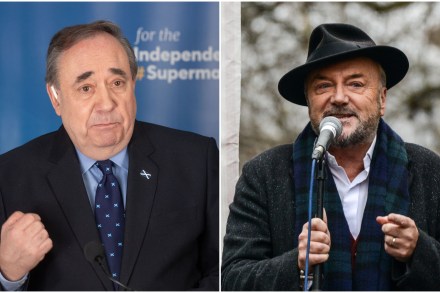
Joanna Cherry was sacked from the SNP's Westminster frontbench today. The former justice spokesperson, who is an ally of Alex Salmond, was dropped as the party continues to row over transgender rights. Has the move strengthened leader Nicola Sturgeon's position? Katy Balls speaks to James Forsyth and Stephen Daisley.

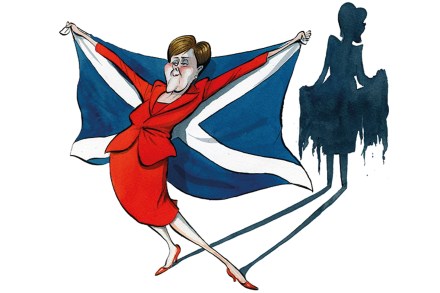
Sturgeon’s purge: why Joanna Cherry had to go

Joanna Cherry is out as the SNP’s Home Office spokeswoman at Westminster. The QC, who also shadowed the Justice Secretary, announced on Twitter that she had been ‘sacked’ from the nationalist frontbench. https://twitter.com/joannaccherry/status/1356233346565730304?ref_src=twsrc%5Etfw Her departure comes as part of a rejigging of what the party terms ‘the real opposition’. There is some established talent there (Alison Thewliss at Treasury, Alyn Smith at foreign affairs, Stewart McDonald at defence) and some fresh blood in the form of 2019-intake MP Stephen Flynn, bumped up from junior Treasury spokesman to ‘Shadow Secretary of State for Business, Energy and Industrial Strategy’.

Sturgeon is playing politics with her clumsy trans rights intervention

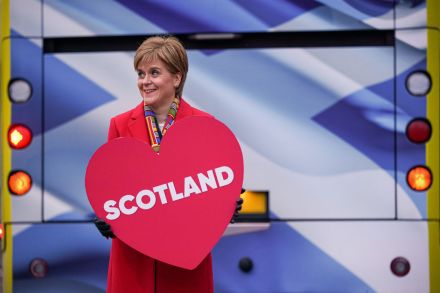
You would think Nicola Sturgeon had enough on her hands, what with overseeing a sluggish vaccine rollout, being under investigation by the Scottish parliament and hosting her own daily TV show on the BBC during the pandemic. Yet the leader of Scotland’s nationalist party has waded into the debate on trans rights and gender identity in a video published on Twitter. Sturgeon said: ‘I don’t have much time for anything other than the fight against Covid right now but on some days silence is not an option. This message wasn’t planned, it’s not scripted; I haven’t consulted with armies of advisers. That might be obvious. But what you’re about to hear comes from my heart.

The 20th century told in 10 films

Cinema came of age in the 20th century and documented that epoch in all its trials and tribulations. Movies are for the most part escapist confections but they can also reflect our world back to us. To learn about the major events of the last century, it is sometimes as useful to turn to a film as to pick up a book. The following are ten movies that tell key chapters of the 20th century. The Great War, 1917 (Sam Mendes, 2019)  https://www.youtube.com/watch?v=gZjQROMAh_s World War I is the harder of the two world wars to make a movie about. It was not a good war, easily rendered into a Hollywood morality play about monstrous Germans, cruel Japanese, plucky Brits and heroic Americans.

The case for liberal pessimism

Liberalism hasn’t had its sorrows to seek of late but its misfortunes show no sign of abating. The confluence of national populism and coercive progressivism, and the refusal of the non-aligned but sympathetic soft-right and soft-left to break with the culture wars, gives liberalism little chance of reasserting itself. This comes, too, as domestic and external threats to the liberal order continue to pile up. Far from a break with the authoritarian trends of recent years, 2021 has the makings of another annus illiberalis. 1) Trump is going, his politics may not be The grim, demeaning scenes at the US Capitol ought to hasten Donald Trump’s departure from the White House but relief that the Trump era is closing seems optimistic.

Richard Leonard’s successor has an unenviable task ahead

Seventh time lucky? Richard Leonard, who has resigned this afternoon, was the sixth Scottish Labour leader since the SNP elbowed the party out of power in 2007. His tenure was the second-longest since devolution began, mostly because Labour is in such bad nick north of the border that no one else wants the job. The Yorkshire-born Scot secured the leadership in 2017 in part by allowing the impression to get about that he was a Corbynista. In truth, he hails from the harder edge of the soft-left and in his three years at the helm of Scottish Labour he did not shift the party significantly to the left. He leaves little in the way of a legacy and cannot claim to have changed much.

Jabs for jailbirds: why prisoners should skip the vaccine queue

Labour MP Zarah Sultana has caused a bit of a stir by proposing that prisoners be allowed to skip the queue for the Covid-19 vaccine. She’s even been Steerpiked, a rite of passage for any aspiring 'Loony Left' Labour MP. If anything, her compassion for lags marks a welcome development in someone who six years ago was pledging to celebrate the deaths of Tony Blair and Benjamin Netanyahu.  Sultana asked vaccines minister Nadhim Zahawi at the science and technology select committee yesterday whether the government had considered ‘prioritising vaccinating detainees as well as those who work in prisons’.  Despite the backlash to Sultana's suggestion, the problem is that there’s evidence to back up her argument.

Alex Salmond has declared war on Nicola Sturgeon

This is a big deal. The Times says it has had advanced sight of Alex Salmond’s evidence to a Scottish parliament inquiry on sexual harassment and it makes for uncomfortable reading for Nicola Sturgeon. The former SNP leader is allegedly accusing his one-time protege of misleading the Holyrood parliament and contravening the ministerial code. If true, that would be the end of Sturgeon’s premiership. The inquiry stems from a botched probe into sexual harassment allegations lodged against Salmond relating to his time as Scottish First Minister.

SNP vs Celtic: Why their Covid showdown matters

Football and politics seldom mix well and especially not when it comes to Scotland’s Old Firm. Yet the SNP government in Edinburgh has got itself into a war of words with Celtic FC after the club’s squad flew out to Dubai for a training camp. Asked about the Parkhead side’s decision on BBC Radio Scotland, Nicola Sturgeon’s deputy John Swinney said: I don't think it's a particularly great example to set. When we are asking members of the public to take on very, very significant restrictions on the way in which they live their lives, I think we have all got to demonstrate leadership on this particular question.

Nicola Sturgeon orders another lockdown in Scotland

Nicola Sturgeon called it ‘not the New Year statement I wanted to give’. The SNP leader addressed the Scottish parliament earlier this afternoon to confirm reports of a new, March-style lockdown across mainland Scotland. It came as 1,905 positive cases were recorded yesterday, though this is likely to be a significant under-calculation as most registry services are closed on Sunday. The positivity rate now stands at 15 per cent, up from 10.1 per cent on New Year’s Eve, and since Christmas there have been 289 deaths recorded in relation to Covid. Against this backdrop, Sturgeon’s government is taking Scotland into the most severe lockdown since the outset of the pandemic.

In defence of 2020

In what I am trying to turn into a tradition, I usually take time at the end of the year to talk up the positives of the preceding 12 months. In 2017, I trumpeted the routing of Islamic State, a drop in measles deaths, and the spread of marriage equality. In 2018, I celebrated the expansion of healthcare in India, advances for cannabis decriminalisation around the world, and a record-smashing day for the England cricket team. In 2019, I didn’t have to explain why everyone should be feeling upbeat; Jeremy Corbyn had just gone down to a hilarious landslide defeat. One of these days, I’ll stop watching videos of that exit poll coming in and laughing myself into bronchial impairment, but not today.

The shrewd calculation behind Sturgeon’s Brexit u-turn

As political journeys go, it’s akin to Jeremy Corbyn quitting his allotment to grow marrows on an Israeli settlement. Nicola Sturgeon, a lifelong pro-European since June 24, 2016, has decreed that the SNP will vote against the free trade pact agreed by the UK and the EU. This is quite the turnaround. Sturgeon has previously said ‘a no-deal Brexit is a catastrophic idea’, warned of ‘the dire economic consequences of a no-deal Brexit’, described ‘the nightmare scenario of a no-deal Brexit’ and urged the UK Government ‘not to countenance in any way a no-deal Brexit’.

Is the SNP’s Brexit strategy paying off?

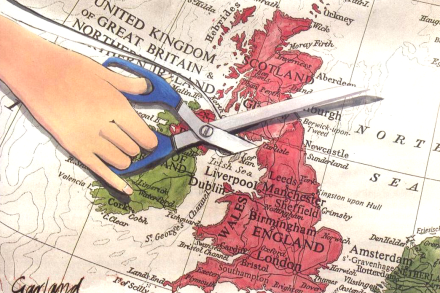
Ursula von der Leyen quoted TS Eliot’s poem ‘Little Gidding’ in her press conference today: ‘What we call the beginning is often the end. And to make an end, is to make a beginning.’ The free trade deal between the UK and the EU marks beginnings (new arrangements on commerce, fishing and security cooperation) and ends (the single market, free movement, Erasmus), but what we can’t yet be sure of is which category Scottish independence falls into. We might glean the answer from the 2,000-page agreement when the text is published but it is more likely that the question will remain open for some time.

Andy Wightman and the limits of trans tolerance

Andy Wightman is — or, as of this afternoon, was — the most independent-minded Green member of the Scottish parliament. A staunch man of the left and pursuer of land reform and tenants’ rights, he nonetheless practises an increasingly old-fashioned respect for opposing views and those who hold them. One of the subjects on which he has sought to keep an open mind is that of trans rights. Under the leadership of Patrick Harvie, a sacristan in the church of identity politics, the Scottish Greens have taken a gender-fundamentalist line with scant tolerance for heretical thinking.

Scotland’s drug problem is a national scandal

You have seen the chart and it is grim. A list of European countries ranked by annual drugs deaths, with Scotland at the top and a long red bar beside it. Scotland recorded 1,264 deaths from drug misuse in 2019, more than twice the number of HIV-related deaths in Somalia and more than double the death toll from terrorism in Iraq in the same year. Two-thirds of deaths were among Scots aged 35 to 54 but there was also an increase among the 15-to-24 demographic. More than 90 per cent involved multiple-drug cocktails, with ‘Street Valium’ cited in two-thirds of cases. The fake benzodiazepines can be bought for 50p a pop on the streets of Glasgow and Dundee.

Seven questions raised by Peter Murrell’s Salmond inquiry evidence

Peter Murrell, the most powerful man in Scotland, gave evidence under oath to the Alex Salmond inquiry on Tuesday. The SNP chief executive (and husband to Nicola Sturgeon) made a number of statements that already are under scrutiny, and others that soon may be. 1) Why doesn’t Sturgeon and Murrell’s evidence match up? Central to the committee’s attempts to shed light on Nicola Sturgeon’s actions has been trying to establish where she considers her role as SNP leader to end and her role as Scottish First Minister to begin.

There’s nothing ‘fair’ about the SNP cancelling exams

Whenever the Scottish nationalists start talking about ‘fairness’, you know someone’s getting shafted. SNP education minister John Swinney has cancelled Scotland’s higher exams for 2021. Not out of concern over safely administering the assessments in a socially-distanced manner, but because letting them go ahead at all could be ‘unfair’. Nicola Sturgeon’s deputy told the Edinburgh parliament on Tuesday: ‘Exams cannot account for differential loss of learning and could lead to unfair results for our poorest pupils. This could lead to pupils’ futures being blighted through no fault of their own. That is simply not fair.’ You might remember Swinney from his previous stance on exam fairness.

Roald Dahl and the limits of cancel culture

Roald Dahl was a proud antisemite but if it’s real courage you’re after, look to his family who, a mere 30 years after his death, have finally acknowledged that the children’s author wasn’t keen on the Jews. The Sunday Times reports that the family ‘recently met for the first time in several years to discuss the problem and published a discreet apology for his racism on his website’. In the statement, buried deep on the official Roald Dahl website, his family ‘deeply apologise for the lasting and understandable hurt caused by some of Roald Dahl’s statements’, though they make no mention of what these ‘prejudiced remarks’ were or to whom they were directed.

French republicanism confounds American progressives

Can an entire country sue for libel? If so, France would have a strong suit against swathes of the American left. The US progressive movement, including the New York Times and Washington Post, has turned on la Republique over its citizens’ habit of getting themselves murdered by Islamists. Most recently, this has included Samuel Paty, a teacher beheaded in the street for showing his students cartoons of the Prophet Mohammed, and three people murdered in a church in Nice. In response, French President Emmanuel Macron has proposed stricter regulations for mosque-financing and an end to home-schooling. And in response to this, much of the American left has lost its mind.

The existential threat facing the BBC

Less impartial than Channel 5. That will be the headline generated by Ofcom’s latest annual report on the BBC. In fact, what the regulator’s research finds is that, over the last two years, the percentage of BBC viewers who deem the Corporation’s output ‘impartial’ has fallen from 61 to 58 per cent, while Channel 5 has driven up confidence in its impartiality from 57 to 61 per cent. Indeed, Auntie is still ‘the most-used news source in the UK’ and 70 per cent of regular viewers still say it is ‘accurate and trustworthy’. Nor does Ofcom find the Corporation’s news service breached the Broadcasting Code’s requirements for due impartiality or due accuracy in 2019-20.