Stephen Daisley

Stephen Daisley

Stephen Daisley is a Spectator regular and a columnist for the Scottish Daily Mail

Sunak backs the Union with cash, not love-bombs

Devolution has done so much to fracture the UK that, in Scotland, Rishi Sunak's Budget is an event of the second order. Scottish interest in Budget day is typically limited to whisky duty, support for North Sea industries and the Barnett formula: the additional spending Scotland gets when the Chancellor splurges on England. Today’s Budget was for all of Britain. Not just Scotland, but Wales and Northern Ireland were weaved throughout Rishi Sunak’s speech. Quite apart from the fiscal or economic merits of the policies announced, the Chancellor’s speech was good politics. Not long after Sunak was promoted to the Treasury, I was told Scotland was a weak spot for him and he was not particularly up-to-speed on the intricacies of Scottish politics.

Terrorism remains a major threat to Britain

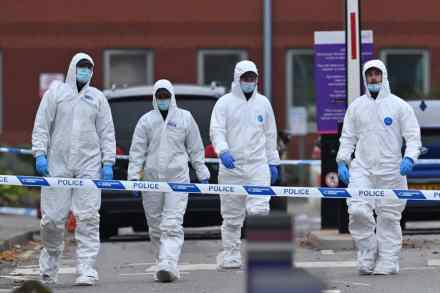
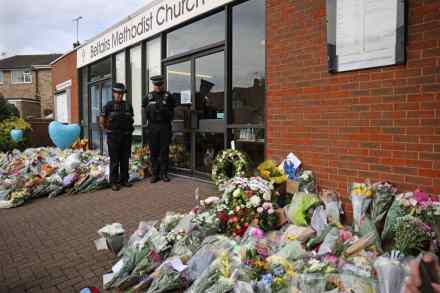
After the assassination of Jo Cox by a white supremacist, there was an angry insistence from progressives and the mainstream (the two were not yet the same) that the threat of the far-right be confronted. Questioning the role played by mental illness or even terming the assassin a ‘loner’ was framed as an attempt to shift the focus away from the killer’s motive. There was a mini moral panic over whether the culprit was being labelled a terrorist or not. The Independent ran a grievance-dripping op-ed under the headline: ‘Why are we so reluctant to label white attackers as terrorists?

It’s no wonder young people don’t understand levelling up

There are two ways Number 10 can look at new polling which shows only 14 per cent of Britons understand the slogan ‘levelling up’. The first: the government has utterly failed to communicate its signature policy. The second: at least they didn’t poll the Cabinet. The findings, which come in research by Redfield & Wilton Strategies for PoliticsHome, are interesting for what they tell us about now much the slogan has cut through (66 per cent have heard of it) versus how much it's been understood (one in three haven’t the foggiest what it refers to).

Glasgow is threatening a rubbish COP26

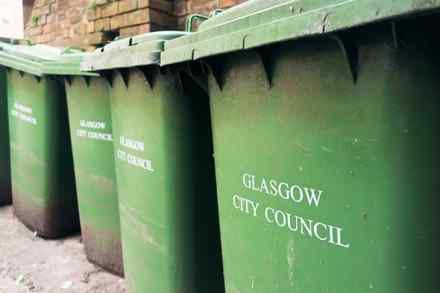
Glasgow’s bin men mostly manage to avoid being drawn into international relations but that could be about to change. The city’s refuse workers have voted 96.9 per cent in favour of industrial action in response to a pay offer that would have seen local government employees on less than £25,000 gain an extra £850. Unless there is an improved offer, members of the GMB Glasgow branch could go ahead with industrial action, including during the first two weeks of November. That is, of course, when world leaders from the Prime Minister to President Biden will be in town for COP26. As I wrote about in the magazine earlier this month, Glasgow is in the middle of a waste crisis that has made scenes of overflowing bins and fly-tipping a common sight across the city.

Ripping up the Northern Ireland protocol is diplomacy in action

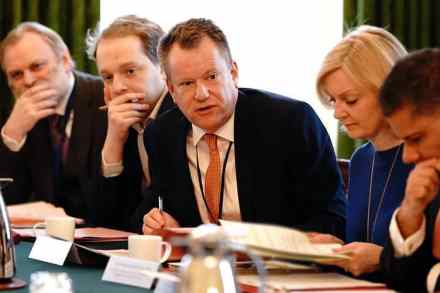
Lord Frost’s Lisbon speech represents the most cogent argument yet for replacing the Northern Ireland protocol. So naturally it has been buried under a slurry of snark, solemn head-shaking and breathless indignation. It is worth stepping back from the noise. Switch off the shouty man on LBC, mute the ‘this is not normal’ people on Twitter, and avoid at all costs the catastrophist-analysis of the academic-activists. You will miss nothing. In fact, read Frost's speech for yourself. It was meant to send a message about the protocol and it does so directly. The Irish are our neighbours. It is in both our countries’ interests that we maintain and enhance the ties between us..

Why Boris is losing his fight against Sturgeon

Gavin Barwell has made a good point, albeit inadvertently. Theresa May’s former chief of staff has a book out, imaginatively titled Chief of Staff, and in it he touches upon the question of Brexit and Scottish independence. Noting that Boris Johnson is unpopular north of the border, the now Baron Barwell of Croydon says: ‘The UK government is on strong ground arguing that it is not the right time for a second independence referendum — polls show Scottish voters want the immediate focus to be on recovery from the pandemic — but the democratic mandate for the question to be asked again at some point is clear.’ No. It. Is. Not.

Blue-collar Toryism comes to Scotland

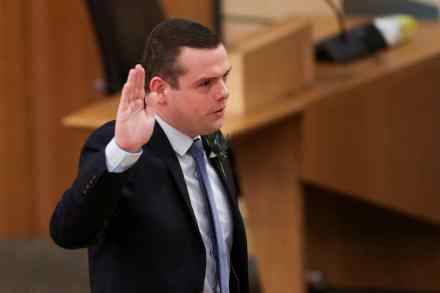
Like all good fables, Douglas Ross’s speech at Tory conference had a beginning, middle and end. Act One detailed the many iniquities of the SNP, from their dysfunctional vaccine passport scheme to their Hate Crime Act, and most of all their agitation for Scotland to break away from the UK. Act Two took the sword to Labour, bemoaned its abandonment of working-class voters and its internal divisions over the constitution. Theirs was not the party to take on the SNP. Only one party was and it was the subject of Act Three, in which Ross deepened a theme begun under Ruth Davidson’s leadership: the Scottish Conservatives as the party of the Scottish working-class.

Why is the SNP gagging charities?

The SNP handles criticism as well as the Incredible Hulk handles irritation. It’s why the party’s own parliamentarians are banned from making critical comments. The Nationalists are an independence-first organisation and rely on two important psychological tools. The first is projecting Nicola Sturgeon as the ‘Chief Mammy’ (her own term; ‘mammy’ being Scottish slang for ‘mother’), a national figure more akin to the Queen than the Prime Minister. The second is framing any institutional or organisational dissent not as standard, democratic debate (in the way that businesses, unions and charities routinely take the UK Government to task) but as something more controversial, political — even unpatriotic.

As COP26 looms, Glasgow is facing a waste crisis

In just a few weeks, Glasgow will be the focus of the world’s attention for the COP26 summit. For the Prime Minister, however, two major embarrassments await. Firstly, an environmental conference aimed at weaning the developed world off fossil fuels looks set to take place in the middle of a British energy crisis. Secondly, Glasgow — whose council is now run by the SNP for the first time — is a city in crisis where streets are overflowing with rubbish. Pavements strewn with household waste are a common sight. Residents routinely post images on social media of the city centre and its outer-lying suburbs covered in detritus.

Labour is still overrun with anti-Israel cranks

As unhinged Labour conference motions go, the party’s anti-Aukus resolution will likely capture the headlines. The text describes the new defence pact between Australia, the UK and the US as a ‘dangerous move that will undermine world peace’. Sir Keir Starmer is on record backing the alliance but the Labour leader can at least take comfort in how close the card vote was: a mere 70.35 per cent of delegates voted for the motion. For a classic Labour conference motion, though, the prize has to go to the composite on… the NHS? Covid? Fuel shortages? No, silly: Palestine.

Calling Tories ‘scum’ is part of Angela Rayner’s leadership pitch

The chair of this year's Labour Party conference, Margaret Beckett opened proceedings yesterday emphasising the importance of civility. A few hours later, Angela Rayner delivered some remarks to a Labour conference fringe event which included the following description of the Tories: https://twitter.com/mikeysmith/status/1441859834605879299?ref_src=twsrc%5Etfw Well, she’s running. Labour's deputy leader has suffered false starts in her efforts to drop the ‘deputy’ from her title but such brazen pandering is a sure sign she hasn't given up her designs on Sir Keir Starmer’s job.

Scotland’s worst council leader strikes again

Susan Aitken, the worst thing to hit Glasgow since the Luftwaffe, might well be Britain’s most hapless council leader. The SNP leader of Glasgow City Council was challenged again on the city’s cleaning crisis during a BBC interview last night. Shown footage of graffiti at the Scottish Event Campus, soon to host the COP26 conference, Aitken blamed ‘a wee ned with a spray can’. It is not Aitken’s first gaffe over a city-wide waste and dumping epidemic. In a knuckle-gnawingly awkward TV grilling earlier this month, she insisted Glasgow’s streets weren’t ‘filthy’ and just needed ‘a spruce up’.

AOC’s Iron Dome defeat is a win for the United States

Moshe Feiglin is the figurehead of far-right, free-the-weed libertarianism in Israel, a country where this barely makes the top ten weirdest ideological mash-ups. Back in 2013, when he was still a powerful player on the right-wing of the right-wing of the Likud, Feiglin gave an interview to the New American, the magazine of the John Birch Society. He used the opportunity to do something most ambitious Israeli politicians would never dream of doing: he called for an end to US military aid to Israel. Noting America’s unemployment troubles at the time, Feiglin said he was ‘totally against this aid’ because it ‘doesn’t look moral to me’.

Why The Spectator is wrong to call for amnesty for illegal migrants

The Spectator is a magazine for conservatives written by liberals. From that tension comes an editorial persuasion — there is no line — that can seem winsome, beguiling, even perverse. Optimistic but never idealist, sceptical of the big but not the new, The Spectator combines a radical’s grasp of the possible with a reactionary’s sense of the inevitable. It is instinctually Whiggish but plagued by spasms of Toryism, looking forward through the rear-view mirror of life. If National Review is in the business of standing athwart history yelling ‘stop’, the The Spectator has more often been found sprinting ahead of history yelling ‘hurry up’.

Australia and the new special relationship

The awkwardly-named AUKUS agreement reflects Washington’s escalating concern about China’s dominance in the Indo-Pacific. It signals London’s determination to be more, not less, involved in the global community after Brexit and the retreat from Afghanistan. Ultimately, however, this deal is about Australia. Few countries are as pivotal to regional security yet so poorly understood as such, at home and abroad, among commentators, politicians and policymakers. Australia’s standing in security terms is intimately linked to its alliance with the United States, but this relationship is not as one directional as some Australian critics believe.

Can doctors be ‘neutral’ on assisted dying?

The British Medical Association (BMA) has dropped its opposition to assisted dying after a landmark vote. In doing so, it marks a journey from professional principle onto the ethical fence. This is not the first time the BMA has declared itself neutral on the termination of post-natal human life. In 2005, the organisation voted to switch from opposition to neutrality on physician-assisted suicide but that position was overturned the following year amid charges that the policy shift had been achieved through an ‘extraordinary manoeuvre’ and ‘procedural tactics’. A decade later, in 2016, the body again rejected adoption of a neutral stance following a consultation with 500 association members and the general public.

From Neil to Nigel: the descent of GB News

I can’t claim to know any behind-the-scenes rivalries or boardroom brouhaha motivating Andrew Neil’s departure from GB News but I am glad to see him go. Neil is out at the still ill-defined channel which can’t decide whether it’s a populist classical-liberal network, standing up to authoritarian cancel culture, or a British version of Fox News. It excels at neither. Given wobbly ratings, staff departures and one instance of very off-brand knee-taking, it's not entirely surprising that Neil has finally had his fill and walked away. He was not only chairman but the underwriter of the promise — issued in his opening monologue — that the channel would dissent from the broadcasting mainstream with quality, rigour, open-mindedness and intelligence.

Sturgeon is indulging her conspiratorial supporters

Nicola Sturgeon’s speech to the SNP’s conference earlier this afternoon was mostly standard fare (Covid, climate, coalition with the Greens, Universal Credit) but towards the end, a section on Brexit and independence stood out. She told the faithful: Westminster will use all that damage that they have inflicted as an argument for yet more Westminster control.By making us poorer, they’ll say we can’t afford to be independent. By cutting our trade with the EU, they’ll say we are too dependent on the rest of the UK. By causing our working population to fall, they’ll say the country is ageing too fast.They want us to believe we are powerless in the face of the disastrous decisions they have taken for us and the damage those decisions are doing.

Boris Johnson is the ‘Queen of Mean’

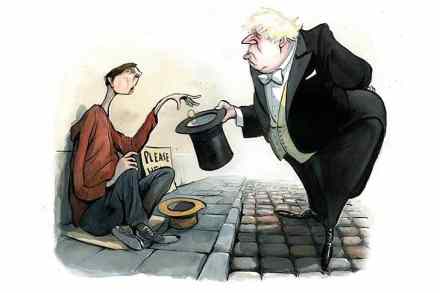
Leona Helmsley died 14 years ago so it is surprising to find her setting fiscal policy for the UK Government. When the New York real estate billionaire, dubbed the ‘Queen of Mean’, was on trial for tax evasion in 1989, her housekeeper testified that Helmsley had told her ‘only the little people pay taxes’.  This government, lacking any discernible philosophy of its own, appears to have adopted Helmsleyism, for it too believes it is the little people who should bear the tax burden. Indeed Helmsley, who commissioned upgrades to her $11m mansion then tried to leave the contractors with the bill, would probably admire the sheer chutzpah of what No. 10 is proposing.

The shame of the SNP’s grubby power-sharing deal with the Scottish Greens

This afternoon Patrick Harvie and Lorna Slater, co-leaders of the Scottish Greens, will become ministers in Nicola Sturgeon’s government. The appointments come after Green members ratified a cooperation agreement over the weekend. The unity pact is a strategic masterstroke by Sturgeon, handing her an overall majority at Holyrood, insulating her from internal SNP criticism and coopting a rival nationalist party. There is one midge in the porridge, however, and it’s this: the Scottish Greens are unhinged. Not merely eccentric or a little outside the mainstream, but full-blown, solar-powered, honest-to-Gaia cranks. For an illustration, consider a motion debated at their autumn 2015 conference in Glasgow.