


On Monday night, with the glass still being swept up from the latest événements, French viewers were offered a spectacle almost as compelling as the riots. A young, blonde, radical left-wing woman appeared on France’s La Grande Confrontation TV show and gave a performance mixing, in equal parts, conviction, narcissism, privilege, contempt and, at best, a highly selective grasp of history. And all delivered from a face of transfixing beauty.
The privileged young blonde white woman was defending the poor brown boys
Her name is Lola-Fleur Whittaker. She is 23, and a Sciences Po student who stood for Mélenchon’s La France Insoumise in the Paris municipals this spring. Facing shopkeepers in the TV studio, whose premises had been looted, she excused the rioters and condescendingly explained to the traders: “Vos boutiques, c’est bien mignon.” Literally: oh your shops, how sweet. Within hours an infuriated internet had found her backstory: she’s a well-born Anglo-French influencer who posts photos of herself, looking lissom in bikinis, on boats off Croatia, on holidays in Oman.
Lola-Fleur may seem like a one-off. The opposite is true. There is a long, honourable tradition of the firebrand young woman who is also decidedly lovely, and the French possibly invented it.
Liberty in Delacroix’s famous painting has her youthful breasts exposed, and it’s not because she’s nursing. The Revolutionary Charlotte Corday was notoriously beguiling. Fast forward a couple of centuries and the 1970s gave us Palestinian Leila Khaled with her keffiyeh plus Kalashnikov. Meanwhile, Britain had Bernadette Devlin, “Castro in a miniskirt”, an independent socialist MP elected at 21. America answered with Patty Hearst, a kidnapped heiress turned urban guerrilla, who posed with a carbine for the Symbionese Liberation Army. Today, Mélenchon’s ranks are full of these radicalised hotties: Clémence Guetté, Mathilde Panot, Rima Hassan.
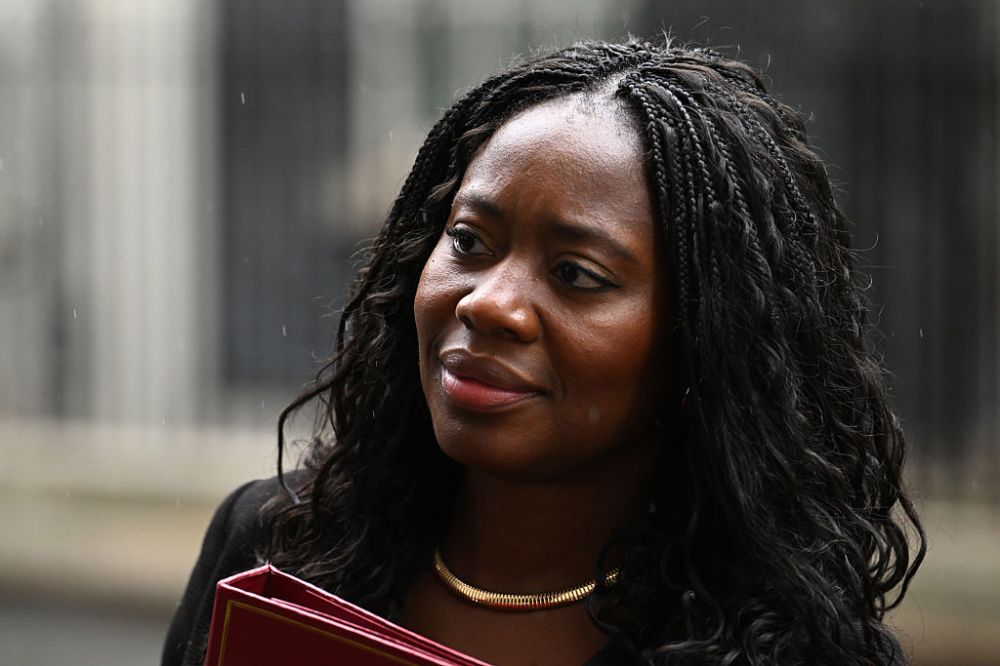
Why do these women unnerve us? Partly because young female beauty is already so potent it can alter perspectives. Society genuflects before it; everyone gets slightly stupider in its presence. Add radical politics and the effect is dizzying and confounding. We gaze, with desire or envy, as these women speak, and the actual words can blur. Nobody remembers what Leila Khaled said.
On top of that, young women are often the most zealous of activists, as Orwell noted. In Nineteen Eighty-Four Winston Smith watches the ardent girl with the anti-sex sash and concludes: “It was always the women, and above all the young ones, who were the most bigoted adherents of the Party, the swallowers of slogans, the amateur spies and nosers-out of unorthodoxy. “
The New French Events have added an extra, troubling spice to this brew. The crowd Lola-Fleur was absolving was, at least in perception, mainly African, Muslim, male. The privileged young blonde white woman was defending the poor brown boys. It would take the most gifted French semiotician an entire career to untangle all that anxiety-inducing class-and-race complexity.
And then that philosophe would have to address a further, delicious twist. Even as Lola-Fleur emerges on the left, arguably for the first time the right has radical babes of its own. Giorgia Meloni is, by common agreement, a bit of a MILF. Marion Maréchal has dropped the Le Pen from her double-barrelled surname, but she’s still drop dead gorgeous. Holland’s far-right firebrand Eva Vlaardingerbroek looks like a beauty queen who has read The Camp of the Saints.
Perhaps this is inevitable. As AI takes over all words and thoughts, the one thing the machines will never supply is a lovely human face. Politics may become a Battle of the Babes. And Lola-Fleur Whittaker, however ignorant and however infuriating, will be very hard to beat. I mean, I can already feel myself getting stupider.





Comments