Sam Leith

Sam Leith

Sam Leith is literary editor of The Spectator.

Books Podcast: writings of the working class

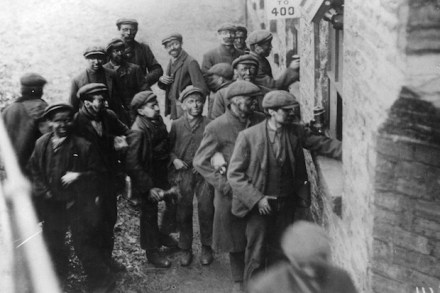
In this week’s books podcast Kit de Waal is here to talk about her new anthology of working-class memoir, Common People. First a guest on this podcast a couple of years ago talking about her Desmond-Elliott-shortlisted debut My Name Is Leon, Kit explains why she thought an anthology of working-class writing was necessary, about if and how the pendulum has swung since previous booms in working-class writing, what still needs to change in publishing, and how, as an editor, she avoided falling victim to Four Yorkshiremen Of The Apocalypse Syndrome.

Common sense is the real generation gap – just ask John Cleese

As I write these words, I regret to inform you, John Cleese is on his way to being cancelled. Now there’s a sentence that straddles a generation gap. Many people very familiar with John Cleese will have only the dimmest idea of what ‘cancelled’ means; while people who are all about cancelling celebrities will tend not to know what ‘John Cleese’ means. If anything saves him from cancellation, it will be the hope that he can snuggle down and hide in that gap until it’s all over.

Twitter: no country for old men

As I write these words, I regret to inform you, John Cleese is on his way to being cancelled. Now there’s a sentence that straddles a generation gap. Many people very familiar with John Cleese will have only the dimmest idea of what ‘cancelled’ means; while people who are all about cancelling celebrities will tend not to know what ‘John Cleese’ means. If anything saves him from cancellation, it will be the hope that he can snuggle down and hide in that gap until it’s all over.

Books Podcast: does tripping balls tell us anything profound about human consciousness?

This week’s books podcast promises to be a trip. I’m joined by Mike Jay to talk about the history of mescaline — a psychedelic drug whose influence goes from the earliest South American civilisations through the 19th-century Indian Wars up to W B Yeats, Aleister Crowley and (of course) Aldous Huxley and Hunter S Thompson. Does tripping balls tell us anything profound about human consciousness? How come Mexico got all the good drugs? And why did Aldous Huxley lie about his trousers?

Life at the Globe | 6 June 2019

IN ASSOCIATION WITH THE PRINCIPAL PARTNERS OF SHAKESPEARE’S GLOBE’S 2019 SUMMER SEASON   This column concludes my brief series about Shakespeare and the Globe, linked to the summer season of history plays — from Richard II to Henry V — sponsored by Merian. It’s been a pleasure to write. And one of the special pleasures it has offered is the chance to explore what Oxford’s Professor of Shakespeare Studies, Emma Smith, identifies in her book This Is Shakespeare as the Stratford man’s outstanding quality: what she calls his ‘gappiness’. That is what academics more usually call indeterminacy. (I can see why she prefers ‘gappiness’.

Books Podcast: Chaucer’s European roots

In this week’s books podcast we’re talking about why the Father of English Poetry, Geoffrey Chaucer, at least half belongs in a French, Latin and Italian tradition. Marion Turner’s magnificently scholarly Chaucer: A European Life sets the great writer in his own times — one of a hinge between feudal and early modern ideas about selfhood, authorship and originality; and one in which our man travelled widely and with profit across the Europe of his day, learning from poets in France and Hainaut, from Dante and Boccaccio, and even possibly from the painter Giotto.

The Books Podcast: science fiction from Jim Al-Khalili

In this week’s books podcast I’m joined by the physicist Jim Al-Khalili (host of Radio Four’s The Life Scientific) to talk about his first novel, a science-fiction thriller called Sunfall. In it, Jim uses real science to conjure up a plausible but fantastical near-future crisis in which the earth’s magnetic field falters and dies. What would that mean? (Nothing good, is the answer.) He helps us sort our neutralinos from our neutrinos, tells us about the real existential threats we face, and explains why he’s drawn to so-called “hard sf”.

The Books Podcast: Rory Stewart in conversation with Sam Leith

Rory Stewart is the back-of-field Tory leadership candidate who’s catching most attention at the moment; popping up all over London inviting all comers to talk to him about policy and ideas. He’s a politician with real hinterland- and you can get a flavour of that hinterland in the conversation we had when he came to talk to me about his last book, The Marches. It’s at once the tale of a meandering journey he made along the Anglo-Scottish border around the time of the Scottish independence referendum (Rory is MP for Penrith and the Borders), and a tender account of his relationship with his father Brian.

Rest in peace, Judith Kerr

I am so, so sad to hear about the death of Judith Kerr. I last saw her only a month or two ago, at an Oldie Literary Lunch, where she was in fine form and did not stint herself on a glass or two of wine. She seems to have been constitutionally a merry person, and a modest one. Among the greatest privileges of doing our books podcast was meeting Judith at her house in Barnes, where we recorded our interview with her and her son Matthew Kneale. What made it really special was that – thanks to one of my routine childcare emergencies – I had my then four-year-old son Jonah in tow. I have a photograph, therefore – which I hope will be a lifelong treasure for him – of Jonah, aged four, sitting with Judith, aged 94.

Life at the Globe | 23 May 2019

IN ASSOCIATION WITH THE PRINCIPAL PARTNERS OF SHAKESPEARE’S GLOBE’S 2019 SUMMER SEASON   ‘Small Latin and less Greek’ was Ben Jonson’s verdict on Shakespeare the linguist. But as Henry V (the latest play in the Globe’s Merian-sponsored summer season) shows, he knew a bit of French, too. As well as all that blood-and-thunder stuff on the battlefield, the play contains — in Act Three, Scene Four — the only scene wholly in French anywhere in the plays; as well as his dirtiest joke. Princess Katharine, offered in marriage to King Harry to appease him after the Dauphin’s consignment of tennis balls failed to amuse, is learning English with her lady’s maid Alice.

The Books Podcast: what makes Shakespeare special?

In this week’s books podcast my guest is Emma Smith, Professor of Shakespeare Studies at Hertford College, Oxford, who’s talking about her new book This Is Shakespeare. What is it that makes Shakespeare special — and is it defensible that, as even in university curricula, we talk about Shakespeare apart from and above the whole of the rest of literature? How did he think about genre? Why is Act Four always a bit boring? Is the Tempest an autumnal masterpiece or the thin work of a writer of dwindling powers? And how filthy is A Midsummer Night’s Dream?

Pass the sick bag | 16 May 2019

It has been 13 years since Thomas Harris published a novel, and the last time he published one without Hannibal Lecter in it was 1974. So, ‘hotly anticipated’ is probably the phrase. The good news for readers of Cari Mora is that Hannibal is here in spirit if not in person. This is a very peculiar book, lavishly ridiculous in almost every respect and fully committed to the gothic extremes of human cruelty: just camp enough to skirt charges of outright porno-sadism. Sounds like fun, right? Well, it is. But, as I say, it’s also mad as a badger. The way I found myself describing it to a friend is as Dr Fischer of Geneva retold by Carl Hiaasen and shot by Tobe Hooper. A character with a walk-on part eats a human kidney, for instance, just because it’s there.

Books Podcast: Ursula Buchan on her grandfather, John Buchan

In this week's books podcast, I'm joined by Ursula Buchan - the author of a hugely involving new life of her late grandfather John Buchan. The book is called Beyond the Thirty-Nine Steps (you can read Allan Massie's enthusiastic Spectator review of it here), and it does as the title promises. Buchan (or 'JB' to his family) is known, if he's known now at all, as the author of the pre-war thriller The Thirty-Nine Steps, later filmed by Hitchcock. Yet here was a man of staggering range and energy - diplomat, historian, politician, propagandist, poet, barrister, publisher, and (most important of all) one-time assistant editor of The Spectator.

‘Come on: cancel me’

‘I grew up in LA where we all thought fame was a joke,’ says Bret Easton Ellis. ‘My class was filled with people from Laura Dern to the girls in Little House on the Prairie. And it always seemed a bit of a joke. I never really imagined that was on the cards for me. And I really haven’t done a lot of the things that you’re supposed to do to stay famous. ‘I haven’t published anything in ten years. I haven’t tried to write that novel that’s going to give critical acclaim or a prize or two — which I’ve never won. And I seem to be continually controversial and rub people the wrong way. And this has been for 35 years now and I can’t tell you why: I don’t know. I mean the big joke is: cancel me.

Life at the Globe: good golly, Henry V has some thumping lines

IN ASSOCIATION WITH THE PRINCIPAL PARTNERS OF SHAKESPEARE’S GLOBE’S 2019 SUMMER SEASON ‘Once more unto the breach, dear friends, once more/ Or close the wall up with our English dead…’ Good golly, Henry V has some thumping lines, doesn’t it? The final play in this summer’s Henriad at the Globe — partnered with Merian — shows us Prince Hal fledged as a king, and a war leader at that. The subjunctive mood of the previous plays has become indicative; even imperative. And it’s a play where British (OK, in this case English) identity comes galloping back to the fore as it has not done since John of Gaunt popped his clogs in Richard II. Our concern is no longer civil strife but foreign wars.

The Books Podcast: Bret Easton Ellis on coming out as Patrick Bateman

In this week’s books podcast I’m joined by Bret Easton Ellis. The author of Less Than Zero, American Psycho and Imperial Bedrooms is here to talk about his first nonfiction book White, and the savage critical response to it. We discuss censorious millennials, the fascination of actors, his problem with David Foster Wallace, 'coming out' as Patrick Bateman - and his own personal Ed Balls Day, when he posted what he thought was a text message ordering drugs to Twitter.

Books Podcast: Joseph Stiglitz on the EU’s big economic mistake

In this week’s books podcast, my guest is the Nobel prize-winning economist Joseph Stiglitz, architect of Bill Clinton’s “Third Way” and former chief economist at the World Bank. His new book People, Power and Profits: Progressive Capitalism for an Age of Discontent argues Trump’s economic boom is a “sugar-high”, and that the US economy is in a far, far worse state than anybody thinks. As a result, he says, we need to reevaluate our whole faith in free markets. The reason the "invisible hand" is invisible, he says, is because it isn’t there. He tells me why he thinks that, and what we need to do about it. He also tells us about the desperate economic mistake at the heart of the EU.

Life at the Globe | 25 April 2019

    IN ASSOCIATION WITH THE PRINCIPAL PARTNERS OF SHAKESPEARE’S GLOBE’S 2019 SUMMER SEASON As I noted last week, the dramatic climax of Henry IV, Part Two — that stew of rot and renewal — is reached when Prince Hal casts off the roguish companion of his younger years, ‘the tutor and the feeder of my riots’, Sir John Falstaff, on the way to his coronation in the final act. Falstaff is a parodic king, an anti-king. That is what gives much of the dramatic electricity to the clowning scenes in Part One where Falstaff play-acts King Henry. The King embodies the rule of law; and Falstaff holds it in contempt. The King embodies honour; and Falstaff delivers a celebrated soliloquy in which he mocks it as ‘a mere scutcheon’.

The Books Podcast: Nicci Gerrard – The Cold Friction of Expiring Sense

In this week’s books podcast I’m joined by the journalist and (as one half of the crime writer Nicci French) novelist Nicci Gerrard to talk about her new book What Dementia Teaches Us About Love. The loss of her own father to dementia prompted Nicci to look at one of the most painful and pressing social problems of the age: how we care for, or fail to care for, those who have dementia — and the philosophical questions of what it means when the things that make you start to fall away.  https://audioboom.

The Books Podcast: Cass Sunstein – Beyond the Nudge

In this week's Books Podcast I'm joined by Professor Cass Sunstein – best known here as co-author of the hugely influential 2008 book Nudge: Improving Decisions About Health, Wealth and Happiness, which spawned a whole transatlantic movement in using behavioural psychology to influence public policy (not least in the Cabinet Office's celebrated 'Nudge Unit'). Cass's new book is called How Change Happens – and extends the arguments of his previous books to talk about the mechanisms that determine quite big, and quite abrupt shifts in politics and social attitudes.