Ross Clark

Ross Clark

Ross Clark is a leader writer and columnist who has written for The Spectator for three decades. He writes on Substack, at Ross on Why?

The left’s prophet of doom is still wrong

The Left has found something to raise its cheer. Needless to say, it is someone predicting that mankind is doomed. The most-read piece on the Guardian website yesterday was an interview with Paul Ehrlich – not the one who did something useful, the 19th century immunologist, but Paul R Ehrlich, the Stanford Professor of Biology, who has made a career out of warning that mankind is doomed. His latest thesis is certainly eye-catching. The Guardian quotes him as saying “the collapse of civilisation is a near-certainty within decades”. “Population growth, along with over-consumption per capita,” he says, “is driving civilisation over the edge: billions of people are now hungry or micronutrient malnourished, and climate disruption is killing people.

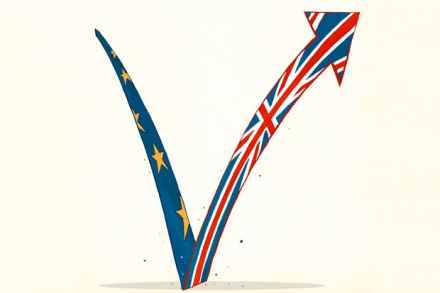
Let’s hear more of the moral case for Brexit

How many times over the past few months have some remain supporters tried to tell us that tariffs on imported goods are a very big deal indeed? Were trade between Britain and the EU to revert to World Trade Organisation (WTO) rules, they assert, the UK economy would be reduced to ruins. Food prices would soar, leaving millions scrabbling around in bins. British firms will never export anything ever again. This morning comes a slightly different tack. Actually, it seems that tariffs don’t really matter all that much at all. Removing them, according to reports broadcast loudly at various points during the Today programme this morning, will hardly affect consumer prices.     The reason for the sudden change of heart?

The Russian spy row could help Corbyn

It seems obvious, doesn’t it? Jeremy Corbyn, in a comment piece in the Guardian, continues to insist that Putin might not have been behind the Salisbury attack – when even his shadow foreign secretary, Emily Thornberry, says there is ‘prima facie evidence’ of the involvement of the Russian government. Labour backbenchers sign a motion pointedly calling for ‘unequivocal’ recognition of Russian government involvement – exactly what Corbyn has refused to give. And that is just the internal opposition from within the Labour party. Political commentators are scathing of his position, myself included.

Thanks to the anti-fracking lobby, Britain can’t avoid Russian gas

Who stands between the government and a proper, effective sanctions regime against Russia? Not Jeremy Corbyn, though he might wish he could. Putin is going to get away with the Salisbury attack, suffering little more than a token expulsion of diplomats, thanks to anti-fracking protesters. They didn’t mean it, of course. When they stood before the bulldozers in the Sussex village Balcombe, jumped up and down about mini-Earth tremors in Lancashire they thought they were doing the Earth a favour. They saw UK-produced shale gas as a dirty alternative to clean, carbon-free energy. But they were wrong. In the short to medium term at least the alternative to UK-produced shale gas was imported gas, an increasing proportion of which comes from Russia.

IB or not to IB?

The International Baccalaureate (IB), which celebrates its 50th anniversary this year, has — like its home town of Geneva — a slightly goody-goody reputation. Although not founded until the 1960s, it grew out of efforts to build a liberal infrastructure for postwar Europe. It was inspired by a pamphlet written in 1948 by the French pedagogue Marie-Thérèse Maurette called ‘Do Education Techniques for Peace Exist?’ We don’t want our schools and universities creating swots who might just turn out like Josef Mengele, the IB seems to be saying, but well-rounded citizens of the world.

Gavin Williamson was right to be paranoid about Russia

In responding to the Salisbury attack, Theresa May was in little danger of over-reacting. Her challenge was more to come up with a response which would not have Vladimir Putin laughing. As soon as the nerve agent used against Sergei Skripal and his daughter was identified as Novichok – a chemical developed by the Russian military – it became clear that there was going to be no chance of fudging the issue – of doing what the Labour government did after the death of Andrei Litvinenko in 2006: calling an inquiry which concluded the Russian state was ‘probably’ to blame. Unlike the Polonium used to kill Litvinenko, there is really is no other possible source for Novichok.

Don’t pinch the penny!

It always takes a few hours for the nasties in a Budget to become clear. That is as true with today’s seemingly content-less Spring Statement. In the small print is a proposal to do away with one pence and two pence coins. Of course, inflation eats away at the value of coins so as to make the smaller ones pretty value-less over time – an argument made by the Treasury. The country survived the abolition of the farthing in 1971 and the halfpenny in 1984. A halfpenny in the mid-1980s, indeed, was worth more in real terms than a penny now.

Will Philip Hammond drop the Eeyore act in his Spring Statement?

A spring without a Budget is a bit like one without the Grand National or the Boat Race. It doesn’t feel right. The sight of the Chancellor’s red box, regardless of its contents, has always instilled in me a frisson of elation as one contemplates the warmer, sunnier months ahead. We do, however, have the consolation of a spring statement, which Phillip Hammond will deliver next Tuesday. What can we expect? Very little, if the briefings are anything to go by. Hammond has let it be known that the occasion will not mirror the autumn statements of the Brown, Darling and Osborne years, which were used as a second opportunity to jack up taxes or come up with a handout. In some years it was the autumn statement, not the Budget, which carried the more significant fiscal changes.

Does the BBC think northerners starved under the Tories?

Why does almost every BBC programme have to turn into lefty propaganda? For the past few Tuesday nights, there has been a reality TV show on BBC2 called Back in Time for Tea, featuring a Bradford family whose house is transformed into a time capsule – they have ate, slept, worked and entertained themselves one decade of the 20th century at a time. It was a rather good programme for the first few episodes, showing them grappling with old technology and having to eat period food which, in one or two cases, left them bewildered as to how anyone could possible consume such stuff.

Did Munroe Bergdorf not expect the digital inquisition?

But for Toby Young, it is possible that few of us would have noticed the appointment of a transgender model called Munroe Bergdorf, who resigned this morning as a member of Labour’s LGBT advisory board. Her appointment might have gone unnoticed, along with her past comments on social media, which included attacking what she described as 'the racial violence of white people' – adding: 'Yes ALL white people. Because most of ya’ll don’t even realise or refuse to acknowledge that your existence, privilege and success as a race is built on the backs, blood and death of people of colour. Your entire existence is drenched in racism.

How Theresa May can take advantage of Trump’s trade wars

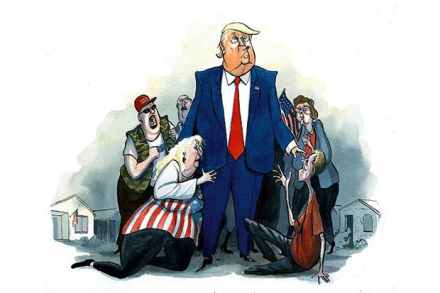
It speaks volumes about protectionism that while the share prices of steel and aluminium makers rose on the news that President Trump is to place tariffs on imports (from exactly which countries he didn’t say), shares in companies which use large amounts of steel immediately plunged: General Motors by 3.7 per cent, Ford by 3 per cent.   It is always the same with protectionism. Either Donald Trump hasn’t studied the effects of George W Bush’s experiment with steel tariffs in 2002 or he doesn’t care.  On that occasion, while creaking steel companies enjoyed a temporary reprieve, the overall effect on the economy was hugely negative.

What are Jeremy Corbyn and Michel Barnier up to?

The Commons Select Committee on Culture, Media and Sport recently investigated claims of Russian interference in the UK electoral process. The committee might soon be forced to go one further and investigate EU interference in our political system.  How remarkable that today’s ‘legally-binding’ document from Michel Barnier, which tries to keep Northern Ireland in a customs union with the EU comes just 48 hours after Jeremy Corbyn made a speech changing Labour’s policy in order to commit the UK as a whole to remain within the customs union. I am not party to any conversations Jeremy Corbyn might have had with Michel Barnier or his team, but the Labour leader couldn’t have done better to create the impression of collusion between the two.

Corbynites are right: bin bullies must be stopped

It is another case of Corbynite militants overthrowing a moderate Labour politician. Or so I thought when I read this morning that Warren Morgan, leader of Brighton and Hove Council, has been driven out by the left of his party – he will step down as leader in May and not stand again as a councillor when his term expires in 2019. It has similarities to what happened to Claire Kober, former Labour leader of Haringey council, who recently resigned claiming ‘bullying’ by Jeremy Corbyn supporters. But then I recalled the last time I read the names ‘Haringey’ and  ‘Brighton and Hove’ in the same story.

White heat: How is tech changing politics?

Jeremy Corbyn began the 2017 election campaign 20 points behind the Conservatives in the polls; he ended it just two per cent behind in the actual vote. The remarkable turnaround has been attributed by many to his effective use of social media, which allowed him to broadcast his message to people whom traditional campaigning fails to reach, people who in some cases may never have voted before. Social media is one aspect of how technology is changing politics – an issue debated at a recent Spectator lunch, in association with Michael Tobin OBE and involving a notable collection of people from the worlds of politics and technology. Do the unexpected results in recent elections really come down to who has the most effective online operation?

Sod the Second Amendment

I just wonder how many more school massacres it will take before four words, which I am sure are already being muttered beneath the breath of millions of Americans, break out into mainstream opinion: Sod the Second Amendment.   It is all very easy to scoff at Americans for their love of guns and the obvious evidence that it is contributing to a murder rate that is vastly higher than in any Western European country. But US gun control is part of a wider fault in the practice of government, and one which is being committed increasingly by all developed countries –  the fetish for tying the hands of future legislators with over-prescriptive charters. Donald Trump today has ignored questions on gun controls.

Why are animals more important than unborn children?

Most of the time I feel perfectly at ease in my own country, and that would be the case had we voted Brexit or Remain, Theresa May or Jeremy Corbyn. But just occasionally Britain seems to me an utterly alien place – bizarre even. Today, Jeremy Corbyn launched his manifesto for pets. He wants to ban foie gras, make it mandatory for motorists to report that they have run over and killed cats, and pass a law giving tenants the right to keep a pet. I don’t suspect that he will encounter a great deal of opposition on these things – bar a token protest on the last from buy-to-let investors. Fox hunting aside, no political party in recent times has come to much harm by doing something to help furry, feathery or scaly animals.

Bermuda’s gay marriage row shows the liberal-left’s disdain for democracy

The Labour benches and the pages of the Guardian are not normally places one would go for a defence of Empire – until, that is, comes along an opportunity to further a popular liberal cause in a British overseas territory. Then, otherwise liberal-minded folk, who would normally be falling over themselves to apologise for the evils of the British Empire, bizarrely come over all neo-colonial – demanding that the Government lords it over the untrustworthy natives and imposes direct rule from Westminster. This week, the Bermudan government overturned a ruling made by the island’s supreme court introducing gay marriage. The government’s decision was in response to a referendum on the island which had opposed gay marriage.

Is Carney’s growth forecast anything to get excited about?

It is really worth bothering with Mark Carney’s upgrading of the Bank of England’s growth forecast for 2018 from 1.5 per cent to 1.7 per cent? Carney, you might just remember, warned before the EU referendum that the UK would most likely suffer a technical recession if Britain voted to leave. Even in August of that year, six weeks after the vote, when it was already clear that the economy was not diving into the abyss, he was predicting a sharp slowdown. Growth in 2017, he suggested, would come out at 0.8 per cent. In the event it was 1.8 per cent. We have seen enough forecasts over the past couple of years to realise that Michael Gove was absolutely right when he said during the Leave campaign that the country has had enough of economic experts who try to foretell the future.

The Tesco equal pay claim sets a dangerous precedent

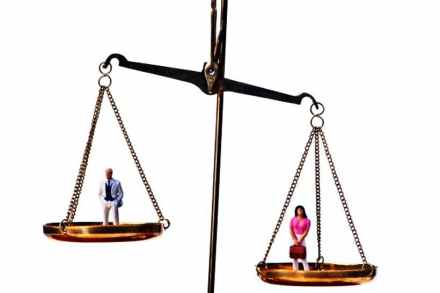
I have decided that my work is of equal value to that of Claudia Schiffer and that therefore in future I should be paid the same as her. Why not? Okay, we don’t quite do the same thing, but we both get up in the morning, go out and do what we do as best we can. Yet she is paid more than I am, which is indefensible. That is pretty much the basis of the claim by 100 female Tesco shop floor workers who have launched an action against the supermarket claiming that they should be paid the same as men who work in the store’s warehouses. It is discrimination, they say, because their work is of ‘equal value’. It is estimated that, if successful, Tesco could face claims for up to six years’ of back pay for 200,000 workers – amounting to as much as £4bn.

The Today programme has become Woman’s Hour

Anniversaries are very interesting, of course, but all the same I think a news programme ought to revolve around, well, the day’s news. That is something which increasingly seems to be missing from the Today Programme, once the BBC’s flagship news programme. Overnight, as I have read elsewhere, stock markets have plummeted around the world. Michel Barnier has made further statements on a future Brexit trade deal, again appearing to try to block the comprehensive trade deal which the government, and I suspect most business interests across the EU, want. But these were matters only sketched-over in a bizarre edition of the Today programme which devoted virtually every single item to the 100th anniversary of the 1918 Representation of the People Act.