Ross Clark

Ross Clark

Ross Clark is a leader writer and columnist who has written for The Spectator for three decades. He writes on Substack, at Ross on Why?

A dose of AI

Perhaps in common with many people who don’t work in pharmaceuticals, I vaguely imagined that the industry found much of its inspiration from nature. Scientists might start with an old wives’ tale that, say, cowslips cure genital warts, and then work towards medicalising it — searching for an active ingredient which can then be synthesised, tested and ultimately marketed as a sterile pill in a little cardboard box, to be taken three times a day. That was, indeed, how some common drugs were developed — and how some still are, most notably with efforts to make medical use of the constituents of cannabis plants. Yet this ignores the fact that the great bulk of modern drugs are increasingly being identified via theoretical work.

Liam Fox falls foul of the climate change cult

A question has come to me from a test paper in the A-level for 21st century ethics. Read the following statement and explain what is wrong with it: 'It's important that we take climate issues seriously. Whether or not individuals accept the current scientific consensus on the causes of climate change, it is sensible for everyone to use finite resources in a responsible way.' The correct answer, it turns out, is that the statement allows for the possibility that failing to accept the scientific consensus on climate change is somehow a legitimate position for an individual to hold, when of course it is not.

The trouble with Greta Thunberg

In popular mythology Greta Thunberg is a one-girl revolution who has inspired millions of young people into action by being able to see what adults refuse to see. But her promotion as global statesman is really a well-crafted piece of PR. Those on the Left who seek to use climate alarmism to further their war on global capitalism know full well that the likes of Robin Boardman-Pattison – the Bristol University graduate with a private education and fondness for foreign holidays, who stormed out of the Sky News studio when Adam Boulton accused him of being middle class – is a liability to their cause. But allow Thunberg to speak for them by proxy and, well, who will dare criticise a 16-year-old girl with Asperger's?

What David Attenborough’s climate change show didn’t tell you

Given the reception that awaited Richard Madeley when he ventured last week that David Attenborough is “not a saint, just a broadcaster” – something which is evidently true, though I haven’t formally checked with the Vatican – one delves into this subject with some intrepidness. Nevertheless, great documentary-maker though he may be, Attenborough cannot be allowed to get away with the propaganda element of his latest piece, his documentary Climate Change: the Facts which went out on Thursday evening.    Before I get going, don’t even bother thinking of calling me a climate change denier in the pockets of oil companies, or whatever.

Fretting over ‘land inequality’ is a waste of time

As if the nation is not already mired in enough scandal, now comes the revelation that half the land in England is owned by just 25,000 individuals and organisations (1% of the population!). How wrong and elitist that sounds when placed beneath a Guardian headline which implies it is a yet another measure of horrible inequality and deprivation. According to Labour MP John Trickett “The dramatic concentration of land ownership is an inescapable reminder that ours is a country for the few and not the many”. But it means nothing at all. We are not an agrarian society. Fewer than one per cent of the population are employed in agriculture. In addition to farmworkers there are a few allotment-holders, like Jeremy Corbyn, who satisfy some of their own food needs.

Extinction Rebellion shouldn’t be given such an easy ride

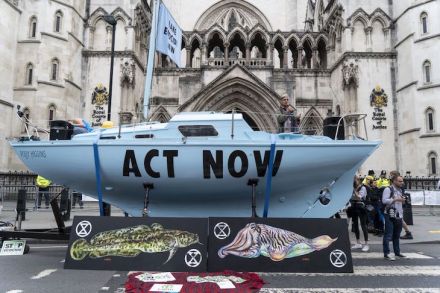
Why is Extinction Rebellion being given such an easy ride? It isn’t hard to imagine the outrage which would rightly follow if, say, Brexiteers were to smash windows, block roads and bridges in the cause of trying to force the government into a no-deal Brexit. We would never hear the last of the Guardian condemning them for ‘fascist’ methods and attempting to bypass democracy. Yet Extinction Rebellion has been allowed to get away with all this for the past three days with hardly a murmur of protest from government ministers, MPs, commentators or anyone else. The whole things seems to have been treated a great big joke.

Theresa May’s Brexit compromise won’t work

So, finally, we have a spirit of compromise. Jeremy Corbyn and Theresa May are going to sit down together and hammer out a deal on which both their respective parties can agree. Well, maybe not. There has been plenty of analysis over the past few hours predicting how it could all unwind – with further ministerial resignations and so on. But there is something more fundamentally wrong with what Theresa May has proposed. While searching for compromise might be a reasonable way to proceed on most political issues it simply doesn’t work in the case of Brexit.

Why Matt Hancock is likely to be the next prime minister

As MP for the constituency which covers Newmarket, health secretary Matt Hancock will have met a few bookmakers in his time. He has even won a horse race himself, of amateur jockeys in a charity event. He will know the Conservative leadership is the sort of open race with appetising prices – not least the 10-1 which William Hill is today offering on him. I have never met Mr Hancock, and can’t say I even particularly like him, but I am sorely tempted to have a flutter. Why? Because Conservative leadership contests, for all their drama, are pretty easy to read. The winner is almost invariably the credible candidate who, at the time of the election, has succeeded in offending the fewest number of Conservatives.

The shame of Jacob Rees-Mogg

Until this morning Jacob Rees-Mogg had had a remarkable Brexit. From being an obscure backbencher he had risen, without any formal position, to being just about the most powerful figure in the Conservative party after the Prime Minister. He controlled a party within a party, influencing the votes of seventy or so MPs. He became the most lucid of all MPs on Brexit, speaking with a logic and clarity which disarmed his opponents. He introduced a term to the debate – vassalage – which identified perfectly the weakness of Theresa May’s deal, and emphasised how the EU had successfully driven the Prime Minister into a corner. But this morning, all that has gone.

The shame of Jacob Rees-Mogg | 27 March 2019

Until this morning Jacob Rees-Mogg had had a remarkable Brexit. From being an obscure backbencher he had risen, without any formal position, to being just about the most powerful figure in the Conservative party after the Prime Minister. He controlled a party within a party, influencing the votes of seventy or so MPs. He became the most lucid of all MPs on Brexit, speaking with a logic and clarity which disarmed his opponents. He introduced a term to the debate – vassalage – which identified perfectly the weakness of Theresa May’s deal, and emphasised how the EU had successfully driven the Prime Minister into a corner. But this morning, all that has gone.

Has Leo Varadkar finally come clean on the Irish border?

Without the issue of the Irish backstop, it is reasonably safe to assume the UK would be leaving the EU on Friday with a withdrawal agreement. The government would not be falling apart and businesses and investors would know where they were. But of course, as we have been told constantly by the EU, the backstop is essential. It is absolutely the only way of ensuring, post-Brexit, that the Irish border remains open. What, then, if the whole thing was a hoax – if Britain and Ireland are capable of agreeing between themselves on a customs arrangement which eliminate the need for customs formalities? That is exactly what it appears may be about to happen, if we are to believe Irish PM Leo Varadkar.

John Bercow is right to block a third vote on May’s deal

I don’t know how religiously John Bercow reads Coffee House, but I am pleased that he has taken the advice I gave here on Saturday to use his powers to block a third ‘meaningful vote’ on Theresa May’s deal. This afternoon, the Speaker has made a statement to MPs that he intends to use his powers to do just this – on the grounds of a long-standing convention that a motion cannot be brought before the Commons if it is substantially the same as a motion that has already been defeated during the current session of Parliament. In one fell swoop Bercow has undermined what had seemed to be Theresa May’s last, desperate throw of the dice – a third vote on her deal.

John Bercow should block a third vote on Theresa May’s Brexit dealĀ 

Not for the first time the Speaker of the House of Commons appears to hold the Brexit process in his hands. There has been speculation this week that John Bercow has the power to prevent a third vote on Theresa May’s deal by resorting to a parliamentary convention which prevents a motion being debated in the Commons if it is substantially unchanged from a motion already brought before the House during the same session of parliament. Given that a third vote on May’s deal – likely to be called on Tuesday – would be essentially the same motion as was defeated by 149 votes last Tuesday (and not all that much different from the one defeated by 230 votes in January) there would appear to be a good case for Bercow to act.

Unconditionally yours

I know what it is like to receive an unconditional offer for university. In 1984, when I took the Cambridge entrance exam, if you passed, you then only had to meet the matriculation requirements of the university, which were two Es at A-level. For someone predicted straight As (virtually all Oxbridge candidates), that wasn’t asking a lot. It was hard not to slacken off a little, to take a mental gap year, or six months at any rate, for the last two terms of the sixth form. I slipped to a B in further maths, which seemed an embarrassment at the time, though I know others who took a bigger plunge. What with a real gap year, too, I never really did get back into numbers.

The no-deal Brexit tariffs are nothing to be afraid of

What strange knots some tie themselves in over Brexit. The attitude of some of those opposed to Britain leaving the EU is this when it comes to free trade: when conducted with the EU, it is essential for our prosperity. But when conducted with any other country it is a dark threat to our very being. How else to explain the reaction of CBI director-general Carolyn Fairbairn to the publication of the Government’s proposed tariff rates, which would apply in the even of a no-deal Brexit. The new regime would see some tariffs imposed on EU goods which currently enter the country tariff-free – 18 per cent of EU imports by value would fall into this category. But overall it would mean a sharp drop in tariffs on goods from all around the world.

The choice voters must be given if there is a second referendum

Of all the possible outcomes on Brexit one stands out as more unpleasant, more outrageous, more guaranteed to provoke mass anger in the country than any other. No, not Britain leaving the EU on 29 March with no deal – however much that would send some into their imaginary bunkers for fear of the sky falling in. It is Britain being made to vote in a second referendum – without the option of no deal on the ballot paper. Worryingly, this is exactly the outcome which a large part of the Labour party – including, crucially, the leadership – seem intent on achieving. Two weeks ago, the leadership produced a briefing for its MPs which raised the possibility of Labour backing a version of May’s deal – on condition that it was affirmed in a referendum.

It would be a mistake for Tory rebels to back May’s Brexit deal

How unsophisticated can Theresa May get in her efforts to persuade MPs to back her crumbling Brexit deal? Earlier this week we had her £1.6 billion bribe for “left behind” constituencies of Labour MPs who might just be tempted to back her deal. Yesterday, in Grimsby, she turned to her own backbenchers, telling them: "Reject [the deal] and no-one knows what will happen. We may not leave the EU for many months. We may leave without the protections a deal provides, we may never leave at all." She is of course right: no-one knows what will happen on Tuesday nor in the coming three weeks before 29 March. It does her no credit that she has allowed it to get to such a late stage with businesses still having no idea how to prepare for Brexit, or no Brexit.

It’s time for Mark Carney to come clean about Brexit

What wonderful powers that Mark Carney, governor of the Bank of England, possesses. At a stroke, he has just succeeded in increasing the size of the economy by three per cent. Well, sort of. Only last November, the Bank of England claimed that a no-deal Brexit could cost the UK economy between 4.75 and 7.75 per cent of growth over a three year period, relative to what would happen under May’s deal. Yesterday, he changed his tune a little, telling the House of Lords economic affairs committee the effect of a no-deal Brexit on the UK economy in three years’ time would be between two and 3.5 per cent smaller than he had previously stated. Why the improvement? It is all, apparently, down to Carney’s clever contingency plans, as well as a few other positive developments.

Whatever happened to the great Brexit property crash?

Whatever happened to the great Brexit property crash? The stock market has been pummelled on occasion since the referendum in 2016 but none so much as housebuilders’ shares. They suffered one downward loop immediately after the Brexit vote. Then again, as the chances of a no-deal Brexit increased towards the end of 2018, it was housing shares which suffered the most, with Taylor Wimpey, Barratt and several others plunging by 30 per cent, as rumours of sliding house prices took hold. And then? One by one, as housebuilders’ results came through, they turned out to be actually rather good. When Barratt reported on 6 February, for example, revenue was up 7 per cent, profits up 15 per cent, margins 2 per cent and sales volumes 4 per cent. The main housing indices have held steady.

Child climate change protestors aren’t truants, they’re traumatised

Earlier this week I wrote a blog here accusing children who were planning to take part in today’s Youth4Climate march of wanting to play truant. I realise now that I may have been a little harsh on them. Having read and heard what they have been saying and posting this morning, I fear that some of them at least may be suffering from trauma. They are victims of the hyperbole they have been fed constantly ever since they were born. Here, for example, is 10 year old Zane: 'The reason I climate strike is because the Earth is burning before our very eyes'. According to Hannah, from Birmingham, 'there is no point in going to school if we have no future'.