Ross Clark

Ross Clark

Ross Clark is a leader writer and columnist who has written for The Spectator for three decades. He writes on Substack, at Ross on Why?

David Cameron has helped Theresa May – even if he didn’t mean to

David Cameron has been widely blamed for the Conservatives’ current predicament, but in one sense he has saved the party – if inadvertently. It is thanks to his drive for younger candidates that Theresa May’s government has avoided succumbing to a no-confidence vote. May does not have a majority, and relied on DUP votes to help her survive a no-confidence vote last month. Yet even DUP votes would not be enough to save her were she losing her own MPs at the rate John Major did in the mid 1990s. In 1992, Major was elected with a seemingly healthy majority of 21. Yet over the course of the following five years he lost that majority entirely. Why?

What is the student ‘strike’ against climate change trying to achieve?

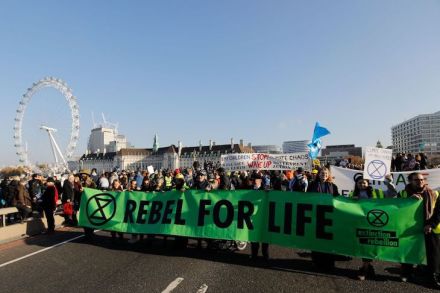
Forty years ago, I occasionally succeeded in skipping school for climate-related reasons – namely because my village was under deep snow and the school bus couldn’t get through. But too often the snowploughs proved surprisingly effective. It never occurred to me, though, to skip school on a point of principle. That is, however, what pupils are threatening to do – or are being implored to do – on Friday. A “Youth for Climate” movement circulating on Twitter has declared a ‘strike’ for the day – the idea being that children will walk out of lessons in order to protest at the lack of progress on tackling climate change.

Is there any point listening to the Bank of England’s growth forecasts?

The Bank of England today downgraded its forecast for UK GDP growth in 2019 from 1.7 per cent (a forecast it made in November) to 1.2 per cent. That is a chunky fall, but really, does anyone really care? As I have pointed out here many times before, the Bank’s record for forecasting is pretty lousy. The past year has been no exception. What has caught my eye is just how over-optimistic it was about Euro area growth a year ago. In its inflation forecast in February 2018 the Bank foresaw GDP growth in the Eurozone over 2018 running at 0.75 per cent per quarter. In the event, growth slowed dramatically to 0.4 per cent in the first two quarters and to 0.2 per cent in the second two quarters. The truth is, if we do end up with growth this year of 1.

Carmageddon

When Nissan announced it would not, after all, produce its new X-Trail in Sunderland, this was reported as proof of an impending Brexit disaster. A Labour councillor in South Wales even suggested that ‘all those who voted to leave should be laid off first’. But Nissan’s decision has little to do with Brexit, and everything to do with the turmoil of the global car industry. It is not that overall car sales are plunging — they grew by a modest 0.5 per cent across Europe last year. The problem is that established carmakers have failed to keep up, and their future now looks far more uncertain than it did even just a few years ago. BMW, Mercedes, Volkswagen, Nissan: for decades, the same names ruled. It was a complacent industry, and progress was incremental.

The Asda equal pay ruling that could wreck the UK’s labour market

I don’t know what it is like to work as a checkout assistant in Asda, still less in an Asda warehouse. But if I did work in a company’s shops and I learned that there were better-paid jobs available in its warehouses I am pretty sure I know what I would do: apply for a job in the latter. It wouldn’t occur to me to pick up the phone to a lawyer and claim I was a victim of discrimination. But then perhaps I am not suited to life in the age of grievance politics. Today, the Court of Appeal has ruled that Asda may be guilty of sexual discrimination in that it is paying shop staff less than warehouse staff.

Does the Left want us to return to the pre-industrial age?

However misguided their ideas, until recently it was safe to assume that those on the Left did at least want to improve the lot of humanity – they wanted the global population to enjoy better health, a better diet and longer lives. They just disagreed with capitalists and free marketeers over how best to achieve those things. Now I am not so sure. An extraordinary piece appears in the Guardian today by Jason Hickel, an anthropologist at Goldsmiths College, which savages Bill Gates for tweeting, from Davos last week, an infographic showing several ways in which global poverty is declining. I can think of many reasons to savage Bill Gates, not least over the nightmare that is Windows 8, Microsoft OneDrive and other things.

Does the Left want us to return to the pre-industrial age? | 29 January 2019

However misguided their ideas, until recently it was safe to assume that those on the Left did at least want to improve the lot of humanity – they wanted the global population to enjoy better health, a better diet and longer lives. They just disagreed with capitalists and free marketeers over how best to achieve those things. Now I am not so sure. An extraordinary piece appears in the Guardian today by Jason Hickel, an anthropologist at Goldsmiths College, which savages Bill Gates for tweeting, from Davos last week, an infographic showing several ways in which global poverty is declining. I can think of many reasons to savage Bill Gates, not least over the nightmare that is Windows 8, Microsoft OneDrive and other things.

The new mood of Question Time audiences reflects the changing Brexit debate

Earthquakes in public opinion do not happen often, and when they do they can catch commentators unawares. But if you want to see one in motion you should go back and watch the last two editions of Question Time. Until recently, the BBC show could be relied upon to have a loud contingent of groaning audience members capable of drowning out the ‘gammon’ tendency. The programme even managed to find a broadly pro-Remain audience in Clacton, the one and only seat which Ukip ever managed to win at a general election. But no longer. The arrival of Fiona Bruce has coincided with a sharp change in audience tone.

Tofu truths

Last week’s Lancet report and its ‘planetary health diet’ of next to no red meat will have bolstered the egos of vegans who claim that they are doing the Earth a favour. But just how environmentally friendly are many of the alternatives favoured by vegans? Fancy a bowl of quinoa, a grain stacked with amino acids, magnesium, phosphorous and iron, which in 2013 enjoyed the endorsement of the UN as a ‘superfood’? Not so fast. Quinoa is traditionally grown in the Andes, spanning parts of Bolivia, Peru and Ecuador, where thin soils are replenished with llama dung. Or at least they were. In the first decade of this century, quinoa production increased forty-fold as western consumers took it up with relish.

Is Dyson’s Singapore move anything to do with Brexit?

Brexit has become the inverse of a pair of rose-tinted spectacles. It is the lens through which all negative economic news has come to be interpreted – and magnified. Yesterday, the IMF published its latest forecasts for global economic growth. One might well ask what use this material is, given the IMF’s past record at economic forecasting. But whether these forecasts are of any value or not, they have, predictably enough, been jumped on by the Remain-supporting media in order to scribble yet another chapter of anti-Brexit narrative. Indeed, according to this narrative, it is not just Britain which seems to be suffering now from the moronic, misinformed decision of the UK public to vote to leave the EU in 2016 – it is the entire world.

Brexiteers may have blown their big chance, but Remainers have done far worse

Have Leavers just blown their best chance of Brexit in a subconscious sort of way, because deep down, they never really wanted it? Matthew Parris makes this case in a typically eloquent Spectator column this week. He might be right, but they have not blown it quite so badly as Remainers have. Imagine how events would have turned out this week had the great mythical new political party of the centre actually existed – if it had an organisational structure ready to pounce on its big opportunity, along with a smattering of MPs of other parties ready to jump ship. Imagine if, in the 24 hours between the Brexit vote and the no-confidence vote, it had suddenly risen, serpent-like.

Brexiteers owe Dominic Grieve and Gina Miller a debt of gratitude

If, as seems inevitable, the Commons votes to reject Theresa May’s Brexit deal later today – thereby sparing Britain from the humiliation of being trapped in the backstop, forced to accept EU rules without having a say in them – the hero of the hour will be Dominic Grieve. Him and Anna Soubry, Nicky Morgan, Kenneth Clarke, Sarah Woolaston and a gaggle of other Remain MPs. Why? Because it was only thanks to them that the Commons is getting its meaningful vote on the Brexit deal. It was they who rebelled against the government in December 2017 to make sure that such a vote would be held.

Project Fact

Food shortages, diabetics going without insulin, outbreaks of salmonella and swine flu: a no-deal Brexit has become a dystopia of the imagination that gives even the Old Testament a run for its money. To lend it extra credence, the doomsayers are not muttering men with long white beards but business leaders and figures from respectable-sounding thinktanks. Yet in just 11 weeks’ time, a no-deal Brexit could become a reality. Will we really be impoverished, hungry and living in fear of infectious diseases? Or is it just Project Fear, ratcheted up to a new level by those who see the clock ticking down and have become ever more desperate to persuade the public of the foolishness of its decision to vote for Brexit? Some dismiss the predictions of chaos as mere scaremongering.

The forgotten voters who might win the next election for Corbyn

Before Brexit: The Uncivil War is allowed to drift off into the ether, there is an important point which needs to be made, and yet which has not been addressed in all the reams of comment which have written about it. There is a gaping hole in its narrative. That narrative seems straightforward enough: Vote Leave won the referendum because its leader, Dominic Cummings, and his team of geeks realised that they could tap into a vast, lost constituency of Britons with whom politicians and traditional political campaigning methods had lost touch. This they did by analysing Facebook and other social media data and then hitting the lost voters – put at three million – incessantly with micro-targeted adverts.

Will Brexit really hit house prices?

On any other day of the week the Guardian is – with some justification – complaining about a housing crisis, with millions of young people priced-out of ever owning – or even renting – a decent home. Now, however, it seems to be treating with alarm news that prices are stagnating. 'UK house prices take pre-Brexit hit, says Nationwide' declared a headline this week – followed by news that house prices have, in fact, risen by 0.5 per cent over the past 12 months. That is a lot lower than we have become used to in recent decades, but isn’t it a good thing if rampant house price inflation has come to a halt? And is it really connected with Brexit? The housing market – outside London – never returned to the mania of pre-2008.

The good news about Britain’s economy you might not have heard

Britain is, of course, in a Brexit-driven recession of its own making, while other EU countries are powering on ahead without us. Or so we keep being told. The ideas is that we are distancing ourselves from European markets - and concerned manufacturers will move production to factories elsewhere in the EU. While this gloomy analysis appears to be confirmed every time the CBI, IMF and others publish their forecasts, it is becoming increasingly hard to square with the economic data. This morning, IHS/Markit published its monthly Purchasing Managers’ Index (PMI) for manufacturing – a measure of business activity which leads official government statistics on the economy.

Returning migrants to France is the most humane option

Last week the government awarded a £13.8 million contract to operate a new ferry service between Ramsgate and Northern France in the event of a no-deal Brexit – the money going to a company which, as yet, seems to possess no ferries. But that is a minor misuse of public money compared with the costs that the government will impose upon itself if it fails to tackle that other embryonic cross-Channel ferry service – the one being operated by Border Force and RNLI in conjunction with a bunch of thugs with a flotilla of rubber dinghies.

Why MPs should not stop legal aid reform

There is never more excitement on the Left than when a Tory MP recants and concludes that his heartless party and its callous social policies are wrong. So it was on Friday when Nigel Evans, MP for Ribble Valley, announced that he had had a ‘road to Damascus conversion’ and realised that David Cameron’s legal aid reforms – which reduced the eligibility for legal aid – had made life harder for those who found themselves on the wrong end of a court case. It wasn’t pure altruism which had led him to this conclusion – Evans himself was acquitted on nine charges of sexual assault in 2014. While the case against him fell apart so, too, did his financial security. He complained that it had swallowed up his entire £130,000 life savings.

The feeble response to the Gatwick drone will encourage others to cause havoc

Gatwick Airport has been brought to its knees by a bunch of drones – not so much the flying variety as the type who sit in offices or stand around in hi-viz vests and make decisions by the book, with no imagination nor initiative of their own. How can a little airborne gizmo bring the country’s second busiest airport to a complete halt for 36 hours, defeating the efforts of police, airport security and the uncommonly useless Chris Grayling?

The EU’s no-deal preparations make it clear: they want to make Britain suffer

When Boris Johnson was foreign secretary, he was admonished for accusing the EU of wanting to administer ‘punishment beatings’ to Britain for its temerity in wanting to leave the EU. In the months since it has become clear just how apt his description was. At every turn, the EU has acted with one aim in mind: to try to ensure that Britain suffers from exiting the EU, in order to deter other member states from contemplating leaving the bloc. Today’s memo from the EU, laying out the plans for what would happen in the event of a ‘no-deal’ Brexit is a case in point. It is hard, reading this document, to reconcile it with the EU’s claim to be an organisation which promotes free trade and free movement of people and goods.