Ross Clark

Ross Clark

Ross Clark is a leader writer and columnist who has written for The Spectator for three decades. He writes on Substack, at Ross on Why?

What’s to blame for the surge in excess deaths?

From the beginning, the debate over lockdowns was skewed by the fact that Covid deaths were imminent – and any other effects from lockdown would become apparent over a longer period. But are we beginning to see that now? Over the past few months the Office for National Statistics has been recording ‘excess’ non-covid deaths of around 1,000 a week in England and Wales – that is to say deaths above and beyond the level which would be expected at this time of year. Deaths over the summer months have been more in line with the number of deaths which might be expected in a normal winter.

Is the housing bubble about to burst?

There are so many house indices that they can create confusion. Last week, the Halifax house price index showed a small monthly fall. This week the government’s own index, the HPI, shows that prices rose by 7.8 per cent in the year to June, down from 12.8 per cent in the year to May. That suggests a slowing market, but then that is hardly surprising. June 2021 marked the end of Rishi Sunak’s stamp duty holiday, which created a rush of completions as buyers sought to avoid a bill of thousands of pounds. This month’s HPI marks the first time that bulge in sales has dropped out of the annual figures. This ought to be a warning sign.

My holiday from the news

We are all supposed to remember where we were when we heard that Mrs Thatcher had resigned (my mother rang me while I was having a late breakfast). But I will always have a much more vivid memory of where I was when I heard Boris Johnson had called it a day. I was at a mountain refuge in Andorra when a Dutch hiker told me: ‘I’ve just spoken to my wife and she tells me your Boris Johnson has resigned.’ It turned out to be four days after the actual event. Between Boris appearing at his Downing Street lectern and me hearing about it I had managed to walk 100 miles across three countries, scale nearly a Mount Everest-worth of mountain passes and survive in my skimpy tent the foulest thunderstorm I have ever known.

Tony Blair’s Covid grift

Have we yet seen the end of Covid restrictions? It is tempting to think so. For many people, Covid and the lockdowns have receded into history, replaced by Ukraine and the energy crisis. It would be easy, but foolish, to dismiss Tony Blair’s proposals as the ramblings of a bored ex-PM But perhaps we have parked the whole business in our memories a little too soon. Some are already pushing for restrictions to be re-enacted this winter. The Tony Blair Institute for Global Change has just published a paper, Three Months to Save the NHS, demanding that the government consider re-imposing mask mandates on public transport and other enclosed settings.

Can inflation be brought under control?

That today’s inflation figures would come as an immense shock to anyone who has returned from a year in the wilderness goes without saying. A little over a year ago, in May 2021, the Bank of England was predicting that the Consumer Prices Index (CPI) would peak at no higher than its two percent target. CPI is now in double figures for the first time in 40 years, at 10.1 per cent – exceeding even the already-grim expectations of many economists. The Bank of England may yet again have to revise its forecast for the inflationary peak – which just two weeks ago it put at 13 per cent. The Bank’s Monetary Policy Committee has been asleep on the job and it is a wonder that its governor, Andrew Bailey, is still in his job.

Why the City made a mistake in writing off coal

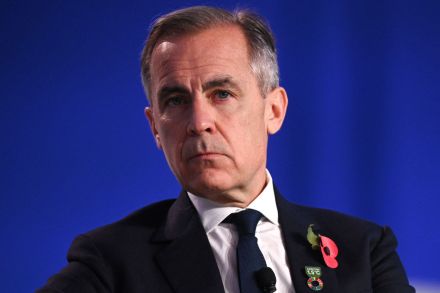
For anyone tempted to believe warnings from Mark Carney and other City figures about ‘stranded assets’ in the fossil fuel industry, while simultaneously buying the idea that renewable energy is the investment which can’t go wrong, here is a cautionary tale. Just over a year ago the mining giant Anglo American demerged its thermal coal division into a new company, Thungela Resources. At the time it seemed to some a bit like Northern Rock being divided into a ‘good bank’ and a ‘bad bank’.

Who’s going to save businesses from soaring energy costs?

Who doesn’t want lower electricity bills, and sympathise with households who will be unable to keep themselves warm this winter? But there is something rather missing from the Dutch auction between Keir Starmer and the two Tory leadership candidates over promises to help with household energy bills. What about businesses, whose gas and electricity bills are uncapped, and which face being forced into bankruptcy by surging prices? Households may have seen their bills rise by 50 per cent since the beginning of the year, and face seeing them double by the end of the coming winter. But they do at least benefit from having politicians falling over each other to help them.

Who is Gordon Brown to pose as the voice of fiscal sanity?

Gordon Brown is demanding Parliament be recalled for an emergency budget. By October, he says, quoting a study he commissioned from the University of Loughborough, half the population could be living in fuel poverty. ‘Not enough thinking is being done about the major social crisis,’ he told Radio Four’s The World at One on Monday. The former Chancellor and Prime Minister does, of course, have every right to make what representations he wishes to the government, and no-one can call him a hypocrite for wanting the Chancellor and MPs to sacrifice their summer holidays for an emergency budget. His first holiday as PM, in 2007, famously lasted half a day before he found an excuse – a minor outbreak of foot and mouth – to return to Downing Street.

Are we already in recession?

The Bank of England recently raised hackles by predicting that the economy would shrink in the final quarter of 2022, with Britain spending the whole of next year in recession. Liz Truss was especially critical, saying that a recession was not inevitable. In last night’s Cheltenham debate she again referred to the subject, saying that it was important we did not ‘talk ourselves into a recession’. But could a recession arrive actually earlier than the Bank of England predicted? This morning’s figures from the Office for National Statistics (ONS) suggest that the economy shrank by 0.1 per cent in the second quarter of this year. If the figures for the third quarter, due in October, also show a fall then Britain could officially be in recession by then.

Water woes: who’s to blame for the shortages?

For residents of the London borough of Islington whose homes were flooded this week by a burst water main, Thames Water’s decision to announce a hosepipe ban the following day must have come across as a sick joke. Just a few days before the flood, the company sent out an email asking its customers to be a ‘hot spell hero’. ‘Every drop you save really is another drop more in your local river or reservoir.’ But Thames Water seemed unable to follow its own advice: five million litres of water were lost during the leak. The episode neatly encapsulated much of what is wrong with Britain’s water industry: crude, 1940s-style rationing on the one hand and a failure to prevent much of the product leaking away on the other.

Europe’s looming energy wars

This summer marks a truce. But if, as expected, Liz Truss becomes prime minister, it is almost inevitable that tensions over the Northern Ireland protocol will resurface. Britain has been threatened with trade barriers if it tears up the protocol, with implications for import and export industries. But one possible consequence has been largely overlooked, in spite of the gathering energy crisis: the trade in gas and electricity. Imported power via undersea interconnectors is the forgotten but fast-growing element of our electricity system. In 2019, 6.1 per cent of our electricity was imported.

Is cash back?

Whatever happened to the great surge towards a cashless society which the pandemic was supposed to bring about? As I wrote here in February 2021, the cashless lobby was ruthlessly exploiting the pandemic in order to push for its nirvana in which we would be forced to pay for everything electronically, either via cards or phones. But the campaign doesn’t seem to be going too well. This week the Post Office reported that £801 million worth of personal cash withdrawals were made from its branches in July, an 8 per cent rise on June and a 20 per cent rise on July 2021.

What a coral reef misconduct claim says about climate science

On Monday, I wrote here about how the Great Barrier Reef is defying predictions of its own demise, bouncing back from a mass bleaching event last year to show the greatest vegetation cover in 37 years of observations. Now comes news that a prominent scientist involved in some of the doom-mongering work over coral reefs has been found guilty by her own university of misconduct in her research.

How did climate doomsters get the Great Barrier Reef so wrong?

We are, of course, in the midst of a ‘climate emergency’ and the ‘sixth mass extinction’ of life on Earth. It is just that one of the iconic victims doesn’t seem to be playing ball just at the moment. As recently as May, environmentalists were warning that the Great Barrier Reef, the 1,500-mile coral structure off the coast of Queensland, was being doomed by warming seas. It was reported to be suffering a ‘mass bleaching’ – where the plants which live on the reef and provide food for it die off. The blame was put on warmer seas. Worse, this was the first mass bleaching event to occur in a ‘La Niña’ year, when the seas off Australia are supposed to be going through a cyclical cooling phase.

How vulnerable are Ukraine’s nuclear power stations to attack?

For years, security services have worried about terrorists unleashing a ‘dirty bomb’ – where a conventional explosive is used to spread radioactive material over a large area. Russian forces now stand accused of threatening a similar form of warfare in Ukraine: attacking a nuclear power station with conventional weapons. Shelling of the Zaporizhzhia nuclear power station on the Dneiper River in the south of the country over the weekend is not believed to have released any radiation, although it did damage some equipment and one worker has been reported injured. However, the possibilities for causing havoc by attacking nuclear stations is very clear.

Rishi Sunak is not stealing from the poor to give to the rich

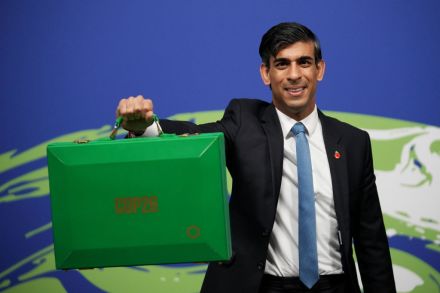
Until this morning this had been Rishi Sunak’s week. While Liz Truss found herself trying to talk her way out of her rapidly-abandoned policy for regional pay boards – which she accused others of misrepresenting but couldn’t seem to explain herself – Rishi Sunak emerged the surprise winner from a show of hands among Sky’s hand-picked audience last night. But no sooner had Sunak started his comeback than he was knocked down with an embarrassment of his own: the New Statesman obtained footage of him boasting to an audience in Tunbridge Wells last Friday that: I managed to start changing the funding formulas to make sure that areas like this receive the funding they deserve.

Bring on the housing crash!

It has been a long time coming, given that shares and bonds have been falling for most of the year, but this morning there are the first signs of a slide in house prices. Don’t get too excited: the Halifax House Price Index fell by just 0.1 per cent month on month, and prices are still up 11.8 per cent year on year.  But it is an indication that things might finally be changing in a market which has seemed to defy logic ever since the arrival of Covid. Yes, the deepest recession in recorded history was accompanied by a boom in house prices. Even when interest rates began to rise, still the housing market powered ahead. With the Bank of England sanctioning a chunky 0.

Is the Bank of England’s recession warning right?

The Bank of England has warned that Britain will fall into a recession this year. Its Monetary Policy Report, released today, predicts that the economy will shrink from October, with the downturn lasting until the end of 2023. The Bank of England also hiked interest rates from 1.25 per cent to 1.75 per cent, the biggest rise for 27 years. The Bank of England’s Monetary Policy Committee has never previously raised the base rate by 0.5 per cent in its 25 years of existence. Previously it has only upped rates in quarter-point stages (and there haven’t been many of those, especially in recent years). The rise will, of course, affect mortgages, but perhaps not to the extent that interest rate rises used to.

The authoritarianism of British Transport Police

When our freedoms are being taken away we are like the proverbial frog boiled alive in water where the temperature is slowly brought to boiling point. Who batted an eyelid in June when it was reported that rail companies are drawing up plans to abolish paper rail tickets and have us all travel with e-tickets instead? Who picked up on today’s story that explains one of the reasons why the police are so keen to switch us to e-ticketing? Lucy D’Orsi, chief constable of the British Transport Police, says her force wants access to data from passengers’ mobile phones and bank cards so that it can track us around the network. At the moment, you can get on a train from Wolverhampton to London with a paper ticket and leave little trace.

Is the eurozone in crisis?

Is the eurozone heading for another 2010-style sovereign debt crisis? Today comes the news that inflation in the eurozone hit 8.9 per cent in the year to July. Although it is a record high, it is not as quite as towering as inflation in Britain – at 9.4 per cent. However, what it does do is expose the vulnerability of the eurozone – and how Italian public debt threatens to undermine it. This week, the yield on Italian ten-year government bonds rose to 3.5 per cent as investors began to wonder again if the country can honour its debts. Granted, it’s not quite as high at the rates of over 6 per cent which investors were demanding in 2012 – but it’s a sharp rise in recent times.