Ross Clark

Ross Clark

Ross Clark is a leader writer and columnist who has written for The Spectator for three decades. He writes on Substack, at Ross on Why?

Tory ministers shouldn’t fall for these purity tests

From our UK edition

Liz Truss’s ministers had not even got their feet beneath the cabinet table before they were treated to a barrage of objections to their appointments. Talk about playing the man rather than the ball. No sooner had Jacob Rees-Mogg been appointed business secretary than Caroline Lucas was declaring him unfit for the position because he has previously expressed sceptical views on climate change. She didn’t even wait to learn that Rees-Mogg will not, in contrast to his predecessor Kwasi Kwarteng, also hold the climate brief, which has gone to Graham Stuart.

Liz Truss’s energy price freeze would be a mistake

From our UK edition

It is not unusual for promises made during an election campaign to fail to survive a headlong impact with reality, but if, as expected Liz Truss, announces an energy price freeze tomorrow, it will leave many Conservative party members who voted for her feeling somewhat cheated. For most of the leadership campaign Truss denounced the idea of government help with energy bills and insisted she would tackle the problem with tax cuts instead. Taxing people and then giving them some of their money back in handouts, she said, was ‘Gordon Brown economics’. Yet it now seems that not only will she spend large amounts of money to bail out householders’ energy bills, but she will seek to outdo Keir Starmer.

What Boris should do next

From our UK edition

Just what do you do with the rest of your life if, aged 58, you have been prised out of the biggest job in Britain? It is a question that Boris Johnson, having delivered his valedictory speech outside No. 10, is now having to answer. The possibility of him returning to Downing Street, as has been mooted by some supporters, is so unlikely that it can be dismissed. He said this morning: ‘I am like one of those booster rockets that has fulfilled its function and I will now be gently re-entering the atmosphere and splashing down invisibly into some remote and obscure corner of the Pacific.’ Yet for him to disappear from public life into obscurity seems too remote a prospect.

Are the markets scared of Liz Truss?

From our UK edition

Look at the chart for interest rate expectations in isolation, and you might come to the conclusion that Rishi Sunak is right about Liz Truss’s fiscal policies. In June, markets were expecting rates to peak at around 3.5 per cent next year; now they are expecting them to reach close to 4.5 per cent. Moreover, as Truss’s victory came to be seen as inevitable, the FTSE 100 plunged from 7,550 on 19 August to 7,230 this morning – a fall of 4.2 per cent. The pound has fallen from $1.22 on 10 August to $1.15 now. Markets could be forgiven some apprehension But hang on a minute. Markets have been revising their interest rate expectations all year.

Putin’s closure of Nord Stream 1 has left Britain exposed

From our UK edition

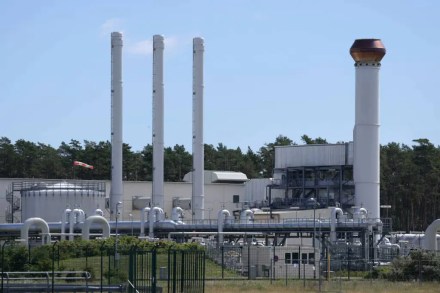
Few will be minded to believe Russia’s explanation for cutting off Nord Stream 1 pipeline – that it is a maintenance issue – and I don’t suspect we are expected to believe it, either – any more than we were expected to believe that the would-be Salisbury assassins had an interest in cathedral spires. It is pretty blatant what game Vladimir Putin is playing: Europe has announced, grandly, its intentions to wean itself off Russian gas and oil and Putin has set out to pre-empt that, to cut off the gas while Europe is still pretty much reliant on it. Gas supplies to Germany from Russia were already down to 20 per cent of the level they were before the Ukraine invasion. No one should count on the gas being turned on again.

Will Sunak’s heating bill plan be quashed by Truss?

From our UK edition

When the next prime minister is installed in Downing Street on Monday, we can expect a package of initiatives to help households with their heating bills. But will Rishi Sunak’s existing scheme – which promised £400 worth of handouts to every household – survive if, as expected, Liz Truss walks into No. 10? The scheme has already been heavily criticised because it is not means-tested and fails to target help towards the poorest. But this morning came bad news: the Office for National Statistics has decided to treat the £400 handout as extra income, not as a reduction in bills as was intended. This matters because it means the scheme will not help to reduce inflation.

It’s time to kickstart North Sea oil

From our UK edition

It is reported this morning that one of Liz Truss’s first acts as prime minister, assuming she wins the Conservative party leadership election, will be to grant new licences for North Sea oil and gas extraction. But will it be enough – and quick enough – to alleviate the energy crisis? There are still substantial known oil and gas reserves in the North Sea left to be exploited. According to a report produced by the Oil and Gas Authority last September, known reserves of oil and gas in the North Sea at the end of 2020 amounted to 4.4 billion barrels of oil equivalent (BOE). This is just a tenth of the 45.9 billion BOE which have already been extracted. However, that ignores that exploration for oil is an ongoing business.

The four-day working week is a sham

From our UK edition

The challenger bank sector has been such a graveyard in recent years that I don’t hold out much hope that Durham-based Atom Bank will ever quite displace the likes of Lloyds and Barclays. Nevertheless, I wish it well. It is just that its claim to have increased productivity by changing to a four-day week does not fill me with confidence. Not only does the bank intend to make four-day working a permanent fixture, it wants other businesses to copy its example. 'We firmly believe the four day week is the future of working life,' says ‘chief people officer’ Anne-Marie Lister. 'We hope that Atom’s experiences will encourage other businesses to make the shift permanently.

Could Macron trigger British blackouts?

From our UK edition

‘We are living the end of an era of abundance,’ according to Emmanuel Macron, ‘the end of the abundance of products and technologies, the end of the abundance of land and materials, including water.’ It is hard to see how water has become less abundant, being the ultimate renewable resource, which evaporates before falling back to Earth as rain. Rewind a year and people in parts of Europe, you may remember, were complaining about a super-abundance of water – in the form of the Rhineland floods. But let’s leave that aside and assume that Macron’s remarks were more immediately prompted by a shortage of energy.

The problem with Biden’s student debt plan

From our UK edition

In Europe it is handouts to help pay our energy bills – even for people who could easily afford to pay them. In the US, it is student debts being written off. With remarkable speed the West is emerging into a new age of big – no, make that huge – paternalistic government. Today, Joe Biden announced that graduates who earn less than $125,000 a year, and who live in a household whose joint income is less than $250,000, will have $20,000 worth of student debt written off. For those who work in the non-profit sector, the military, or federal or local government, the write-off will be 100 per cent.

Are Russian sanctions working?

From our UK edition

Soaring gas and electricity prices are giving us an idea of the cost of imposing sanctions on Russia – a cost which may be worth bearing if it helps to defeat Russian aggression, but a cost nonetheless. But how complete and effective are the sanctions? Trade figures released by the Office for National Statistics (ONS) today reveal that Britain, at least for now, has achieved one of its chief objectives: it has weaned itself off Russian oil and gas. In June there were no imports of fuels from Russia. In the 12 months to February, by contrast, 5.9 per cent of Britain’s crude oil imports, 24.1 per cent of our refined oil imports and 4.9 per cent of gas imports came from Russia. Overall, there were £33 million of goods imports from Russia in June, a 96.

What’s to blame for the crash of the euro?

From our UK edition

Since June 2016 we have settled into a pattern. Whenever the pound plunges, it is followed by cries of 'I told you so'. It is all the fault of Brexit and a result of international investors fleeing Britain and taking their money elsewhere. And when the euro plunges? We hardly hear a thing. Yet today, the euro has passed a milestone which ought not to be ignored: it has fallen below parity with the dollar for the first time since 2002. It is quite a tumble given that in 2008 it was trading at $1.5. Against the pound, the euro is now back to where it was in 2012, long before Britain’s departure from the EU became a serious prospect.

What’s to blame for the surge in excess deaths?

From our UK edition

From the beginning, the debate over lockdowns was skewed by the fact that Covid deaths were imminent – and any other effects from lockdown would become apparent over a longer period. But are we beginning to see that now? Over the past few months the Office for National Statistics has been recording ‘excess’ non-covid deaths of around 1,000 a week in England and Wales – that is to say deaths above and beyond the level which would be expected at this time of year. Deaths over the summer months have been more in line with the number of deaths which might be expected in a normal winter.

Is the housing bubble about to burst?

From our UK edition

There are so many house indices that they can create confusion. Last week, the Halifax house price index showed a small monthly fall. This week the government’s own index, the HPI, shows that prices rose by 7.8 per cent in the year to June, down from 12.8 per cent in the year to May. That suggests a slowing market, but then that is hardly surprising. June 2021 marked the end of Rishi Sunak’s stamp duty holiday, which created a rush of completions as buyers sought to avoid a bill of thousands of pounds. This month’s HPI marks the first time that bulge in sales has dropped out of the annual figures. This ought to be a warning sign.

My holiday from the news

From our UK edition

We are all supposed to remember where we were when we heard that Mrs Thatcher had resigned (my mother rang me while I was having a late breakfast). But I will always have a much more vivid memory of where I was when I heard Boris Johnson had called it a day. I was at a mountain refuge in Andorra when a Dutch hiker told me: ‘I’ve just spoken to my wife and she tells me your Boris Johnson has resigned.’ It turned out to be four days after the actual event. Between Boris appearing at his Downing Street lectern and me hearing about it I had managed to walk 100 miles across three countries, scale nearly a Mount Everest-worth of mountain passes and survive in my skimpy tent the foulest thunderstorm I have ever known.

Tony Blair’s Covid grift

From our UK edition

Have we yet seen the end of Covid restrictions? It is tempting to think so. For many people, Covid and the lockdowns have receded into history, replaced by Ukraine and the energy crisis. It would be easy, but foolish, to dismiss Tony Blair’s proposals as the ramblings of a bored ex-PM But perhaps we have parked the whole business in our memories a little too soon. Some are already pushing for restrictions to be re-enacted this winter. The Tony Blair Institute for Global Change has just published a paper, Three Months to Save the NHS, demanding that the government consider re-imposing mask mandates on public transport and other enclosed settings.

Can inflation be brought under control?

From our UK edition

That today’s inflation figures would come as an immense shock to anyone who has returned from a year in the wilderness goes without saying. A little over a year ago, in May 2021, the Bank of England was predicting that the Consumer Prices Index (CPI) would peak at no higher than its two percent target. CPI is now in double figures for the first time in 40 years, at 10.1 per cent – exceeding even the already-grim expectations of many economists. The Bank of England may yet again have to revise its forecast for the inflationary peak – which just two weeks ago it put at 13 per cent. The Bank’s Monetary Policy Committee has been asleep on the job and it is a wonder that its governor, Andrew Bailey, is still in his job.

Why the City made a mistake in writing off coal

From our UK edition

For anyone tempted to believe warnings from Mark Carney and other City figures about ‘stranded assets’ in the fossil fuel industry, while simultaneously buying the idea that renewable energy is the investment which can’t go wrong, here is a cautionary tale. Just over a year ago the mining giant Anglo American demerged its thermal coal division into a new company, Thungela Resources. At the time it seemed to some a bit like Northern Rock being divided into a ‘good bank’ and a ‘bad bank’.

Who’s going to save businesses from soaring energy costs?

From our UK edition

Who doesn’t want lower electricity bills, and sympathise with households who will be unable to keep themselves warm this winter? But there is something rather missing from the Dutch auction between Keir Starmer and the two Tory leadership candidates over promises to help with household energy bills. What about businesses, whose gas and electricity bills are uncapped, and which face being forced into bankruptcy by surging prices? Households may have seen their bills rise by 50 per cent since the beginning of the year, and face seeing them double by the end of the coming winter. But they do at least benefit from having politicians falling over each other to help them.

Who is Gordon Brown to pose as the voice of fiscal sanity?

From our UK edition

Gordon Brown is demanding Parliament be recalled for an emergency budget. By October, he says, quoting a study he commissioned from the University of Loughborough, half the population could be living in fuel poverty. ‘Not enough thinking is being done about the major social crisis,’ he told Radio Four’s The World at One on Monday. The former Chancellor and Prime Minister does, of course, have every right to make what representations he wishes to the government, and no-one can call him a hypocrite for wanting the Chancellor and MPs to sacrifice their summer holidays for an emergency budget. His first holiday as PM, in 2007, famously lasted half a day before he found an excuse – a minor outbreak of foot and mouth – to return to Downing Street.