Ross Clark

Ross Clark

Ross Clark is a leader writer and columnist who has written for The Spectator for three decades. He writes on Substack, at Ross on Why?

Does John McDonnell have any savings for a rainy day?

It is very sporting of John McDonnell to release his tax return for us all to inspect. It is reassuring to see that he isn’t posing as a hero of the working man while living off rent from a property portfolio, and that he hasn’t been working on the side for Vodafone or Google while laying into their tax affairs. Presumably it is the very simplicity of his tax return with which he hoped to impress us. But that is what is bothering me – the lack of entries. Apart from his income of £61,575 as an MP and a pension of £14,421 from his career in local government he seems to have no taxable income whatsoever. Most worrying of all he appears to have earned not so much as a pound in interest from a savings account.

Why would anyone invest in energy when the policies are so fickle?

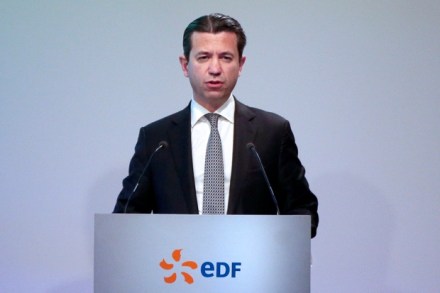
In 2007 Vincent de Rivaz, chief executive of EDF’s UK arm, made the now-infamous promise that by Christmas 2017 we would be cooking our turkeys using energy generated at Hinkley C nuclear power station. That has already been put back to well into the 2020s. But if you are making plans for Christmas 2025 it might be an idea to base them around eating cold turkey sandwiches by candlelight around a wind-up gramophone. The French newspaper Les Echos reports today that an EDF board meeting about Hinkley has been postponed, amid fears that EDF is having more problems funding the project. EDF has already looked to China’s Nuclear Power Corporation, which last October agreed to take a one third stake in the project.

A select committee revelation: the doors were painted red 20 years ago

The whole purpose of parliamentary select committees was supposed to be to help inform policy-making. Instead, they have sunk to becoming rather vulgar kangaroo courts used by wannabe barristers of the backbenchers to boost their egos. It took about five minutes at today’s session of the Commons Home Affairs Committee to establish that neither G4S nor Jomast (the landlord which provides properties in Middlesbrough for the housing of asylum-seekers) have a policy of deliberately painting front doors red in order to help identify the occupants as asylum-seekers. Only 59 per cent of properties in the town occupied by asylum-seekers are red, it turns out. Moreover, the doors have been painted red for 20 years – long before they were used to house asylum-seekers.

There’s a reason why Middlesbrough asylum-seekers’ doors are red, and it’s not ‘apartheid’

Was there ever a less convincing scandal than the revelation that a landlord who rents houses to G4S for housing asylum-seekers in Middlesbrough chooses to paint all their doors bright red? This, apparently, is ‘apartheid’, according to a hyperbolic Times headline yesterday morning. As if that were not enough, Ian Swales, former Lib Dem MP for Redcar, said the firm’s decoration policy reminded him of Nazi Germany. Presumably, tomorrow’s paper will divulge the devastating finding that the Duke of Devonshire paints all the doors at Edensor, the village on the Chatsworth Estate, a rather fetching shade of dark blue.

Forget ‘peak home furnishings’. We may have reached ‘peak Ikea’

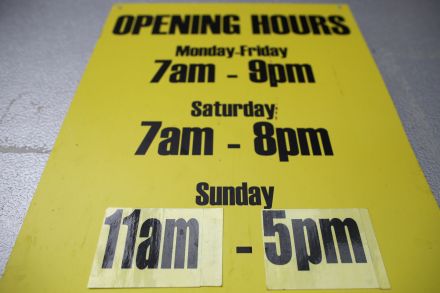
Retail empires, like the political and military kind, are tragedies. They grow from modest beginnings, pushing all others aside until they reach their apogee when all competitors seem to have been vanquished. Then they collapse from within.  The only difference is that instead of leaving us magnificent cathedrals and palaces they leave us enormous tin sheds. For the past 20 years Ikea has carried all before it. Positioning itself as a mass-market Habitat, at MFI prices, it has all but extinguished the market for traditional furnishings and antiques, which now are sold for peanuts by increasingly desperate auctioneers. In 2005, 4000 people turned up when the Swedish chain opened its new store in Edmonton.

The Hatton Garden mob are greedy and immoral. Stop treating them as folk heroes

The Today programme often has one choking on one's porridge, but this morning's edition had an item even more infuriating than usual. A barrister who had represented one of the men accused in last April's Hatton Garden raid -­ in this case acquitted -­ was invited onto the show to speak of his 'grudging admiration' for the men who have just been convicted. 'They were clever, they were brave, they were elderly,' he began, suggesting that the raid had 'captured the imagination' of all of us. He was then followed by a crime writer who likened the gang's takings to a 'lottery win', and suggesting that it had cheered us all up at a time when many are struggling with their own finances.

The author of the RBS ‘sell everything’ note has been predicting disaster for the last five years

Should we sell everything because Andrew Roberts (not the historian but an analyst at RBS) tells us to in the expectation of crash? Before you press the ‘sell’ button, it might just be worth reflecting on the fact that there has always been a time when some analyst somewhere has been handing out the same advice. Quite often that somebody has been Andrew Roberts himself. In June 2010, for example, he said: 'We cannot stress enough how strongly we believe that a cliff-edge may be around the corner, for the global banking system (particularly in Europe) and for the global economy. Think the unthinkable,' he said. The unthinkable in that case turned out to be that, contrary to the Cassandras' warning of a double dip recession, it didn’t happen.

Wanted: someone with a grounding in PR, dam-building and Caribbean geography

The tragedy of Sir Philip Dilley’s short reign as chairman of the Environment Agency, which ended when he resigned today, is that until he chose to stay in Barbados rather than travel back to Britain to take control of the response to the floods, he was unusually well-qualified for the job. With his appointment in September 2014 we finally had an engineer in charge of the nation’s flood defences. Prior to that the quango had been led by a long line of chairmen and chief executives who seemed to have little grounding in water management or any kind of construction. Baroness Young of Old Scone, chief executive between 2000 and 2008, had come to the job from the Royal Society for the Protection of Birds.

Hungary’s Prime Minister shares similar views to Donald Trump. Should he be banned too?

If you are going to try to put people beyond the pale on the grounds of what they have said it pays at least to be consistent. This week, left-wing MPs were cock a hoop at achieving the required number of signatures on a petition calling for Donald Trump to be banned from the UK for the matter to be debated in Parliament.  More than 560,000 signed, with the result that the issue will be discussed in Westminster Hall on 18 January. There was no visible protest, on the other hand, against David Cameron meeting Hungarian PM Viktor Orban in Budapest this week, no audible call for Mr Orban to be banned from making a return visit to the UK. There was even praise from liberals for Mr Orban’s strong words to David Cameron complaining about negative images of Hungarians in the UK.

Health killjoys are now using alcohol guidelines to promote gender equality

To adapt Pastor Martin Niemoller’s famous dictum on the failure of the Germans to tackle Hitler, 'First they came for the smokers and I did not speak out because I was not a smoker…’ How right the smoking lobby was when it warned that once the health Nazis had banned smoking in enclosed public spaces they would target the rest of us. Red meat, cured meat, sugar – all are the subject of increasingly belligerent health campaigns. Today the Chief Medical Officer has upped the ante on alcohol.  No amount of alcohol intake is safe, she says. We risk cancer with every sip we take.   The recommended maximum for men has been reduced from 28 to 14 units a week and for women from 21 to 14 units.

It’s time to abolish the FTSE 100

Jeremy Corbyn wants to get rid of the British Empire Medal and David Cameron wants to ditch the Human Rights Act. But I have a different nomination for the national institution most desperately in need of abolition: the FTSE 100 index. It is harming our economy by consistently underplaying the returns to be made on stock market investments and encouraging us all to invest in property instead. The FTSE 100 is the standard proxy for the entire stock market, yet its recent record is enough to put off anyone investing in shares. Last year, it made a loss of 5 per cent. Over 10 years it has just about scraped into the black, staggering from 5800 to 6100. Another morning like this morning and it will be back to where it was a decade ago.

The latest child abuse statistics simply don’t stack up

Have 425,000 children really been abused during the past two years? That is the extraordinary claim suggested in a report put out earlier this week by the Children’s Commissioner, Anne Longfield, which was swallowed whole by the Today programme and many newspapers. Not even the normally-inquisitive John Humphrys raised the slightest doubt about the figure when he interviewed a woman who said she had been abused back in the 1960s. The more you dig into the data, though, the more that the estimate of 425,000 child abuse victims comes across as a pure fantasy figure.

Eight years’ jail for a girl with a strap-on. What’s Britain coming to?

In a TV stunt, a Brazilian actress recently lay on a beach asking male passers-by to rub suncream into her back. Many were eager to oblige only to recoil, when she turned over and they saw a bulge – a prosthetic penis – in her bikini. It is a good job she didn’t try it here, else she might be facing the best part of a decade behind bars. There have been many times since the accusations against Jimmy Savile came to light three years ago that I have wondered whether Britain’s traditional prudishness over sex is developing into a national psychosis.

There’s a transgender storm coming…

The weather chart does not usually echo social trends, but Monday might be an exception. We could be about to be blown about by the world’s first transgender storm. This week, the Met Office began the practice of naming storms to strike the UK, in the manner that tropical hurricanes have been named by the World Meteorological Organisation since the 1950s. If a storm looks as if it is developing winds powerful enough to uproot trees and cause structural damage to buildings it will be given a name from a list. The list of chosen names goes through the alphabet in progression, alternating between male and female names. The first named storm, Abigail, was due to brush the north-western fringes of Scotland on Friday morning, before moving into the North Sea and away to Norway to die.

The left love to pick and choose which scientific research they trust

There has been predictable frothing at the suggestion by Professor Averil Macdonald, Chairwoman of UK Onshore Oil and Gas, that more women than men oppose fracking because women are more prone to follow their gut instinct than the science behind fracking. I am going to keep out of that debate, not because I fear for my chances of landing an honorary fellowship – if Tim Hunt’s experience is anything to go by, the world of academia will fall in on Professor Macdonald -- but because I am more interested in what fracking tells us of the attitude of the left towards science. Over the past few years the left has tried to establish itself as the defender of scientific reason.

The Hinkley Point disaster

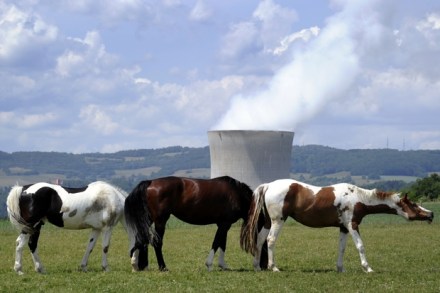
How easy it would be to scorn the environmentalists who are up in arms about George Osborne’s new pet project, the Hinkley Point C nuclear power station. You can understand their anxiety: subsidies for green energy are being slashed, yet the Chancellor will do anything — and pay anything — to get this project up and running. He is happy to force households to pay artificially high prices for a form of energy which brings all kinds of risks — of which the world was reminded this week when Japan found the first cancer case liked to the Fukushima disaster of 2011. ‘Has the Chancellor lost his mind?’ they ask.

A Chinese bailout won’t save Hinkley Point, our latest nuclear disaster

How easy it would be to scorn the environmentalists who are up in arms about George Osborne’s new pet project, the Hinkley Point C nuclear power station. You can understand their anxiety: subsidies for green energy are being slashed, yet the Chancellor will do anything — and pay anything — to get this project up and running. He is happy to force households to pay artificially high prices for a form of energy which brings all kinds of risks — of which the world was reminded this week when Japan found the first cancer case liked to the Fukushima disaster of 2011. ‘Has the Chancellor lost his mind?’ they ask.

North London will be boosted by HS2 – but the North won’t be

Futurology is a cursed science, but just occasionally I feel I can already write a news story years into the future. Watch out about the year 2040 for a headline: ‘Building HS2 wasn’t worth it, ministers admit.' It gave a us a gleaming new Euston station, it will go on to say, and regenerated the once depressing Euston Road into a desirable suburb.  But as for the rest of the country? There are a few signs of regeneration at one or two points along the route, but there is really not much to see. How can I be so sure? Because, swap Euston for St Pancras and HS2 for HS1 and that is exactly the conclusion of a report published quietly by the government on Thursday analysing the cost and benefits of the high-speed line from St Pancras to the mouth of the Channel Tunnel.

Where there’s smoke…

What fun it is watching again all those smug Volkswagen ads on YouTube, featuring men in mid-life crisis revving up their Golfs and Passats. German carmakers vie with French farmers for their sacred status in the European Union. That it has taken US authorities to sniff out the company’s cheating on emissions tests doesn’t say much for European environmental law, which is good at telling us we can only have low-powered kettles, but apparently unable to sniff out high emissions from overpowered diesel cars. But the VW scandal isn’t just a story of corporate turpitude. It is part-product of an environmental policy in Britain as much as across the EU which has become fixated on carbon emissions to the exclusion of virtually everything else.

Struggling to get on the property ladder? Qualifying for social housing may soon be your best bet

That the Conservatives came up with the idea of extending the right-to-buy to housing association tenants was a symptom of their failure to believe they could win this year’s general election. Such an ill thought-out policy can only have made it into the manifesto in the expectation that it could be used as a bargaining chip in the coalition negotiations which were expected to follow. Today, communities secretary Greg Clark announced a significant weakening of the manifesto promise. He said he would consider an alternative scheme put forward by the housing associations themselves, which would exempt many properties, such as those funded by charitable donation.