Ross Clark

Ross Clark

Ross Clark is a leader writer and columnist who has written for The Spectator for three decades. He writes on Substack, at Ross on Why?

It’s time to put all our MPs on ‘flexible-hours contracts’

I agree with much of what Iain Duncan Smith said on Sky TV this morning: that zero-hours contracts should be rebranded ‘flexible-hours contracts’, that they are good for work-life balance and are often very popular with those who are employed in this way – who are, as a result, able to do such things as combine working with studying. But IDS would have a much easier job of convincing the electorate on this had he gone further and recommended that one particular group of workers was switched to the contracts: MPs. I am not trying to belittle the job of being a parliamentarian, nor try to assert that it is on a skill level with shelf-stacking. Scrutinising legislation is a skilled activity which deserves to be paid well.

Farage, the debate audience wasn’t left-wing but it was affected by groupthink

The BBC opposition leaders’ debate wasn’t great political theatre, but it did turn into a fascinating experiment in human behaviour. A third of the way through, Nigel Farage suddenly imploded, attacking the BBC for putting together a left-wing audience – which he then went onto to insult and dismiss as an irrelevance, the real audience being at home. On this occasion, Farage was almost certainly wrong about BBC bias. I am sure that David Dimbleby was telling the truth when he said that the audience had been put together by a polling company to reflect the balance of voting intentions. And yet Farage was right to detect that the audience, which had initially received him with applause, had started to turn against him.

If Cameron really wanted to encourage home-ownership, he would increase inheritance tax

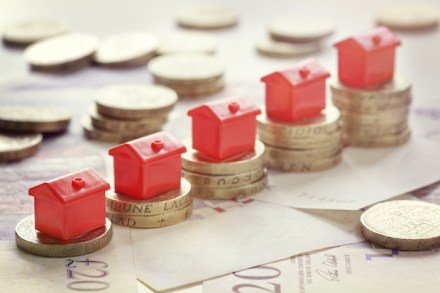
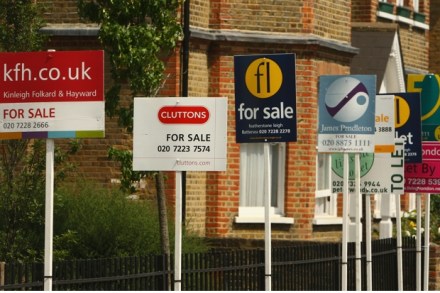
'The dream of a property-owning democracy is alive,' David Cameron will say today as he launches the Conservative manifesto, promising to extend the right to buy to all 1.3 million housing association tenants. Why, then, if he wants to promote a property-owning democracy is he also proposing to raise allowances for inheritance tax, allowing people to inherit homes worth up to £1 million without paying a penny in tax? Inherited wealth is a huge factor in the concentration of property-wealth in ever fewer hands. This is what happens: middle-aged couple inherit large family home. They then sell it and reinvest the money in several buy-to-let properties, outbidding in the process several first time buyers who are as a result forced to rent a home instead.

Ruth Davidson, Scotland’s Iron Lady, could be just what the Tories need

Nicola Sturgeon has been described as a rock star politician. In Tuesday’s STV debate she looked like one who is suffering from second album syndrome. Having impressed a UK-wide audience in the seven-leader ITV debate last week, her reception at the Scottish version was far more muted, with some instant polls suggesting a narrow victory for Scottish Labour leader Jim Murphy. A dispassionate observer might place Sturgeon third, behind Murphy and an impressively plucky Ruth Davidson. It takes something to stand before a Scottish audience, where the Tory brand isn’t just toxic but radioactive, and earn applause for making the case to reintroduce prescription charges.

Labour’s business battle shows how small its circle of support is

I have never been impressed by round robin letters, so if Ed Miliband had shrugged off the letter to the Daily Telegraph this week signed by 103 businessmen with the words: ‘if they have got something to say why can’t they speak for themselves rather than bleating like a flock of sheep’ he would have gained my respect. If Labour had to counter it with a round robin letter of its own it might at least have tried to find 100 businessmen of its own. Instead it rustled up a bizarre letter of its own. Complaining about zero hours contracts it declared:  'We come from all walks of life, this is what Britain looks like.' But when you read the signatories below you realise just how small Labour’s circle has become. All walks of North London, it ought to read.

After the Germanwings disaster, do airplanes need to have three pilots onboard?

As soon as I heard the French prosecutor reveal that the co-pilot of the Germanwings jet appears deliberately to have flown his plane into a mountain it took me back to an anecdote told to me by a friend who is an airline pilot. A pilot, like you and I, has to go through scanners being allowed near an aeroplane. On one occasion a security scare had forced him to and his crew to go through a second time. After being asked to remove his shoes he finally flipped: 'look, I'm the pilot,' he said. 'If I wanted to crash the plane all I would have to do is move the stick forwards and we would be diving into the ground.' Since 2001 we have had endless security measures which have no doubt helped to keep terrorists off aeroplanes. We have had bans on liquids and nail scissors.

Is it really surprising that people think Ed Miliband is more of a toff than David Cameron?

The most remarkable poll of the week was the one which suggested the British public find Ed Miliband more of a toff than David Cameron. It takes something to out-toff an Old Etonian with a patrician air and liking for green wellies. But is it so very surprising? Ed has, after all, just shown himself to be on the friend of wealthy idlers, by hinting that the brunt of tax rises in a Labour government would fall instead on those who work for a living. Ed Miliband began well in the last Prime Minister's Questions before the election. He noted David Cameron's direct answer to James Landale’s direction question on his future as prime minister and then posed the Prime Minister a direct question of his own: could he rule out a rise in VAT?

Now more than ever the ‘I’ in IGCSE is for ‘independent’

I always thought that rugby was invented so that there was no chance of public schoolboys having to meet grotty kids from football-playing state schools on the playing fields. But until recently all children, whether in the state or independent sector, did at least take the same exams. Until, that is, there emerged a great divide between GCSE and IGCSE. In January, Education Secretary Nicky Morgan confirmed that international GCSEs, or IGCSEs, will no longer be counted in school performance tables once the first reformed GCSEs start to be taken in 2017. The new courses, like IGCSEs, will be examined at the end of the course, not in modular instalments.

The Domino’s effect: Can fund managers tell a pizza from a printer?

There have been many occasions since the financial crisis that I have been led to question the calibre of the more-than-amply remunerated  ‘masters of the Universe’ who inhabit the City. But this morning brings a fresh insight into the competence of the fund managers who look after our pensions and investments. Biggest riser in the FTSE250 this morning is Domino Printing Services, a Cambridge-based company which makes machines to print barcodes and other rather dull stuff like that. It is up over 30 per cent after confirming that it has accepted a takeover from the Japanese company Brother. Second highest riser in the FTSE250 is the rather better-known Domino Pizza Group, which has outlets on every high street.

The real scandal of zero-hours contracts: HMRC’s greed

Cue the Guardian headlines of ‘exploitation’ in ‘Dickensian’ Britain. Nearly 700,000 people are now working on zero-hours contracts, a rise of 100,000 in just one year. Is that really such a problem? Not among the many people who want flexible work because they want to fit the business of earning money around studying, travelling or other careers. I agree that employers using zero hours contracts should not be allowed to place exclusivity clauses in them, preventing people working elsewhere – and which the government has already said it will ban. But most zero hours contracts do not state this – they offer two-way flexibility, with the employer not obliged to offer employment and employee not obliged to work.

As oil prices plunge, I want to profit from the next spike. Here’s how

Buy jerry cans and fill them while you can. You won’t want to be caught out by the great oil shortage of 2016. Maybe that is exaggerating a little, but when you start hearing people talking about the world being ‘awash’ with oil, and read of oil companies slashing exploration and towing rigs to be laid up in the Moray Firth, you have to wonder if an oil crunch can be far behind. Someone is going to make a fortune when the balance between supply and demand flips and prices rocket again. It is easy to fancy that it could be you. But being a contrarian doesn’t always work out. Only misery awaited those who thought that when bank shares halved at the end of 2007 it must be a great buying opportunity. I would love to say I wasn’t one of them.

Why are renewable technologies held to a different set of standards?

The House of Commons’ Environmental Audit Committee wants a moratorium on fracking so that what it calls the ‘huge uncertainties’ of its impact on the environment can be resolved. If they hadn’t noticed, we already have had a moratorium on fracking. All activity ceased in 2011 after a couple of minor earth tremors near Blackpool were linked to exploratory drilling by Cuadrilla in the area. What the company now wants to do – and in which it is being frustrated at present by Lancashire’s planners – is to resume exploration, having changed their procedures in response to the tremors. If there are ‘huge uncertainties’ over fracking, how would they ever be resolved without testing the technology?

Is your smartphone making you fat?

Matthew Parris is obsessed by an unsolicited app which landed on his smartphone and which, thanks to GPS tracking, is able to tell him how far he has walked in the past 24 hours. 'I can't stop checking, sometimes every 10 minutes, my average daily distances,' he wrote in the Times last week. He has discovered, to his pride, that he covers an average of 3 miles a day. I would beware that app, Matthew. There is a reason why it is free and why it sneaked itself onto your phone ­and it isn't with your health in mind. It has put itself there so that advertisers can follow you around.

Blame Tony Blair for Labour’s new stupidity about wealth

Peter Mandelson’s famous quote about New Labour being intensely relaxed about people getting filthy rich has a suffix that is often mischievously omitted: he added ‘so long as they pay their taxes’. But there are a few more things which many Labour members would have put on the end: so long as you don’t earn it by advising Central Asian dictatorships, so long as you don’t hang around with Russian oligarchs, so long as you don’t make it from the Saudis. Tony Blair and Peter Mandelson got filthy rich all right. But the whiff they gave off while doing so has only served to regenerate a very Old Labour disgust of wealth.

Objecting to Charlie Hebdo cartoons doesn’t make you a terrorist

The French liberal-left and George W Bush are not natural bedfellows, but today the former are sounding just a little bit like the latter. The ‘Je suis Charlie’ banners they are carrying in reaction to yesterday’s murders at the offices of the satirical magazine Charlie Hebdo are effectively saying, to borrow the former US president’s slogan: you are either with us or you are with the terrorists. The terror attack, of course, deserves universal condemnation. It is an act of cold-blooded murder. That it was carried out against a targeted group makes it neither better nor worse than 9/11 or the London tube bombings which were conducted against random victims.

The UN has outsourced our emissions to the developing world

Haiti is an object lesson in how chronic aid – as opposed to emergency aid in reaction to a disaster – can lay waste to a developing economy. For decades,  rice imports subsidised by the US government and well-meaning gifts of clothing undermined what should have been two of the country’s biggest industries: agriculture and textiles. The result is a junkie nation, dependent on outside help. There are going to be a lot more Haitis around in future, thanks to the agreement reached at the UN climate talks in Lima. Developing countries have for the first time agreed in principle to curtail their carbon emissions – in return for payments from  western governments towards 'ambitious mitigation and adaptation actions'.

Firefighters react to the Autumn Statement – before Osborne’s even opened his mouth

Post-war Labour Chancellor Hugh Dalton had to resign for letting slip the contents of his Budget speech before he delivered it. Nowadays, everyone leaks in advance, including PR people. The following press release was received from the Fire Brigades Union at 11 am, giving its 'reaction' to a speech which did not start until 12.30: 'This government is promising more of the same – austerity for workers, so they can cut taxes for the rich. Firefighters want investment in the fire and rescue service, not more cuts. 'Last winter we saw widespread flooding throughout the country, but still the Westminster government refuses to give the fire and rescue service a clear statutory duty to respond to major flooding, unlike the governments of Scotland and Northern Ireland.

Is the Hinkley C nuclear power station the most expensive object ever built in Britain?

We might not have much of a coherent energy policy, but we do at least have the honour of breaking the record for the most expensive object ever built. According to Peter Atherton of Liberum Capital, speaking at the Spectator Energy Forum, the cost of Hinkley C nuclear power station, Britain’s first nuclear power plant in 30 years, to be built in Somerset by French power giant EDF, is now up to £24 billion. ‘I’ve looked online to see if there was a more expensive object ever built but I couldn’t find one’ says Atherton. ‘The most expensive bridge was something like £6 billion and the most expensive building something like £5 billion.

Before investing in more renewables, we need to find a cheap way of storing electricity

There is an app you can load onto your smartphone, called UK Energy, which can tell you how much electricity is currently being generated in Britain and what percentage is coming from different sources. This afternoon the contribution from wind increased sharply from 1.3 per cent to 2.8 per cent as the wind picked up in the west. On some of the coldest winter days, when an anticyclone is sitting over Britain wind will contribute next to nothing, and once the sun goes down solar panels will generate nothing, either. It is a mark of our unjoined-up energy policy that vast subsidies have been thrown at wind turbines and solar panels without any real thought being put into electricity storage.

Why Vladimir Putin’s threats about cutting off Europe’s gas supply are all bluff

Has the West found a secret new weapon in its battle with Putin’s expansionist ambitions: reversible gas pipelines? Putin has never made a secret of his willingness to use energy as bludgeon against his neighbours. In 1999, the year before he became Russian leader, he wrote a pamphlet making the case that energy exports provided the means by which his country’s greatness could be restored. Putin’s behaviour over Ukraine has been typical. Over the past 15 years Russia has constructed a network of pipelines which can be used to bypass Ukraine. Starve Ukraine of energy, goes Putin’s thinking, and it might be forced back into Russia’s fold.