Ross Clark

Ross Clark

Ross Clark is a leader writer and columnist who has written for The Spectator for three decades. He writes on Substack, at Ross on Why?

Did ‘neoliberalism’ really wreck Britain?

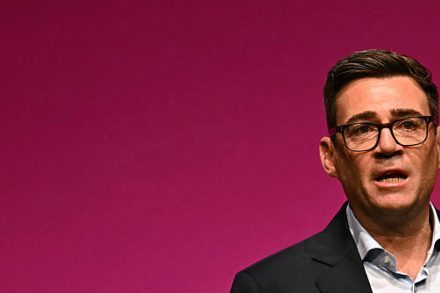
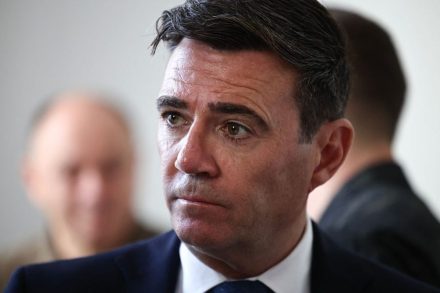
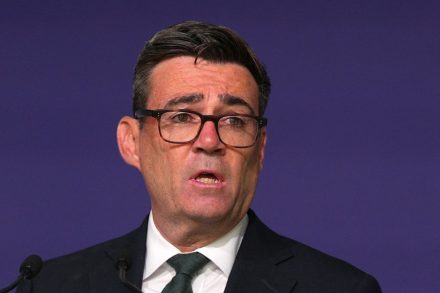
Andy Burnham thinks Tony Blair is missing something, and he is being too polite to say it is a few screws. He thinks that the former prime minister's essay published on Wednesday morning fails to take account of the declining living standards that many people have experienced since the financial crisis of 2008/09. It is this frustration, he says, which is driving anger on the streets of Makerfield and elsewhere, and you can't win an election unless you understand that. Burnham asserts that Britain has been on the wrong, neoliberal path for the past 40 years; a period which of course includes Blair’s own time in office. But Burnham himself appears to be missing something, too.

Tony Blair is right about Britain – but can’t own up to his mistakes

Andy Burnham has been described as Labour’s ‘king over the water’ who could save us from the turgid decline of Starmer’s premiership, but there is another candidate for that position, and a more convincing one at that. On the website of his eponymous institute, Tony Blair has published a long essay which reminds us of the fact that between 1997 and 2007 we had the novelty of a Labour government which didn’t destroy the economy. Virtually alone among Labour figures at the moment he seems to understand that the economy is being brought low by high taxes and a welfare system which is draining life from the rest of the economy Britain would be in a vastly different place now if Blair were PM.

Labour hasn’t won the battle for Britain’s borders. Far from it

Where the Tories failed on controlling Britain's borders, letting net migration surge to an unprecedented 944,000 in the year to March 2023, Labour has succeeded. It shows what can be achieved through hard work and strict adherence to human rights laws rather than heartless gimmicks like the Rwanda scheme.  That, at any rate, is what the government will want us to believe when the latest net migration figures are published this week. They are almost certain to show that they have fallen to less than 200,000, and possibly as low as 160,000. If the latter, it would be the lowest figure for 14 years, outside Covid. Some Labour MPs are planning to use the figures to call for the government's migration reforms to be abandoned on the grounds they are not necessary.

Andy Burnham is making Keir Starmer look good at politics

One of the many complaints levelled against Keir Starmer is that he is fundamentally bad at politics; he doesn’t know how to win people over, keep voters on his side. But on current showing he is a darned sight better at the game than is Andy Burnham. Whatever possessed the leadership hopeful at the weekend to suggest that he favoured rejoining the EU? Even the most basic research on Makerfield, the constituency he must win before he can make a bid to become Labour leader and prime minister, would have told him that it voted Leave in 2016 by a margin of two thirds to one. Having failed to find that out, he was forced into a hasty retreat yesterday, saying that he ‘respects’ Brexit. I fear it may be too late; he has already energised the Reform UK campaign.

Britain’s growth uptick can’t save Starmer and Reeves now

At any other time the GDP figures released by the Office for National Statistics (ONS) this morning would have come as a huge relief for Keir Starmer and Rachel Reeves. They show that the economy grew unexpectedly by 0.3 per cent in March. When February's figures were published a month ago showing impressive monthly growth of 0.5 per cent (revised down to 0.4 per cent in the latest release) it was widely interpreted as looking back on a lost age, prior to the beginning of the Iran war on 28 February. Now, however, it seems as if the uptick in growth has survived the surge in oil prices. In services, growth was 0.3 per cent and in construction, 1.5 per cent. There was a small fall, however, in output in the production sector, to the tune of 0.2 per cent.

Miliband’s energy plan is no different to Just Stop Oil’s

A few weeks ago it seemed as if some sense was finally creeping into Labour's energy policy. It was reported at one stage that even Ed Miliband himself had changed his mind and come round to the view that it would, after all, make sense to use more of our own oil and gas reserves rather than import the stuff: better economically as well as environmentally, as transporting fossil fuels around the world costs money and involves greater carbon emissions. This is especially true in the case of liquified natural gas (LNG). But it seems we were all deceived. Far from relaxing Ed Miliband's moratorium on new oil and gas extraction, the Energy Independence Bill announced in the King's Speech seeks to convert it into a permanent ban.

The inevitable horror of an Ed Miliband premiership

Logic, sadly, points to one all-too-likely victor from the Labour leadership crisis: Ed Miliband. On the principle of ‘he who wields the sword never wears the crown’, Wes Streeting has already ruled himself out; he has become far too publicly associated with efforts to remove Starmer from office, especially with his ‘showdown’ with the PM this morning. All PMs who enter No. 10 while their party is already in office suffer from the lack of a personal mandate. But Miliband would enter office with something far worse: an anti-mandate Andy Burnham is marooned in Manchester. He may not even win the required by-election to make himself a runner; the UK public has shown a distinct intolerance in the past for by-elections they think are unnecessary.

Zack Polanski’s council tax blunder shows he isn’t fit to lead the Greens

What a lucky fellow Zack Polanski is, in that his little council tax issue has come to light on the day that Keir Starmer ought to – and yet still might – resign. Amid the melee surrounding the Prime Minister, it could easily go unnoticed that the Green Party leader lived on a houseboat for three years without paying council tax to the local authority, Waltham Forest. That would be unfortunate, because it tells us rather a lot about the character of a man who could well hold the balance of power after the next election.

Nigel Farage has inherited Boris Johnson’s Red Wall problem

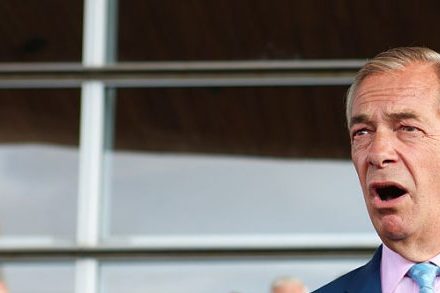
The thing about white working-class voters, as Boris Johnson discovered in 2019 and Nigel Farage is finding out now, is that there are a lot of them. They way outnumber the other voting blocs who often grab more attention, such as students, middle class muesli munchers, Muslims and so on. Tap into the white working class and you enter a fast track to power. But having won over such voters, Farage now has the same problem as Johnson had in 2019. His voters have an expectation of high public spending, at a time when fiscal reality is demanding a sharp contraction in the size of the state. On many issues Farage and those surrounding him see absolutely eye to eye with his voters.

What happened to the Green wave?

No amount of Labour spin will disguise the party's dreadful night, but the hefty losses of seats in English council areas are nothing more than was expected. The bigger story of the night is the failure of the Greens to make any meaningful breakthrough. With 40 councils so far declared – a minority, as most did not count votes overnight and will declare this afternoon – the Greens have made a net gain of just 25 seats, less than a tenth of the gains made by Reform UK. They are running at around 18 per cent of the popular vote, while Reform UK are pushing 30 per cent.

Don’t feel sorry for the business leaders who backed Labour

Just what were business leaders expecting when so many of them sucked up to Labour before the 2024 general election? Only Keir Starmer's party, 121 of them declared in an open letter, could deliver Britain's full economic potential. They swarmed around Rachel Reeves like drones around a queen bee. Richard Walker of Iceland even turned up to the party's manifesto launch to praise it for its economic plans. They are not cheering now. Only 17 of the 121 who signed the 2024 letter are currently prepared to restate their support for Labour. The rest are moaning – many of them anonymously – that they are being killed off by hikes in employers' National Insurance and business rates, as well as the rise in the minimum wage and the Employment Rights Act.

Why can’t Germany extradite the Madeleine McCann suspect?

I make no suggestion as to whether Christian Brueckner, the convicted rapist suspected of kidnapping and killing Madeleine McCann, is either guilty or not guilty of the latter offence; a court of law is the only place where that should be decided. But I do find the German constitution guilty of naivety and foolishness. How about denying visas to German citizens with any kind of criminal record until it permits extradition of Brueckner, or subjecting German citizens to extra, irritating checks whenever they arrive on UK shores? UK police would like to extradition Brueckner so that he can be properly investigated here, with a view to possibly holding a trial in Britain.

The state should keep its hands off your pension

The worst thing about the government’s plans to force pension providers to invest their money in particular assets is that ministers and MPs themselves don’t have to worry about it. They, of course, are members of a gold-plated pension scheme that is underwritten by the taxpayer. They will receive their index-linked pensions whatever the economic performance of the country or of any particular assets. As for the rest of us, how well we do in retirement very much depends on how investments perform. That is why it is so obnoxious that the government is trying to force pension funds to invest some of their funds in UK assets and in particular public sector ventures.

How Airbnb killed off the B&B

Sooner or later, Airbnb is going to change its name to Airb, partly because it takes less time to type, and partly because it is becoming a misnomer. Increasingly rarely is there a breakfast to go with your bed. I am walking from John o' Groats to Land's End at the moment, so I have been staying in a different town every night, save for when I have been on the hills in a tent, and not once so far has anyone offered me a fry-up. Only once have I been offered any breakfast at all. Neither, by the way, have I even seen anyone in most of the places I have been staying. All but one have been entirely remote-control operations with key codes and key safes. I am, therefore, getting quite nostalgic for the traditional B&B.

Reeves is using Iran as an excuse to get closer to the EU

Never let a good crisis go to waste, as they say. And Rachel Reeves has made it quite clear that she is going to milk the Iran war for all it is worth. It was Iran wot pushed inflation up to 3.3 per cent, she has hinted (ignoring that the Consumer Prices Index was already above 3 per cent, and has been well above the Bank of England's target for most of her time in office). It will be Iran (or rather Donald Trump) which destroys British jobs (ignoring that her hike in employers' National Insurance had already cost tens of thousands of jobs), and it won't be anything to do with her when the economic growth figures turn sour. 'Just look at that thundering growth of 0.5 per cent I created in February,' she will say (ignoring that growth in the year to February was just 0.8 per cent).

An energy bill bailout would be a terrible idea

Liz Truss’s greatest fiscal sin was her Energy Price Guarantee. True, markets didn’t like her tax cuts unmatched by spending cuts, and a Budget which froze out the Office for Budget Responsibility. But they hated an open-ended commitment to subsidise energy prices, which the government estimated would cost £25 billion in the first six months alone. The Labour party has become a misnomer. It is now firmly the benefits party But trust Ed Miliband to come up with a scheme which is even worse. The Energy Security and Net Zero Secretary has rightly rejected a revival of the Energy Price Guarantee on the grounds of cost – and is looking instead to bail out poorer households by forgiving the debts they owe to energy companies.

Tariff refunds are a nightmare for Trump’s economy

From our US edition

Donald Trump's second presidency began with a blaze of executive orders which horrified and impressed in equal measure. It also begged the question: if it really were so easy for a president to circumvent the legal obstacles and assert his will, how come none had behaved in this way before? A year on, we are learning the truth: no, a president can't just do what he likes, and there is a horrible price to pay if he tries. In the case of Trump's "Liberation Day" tariffs the notional bill is $166 billion. That is the sum that US Customs believes it will have to refund to importers who paid tariffs which were ruled unlawful by the Supreme Court in February. A computer portal to handle the refunds was set up this week, the administration of which adds more cost.

trump tariffs

Miliband’s fight against North Sea drilling is far from over

What have North Sea oil and gas production and grammar school education got in common? Both are subject to a fiddle by which they can be expanded while the government pretends they are not expanding. After David Cameron changed his mind on grammar schools and said he wouldn’t allow new ones to be created, a deal was done whereby existing schools could open a ‘satellite’ on another site in another town. Hence Tunbridge Wells Grammar School opened a new site in Sevenoaks – a separate school in all but name, and yet the government could claim that it had stuck to its promise of no new grammars. The cabinet battle over the energy crisis is still far from resolved Rachel Reeves has suggested that the present government may take the same approach to North Sea oil.

The high cost of Ed Miliband’s ‘cheap’ renewable energy

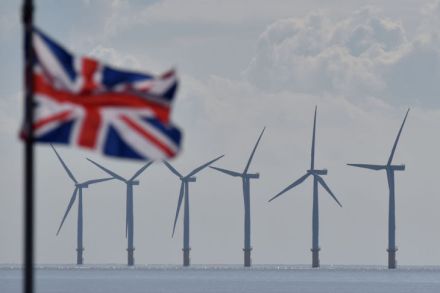
First the good news. Some commercial users may be enjoying free electricity at some point this summer – or better still, they may even be paid to consume it. Now the not so good news: at other times it will mean us all having to pay even more for our electricity than we already do. The National Energy System Operator (NESO) – the nationalised body which manages the grid in Britain – is reported to be drawing up emergency plans in case it becomes too sunny. Thanks to Ed Miliband, there is now so much installed wind and solar capacity that in sunny and windy conditions it threatens to overload the grid. Here is the problem. Currently, the UK has 32 gigawatts of installed wind capacity and 22 gigawatts of installed solar capacity.

Zack Polanski’s Green party bubble won’t last forever

It was bound to happen sooner or later, but coming at the beginning of a local election campaign in which his party is expected to make a huge breakthrough, it is pretty much the worst time for Zack Polanski. The nice, middle-class Greens who joined the party because they care deeply about the climate, bunnies and hedgehogs are rebelling against Polanski’s efforts to turn it into a far-left party obsessed with trans issues and Palestine.      Last week, Michael de Whalley, a Green councillor on Kings Lynn and West Norfolk borough council, resigned his membership and now sits as an independent.