
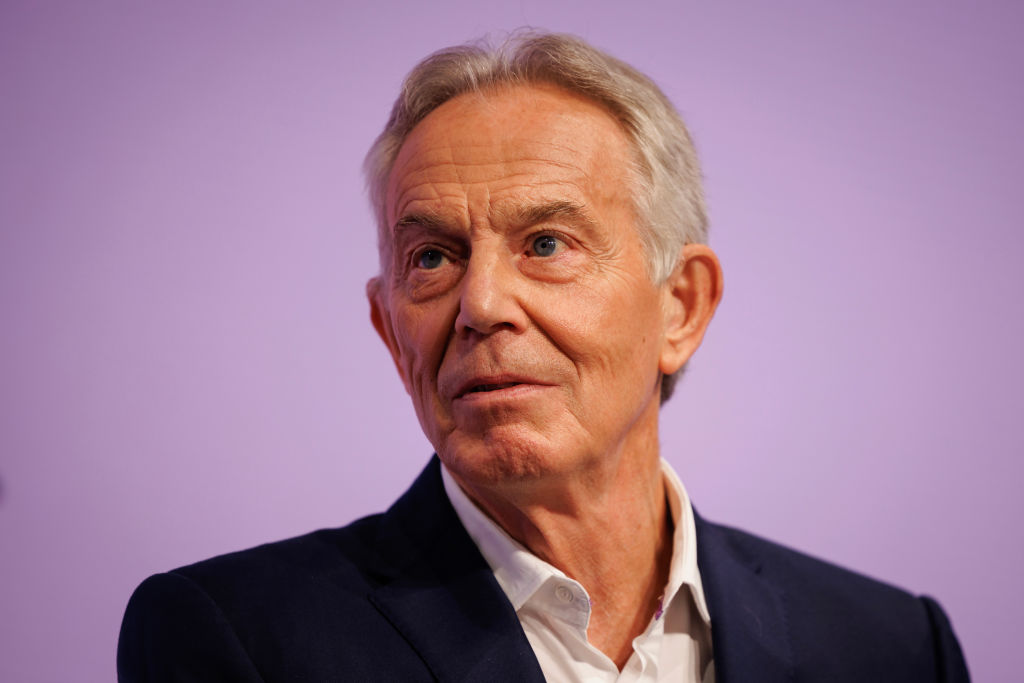
Andy Burnham has been described as Labour’s ‘king over the water’ who could save us from the turgid decline of Starmer’s premiership, but there is another candidate for that position, and a more convincing one at that.
On the website of his eponymous institute, Tony Blair has published a long essay which reminds us of the fact that between 1997 and 2007 we had the novelty of a Labour government which didn’t destroy the economy.
Virtually alone among Labour figures at the moment he seems to understand that the economy is being brought low by high taxes and a welfare system which is draining life from the rest of the economy
Britain would be in a vastly different place now if Blair were PM. Virtually alone among Labour figures at the moment he seems to understand that the economy is being brought low by high taxes and a welfare system which is draining life from the rest of the economy. He correctly argues that the fundamental problem is a lack of economic growth. If you want generous social programmes first you need economic growth to pay for them. Instead, the current government seems determined to sink back into the left-wing comfort zone of punishing the businesses which could help deliver it.
Blair’s statement that the role of government should be ‘enabling, not directing’ will come across as good sense to many conservatives and economic liberals. But it is a complete anathema to all but a handful of the current government, who seem determined to outdo each other in coming up with ways to intervene in the economy, and punish activities of which they personally disapprove.
All that said, Blair seems to have rather less insight into his own role in pushing many voters, especially young ones, to the left, and many others into embracing anti-migration policies. It was Blair who chose not to enact a seven-year delay in giving nationals of the former Soviet bloc countries which joined the EU in 2004 the right to live and work in Britain. Most other EU states did enact the delay, which turned Britain into a magnet for migrant workers, expanding the population rapidly, at a rate public services and the housing stock could not keep up with. In the words of one former Blair aide it was done in part, ‘to rub the noses of the right in diversity’. What it did in the longer term was to encourage the right. Migration became the defining political issue of the day, leading inexorably to Brexit: something which Blair opposed bitterly at the time but, unlike many current senior Labour figures, does not want to reverse.

Blair now says he wants serious reform of the planning system. Yet he doesn’t acknowledge his own role in the housing crisis which has driven many young voters to back left-wing policies such as rent controls and punitive taxes on property ownership. For years, his government pursued a policy of restricting the supply of new homes through planning laws while doing everything to boost demand.
‘Keyworkers’ were showered with government help to buy new homes. Overseas investors were allowed to monopolise the purchase of new housing developments as speculative investments, driving up prices to levels that many Brits could not afford, even if they had a decent salary. Blair’s government seemed to champion high house price inflation as it made existing homeowners feel richer, but it had a political price which the country is paying heavily now. What has capitalism ever done for me, millions of young people ask, when I can’t acquire the capital asset which made previous generations richer?
Nor, by the way, did Blair do much to rein in the high-spending habits of his Chancellor, Gordon Brown, who came to office promising fiscal prudence yet left the country with a near £160 billion overdraft. Much of the damage, it is true, was done after Blair had left office, but Brown began to lose his fiscal discipline after 2001-02, the last year a UK government of any colour ran a surplus.
Blair criticises his party for thumbing its nose at Donald Trump, correctly observing that the US president is telling us the harsh home truth that we are not spending enough on our own defence and have not been doing do for years. But he does not care to acknowledge his own role in Labour’s anti-Americanism: his craven attitude towards George W. Bush over Iraq.
Tony Blair was a better PM than any current Labour challenger would make. But we might be more inclined to listen to him if he admitted his mistakes in office.





Comments