Robin Oakley

British horse racing’s debt to the Middle East

A joyful Saturday at Ascot recently reminded me that when the old Hurst Park Racecourse (near Hampton Court Palace) closed to become a Wates housing estate, the turf was taken to Ascot to form the basis of the jumping track then being established there. It was living beside Hurst Park — where the seven-furlong start abutted the Thameside Upper Deck swimming pool and jockeys focused on bikini-clad local lovelies sometimes missed the off — that turned me in my boyhood into a racing enthusiast, standing on the saddle of my bike perched against the boundary fence to watch the horses flash by or goggling at Prince Monolulu in his headdress flogging tips outside the front gate.
The culture of the weighing room needs to move with the times

In the first such case for 20 years, former rider Freddy Tylicki, paralysed and wheelchair-bound since his mount Nellie Dean clipped heels in a Kempton Flat race with Madame Butterfly, ridden by Graham Gibbons, has been suing Gibbons for £6 million in the High Court. Arguments have centred on whether Gibbons made a fractional misjudgment in an ambitious manoeuvre or whether he showed a punishable disregard for his colleagues’ safety. It hasn’t helped racing’s image that Gibbons is a jockey with a history of drink problems and that former champion jockey Jim Crowley testified that he smelled alcohol on Gibbons’s breath that day.

A feast of feelgood emotion

Ascot’s image is all champagne and fascinators, high society and high rollers. Said Art Buchwald: ‘Ascot is so exclusive that it is the only racecourse in the world where the horses own the people.’ But there is another Ascot — one entirely comfortable with tweeds, corduroys, cloth caps and woolly jumpers. It might not have been. Bernard Fitzalan-Howard, the 16th Duke of Norfolk and the Queen’s doughty representative at the course from 1945 to 1972, allegedly declared that jumping would be introduced at Ascot only over his dead body. Fortunately it didn’t require his early demise.

My tips for this season and a look back at our Flat Twelve

There are Flat people and there are jumping people. People like the late Captain Tim Forster, trainer of three Grand National winners, Ben Nevis, Well to Do and Last Suspect, who once declared: ‘One day I’m going to stand for Parliament. If I get in my first Bill will be about abolishing Flat racing and the second about doing away with hurdlers.’ People like Trevor Hemmings, the billionaire with the flat cap whose later life became a quest for Grand National winners in his green and yellow quartered colours, a quest in which he succeeded with Hedgehunter, Ballabriggs and Many Clouds. Sadly the kindest of owners died last month and won’t see his appropriately named Cloth Cap campaigned again for the National. Then there is J.P.

A brace of new books worth the space in any racing library

In 1986 a young Mark Johnston, having acquired a derelict yard on the Lincolnshire coast, phoned the Jockey Club to enquire about a licence to train. He was asked what experience he had. ‘I’m a vet in practice.’ Back came officialdom’s less than encouraging reply: ‘Just because you’re a vet doesn’t mean you can train a horse.’ So furious was the combative Scot that he almost decided on the spot to go to America to test out his theories. Fortunately for British racing, he persevered and had the cojones when the Jockey Club grudgingly offered him a jumping licence only to insist that it was a combined licence or nothing.

Charlie Appleby is the trainer to beat

I know what Keats was on about with his mists and mellow fruitfulness, but autumn is less of a joy when you daren’t rock up at the local petrol station with a jerry can to fill the mower for fear of being lynched by fuel-hungry vigilantes taking you for a hoarder. For me this time of year is defined more by my annual quest to bring off the autumn double, finding winners two weeks apart for the Cambridgeshire and the Cesarewitch. This year I managed two seconds with Anmaat (11–2) and Burning Victory (13–2): the dream goes on.

The making of a racehorse trainer

My best fun, through ten years reporting European politics for CNN, was bumping around the Continent with sparky young producers and the cream of international cameramen. Among the shooters was Woj, a pony-tailed Pole with a sardonic sense of humour and so unpronounceable a surname that when we were late joining a flight an airport announcer demanded: ‘Mr R. Oakley and Mr… Mr… Mr Oakley’s companion must go immediately to Gate 23.’ Todd was the only person I ever met who drank Coca-Cola with breakfast. Scotty had his hair parted by a sniper’s bullet in Iraq and lived to tell the tale. Darren was a film director manqué who framed each piece to camera with the meticulous attention of a Dutch miniaturist painter.

My Arc de Triomphe tips

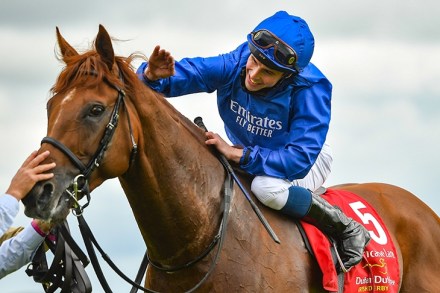
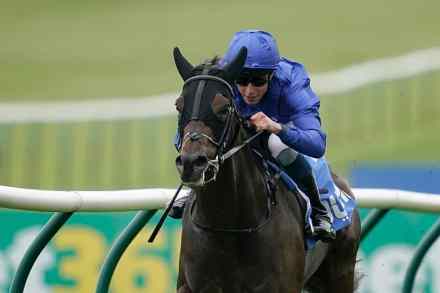
The emphasis may all be on speed horses these days, with breeders interested only in horses that struggle to get a yard more than ten furlongs without the aid of a horsebox. But I remain a devotee of the St Leger, the last and longest of the English Classics run at Doncaster over a mile and six furlongs. In this year’s contest it took only one look at the favourite Hurricane Lane, five furlongs out, to know that the money was as good as in your pocket. Jockey William Buick had him in the perfect rhythm in midfield and was clearly unworried when rival Rossa Ryan, on the handsome Mojo Star, struck for home three furlongs out to test the stamina of the chasing pack. A furlong later, Buick eased Hurricane Run up to the leader and won authoritatively by two and a quarter lengths.

The importance of second chances

A Sandown Saturday proved the perfect send-off for 12 raceless days on the otherwise wonderful Isle of Mull. A Frankie Dettori win on a progressive colt who could bring the Queen a Derby victory in her Platinum Jubilee year of 2022, another victory that restored the rumbustious Jane Chapple-Hyam’s faith in her best filly, and a talk with a jockey whose career is taking off nicely thanks to hard grafting after an early mistake left me in perfect holiday mood. I was bouncing anyway thanks to a meticulously researched family history that Mrs Oakley had bought me to celebrate a birthday with a big zero attached. Links back through a few generations of Worcestershire farmers and teachers were no surprise. These were intermingled with labourers, grate fitters and a waterworks stopcocker.

A great contest without the skulduggery of the past

Taking a day off racing to enjoy Joe Root’s regal 180 not out against India on the third day of the England-India Test — tranquillity interrupted only by a call from home to say that Flat-coated Retriever Damson had eaten the TV controller — I was struck by the amount of ‘gardening’ indulged in by batters. After any ball that has beaten them they stroll down the pitch, glare malevolently at an innocent patch of turf and prod back into inoffensive conformity the infinitesimal protrusion on the surface which they have assured themselves was responsible for the ball whipping past their hung-out bat. Excuse accepted. Mental confidence restored.

Proper racing is back at last

At last proper racing is back. Through the long days of lockdown horses and jockeys have still given their all on the track. But racing is an emotive, instinctive sport which needs the oohs and aahs of sizeable involved and vocal crowds to impart its magic. With Ascot’s King George VI and Queen Elizabeth Stakes, followed by Glorious Goodwood, at last it felt again like the real thing. In 2020, when the great Enable won the King George VI for the third time, it was behind closed doors in heavy rain. When Derby winner Adayar this year walked into the parade ring with the arrogance of a finely tuned athlete, you could see people literally standing up and taking notice, nudging each other with their racecards.

Jockeys suffer online abuse just like footballers

At least England’s defeat in the European Cup final has spared us the sight of Boris Johnson, who can scent a photo opportunity at 4,000 yards over the horizon, indulging in any more embarrassing antics in a No. 10 football shirt. Not that he is the only prime minister to have sought to ingratiate himself with football-followers. As BBC political editor in Tony Blair’s time, I learned that the government was thinking of supporting a World Cup bid and fixed an interview with sports minister Tony Banks. Later, to gauge just how much government commitment there was, I spoke to Alastair Campbell in Downing Street. That night Banks called me: ‘What the hell have you done? We’ve both been summoned to No. 10 tomorrow morning.

The 4,000 spectators at Sandown Park weren’t short-changed

When only four horses were declared to contest this year’s Coral Eclipse Stakes at Sandown Park, there were the usual mutters. Since owners and trainers are always complaining (with justice) about the low levels of prize money in British racing, why weren’t more of them sending their charges to compete for the £640,000 on offer? Brought up within walking distance of the Esher track (and yes, there were occasions when, having blown my stake money and then some, I did have to walk home), I have always been fascinated by the Eclipse, the year’s first contest between the three-year-olds and their elders.

The rise of older jockeys

There are many facets to Royal Ascot’s appeal. For some it is glamour, style and opulence. For some it is the betting opportunities afforded by large fields, for others an opportunity to pay tribute to a revered monarch and to share her obvious pleasure in its equine stars. What I love is the sheer intensity of the competition. The immeasurable kudos afforded to owners, trainers and jockeys of being able to say you have had a Royal Ascot winner ensures the fiercest effort from all concerned: there is no such thing as an easy victory at Royal Ascot.

The Derby was a game of musical saddles

We all know it takes courage to win races over jumps, along with athleticism, stamina and speed. But you need courage to win on the Flat too and Adayar showed that in abundance winning this year’s Derby. The aerial shots show vividly the moment, two furlongs from the finish, when early leader Gear Up moved fractionally away from the rail. Jockey Adam Kirby, who had been tracking him all the way, saw his opportunity and asked Adayar to forge through the narrow gap. His brave mount responded and suddenly they were clear, going on to win by four lengths in a success that was truly popular with the racing community. His fellow jockeys all exited the weighing room to greet the winning rider with handshakes and hugs.

Racing badly needs the full relaxation of restrictions

Humans are herd animals too. Jockeys, trainers, owners and those enjoying the few prized media attendance slots for racing behind closed doors have agreed that without the crowds it simply hasn’t been the same experience. TV coverage of racing is first class going on brilliant and has provided vital information and entertainment through lockdown, but we in the racing tribe need to be regularly on the course, rubbing shoulders with the like-minded: ‘Did you see what that one did last time at Newbury? Why isn’t X riding his regular stable’s two-year-old here?

My Twelve to Follow on the Flat

Combing through race recordings to try to find some fun horses for Spectator readers this summer, I have been struck by how often even the best riders find themselves stuck in equine traffic with plenty of horsepower underneath them but nowhere to go. Gaps open in a flash and then close again, forcing riders to snatch up and probe, often too late, for another opening. It is never, though, as simple as it looks from the stands. One former top jockey was berated by a trainer on his return to the unsaddling enclosure: ‘Why didn’t you go for that gap between the leaders two furlongs out?’ ‘Because, Guv’nor, the gap was moving a lot faster than my horse was.

My top tip for the Grand National in 2023

Want to know the winner of the Grand National in 2023? You heard it here first: when the ante-post books open, get in early on Kitty’s Light, trained by Christian Williams and to be ridden, I hope, by Jack Tudor. Being married to a racing scribe is a bit like being an angler’s wife: you hear rather too often the tales of the one that got away. Mrs Oakley is so inured to my hard luck stories that she tells all her friends they can be sure that any horse I recommend will finish second. But after Sandown Park’s jump racing finale last Saturday, she conceded my point and consolingly opened a bottle of the expensive Condrieu we reserve for special occasions. Kitty’s Light caught my eye in the three-mile Badger Beers Chase at Wincanton on 7 November last year.

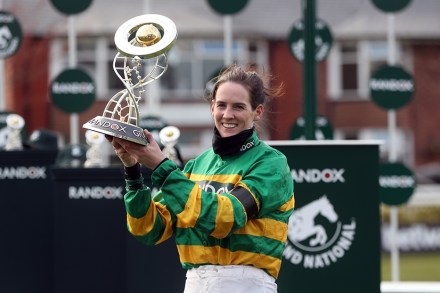
Hats off to Rachael Blackmore

Sporting heroes in our modern world have an extra burden to carry. Within seconds of their triumph, with the adrenaline still pumping, somebody is going to thrust a live microphone in their face and demand: ‘What does it feel like to have been the first person of Asian lineage to surmount six metres in the pole vault, to have been the first Lithuanian to have won the Sahara Rally, or the first transgender non-swimmer to have crossed the Channel in a self-propelled bathtub?

The secret of Ireland’s racing success

How Father Sean Breen would have loved this year’s Cheltenham Festival. The late parish priest at Ballymore Eustace, who owned a horse or two and had a pundit’s tipping spot on Kildare FM, used to complain that it was most inconsiderate of people to die in the Cheltenham run-up: over 40 years, it was only ever funerals that stopped him attending to conduct his usual service for his fellow Irish attendees, bless a few Irish horses and pray that the Almighty would leave enough in the bookmakers’ satchels for Irish punters to be paid out their winnings. There was nothing in the Bible, he used to argue, that said we should not gamble. Beware the invaders from across the Irish Sea at this year’s Cheltenham Festival, I wrote a month ago.