Robin Oakley

Horse-racing has made a triumphant return

Horse racing, it turns out, wasn’t the first sport back in post-lockdown action: that distinction went to pigeon racing when some 4,400 birds took to the air and raced from Kettering to Barnsley. Nor did the first Classic, the 2,000 Guineas at Newmarket, provide the hoped-for tonic headlines about a new super-horse to succeed the great Frankel. Pinatubo, a scintillating winner of all his six races as a juvenile and the highest-rated two-year-old since 1994, ran a perfectly respectable race to finish third, but the high hopes that the hot favourite was going to prove to be something truly special were dashed. It seems that the bigger, rangier types caught up with Godolphin’s compact little star over the winter.
Racing needs us as much as we need it

Horseracing in Britain, which was suspended by coronavirus on 18 March, is due, as I write, to resume on Monday 1 June at Newcastle. Some French tracks reopened last week but Irish racegoers will have to wait until 8 June. In all cases, including the belated staging of the 2,000 and 1,000 Guineas at Newmarket on 6 and 7 June, Royal Ascot from 16 to 20 June and the Derby and Oaks at Epsom on 4 July, it will be racing behind closed doors. Thank you, France, for the hors d’oeuvre that served as a reminder of the hot form on the Flat of jockey Pierre-Charles Boudot and, over jumps, of François Nicolle, champion trainer for a second year last year.

How to get your racing fix under lockdown

There is racing elsewhere in the world. It restarted in France on Monday, la course de chevaux being classed in that fine country as an agricultural activity. My friend the form guru, who combs back six races in search of clues, has even cast his net to include somewhere called Morphettville in Australia where last week he succeeded in backing a 65-1 winner. When, over the phone, he sensed my raised eyebrow at a horse with truly believable form being allowed to start at such odds, he explained that the animal had won two previous races: ‘The horse wasn’t to know they were lower-class events. He still got the same boost to his confidence.’ Good point.

What the Queen will miss most in self-isolation

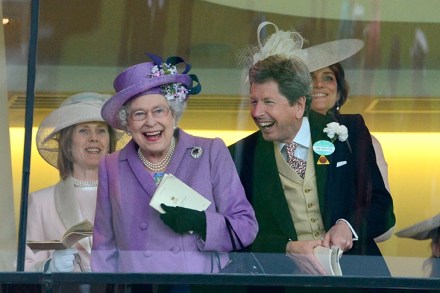
Seven hundred pages of memoir is stretching it a bit even for an ex-inhabitant of No. 10 with David Cameron’s need for self-justification. Halfway through For the Record I was tempted to skip a chapter or two, but then I encountered a passage that made the slog worthwhile. Talking about his relationship with the Queen, her 12th prime minister notes two essentials in preparing for the weekly audience. First check the BBC news headlines because she is always formidably well informed. Second get up to speed on what is happening in the horse-racing world. (He used to check with his bloodstock agent friend Tom Goff whether one of her horses had won that week or one of her mares had foaled.

A first-hand account of a racehorse trainer’s battle for survival

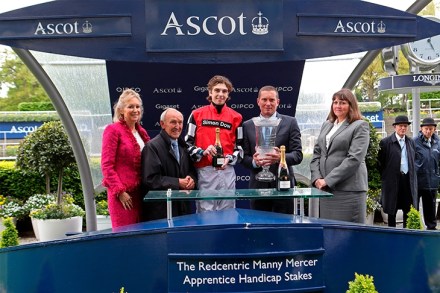
Sport may well be ‘the great triviality’ as Timeform founder Phil Bull once put it, and racing as trivial as any. But many thousands of jobs depend on it. To get an idea of the impact the pandemic is having on the 550 licensed training yards in Britain, I called up my friend Simon Dow at his Epsom yard. Back at Clear Height stables, where he has had his greatest successes with horses such as Young Ern and Chief’s Song, Simon has around 30 horses. Typically, the first thoughts of this articulate workaholic were with those living in the London tower blocks visible on clear days from the Epsom gallops. ‘We have to remember how lucky we are by comparison. We have so much freedom.

Does horse-racing have a future?

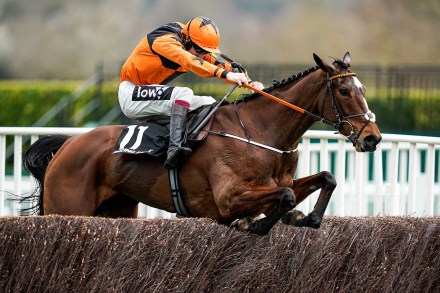
Asked, after his Imperial Aura’s impressive win in the Northern Trust Novices’ Handicap Chase at the Cheltenham Festival, if he had been worried about one particular challenger in the race, Kim Bailey wryly replied: ‘Of course I was worried. I’m a racehorse trainer.’ Trainers now have a lot more to worry about. When we finally resume racing — and few expect it to be after the six weeks originally announced — how many of the 14,000 racehorses in training as the suspension was announced will be coming back? How many owners whose businesses have suffered from Covid-19 will see paying bills for forage, farriers and vets’ attentions as a priority use for their remaining funds?

Cheltenham Festival was a triumph

The socialite MP Chips Channon once noted in his diaries his feelings about an after-lunch snooze in parliament’s Library: ‘It was,’ he said, ‘a true House of Commons sleep. There is no sleep to compare with it — rich, deep and guilty.’ With racing by then almost the only spectator sport available, the 60,000 a day who turned up for this year’s Cheltenham Festival had similar instincts. Thanks to coronavirus, millions were facing ill health, bankruptcy or worse while we gloried in the comparatively trivial distractions of who arrived first past the post in 28 races.

The magic of Cheltenham Festival

Every time the Cheltenham Festival looms, I recall a remarkable experience. It was already 25 years since Dawn Run’s recovery from a seemingly impossible position to win the Gold Cup of 1986, becoming the only horse ever to add victory in our greatest steeplechase to a triumph in the Champion Hurdle, when, for my Festival history, I interviewed her jockey. Jonjo O’Neill took me through every stride of the race as if it had been the day before: ‘We were flying down the hill and I could hear them coming behind us. I thought we’d gone a right gallop and couldn’t believe they were so close to us. We jumped the third last and they were jumping up my backside and I thought, “Jesus, if we don’t ping the second last we’re going to get beat.

Cyrname was lucky to survive his shocking fall at Ascot

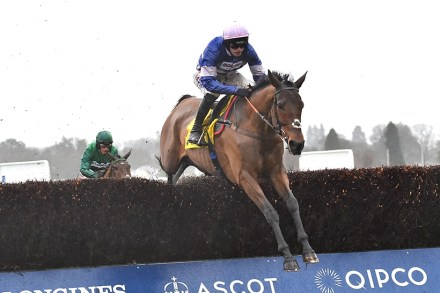
Few jumpers have a better record at Ascot than the Paul Nicholls-trained Cyrname. He triumphed in the Betfair Chase at the Berkshire course in February 2019 by 17 lengths with three Grade One winners behind him. It was at Ascot in November, in an enthralling duel, that he ended the mighty Altior’s record of 19 successive victories over jumps and Cyrname was a short-priced favourite last Saturday to take a second Betfair Chase with only three horses daring to join the highest-rated chaser in Britain. But it was not to be. On rain-soaked turf, soon officially changed from soft to heavy, Cyrname was never going with quite his usual zest.

The saviours of racing

I was once at a racing dinner in York where a distinguished clergyman in attendance was invited to say grace. ‘I won’t, if you don’t mind,’ he told our hosts. ‘I would rather not draw the Almighty’s attention to my presence here.’ There is a slight whiff of rascality about the racing scene which deters some from participation, although even that can have its plus side. When one trainer friend found himself, through no fault of his own, involved in a scandal story, I asked him if it was affecting the number of owners sending him horses. If anything, he told me, it was putting his numbers up. ‘Some people want to demonstrate their faith in my integrity. Others rather hope that there is something a bit dodgy about me.

The trainer who gives the big boys a run for their money

Racing’s New Year began well with the award of OBEs to both Nicky Henderson and Paul Nicholls, showing that they do get some things right at No. 10 and the palace. It would have been monstrous for either of our two best jumps trainers to have been left out when the other was honoured. We owe them both a lot, not just because of the great horses such as Kauto Star and Sprinter Sacre whose careers they have handled so adeptly but because of the impressive training talent they have nurtured. Nicky’s assistants have included Tom Symonds, Charlie Longsdon, Jamie Snowden and Ben Pauling while Paul has launched the careers of Dan Skelton and Harry Fry. For once, though, Ascot’s card last Saturday was not dominated by the big two.

The battle for the future of Flat racing

The master plan in acquiring our flatcoat retriever puppy Damson was that as folk no longer with full-time jobs we would invest our time in producing a perfectly trained dog. On New Year’s Day the growing gap between intention and reality was acknowledged. Damson is affectionate, fun and beautiful — frequently admired by passing strangers. She is also a thief. We were hosting friends from the sadly deprived country of Italy where they are unable to purchase either chipolata sausages or pork pies, a liberal plateful of which we therefore provided for the lunchtime buffet.

Farewell to Australia’s greatest horse

Storm clouds may be rumbling over racing’s future financing in terms of gambling legislation but 2019 offered no shortage of happy memories. The emergence of the once-bumptious Oisin Murphy as a modest, articulate and thoughtful champion jockey. The pulsating battle between two previous winners in this year’s King George VI and Queen Elizabeth Stakes when Enable and Crystal Ocean provided the most thrilling racecourse duel since the gut-buster between Grundy and Bustino in 1975, with John Gosden’s mare taking it by a neck. Then there was the dominance of Pinatubo, surely the best juvenile since Frankel, in the Woodcote at Epsom, the Chesham at Ascot, Goodwood’s Vintage Stakes and the National Stakes at the Curragh.

The election won’t bring any joy to the racing community – whatever the outcome

Whatever the outcome of the election on 12 December, it is unlikely to bring joy to the racing community. Conservatives and Labour are planning to review or replace the Gambling Act and they won’t be doing so intending to increase the amounts trousered by the bookmakers. Sadly, the way things have long been organised means it is the size of the gambling industry’s takings that determine how much filters down to finance the sport. Labour and the Liberal Democrats plan, too, to review jockeys’ use of the whip for ‘encouragement’. It is no surprise that the puritans have long had it in for racing: the sport’s biggest sponsors used to be the drinks industry with the likes of the Whitbread, Mackeson and Hennessy Gold Cups.

Cheltenham was the perfect antidote to election politics

I can only be sorry for the 67,496,581 citizens of the UK who were not at Cheltenham last Saturday. For the 33,591 of us who were there, it could not have been a more heart-warming, thrilling and character-filled way of escaping from the insulting knavery of election politics and the sourness of the weather that it so perfectly reflects. There is nothing like being in a crowd of 30,000 enthusiasts who mostly like a bet but who will cheer courage, stamina or quality whether or not they have backed the winner. Many in the crowd remembered how Kerry Lee’s Happy Diva had unluckily been brought down four fences out in the BetVictor Gold Cup a year before when travelling like a winner.

The best thing about autumn is the return of jumping

Never mind Keats’s mists and mellow fruitfulness, or even that glorious autumnal odour of wet dog — a regular accompaniment to my life thanks to our flatcoat retriever puppy’s arrival. The best thing about autumn is the return of the jumping scene proper with the big yards finally taking the rugs off their hotshot hurdlers and Cheltenham Gold Cup aspirants. The most fascinating question this season is how the mighty Altior, unbeaten in his 19 races so far, will fare now trainer Nicky Henderson and stable jockey Nico de Boinville agree that he should be tried over longer distances, with his first major target the King George on Boxing Day.

The future face of racing

In the second race of a heart-stirring Qipco Champions Day at Ascot the unthink-able happened: on Britain’s favourite stayer Stradivarius, winner of his previous ten races, the King of Ascot Frankie Dettori got beaten. In fact, in going down by just a nose to Aidan O’Brien’s St Leger winner Kew Gardens on heavy ground that blunted his ability to quicken, Stradivarius probably ran as well as he has ever done. Trainer John Gosden and owner Bjorn Nielsen had thought of pulling him out of the contest on such soft ground but they sportingly took the view that, ‘It is Champions Day and you let the day down if you don’t run Stradivarius.

The dark world of Victorian horse racing

Two hours after showing her father, the Marquess of Anglesey, the wedding dress in which she was to marry the country squire Henry Chaplin, Lady Florence Paget took a carriage to Marshall & Snelgrove’s department store. Leaving by a side entrance, she was escorted to St George’s Church in Hanover Square where she married Harry Hastings, the fourth Marquis of Hastings. They were back at his Leicestershire estate of Donington Hall before her family knew a thing. It was the ultimate Victorian scandal: the stunningly beautiful Lady Florence was known as the Pocket Venus, Harry Hastings was a rakehell addicted to the cheap cheers of those for whom he bought drinks in East End alehouses and opium dens.

When nice guys come first

With shorter days and leaves falling, I begin to itch for the more sporting, less obviously commercial world of jump racing. But Newbury’s classy card last Saturday, sponsored for the 24th year by Dubai Duty Free, proved the perfect reminder that the Flat too can provide character, good humour and success for the small battalions. Eric Alston started as an apprentice jockey on two shillings and sixpence a week and began his training career in 1981 while a dairy farmer rising at 4 a.m. for milking. Plying his trade on the outskirts of Preston he is hardly in fashionable racing territory but anybody who loves the sport knows that he can win with cheap horses and that he has had some very decent sprinters through his hands.